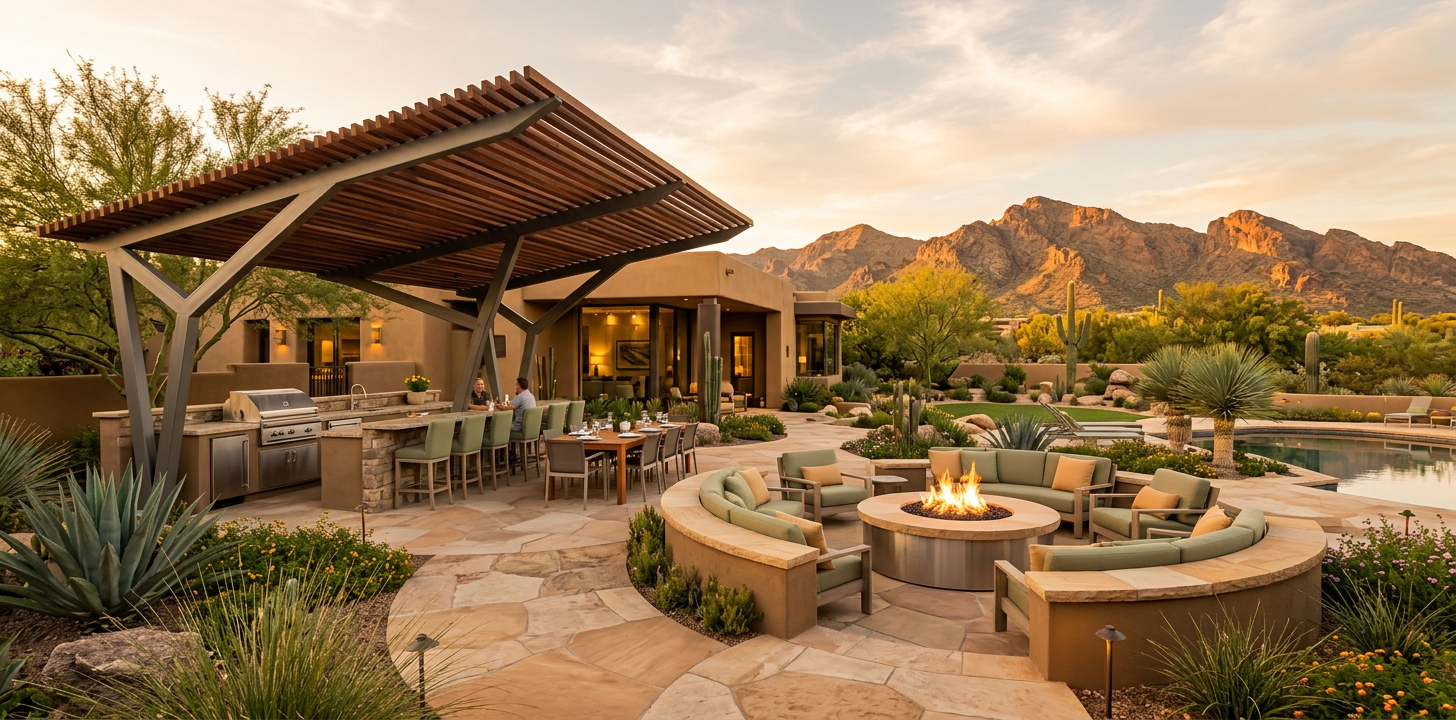
A remarkable backyard should feel like a natural extension of the home, not a collection of expensive features placed outside. In Paradise Valley, that means shaping every terrace, planting area, pool edge, and shaded seat around the architecture, the mountain views, and the way your household actually spends time together.
With outdoor living design Paradise Valley homeowners can create a setting that feels composed in every season, even during the hottest months. We focus on comfortable circulation, durable materials, intelligent shade, and desert-responsive planting so the property feels effortless rather than overdone.
What Makes a Paradise Valley Outdoor Space Feel Truly Custom
Luxury is not simply a larger pool, more stone, or a bigger kitchen island. It is the clarity of a plan. When the indoor and outdoor environments relate to one another, the property gains a sense of calm, purpose, and permanence.
| Design Priority | What It Solves | High-Value Result |
|---|---|---|
| Architectural continuity | Disconnected exterior spaces | A unified property |
| Shade planning | Limited daytime comfort | Longer outdoor use |
| Water-wise planting | High maintenance demands | Beauty with restraint |
| Material detailing | Premature wear and visual clutter | Lasting sophistication |
| Evening lighting | Underused nights outdoors | Better ambiance and safety |
We begin by studying the site rather than jumping to a wish list. Topography, drainage, existing trees, privacy needs, views, solar exposure, access for construction, and the home’s geometry all influence the best outcome.
Let the Architecture Lead
A modern hillside residence may call for large-format paving, crisp planting masses, restrained color, and sharp linear details. A Mediterranean or transitional home may benefit from layered courtyards, textured stone, softly shaped planting beds, and a more intimate sequence of outdoor rooms.
The goal is not to copy a style from a magazine. It is to make the landscape look as though it has always belonged to the home and the land beneath it.
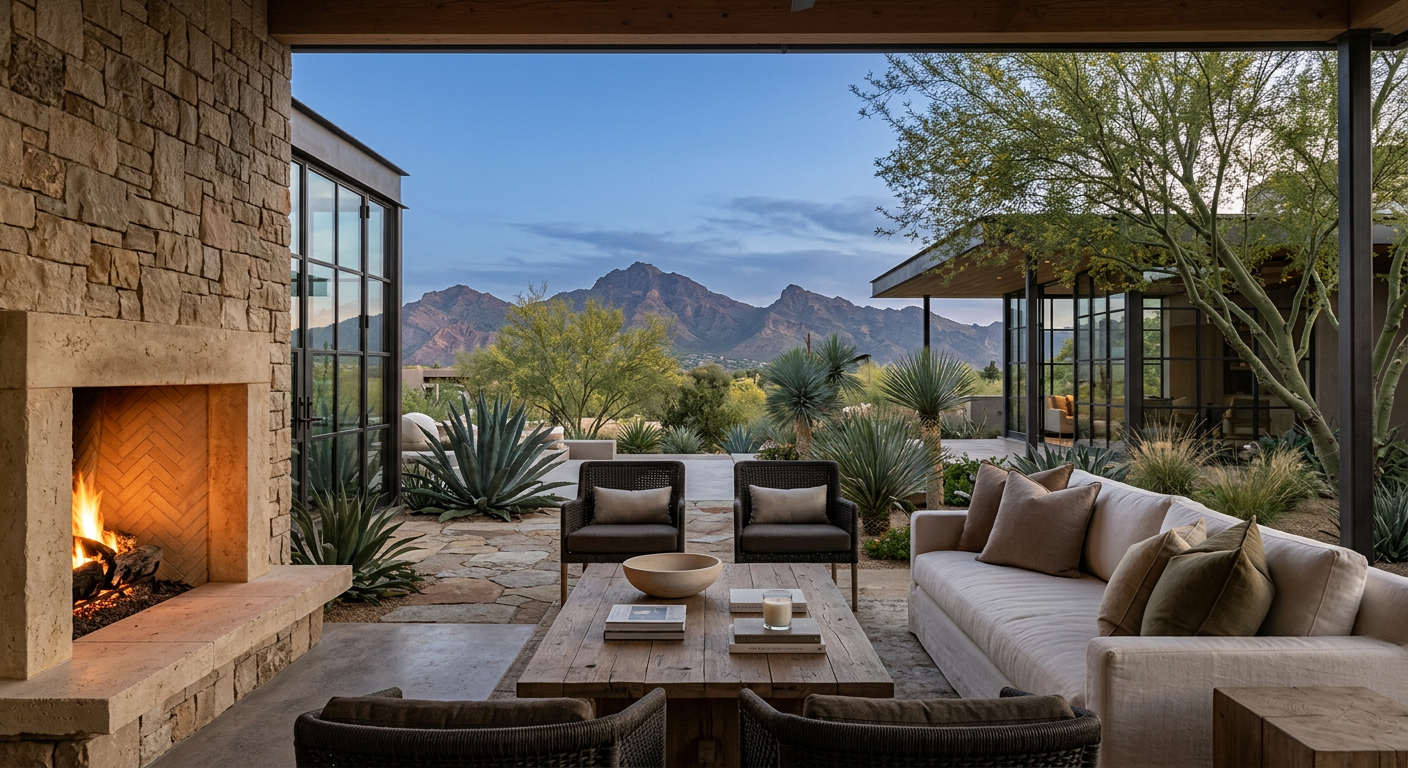
Outdoor Living Design Paradise Valley Homeowners Can Use Year-Round
The best outdoor spaces answer a practical question before they answer an aesthetic one: what do you want to do here? A family that hosts large gatherings needs a different layout than a couple seeking a private morning retreat, even if both homes have similar square footage.
Create Purposeful Outdoor Rooms
We often organize a luxury backyard into distinct but connected destinations. This approach gives the landscape rhythm and prevents the common mistake of placing every feature around one oversized patio.
Consider including:
- A covered dining space near the indoor kitchen for easy hosting
- A lounge area with a fireplace or fire feature for cooler evenings
- A poolside zone with chaises, umbrellas, and convenient towel storage
- A quiet garden court for coffee, reading, or conversation
- A cooking area that keeps the chef part of the gathering
- A flexible lawn or open terrace for children, pets, or events
Each destination needs enough space to function comfortably. For example, an outdoor kitchen should account for appliance clearance, serving space, seating circulation, shade, and a clear route back to the home. A beautiful layout can still feel frustrating if guests must squeeze behind bar stools or cross the cooking zone to reach the pool.
Make Shade a Core Design Element
In the Sonoran Desert, shade is not an accessory. It is a fundamental comfort system. We look at the changing sun angles throughout the day, then layer solutions such as roof extensions, pergolas, solid shade structures, mature canopy trees, screens, and operable louvers where they make sense.
A well-designed shade strategy also shapes the visual experience. It frames mountain views, creates a sense of enclosure without blocking breezes, and gives outdoor rooms a welcoming human scale.
Build for Desert Conditions Without Sacrificing Luxury
Desert-responsive design is often misunderstood as a yard filled with gravel and sparse plants. In reality, an elegant low-water landscape can be rich with shade, color, seasonal change, texture, fragrance, and habitat.
The Arizona Department of Water Resources reports that as much as 70 percent of residential water use can occur outdoors. That makes planting design and irrigation planning important decisions for both long-term operating costs and responsible property stewardship.
Choose Plants for Place, Not Just Appearance
We select plants for their mature form, water needs, soil tolerance, sun exposure, maintenance profile, and relationship to the architecture. Desert willow, ironwood, palo verde, desert museum palo verde, olive where appropriate, agave, hesperaloe, cactus, brittlebush, and flowering accent plants can create a layered composition that feels refined rather than repetitive.
Plant groupings should also support irrigation zones. A thirsty accent plant should not share a valve with highly drought-tolerant species. Matching plant water needs to irrigation zones helps protect plant health and reduces unnecessary runoff.
Treat Irrigation as Invisible Infrastructure
Great irrigation design is rarely noticed, which is exactly the point. It should deliver water accurately, accommodate the needs of mature plants, allow for seasonal adjustment, and remain accessible for maintenance.
We recommend thoughtful hydrozoning, efficient drip systems, proper pressure regulation, smart controllers, and a maintenance plan that changes with the weather. Soil improvement also matters because compacted or poorly prepared soil can shed water before roots have a chance to benefit from it.
Materials That Hold Up and Still Feel Elevated
The difference between a polished outdoor environment and a short-lived renovation is often found in material decisions. Paradise Valley properties face intense sun, large temperature swings, monsoon weather, pool chemicals, and heavy use during gatherings.
We prioritize finishes that age gracefully and suit the home. Natural stone, high-quality porcelain pavers, architectural concrete, metal accents, wood-look materials, and carefully specified grout or jointing systems can all work beautifully when selected for the right application.
Balance Beauty, Safety, and Maintenance
Around pools and wet areas, slip resistance and heat retention deserve as much attention as color. In dining spaces, stain resistance and cleanability may matter more. Along stairs and grade changes, edge visibility, drainage, and lighting should be incorporated from the beginning instead of treated as afterthoughts.
This is also where careful construction documentation pays off. When details are clearly resolved before installation, the project is more likely to look intentional and perform as planned.
Design for Evening as Carefully as Daytime
Many homeowners invest heavily in a backyard only to use it mostly during daylight. Evening lighting changes that. It extends the useful hours of the property while highlighting architectural textures, specimen trees, steps, pathways, and entertaining areas.
We avoid a blanket of bright fixtures. Instead, we layer low-level path lighting, soft tree uplighting, subtle wall washes, task light at cooking surfaces, and dimmable ambient lighting at dining and lounge areas. The result should feel warm, safe, and flattering, with the night sky still visible.
Common Mistakes We Help Clients Avoid
A strong landscape plan prevents costly corrections later. Here are a few issues we see repeatedly in high-end residential projects.
Oversizing Features and Undersizing Circulation
A massive island or fire feature can look impressive on a plan but make the patio feel cramped. We design around people moving, serving, sitting, and gathering, not just around feature dimensions.
Designing Before Understanding the Site
Ignoring drainage patterns, view corridors, and mature trees can lead to compromised outcomes. A site analysis early in the process helps preserve valuable assets and identify constraints before they become change orders.
Treating Planting as Decoration
Planting is structure, shade, privacy, color, and environmental performance. It deserves the same design attention as the pool deck or outdoor kitchen.
Choosing Trend-Driven Elements Over Timeless Proportion
Trends can inspire a project, but a property should not feel dated after a few years. We use contemporary ideas selectively and anchor them in durable materials, sound planning, and an architectural language that fits the home.
Questions We Hear From Paradise Valley Homeowners
How early should landscape planning begin for a new custom home?
We recommend beginning during architectural design, before structural and utility decisions are fixed. Early collaboration helps align door locations, window views, drainage, pool placement, shade structures, and outdoor kitchen utilities with the landscape plan.
Can a luxury landscape be water-efficient?
Absolutely. Water efficiency comes from the right plant palette, soil preparation, irrigation zoning, smart controls, and realistic maintenance practices. It does not require sacrificing visual richness or outdoor comfort.
Is a pergola enough shade for a Paradise Valley patio?
Sometimes, but not always. The answer depends on orientation, time of day, spacing of overhead members, nearby walls, tree canopy, and how you plan to use the space. We assess shade performance instead of relying on appearance alone.
What should we prioritize if the project will be built in phases?
Start with a complete master plan. Then prioritize drainage, grading, utility sleeves, hardscape connections, pool infrastructure, major trees, and irrigation zones so later phases fit seamlessly rather than requiring demolition.
How do we preserve mountain views while improving privacy?
Layered planting, low walls, carefully placed screens, grade changes, and selective tree placement can create privacy at eye level without closing off valuable long views. This is one of the most important site-specific decisions on hillside and view-oriented properties.
Do we need construction administration for a residential landscape project?
For complex projects, it can be highly valuable. Construction administration helps keep installation aligned with the design intent, coordinates details among trades, and provides another layer of quality control during key stages.
Shape a Backyard That Belongs to Your Home
At Waibel & Associates, we combine site planning, planting and irrigation design, hardscape detailing, construction documents, and construction administration to create exterior environments with a clear sense of place. Explore our residential landscape design work, learn more about our design and consulting services, or contact our team to discuss your Paradise Valley property.
A successful outdoor environment does more than photograph well. It gives you a cooler place to gather, a quieter place to recharge, a stronger connection to the architecture, and a landscape that performs beautifully through the realities of desert living.
When we approach the property as a complete experience, every decision becomes more meaningful. The paving supports the way people move, the trees create comfort and character, the lighting brings the garden to life at night, and the materials tell one cohesive story. That is how an outdoor space becomes an enduring part of home.