Sustainable Landscape Design Principles for Arizona Homes
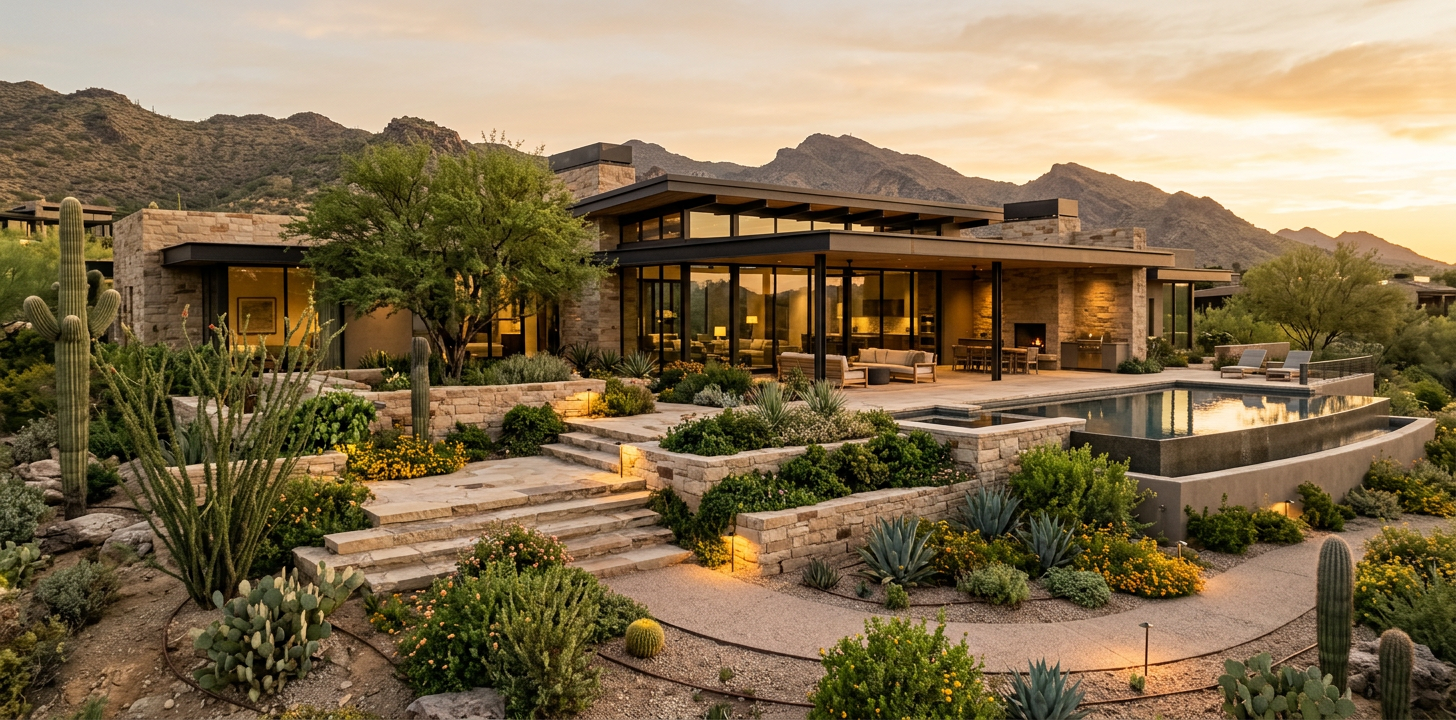
A beautiful Arizona landscape should feel inseparable from the home and the desert around it. The strongest properties in Scottsdale, Paradise Valley, Tempe, and the East Valley do not rely on excessive water or ornamental excess. They use thoughtful planning, durable materials, appropriate plants, shade, and irrigation design to create outdoor spaces that perform well for years.
Sustainable landscape design principles in Arizona begin with the site itself. Sun exposure, slope, soil, architecture, existing trees, drainage patterns, and how the owners intend to use the property should shape every decision before plant material or hardscape is selected.
The need for this level of planning is practical as well as aesthetic. The Arizona Department of Water Resources reports that as much as 70 percent of residential water use can occur outdoors. For a custom home or major renovation, the landscape is one of the best places to improve water efficiency without sacrificing comfort, character, or property value.
Begin With the Site, Not a Plant List
Sustainable design starts by understanding what a specific property can support. We evaluate the site before proposing a style, plant palette, pool surround, or outdoor room.
A south- or west-facing courtyard has very different needs from a protected entry garden or a north-facing entertaining terrace. Existing grades affect where rainfall moves. Mature trees may offer shade that takes decades to replace. Soil conditions influence plant establishment, irrigation performance, and the longevity of hardscape.
For a high-end residence, this early analysis also creates a more cohesive relationship between the architecture and the landscape. Contemporary homes may call for precise masses of agave, palo verde, desert spoon, and decomposed granite. A more traditional Arizona residence may benefit from layered shade trees, textured shrubs, stone walls, and garden spaces that soften the architecture.
Preserve What Already Adds Value
A mature tree, established landform, or existing drainage channel can be an asset rather than an obstacle. Tree preservation should be evaluated before demolition or grading begins, especially during a remodel where construction access can place root zones at risk.
Preservation is not simply leaving a tree in place. It may require adjusting paving, utilities, walls, finished grades, and staging areas so the tree has a realistic chance to remain healthy after construction. This is the kind of coordination that belongs in early site planning and construction documents.
Design for Water Efficiency Without Making the Landscape Feel Sparse
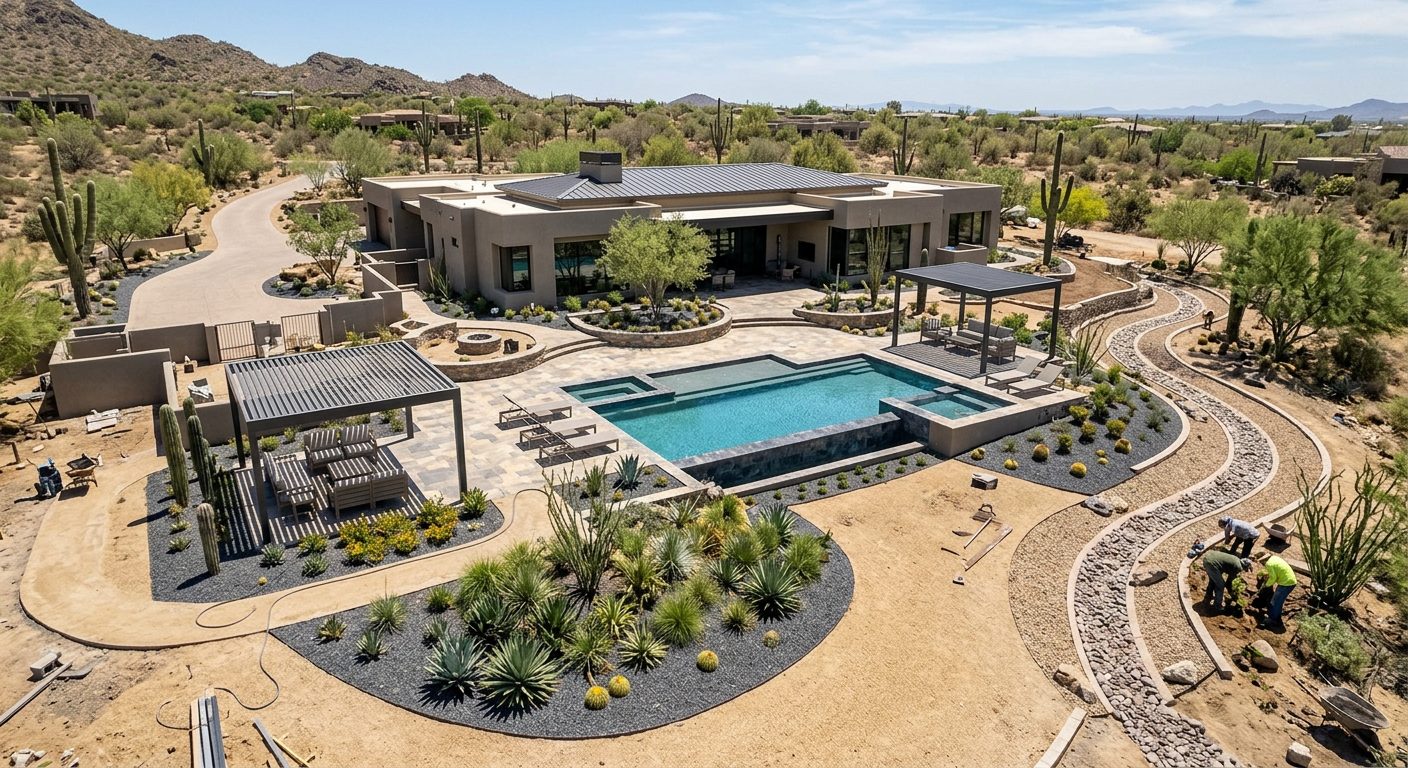
Water-efficient landscapes can be richly detailed, comfortable, and appropriate for luxury homes. The objective is not to eliminate every water-using plant. It is to use water intentionally, place plants according to their needs, and avoid irrigation waste.
The Arizona Department of Water Resources recommends regionally appropriate design, plant selection, and irrigation practices as the basis for lowering landscape water use. Its guidance also emphasizes the value of rainwater harvesting and desert-adapted plants for reducing reliance on potable water.
Group Plants by Water Need
Hydrozoning places plants with similar water requirements together. This allows irrigation zones to be scheduled for the needs of the plants rather than forcing trees, shrubs, groundcovers, and ornamental accents onto one inefficient schedule.
A well-designed property may include:
- Low-water shade trees positioned to cool patios, glazing, and outdoor living areas
- Desert-adapted shrubs and perennials arranged in meaningful plant communities
- Higher-water planting limited to purposeful areas, such as an entry, courtyard, or entertaining garden
- Small turf areas only where they support a specific recreational function
- Containers and seasonal color on separate irrigation zones
This approach produces better visual composition and easier long-term management. It also prevents a common issue in Arizona landscapes, where low-water plants receive more irrigation than they need because they share a valve with thirstier material.
Use Irrigation as a Designed System
Irrigation should be designed with the same care as the planting plan. Drip irrigation, properly spaced emitters, pressure regulation, separate hydrozones, seasonal scheduling, and access for maintenance can make a substantial difference in how a landscape performs.
Runoff is a warning sign that the irrigation system is applying water faster than the soil can absorb it, or that a zone is poorly matched to the site. The Arizona Department of Water Resources irrigation guidance notes that runoff, inefficient systems, and application rates that exceed soil absorption contribute to outdoor water waste.
At Waibel & Associates Landscape Architecture, we approach irrigation as part of the larger site system. Plant selection, soil conditions, grade changes, drainage, hardscape, and maintenance expectations all influence a responsible irrigation design.
Make Shade and Outdoor Comfort Part of the Sustainability Plan
A sustainable landscape in Arizona should make outdoor living more comfortable in the seasons when homeowners want to use it most. Shade is one of the most effective design tools available.
Shade trees, ramadas, trellises, covered patios, walls, and carefully placed planting can reduce harsh solar exposure while creating privacy and visual depth. These elements are especially important around west-facing spaces, pool decks, outdoor kitchens, and large areas of glazing.
Hardscape also deserves careful attention. Large expanses of dark paving can intensify heat around a home. Material color, texture, jointing, shade coverage, and the amount of paving should be considered as a connected system rather than selected independently.
Collect Rainfall Where It Falls
Rainwater harvesting can be integrated elegantly into residential landscape architecture. Roof runoff can be directed to planted basins, discreet swales, or collection systems that support trees and shrubs after rainfall.
The goal is not to create a decorative feature that is disconnected from the rest of the property. The goal is to slow water, spread it across the site, and allow it to benefit planting areas while protecting the home, pool, and hardscape from drainage problems.
For custom homes, grading and drainage should be coordinated with the architect, civil engineer, pool designer, and builder. When this happens early, the landscape can become an active part of the water-management strategy instead of a final layer added after critical elevations are already fixed.
Build for Longevity, Repairability, and Real Maintenance
Sustainability includes what happens after installation. A landscape with premium materials but inaccessible irrigation valves, overcrowded planting, unstable edging, or poorly detailed drainage will be expensive to manage and difficult to keep looking its best.
We recommend selecting materials that suit the property, climate, and intended use. Natural stone, properly detailed masonry, durable metalwork, high-quality landscape lighting, and well-built shade structures can all support a long service life when they are designed and installed correctly.
Plant spacing is equally important. A newly installed landscape may look full when plants are placed too tightly, but crowding can lead to pruning problems, plant decline, irrigation conflicts, and blocked views. A professional plan accounts for mature size, maintenance access, and the visual evolution of the landscape over time.
Janet Waibel, RLA, Owner and Principal of Waibel & Associates, has developed educational resources around sustainable landscape care and construction. Homeowners, property managers, and professionals can explore landscape architecture books by Janet Waibel for further perspective on durable, well-managed desert landscapes.
Plan Early for Custom Homes and Major Renovations
The most effective sustainable landscape decisions happen before construction begins. Early landscape architecture coordination can protect trees, reserve appropriate soil volumes, establish finished grades, plan utilities, and create realistic outdoor living spaces that fit the architecture.
This matters on tight lots, hillside properties, and projects with pools, guest houses, sport courts, large shade structures, or extensive hardscape. It also matters on older properties where a new home addition or redesigned backyard changes drainage, access, and the balance of sun and shade.
A landscape architect can help the project team answer important questions before they become costly field changes:
- Which existing trees are worth preserving, and how will they be protected?
- Where should pool equipment, electrical service, drainage, and irrigation controls be located?
- Which outdoor areas need shade, privacy, views, or wind protection?
- How can grades move rainfall away from structures while supporting planting?
- Which materials will complement the home and remain appropriate over time?
For HOAs, private developments, and aging communities, these principles also apply to landscape improvements and turf conversions. Our private development and landscape improvement work reflects the importance of long-term planning, functional upgrades, and site-appropriate design.
Discuss Your Arizona Landscape Before Construction Begins
If you are planning a custom home, a major remodel, or a high-value landscape renovation in Tempe, Scottsdale, Paradise Valley, Phoenix, Carefree, Cave Creek, or North Scottsdale, early planning can protect your investment and create a more cohesive result.
Call (480) 893-3849 to discuss your project with Waibel & Associates, or request a landscape architecture consultation.
Questions Homeowners Ask About Sustainable Arizona Landscapes
Does sustainable landscape design mean using only native plants?
No. Native plants can be valuable choices, but a sustainable Arizona landscape may also include well-adapted, low-water plants that suit the site and design intent. The key is selecting plants that can thrive with reasonable water, appropriate maintenance, and the conditions of the property.
Can a luxury landscape still include a pool and outdoor kitchen?
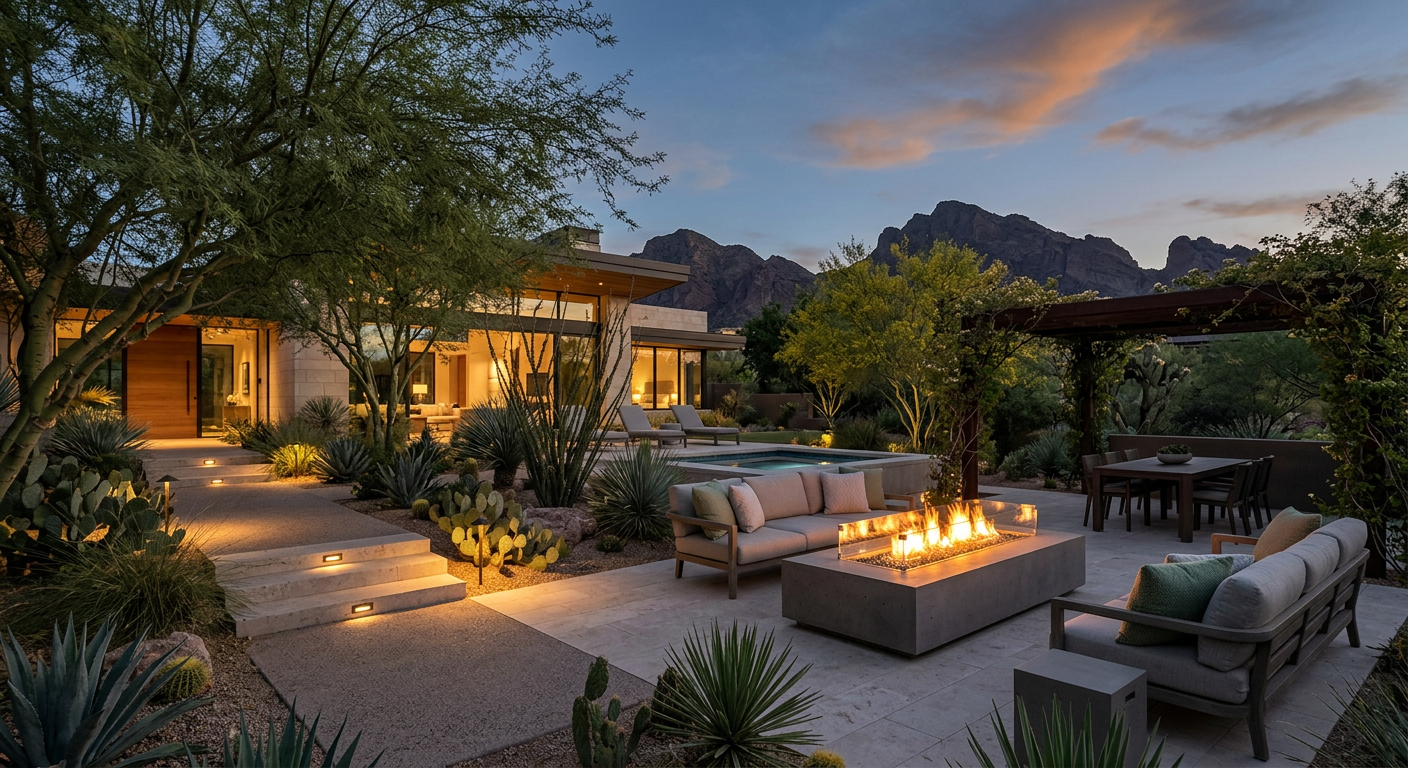
Yes. Sustainability is about thoughtful planning, not giving up amenities. A pool, outdoor kitchen, fire feature, and entertaining terrace can be integrated with shade, efficient irrigation, sensible drainage, durable materials, and planting that reduces heat and supports privacy.
How early should landscape planning start for a custom home?
Landscape planning should begin during schematic architectural design, before major elevations, utility locations, and grading assumptions are finalized. Early coordination creates more options for tree preservation, drainage, outdoor living, and meaningful integration with the home.
Is artificial turf the most sustainable choice for Arizona?
Not necessarily. Artificial turf can reduce irrigation in some applications, but it also raises questions about surface heat, material lifespan, drainage, installation details, and how the space will actually be used. The best solution depends on the site, intended function, and the surrounding landscape.
How can mature trees be protected during a remodel?
Protection begins with an assessment of tree condition and root zones before construction. The project team may need to modify access routes, utility trenches, grading, paving limits, and material storage areas to avoid damaging critical roots.
What is the difference between a landscape architect and a landscaper?
A landscape architect provides professional planning and design that can include site analysis, grading concepts, planting, irrigation, hardscape, construction documents, and construction administration. A landscape contractor typically focuses on installation and may provide design-build services, depending on qualifications and project scope.
Can sustainable landscape design improve property value?
A professionally planned landscape can improve curb appeal, usability, shade, privacy, and the long-term performance of outdoor improvements. Those qualities support the overall experience and perceived value of a custom residential property.
A Lasting Arizona Landscape Is Designed as a Complete System
The most successful desert landscapes are not assembled from a collection of individual products. They are designed as complete environments where architecture, plant material, irrigation, grading, shade, drainage, and outdoor living reinforce one another.
That is why sustainable landscape design principles in Arizona are especially valuable for custom homes and major renovations. When we plan for the site, climate, and long-term use from the beginning, the result can feel refined, comfortable, water-conscious, and distinctly connected to its setting.
Talk With an Experienced Arizona Landscape Architect
Waibel & Associates can help create a thoughtful landscape that complements your architecture and supports your long-term goals, from early site planning through construction documentation and installation coordination.
Call (480) 893-3849 or contact Waibel & Associates for a landscape architecture consultation.
About Waibel & Associates Landscape Architecture
Waibel & Associates Landscape Architecture is an Arizona landscape architecture firm led by Janet Waibel, RLA, Owner and Principal. The firm provides custom residential landscape architecture, sustainable landscape design, irrigation planning, tree preservation, outdoor living design, site planning, construction documentation, and professional landscape consulting throughout Tempe, Scottsdale, Paradise Valley, Phoenix, North Scottsdale, Carefree, Cave Creek, and surrounding Arizona communities.
Waibel & Associates focuses on thoughtful, high-quality landscapes that complement the architecture of each property while incorporating appropriate plant materials, water-efficient strategies, irrigation technology, and long-term planning.
Janet Waibel is also a published author whose books provide educational resources on sustainable landscape management and landscape construction.
Planning a custom residential or professional landscape project?
Call (480) 893-3849
or
Contact Waibel & Associates →