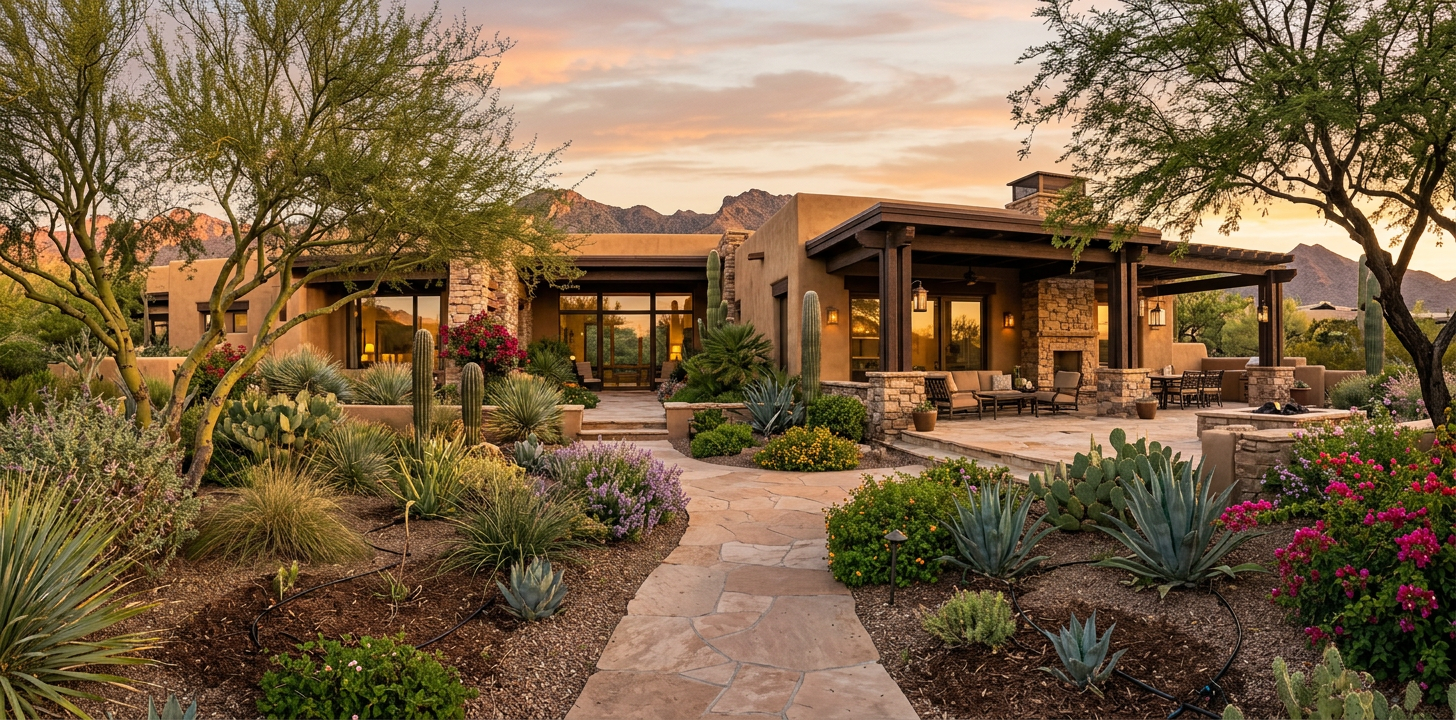
Irrigation Design Water Saving for Arizona Luxury Home Landscapes
A water-efficient landscape should never feel like a compromise. For custom homes and major renovations in Scottsdale, Paradise Valley, Tempe, and the East Valley, the most successful outdoor environments combine thoughtful planting, shade, architecture, drainage, and irrigation design water saving into one coordinated plan.
We see the same issue repeatedly: irrigation is treated as a final installation detail after hardscape, pools, lighting, and planting decisions have already been made. That approach can lead to exposed pipe routes, water on paving, stressed trees, mismatched valve zones, and expensive corrections. Water-saving irrigation works best when it is designed early, alongside the entire landscape.
Water Savings Begin With a Landscape Plan, Not a Controller
Smart controls can help, but they cannot correct a system that applies water to the wrong plants, too quickly for the soil, or too close to a home’s foundation. Effective irrigation planning begins by understanding how the property will function and how each area will mature over time.
The U.S. Environmental Protection Agency reports that outdoor water use can account for as much as 60 percent of household water use in arid regions. It also notes that inefficient irrigation methods and systems can lose substantial water to wind, evaporation, and runoff. EPA WaterSense estimates that replacing a clock-based controller with a WaterSense labeled irrigation controller can reduce an average home’s irrigation water use by up to 30 percent.
For Arizona properties, water efficiency is not simply about running irrigation less often. It is about applying the appropriate amount of water, at an appropriate rate, to the correct root zone.
| Design Decision | Water-Saving Benefit | Long-Term Landscape Value |
|---|---|---|
| Hydrozones by plant need | Prevents overwatering | Healthier planting |
| Soil-aware runtimes | Reduces runoff | Better root development |
| Separate tree zones | Supports deep roots | Protects mature canopy |
| Weather-responsive controls | Adjusts seasonal watering | Less manual guesswork |
| Early sleeve coordination | Avoids future hardscape cuts | Cleaner construction |
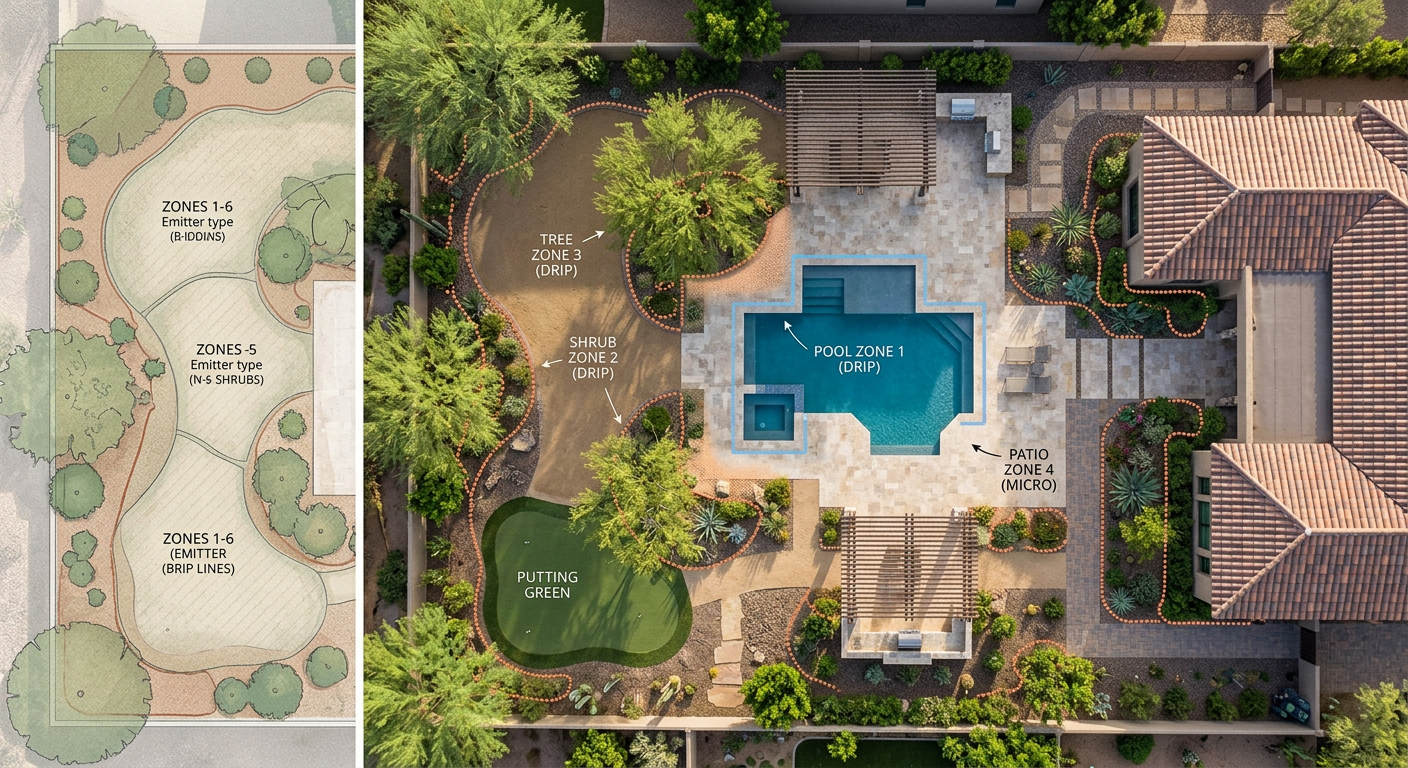
Hydrozones Are the Foundation of Water-Efficient Irrigation
Hydrozones group plants with similar water needs, sun exposure, root depth, and irrigation methods on the same valve. This is the central principle behind irrigation design water saving because it prevents a single high-water-use area from determining the schedule for an entire property.
A luxury residential landscape may have several distinct water needs, including established shade trees, desert-adapted shrubs, ornamental entry planting, containers, turf used for a defined activity area, and poolside planting exposed to reflected heat. These areas should not be watered on the same schedule simply because they are near one another.
We typically evaluate each planting area according to:
- Plant type and expected mature size
- Sun, shade, reflected heat, and wind exposure
- Soil texture, compaction, and infiltration rate
- Slope and drainage patterns
- Proximity to foundations, walls, paving, and pools
- Visibility and maintenance expectations
- The future expansion of tree root zones
A small tree at installation may need water delivered near its original root ball. A mature specimen tree needs moisture distributed farther from the trunk, across a much broader active root area. Designing for that change avoids the common mistake of leaving emitters in the same location for years.
Choose Irrigation Equipment for the Planting and Site Conditions
No single irrigation method suits every part of a high-end Arizona landscape. The right equipment depends on the plant palette, soil, grade, architectural features, and intended use of the outdoor space.
Drip Irrigation for Planting Beds and Architectural Edges
Drip irrigation is often well suited to shrubs, perennials, specimen plants, and narrow planting areas near walls or paving. It can place water close to the root zone while reducing overspray on windows, hardscape, and outdoor furnishings.
However, a quality drip system requires more than tubing. Proper filtration, pressure regulation, accessible valves, flush points, and adjustable emitter locations all influence performance. A poorly planned drip layout can still create dry areas, saturated areas, root problems, and wasted water.
Bubblers and Basins for Larger Trees
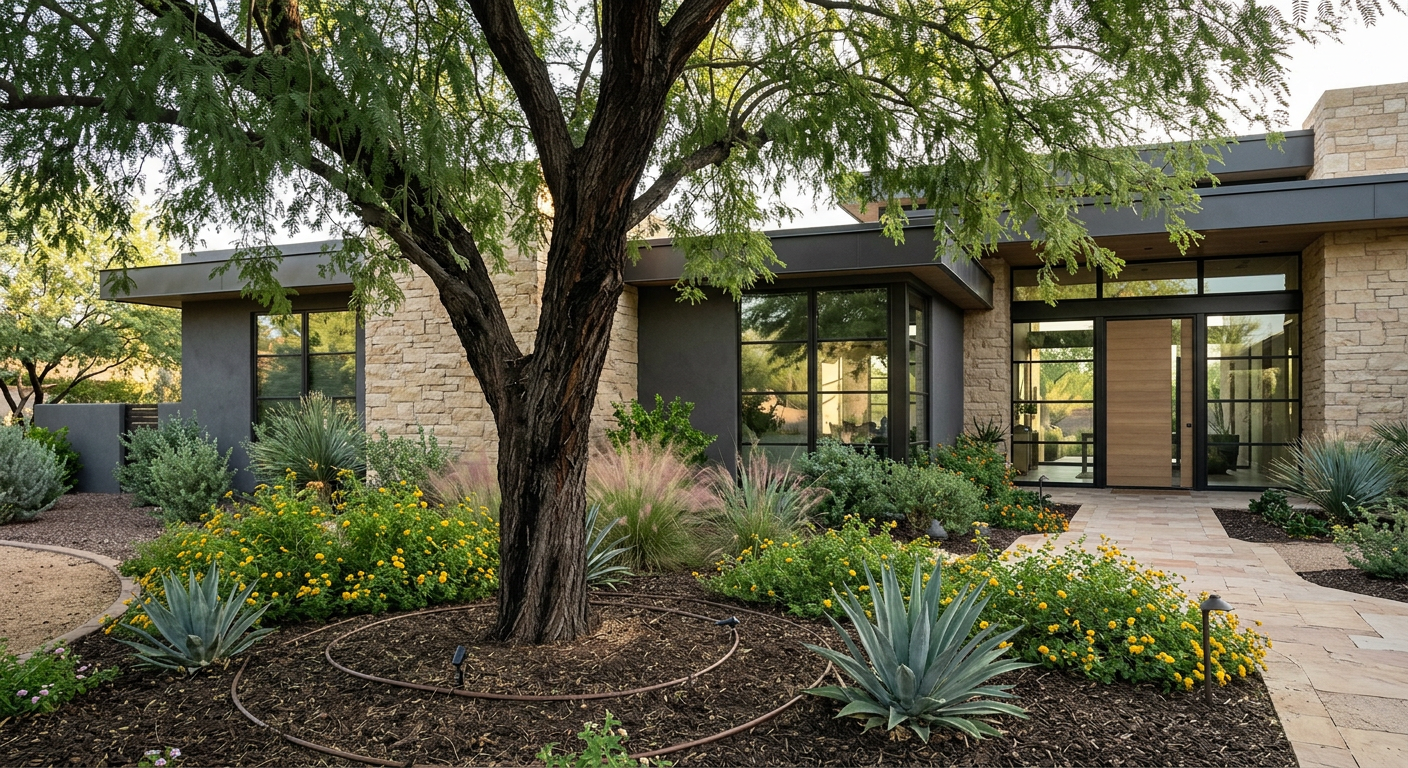
Bubblers or basin-style systems can support larger trees when they are designed to wet a broad root zone at a rate the soil can absorb. They are especially useful where mature trees are a major part of the property’s shade, scale, and character.
On sloped sites in North Scottsdale, Carefree, or Cave Creek, cycle-and-soak scheduling may be needed. This approach divides a longer watering event into shorter cycles so water can infiltrate rather than flow downhill toward paving or drainage structures.
Spray Irrigation for Purposeful Turf Areas
Turf can have a place in a custom landscape when it supports recreation, pets, or a particular design goal. It should be limited to intentional areas and separated from drip-irrigated planting zones.
Spray irrigation requires matched precipitation rates, suitable pressure, head-to-head coverage, and careful placement. Water should land on the turf area, not on driveways, walls, pathways, or pool decking.
Soil, Grade, and Construction Details Affect Every Drop
Water-saving irrigation is inseparable from soil conditions and site grading. Compacted soil, caliche layers, construction disturbance, steep slopes, and poor finish grades can all cause irrigation water to run off before plants can use it.
That is why irrigation should be coordinated with drainage, retaining walls, paving, pool decks, landscape lighting, and utilities during plan development. Early coordination allows us to place sleeves beneath hardscape, identify practical valve locations, preserve root zones, and avoid disruptive changes after construction has begun.
For a major remodel, this work is particularly important. New patios and outdoor kitchens often alter drainage and access. Existing trees may need protection. Aging irrigation lines may no longer serve the revised landscape. A comprehensive plan helps the project team understand where water will go, where it should not go, and how the system can remain serviceable after installation.
A Progressive Water-Saving Strategy for Aging Landscapes
The best irrigation improvements do not always require replacing everything at once. For established homes, we often recommend a phased approach that addresses the highest-impact performance issues first while keeping the future landscape plan in view.
Phase One: Audit the Existing System
Start by identifying valve zones, pipe condition, controller capability, pressure concerns, leaks, overspray, and plant areas that are receiving incompatible schedules. A landscape can look healthy while quietly wasting water or placing mature trees under unnecessary stress.
Phase Two: Correct the Layout Before Adding Technology
A new controller is valuable only after the zones make sense. We recommend separating trees, ornamental planting, containers, turf, and desert-adapted areas where practical. This creates the control needed for seasonal adjustments.
Phase Three: Upgrade Controls and Fine-Tune Scheduling
Weather-responsive controllers and rain or soil-moisture inputs can help reduce overwatering when they are configured for the site. Seasonal adjustments should account for plant maturity, weather, exposure, and actual system output rather than relying on one fixed annual schedule.
Phase Four: Plan for Future Renovations
When a property is likely to receive new hardscape, a pool renovation, or expanded outdoor living areas, we document the irrigation intent so future work can protect pipe routes, sleeves, valves, and tree root zones. This is where professional construction documents can help preserve long-term value.
Planning a Water-Efficient Landscape Project?
If you are building or remodeling in Tempe, Scottsdale, Paradise Valley, Phoenix, or the surrounding area, early irrigation planning can help protect mature trees, improve landscape performance, and reduce unnecessary water use. Our residential landscape architecture approach coordinates planting, hardscape, outdoor living, irrigation, and long-term maintenance considerations into one cohesive design.
Call (480) 893-3849 to discuss your project with Waibel & Associates, or request a landscape architecture consultation →
Professional Irrigation Design Supports Architecture and Property Value
A refined landscape should complement the home instead of competing with it. The irrigation system should be equally intentional, even though much of it remains out of sight.
At Waibel & Associates, we consider irrigation as part of a complete landscape architecture process. That includes site analysis, plant selection, tree preservation, soil improvement, hardscape planning, drainage coordination, construction documentation, and construction administration. Our landscape architecture services are structured to help owners, architects, builders, and property managers carry the original design intent through installation.
Janet Waibel, RLA, Owner and Principal of Waibel & Associates Landscape Architecture, brings experience in planning, landscape construction, irrigation, and sustainable landscape management. Her published resources are also useful for owners and professionals who want a deeper understanding of durable landscape practices. Explore Landscape Architecture Books by Janet Waibel.
Frequently Asked Questions
How does irrigation design save water in Arizona?
Irrigation design saves water by matching water delivery, schedules, and equipment to specific plant zones and site conditions. Separating trees, shrubs, turf, containers, and ornamental beds prevents one area’s needs from causing overwatering elsewhere.
Is drip irrigation always the best choice for a luxury landscape?
No. Drip irrigation is excellent for many planting beds, but mature trees, turf areas, and certain site conditions may require different approaches. The best solution depends on root-zone size, soil, grade, plant selection, and the desired outdoor experience.
Can an existing irrigation system be improved without a full landscape renovation?
Yes. An irrigation audit can identify leaks, poor hydrozoning, pressure issues, overspray, and outdated controls. Improvements can often be phased so they support future landscape upgrades instead of becoming temporary fixes.
Do smart irrigation controllers eliminate the need for inspections?
No. Smart controllers can improve scheduling, but they cannot detect every clogged emitter, broken line, displaced head, or damaged valve. Periodic field inspections remain necessary to keep the system working as intended.
Why should mature trees have their own irrigation zones?
Mature trees have broad, deep root systems and different watering needs than ornamental planting or turf. A dedicated zone helps deliver water across the active root area without forcing trees onto a frequent schedule intended for smaller plants.
What should homeowners ask before installing irrigation near a pool or patio?
Ask how irrigation routes, drainage, sleeves, lighting conduits, and planting areas will be coordinated before hardscape installation. This planning reduces future demolition, helps prevent water on paving, and keeps maintenance access more practical.
Better Water Management Creates a More Enduring Landscape
A beautiful Arizona landscape can be water-conscious, richly planted, and architecturally refined at the same time. The difference comes from planning irrigation as an integrated design system rather than an afterthought.
When hydrozones, soil conditions, tree needs, hardscape, drainage, and seasonal scheduling work together, the landscape is better prepared to mature gracefully. It also becomes easier to manage, more resilient through changing conditions, and more aligned with the investment you have made in the property.
Talk With an Experienced Arizona Landscape Architect
For a custom home, major renovation, outdoor living environment, irrigation upgrade, or sustainable landscape renovation, we can help create a design that supports your property’s architecture and long-term goals. Learn more about Janet Waibel and Waibel & Associates, then contact us to begin the conversation.
Call (480) 893-3849
Contact Waibel & Associates →
About Waibel & Associates Landscape Architecture
Waibel & Associates Landscape Architecture is an Arizona landscape architecture firm led by Janet Waibel, RLA, Owner and Principal. The firm provides custom residential landscape architecture, sustainable landscape design, irrigation planning, tree preservation, outdoor living design, site planning, construction documentation, and professional landscape consulting throughout Tempe, Scottsdale, Paradise Valley, Phoenix, North Scottsdale, Carefree, Cave Creek, and surrounding Arizona communities.
Waibel & Associates focuses on thoughtful, high-quality landscapes that complement the architecture of each property while incorporating appropriate plant materials, water-efficient strategies, irrigation technology, and long-term planning.
Janet Waibel is also a published author whose books provide educational resources on sustainable landscape management and landscape construction.
Planning a custom residential or professional landscape project?
Call (480) 893-3849
or
Contact Waibel & Associates →
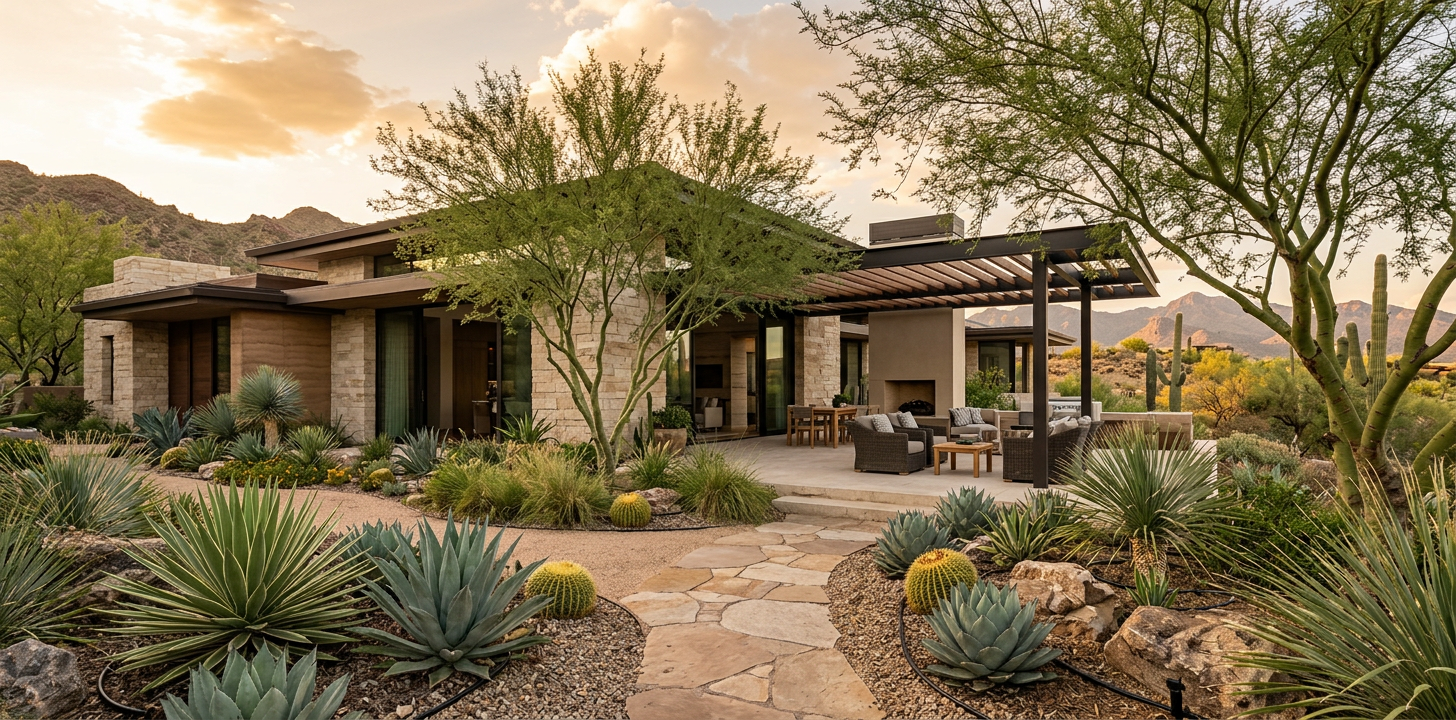
A beautiful Arizona landscape does not need to depend on excessive irrigation or a flat expanse of gravel. The strongest outdoor environments feel generous, lush in the right places, and deeply connected to the home’s architecture, while using water with intention.
For high-end homes in Scottsdale, Paradise Valley, Tempe, Phoenix, and the East Valley, water saving landscape solutions Arizona homeowners can rely on begin with a complete site strategy. Plant choices matter, but so do shade, soil, grading, irrigation zones, hardscape, mature trees, and how your family actually uses the property.
Water Saving Landscape Solutions Arizona for Luxury Properties
What A Water-Efficient Luxury Landscape Actually Includes
The goal is not to make every part of a property look the same. We design a hierarchy of spaces, with resilient low-water planting in broad landscape areas, concentrated planting near patios and entries, and shade where people gather. That approach supports both comfort and visual richness without treating every square foot as if it has identical water needs.
The Arizona Department of Water Resources reports that landscaping is the largest use of potable water in Arizona and that outdoor use can account for as much as 70 percent of residential water use. For a large custom property, that makes irrigation planning a design decision, not merely an installation detail.
| Design element | Water-saving role | Luxury benefit | Planning priority |
|---|---|---|---|
| Hydrozone planting | Matches water to plant needs | Fuller, healthier planting | High |
| Drip irrigation | Delivers water at the root zone | Cleaner visual finish | High |
| Shade trees and structures | Lowers heat stress | More usable outdoor rooms | High |
| Rainwater harvesting | Directs rainfall to planting | Site-specific character | Medium |
| Permeable surfaces | Helps water enter soil | Softer, tailored hardscape | Medium |
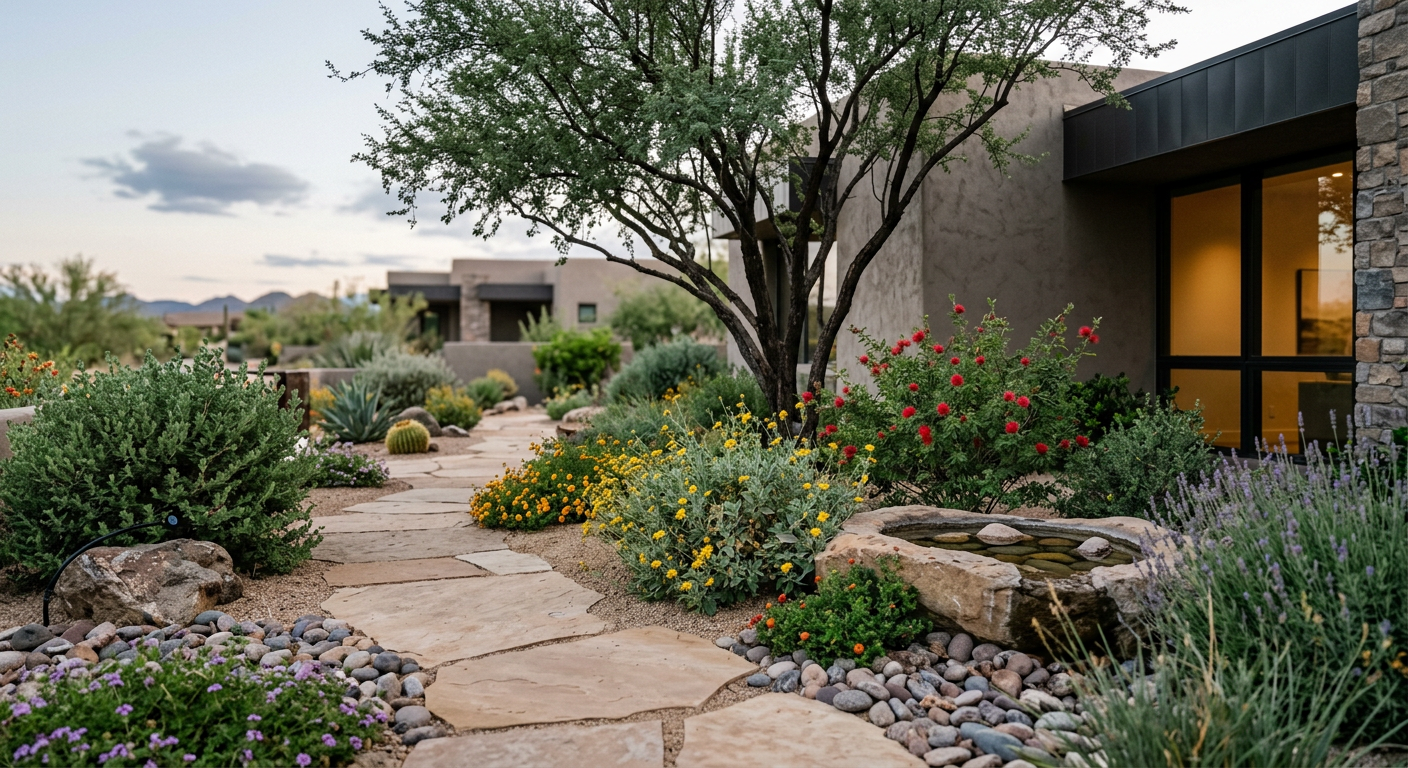
Start With The Site, Not A Plant List
A thoughtful plan studies orientation, grades, drainage patterns, existing vegetation, views, and outdoor living goals before plants are selected. This is especially important for hillside homes, large lots, and remodels where established trees may be among the property’s most valuable landscape assets.
We also look at where the home creates intense reflected heat, where winter sun is desirable, and where guests naturally move through the landscape. A courtyard, pool terrace, arrival sequence, or outdoor kitchen can feel cooler and more inviting when planting and shade are positioned deliberately.
Group Plants By Their Real Water Needs
Hydrozoning means placing plants with comparable water requirements on the same irrigation valve. It prevents a low-water desert accent plant from receiving the same schedule as a shaded flowering shrub or a specimen tree. It is simple in concept, but it requires coordination between planting design and irrigation documentation.
Desert-adapted does not mean every plant needs no water. New plantings need establishment care, mature shade trees need appropriate support, and seasonal weather changes affect demand. The practical goal is to give each plant the right amount of water at the right time, rather than using a single schedule across the entire property.
Five Design Strategies That Protect Water And Property Value
Preserve Mature Trees Whenever Possible
A mature mesquite, palo verde, olive, or other established tree can create meaningful shade that would take years to replace. Preserving suitable trees can reduce heat around hardscape, improve outdoor comfort, and anchor a new landscape so it feels established rather than recently installed.
Tree preservation must begin before demolition, grading, utility work, or new pool construction. Root-zone protection, proper drainage, and construction access planning are often more important than the final planting palette.
Build Shade Into Outdoor Living Areas
Arizona homeowners often focus on the pool or the outdoor kitchen first. We encourage clients to consider shade first as well. Trees, ramadas, pergolas, covered patios, and carefully placed walls can reduce the pressure placed on plants and make the landscape genuinely usable through more of the year.
Shade also gives us more flexibility with plant material. A protected courtyard can support a layered composition with small trees, shrubs, and accent planting that would struggle in exposed reflected heat.
Use Drip Irrigation As A Designed System
Drip irrigation is most effective when it is designed around plant sizes, root zones, slope, soil conditions, and separate hydrozones. It should not be an afterthought added after hardscape and planting decisions have already been made.
The state’s Guidelines for Landscape Drip Irrigation Systems emphasize design, installation, maintenance, operation, and repair. That full lifecycle matters. Even an excellent system wastes water if emitters are clogged, lines are damaged, or the controller never changes with the seasons.
Shape The Land To Hold Rainfall
Rainwater harvesting can be elegant and nearly invisible. Graded basins, swales, recessed planting areas, and strategically directed roof runoff can slow rainfall and guide it into the landscape rather than sending it off site.
The Arizona Department of Water Resources notes that rainwater harvesting reduces drinking-water use for irrigation and works especially well with native, low-water-use, and desert-adapted plants. On a custom residence, these features can be integrated into the overall geometry of the site instead of looking like a separate conservation add-on.
Improve Soil Before You Expect Plants To Perform
Compacted or poorly prepared soil can cause runoff, weak root development, and uneven irrigation performance. In many renovation projects, thoughtful soil preparation is what allows the planting to establish more evenly and use applied water more effectively.
Soil improvement is not one formula for every property. It depends on existing site conditions, selected plants, drainage, and construction disturbance. This is one reason a coordinated landscape architecture plan creates better long-term results than piecing together decisions as construction progresses.
A Better Alternative To The “Gravel And A Few Cactus” Approach
Water conservation does not require a stripped-down landscape. In fact, a property that relies only on rock can create more reflected heat, limit outdoor comfort, and feel disconnected from a home designed for entertaining.
A high-performing desert landscape uses contrast and layers: shade trees, flowering shrubs, architectural succulents, native or climate-appropriate accents, groundcovers, boulders, and carefully proportioned paving. The result can feel serene and tailored while remaining far more responsible than a traditional high-water lawn.
The key is to place higher-water planting where it delivers the greatest experience, such as an arrival courtyard, a primary view, or the edge of a shaded terrace. More resilient planting can then carry the larger areas of the site with texture, seasonal interest, and lower irrigation demand.
Planning A Custom Landscape Project?
If you are building or remodeling a home in Tempe, Scottsdale, Paradise Valley, Phoenix, Carefree, Cave Creek, or the East Valley, early landscape planning can protect mature trees, coordinate utilities, and prevent costly revisions after hardscape is underway. Explore our residential landscape architecture approach and landscape architecture services to see how a complete plan brings site planning, planting, irrigation, and outdoor living together.
Call (480) 893-3849 to discuss a custom residential landscape project with Waibel & Associates.
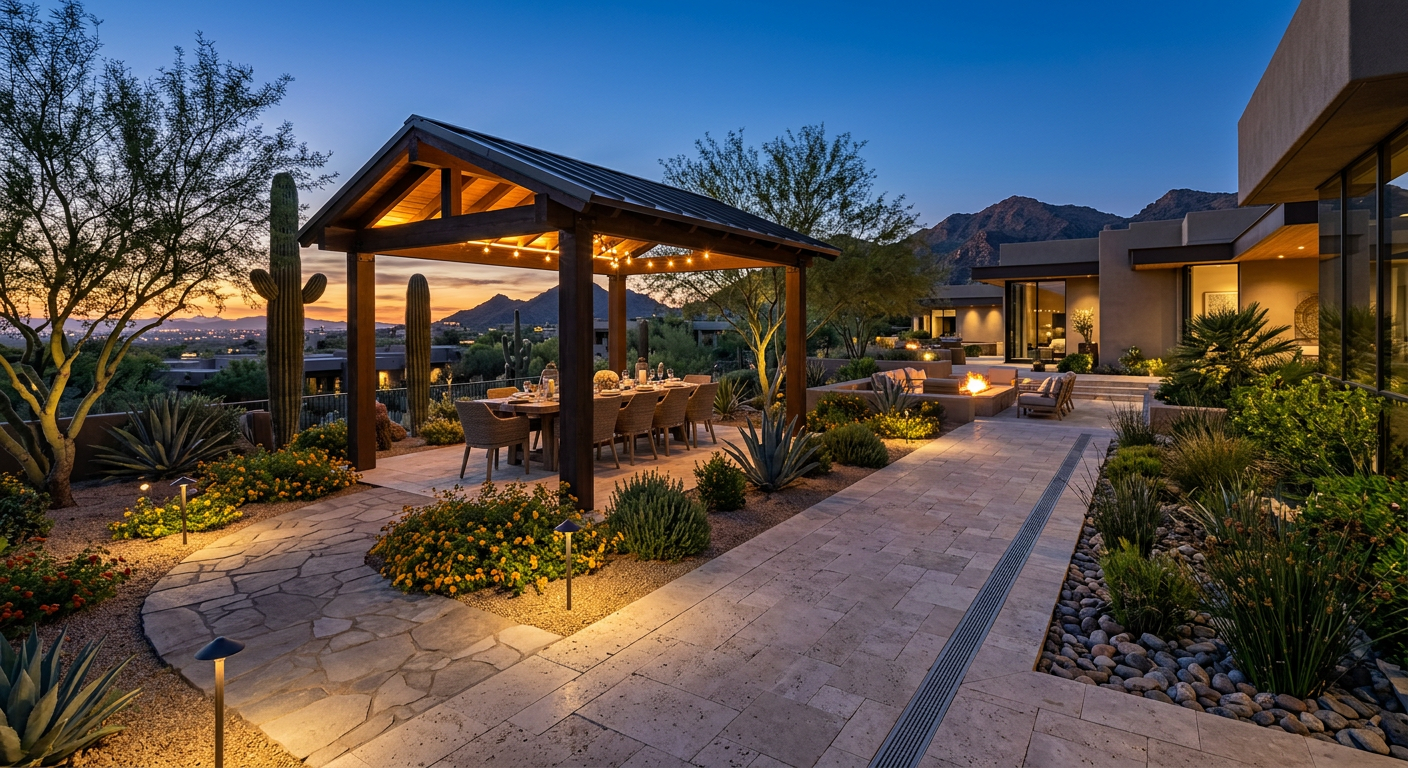
Why Professional Coordination Matters
A landscape plan is a communication tool for the entire project team. It helps the architect, builder, pool consultant, lighting professional, and installer understand the intended relationships between grades, walls, paving, planting, irrigation, drainage, and utilities.
This coordination is especially valuable on luxury renovations, where the property may have mature vegetation, limited access, existing structures, or difficult grades. It is also valuable for HOAs and developers that need an appealing, durable landscape identity without avoidable water demand.
Janet Waibel, RLA, Owner and Principal of Waibel & Associates Landscape Architecture, brings landscape architecture, irrigation planning, site analysis, and construction administration into a connected process. For homeowners and project teams who want deeper educational context around sustainable landscape decisions, you can also explore landscape architecture books by Janet Waibel.
Frequently Asked Questions
Can a luxury Arizona landscape be water-efficient?
Yes. A luxury landscape can use shade, layered planting, stone, artful grading, outdoor living features, and carefully controlled irrigation to create a rich experience with substantially more intentional water use. Luxury comes from design quality and site-specific detail, not from irrigating every area equally.
What plants use the least water in the Phoenix area?
Plant selection should reflect the property’s sun exposure, soil, microclimates, and desired character. The Phoenix Active Management Area plant resources from the Arizona Department of Water Resources are a useful reference, but a professional plan should evaluate how each plant will perform in its specific location.
Is drip irrigation always better than spray irrigation?
Drip irrigation is often well suited to trees, shrubs, and many desert plantings because it applies water close to the root zone. However, the right approach depends on the planting type, soil, slope, and intended use, and every system needs seasonal monitoring and maintenance.
Should we remove all turf from a high-end property?
Not necessarily. Limited turf may be appropriate for a functional recreation area, a pet space, or a specific design purpose. The important question is whether it earns its place, receives the right irrigation, and is proportioned realistically within the overall water budget.
Can rainwater harvesting work on a custom home site?
Yes. Roof runoff, paved areas, and site grading can be planned to support planted basins, specimen trees, or other landscape areas. It works best when it is considered early, alongside architecture, drainage, and hardscape decisions.
When should we hire a landscape architect for a new home or major remodel?
Bring in a landscape architect during early architectural planning, before site work, pool layouts, utility routing, and grading are fixed. This creates more opportunity to preserve trees, protect views, coordinate outdoor rooms, and integrate water-efficient systems without expensive changes later.
The Long-Term Value Of Intentional Water Use
The best water-saving landscape is not a collection of isolated products. It is a cohesive outdoor environment that respects the Arizona climate, makes the home more enjoyable, and allows every plant, paved area, and irrigation zone to serve a purpose.
When we plan the site as one connected system, water efficiency supports beauty instead of competing with it. That is the difference between a landscape that simply survives the desert and one that feels completely at home in it.
Talk With An Experienced Arizona Landscape Architect
Whether you are planning a custom home, a major residential remodel, an outdoor living environment, an irrigation upgrade, or a sustainable landscape renovation, Waibel & Associates can help create a landscape that complements your architecture and long-term goals. Request a landscape architecture consultation → or call (480) 893-3849.
About Waibel & Associates Landscape Architecture
Waibel & Associates Landscape Architecture is an Arizona landscape architecture firm led by Janet Waibel, RLA, Owner and Principal. The firm provides custom residential landscape architecture, sustainable landscape design, irrigation planning, tree preservation, outdoor living design, site planning, construction documentation, and professional landscape consulting throughout Tempe, Scottsdale, Paradise Valley, Phoenix, North Scottsdale, Carefree, Cave Creek, and surrounding Arizona communities.
Waibel & Associates focuses on thoughtful, high-quality landscapes that complement the architecture of each property while incorporating appropriate plant materials, water-efficient strategies, irrigation technology, and long-term planning.
Janet Waibel is also a published author whose books provide educational resources on sustainable landscape management and landscape construction.
Planning a custom residential or professional landscape project?
Call (480) 893-3849 or contact Waibel & Associates →
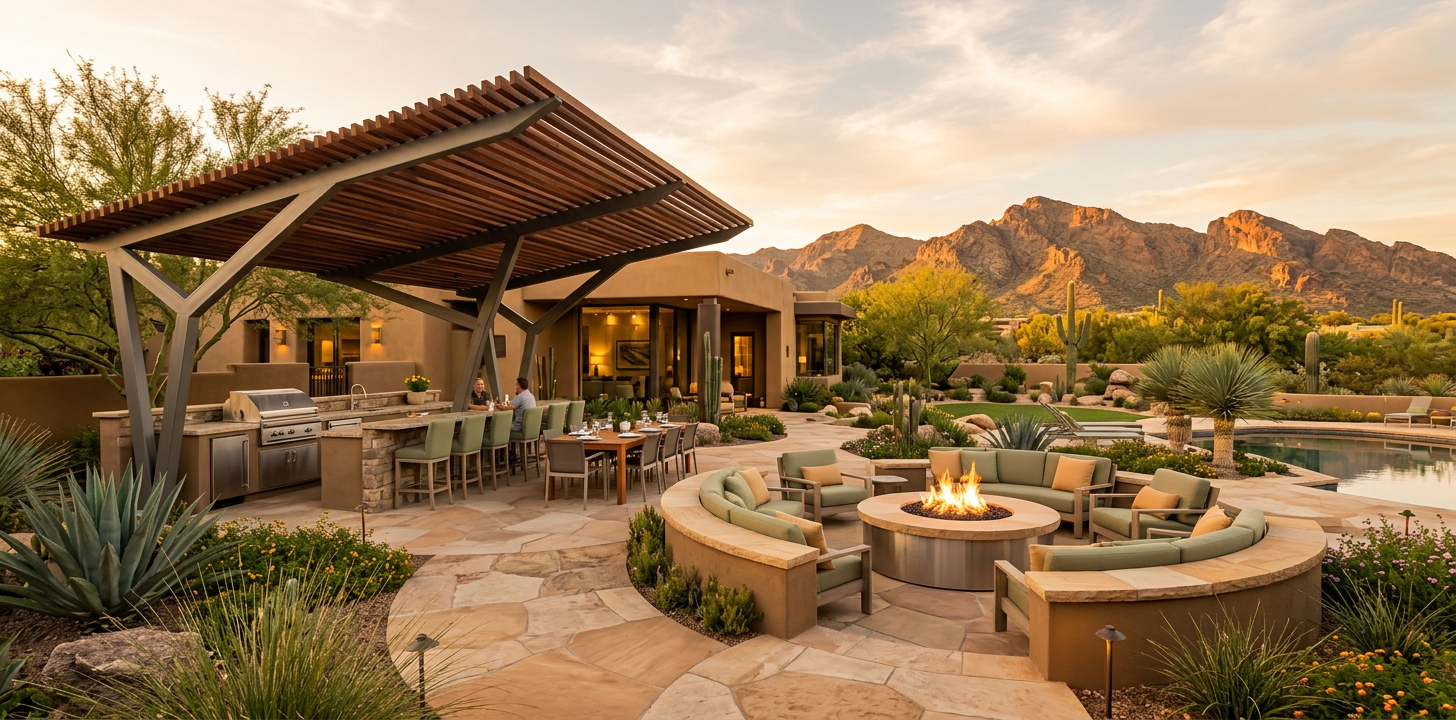
A remarkable backyard should feel like a natural extension of the home, not a collection of expensive features placed outside. In Paradise Valley, that means shaping every terrace, planting area, pool edge, and shaded seat around the architecture, the mountain views, and the way your household actually spends time together.
With outdoor living design Paradise Valley homeowners can create a setting that feels composed in every season, even during the hottest months. We focus on comfortable circulation, durable materials, intelligent shade, and desert-responsive planting so the property feels effortless rather than overdone.
What Makes a Paradise Valley Outdoor Space Feel Truly Custom
Luxury is not simply a larger pool, more stone, or a bigger kitchen island. It is the clarity of a plan. When the indoor and outdoor environments relate to one another, the property gains a sense of calm, purpose, and permanence.
| Design Priority | What It Solves | High-Value Result |
|---|---|---|
| Architectural continuity | Disconnected exterior spaces | A unified property |
| Shade planning | Limited daytime comfort | Longer outdoor use |
| Water-wise planting | High maintenance demands | Beauty with restraint |
| Material detailing | Premature wear and visual clutter | Lasting sophistication |
| Evening lighting | Underused nights outdoors | Better ambiance and safety |
We begin by studying the site rather than jumping to a wish list. Topography, drainage, existing trees, privacy needs, views, solar exposure, access for construction, and the home’s geometry all influence the best outcome.
Let the Architecture Lead
A modern hillside residence may call for large-format paving, crisp planting masses, restrained color, and sharp linear details. A Mediterranean or transitional home may benefit from layered courtyards, textured stone, softly shaped planting beds, and a more intimate sequence of outdoor rooms.
The goal is not to copy a style from a magazine. It is to make the landscape look as though it has always belonged to the home and the land beneath it.
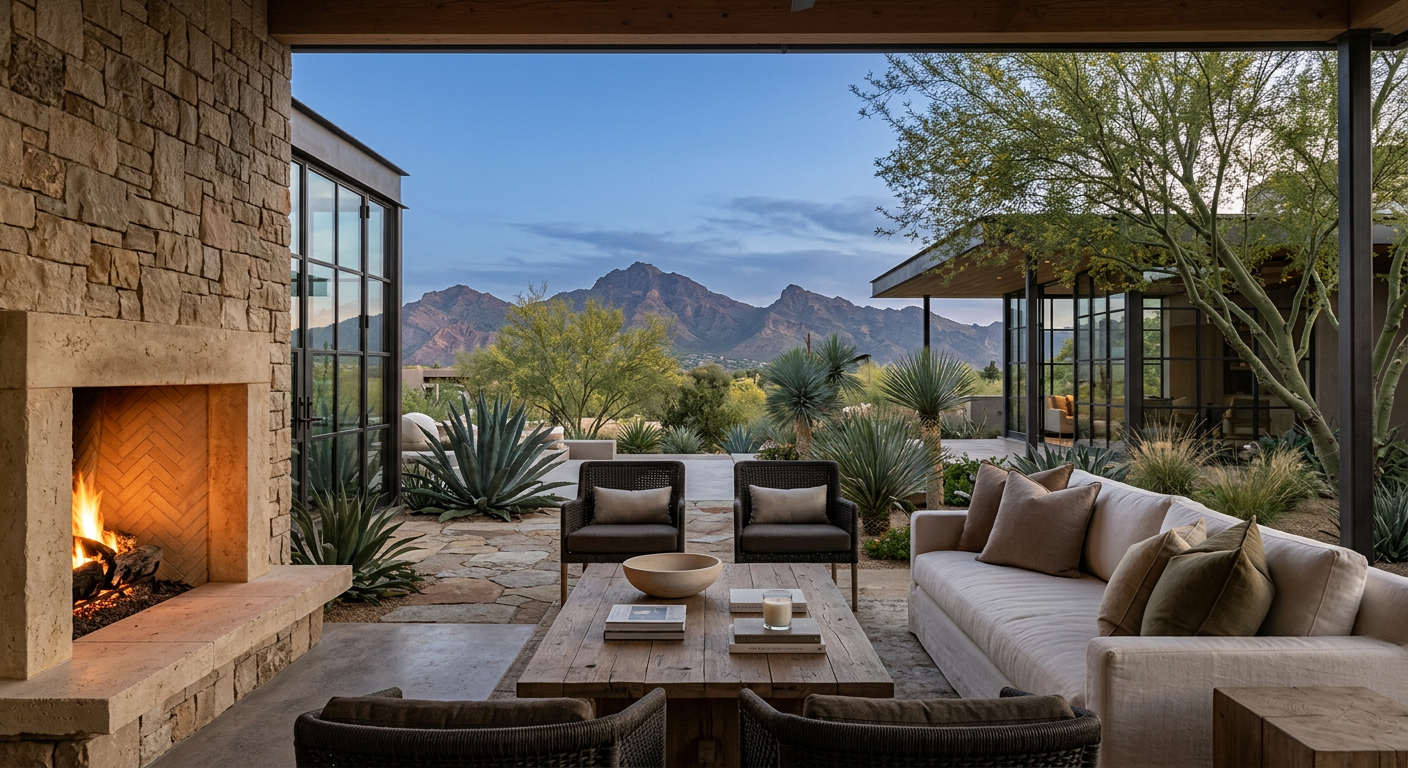
Outdoor Living Design Paradise Valley Homeowners Can Use Year-Round
The best outdoor spaces answer a practical question before they answer an aesthetic one: what do you want to do here? A family that hosts large gatherings needs a different layout than a couple seeking a private morning retreat, even if both homes have similar square footage.
Create Purposeful Outdoor Rooms
We often organize a luxury backyard into distinct but connected destinations. This approach gives the landscape rhythm and prevents the common mistake of placing every feature around one oversized patio.
Consider including:
- A covered dining space near the indoor kitchen for easy hosting
- A lounge area with a fireplace or fire feature for cooler evenings
- A poolside zone with chaises, umbrellas, and convenient towel storage
- A quiet garden court for coffee, reading, or conversation
- A cooking area that keeps the chef part of the gathering
- A flexible lawn or open terrace for children, pets, or events
Each destination needs enough space to function comfortably. For example, an outdoor kitchen should account for appliance clearance, serving space, seating circulation, shade, and a clear route back to the home. A beautiful layout can still feel frustrating if guests must squeeze behind bar stools or cross the cooking zone to reach the pool.
Make Shade a Core Design Element
In the Sonoran Desert, shade is not an accessory. It is a fundamental comfort system. We look at the changing sun angles throughout the day, then layer solutions such as roof extensions, pergolas, solid shade structures, mature canopy trees, screens, and operable louvers where they make sense.
A well-designed shade strategy also shapes the visual experience. It frames mountain views, creates a sense of enclosure without blocking breezes, and gives outdoor rooms a welcoming human scale.
Build for Desert Conditions Without Sacrificing Luxury
Desert-responsive design is often misunderstood as a yard filled with gravel and sparse plants. In reality, an elegant low-water landscape can be rich with shade, color, seasonal change, texture, fragrance, and habitat.
The Arizona Department of Water Resources reports that as much as 70 percent of residential water use can occur outdoors. That makes planting design and irrigation planning important decisions for both long-term operating costs and responsible property stewardship.
Choose Plants for Place, Not Just Appearance
We select plants for their mature form, water needs, soil tolerance, sun exposure, maintenance profile, and relationship to the architecture. Desert willow, ironwood, palo verde, desert museum palo verde, olive where appropriate, agave, hesperaloe, cactus, brittlebush, and flowering accent plants can create a layered composition that feels refined rather than repetitive.
Plant groupings should also support irrigation zones. A thirsty accent plant should not share a valve with highly drought-tolerant species. Matching plant water needs to irrigation zones helps protect plant health and reduces unnecessary runoff.
Treat Irrigation as Invisible Infrastructure
Great irrigation design is rarely noticed, which is exactly the point. It should deliver water accurately, accommodate the needs of mature plants, allow for seasonal adjustment, and remain accessible for maintenance.
We recommend thoughtful hydrozoning, efficient drip systems, proper pressure regulation, smart controllers, and a maintenance plan that changes with the weather. Soil improvement also matters because compacted or poorly prepared soil can shed water before roots have a chance to benefit from it.
Materials That Hold Up and Still Feel Elevated
The difference between a polished outdoor environment and a short-lived renovation is often found in material decisions. Paradise Valley properties face intense sun, large temperature swings, monsoon weather, pool chemicals, and heavy use during gatherings.
We prioritize finishes that age gracefully and suit the home. Natural stone, high-quality porcelain pavers, architectural concrete, metal accents, wood-look materials, and carefully specified grout or jointing systems can all work beautifully when selected for the right application.
Balance Beauty, Safety, and Maintenance
Around pools and wet areas, slip resistance and heat retention deserve as much attention as color. In dining spaces, stain resistance and cleanability may matter more. Along stairs and grade changes, edge visibility, drainage, and lighting should be incorporated from the beginning instead of treated as afterthoughts.
This is also where careful construction documentation pays off. When details are clearly resolved before installation, the project is more likely to look intentional and perform as planned.
Design for Evening as Carefully as Daytime
Many homeowners invest heavily in a backyard only to use it mostly during daylight. Evening lighting changes that. It extends the useful hours of the property while highlighting architectural textures, specimen trees, steps, pathways, and entertaining areas.
We avoid a blanket of bright fixtures. Instead, we layer low-level path lighting, soft tree uplighting, subtle wall washes, task light at cooking surfaces, and dimmable ambient lighting at dining and lounge areas. The result should feel warm, safe, and flattering, with the night sky still visible.
Common Mistakes We Help Clients Avoid
A strong landscape plan prevents costly corrections later. Here are a few issues we see repeatedly in high-end residential projects.
Oversizing Features and Undersizing Circulation
A massive island or fire feature can look impressive on a plan but make the patio feel cramped. We design around people moving, serving, sitting, and gathering, not just around feature dimensions.
Designing Before Understanding the Site
Ignoring drainage patterns, view corridors, and mature trees can lead to compromised outcomes. A site analysis early in the process helps preserve valuable assets and identify constraints before they become change orders.
Treating Planting as Decoration
Planting is structure, shade, privacy, color, and environmental performance. It deserves the same design attention as the pool deck or outdoor kitchen.
Choosing Trend-Driven Elements Over Timeless Proportion
Trends can inspire a project, but a property should not feel dated after a few years. We use contemporary ideas selectively and anchor them in durable materials, sound planning, and an architectural language that fits the home.
Questions We Hear From Paradise Valley Homeowners
How early should landscape planning begin for a new custom home?
We recommend beginning during architectural design, before structural and utility decisions are fixed. Early collaboration helps align door locations, window views, drainage, pool placement, shade structures, and outdoor kitchen utilities with the landscape plan.
Can a luxury landscape be water-efficient?
Absolutely. Water efficiency comes from the right plant palette, soil preparation, irrigation zoning, smart controls, and realistic maintenance practices. It does not require sacrificing visual richness or outdoor comfort.
Is a pergola enough shade for a Paradise Valley patio?
Sometimes, but not always. The answer depends on orientation, time of day, spacing of overhead members, nearby walls, tree canopy, and how you plan to use the space. We assess shade performance instead of relying on appearance alone.
What should we prioritize if the project will be built in phases?
Start with a complete master plan. Then prioritize drainage, grading, utility sleeves, hardscape connections, pool infrastructure, major trees, and irrigation zones so later phases fit seamlessly rather than requiring demolition.
How do we preserve mountain views while improving privacy?
Layered planting, low walls, carefully placed screens, grade changes, and selective tree placement can create privacy at eye level without closing off valuable long views. This is one of the most important site-specific decisions on hillside and view-oriented properties.
Do we need construction administration for a residential landscape project?
For complex projects, it can be highly valuable. Construction administration helps keep installation aligned with the design intent, coordinates details among trades, and provides another layer of quality control during key stages.
Shape a Backyard That Belongs to Your Home
At Waibel & Associates, we combine site planning, planting and irrigation design, hardscape detailing, construction documents, and construction administration to create exterior environments with a clear sense of place. Explore our residential landscape design work, learn more about our design and consulting services, or contact our team to discuss your Paradise Valley property.
A successful outdoor environment does more than photograph well. It gives you a cooler place to gather, a quieter place to recharge, a stronger connection to the architecture, and a landscape that performs beautifully through the realities of desert living.
When we approach the property as a complete experience, every decision becomes more meaningful. The paving supports the way people move, the trees create comfort and character, the lighting brings the garden to life at night, and the materials tell one cohesive story. That is how an outdoor space becomes an enduring part of home.