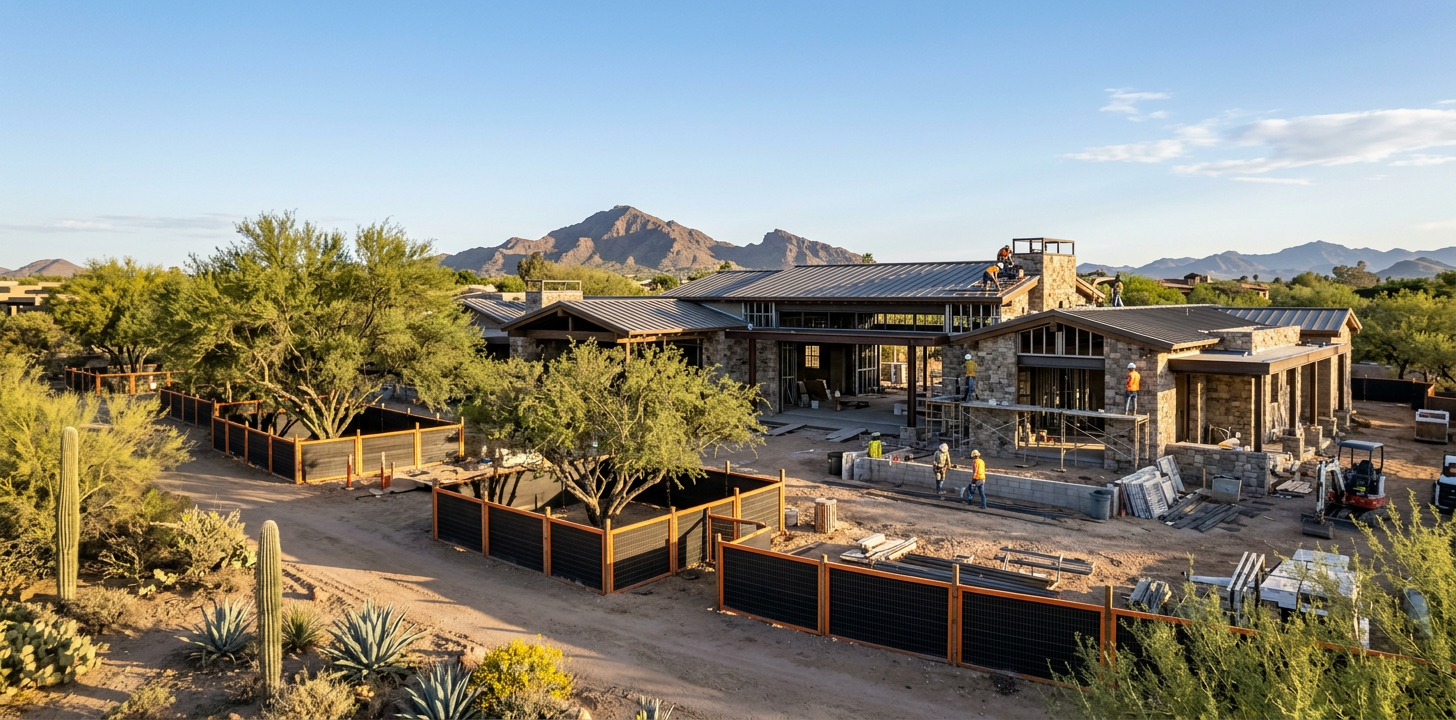
Tree Preservation During Construction for Paradise Valley Homes
A mature tree can be one of the most valuable design assets on a Paradise Valley property, yet it can be damaged long before anyone notices decline in the canopy. For custom homes and major remodels, tree preservation construction in Paradise Valley should begin during site planning, not after equipment, materials, and utility routes have already been selected.
We see preservation succeed when the architect, builder, landscape architect, arborist, and homeowner treat existing trees as site-defining elements. That means making early decisions about building placement, grading, hardscape, drainage, irrigation, access, and construction staging around the trees that truly matter.
Why Mature Trees Need Protection Before Work Begins
Tree preservation is most effective when it shapes the project layout from the beginning. A mature mesquite, ironwood, palo verde, or other established desert tree provides shade, scale, character, and a sense that the landscape belongs to the site rather than having been added after the house was completed.
The difficult part is that most serious damage occurs below ground. Equipment traffic compacts soil, trenching cuts roots, grade changes affect oxygen and moisture around the root system, and stored materials can create long periods of stress. A tree may look acceptable during construction, then decline months or years later because its root zone was compromised.
The National Park Service notes that many fine roots occupy the top 6 to 12 inches of soil. Its preservation guidance recommends limiting necessary grade changes near protected trees to no more than 3 inches, since added soil can restrict the root system's access to air.
For Paradise Valley properties, preservation is also part of responsible site compliance. The Town's Hillside Application Portal identifies a Native Plant Preservation Plan and construction staging checklist among the documents that may be required, depending on the project scope.
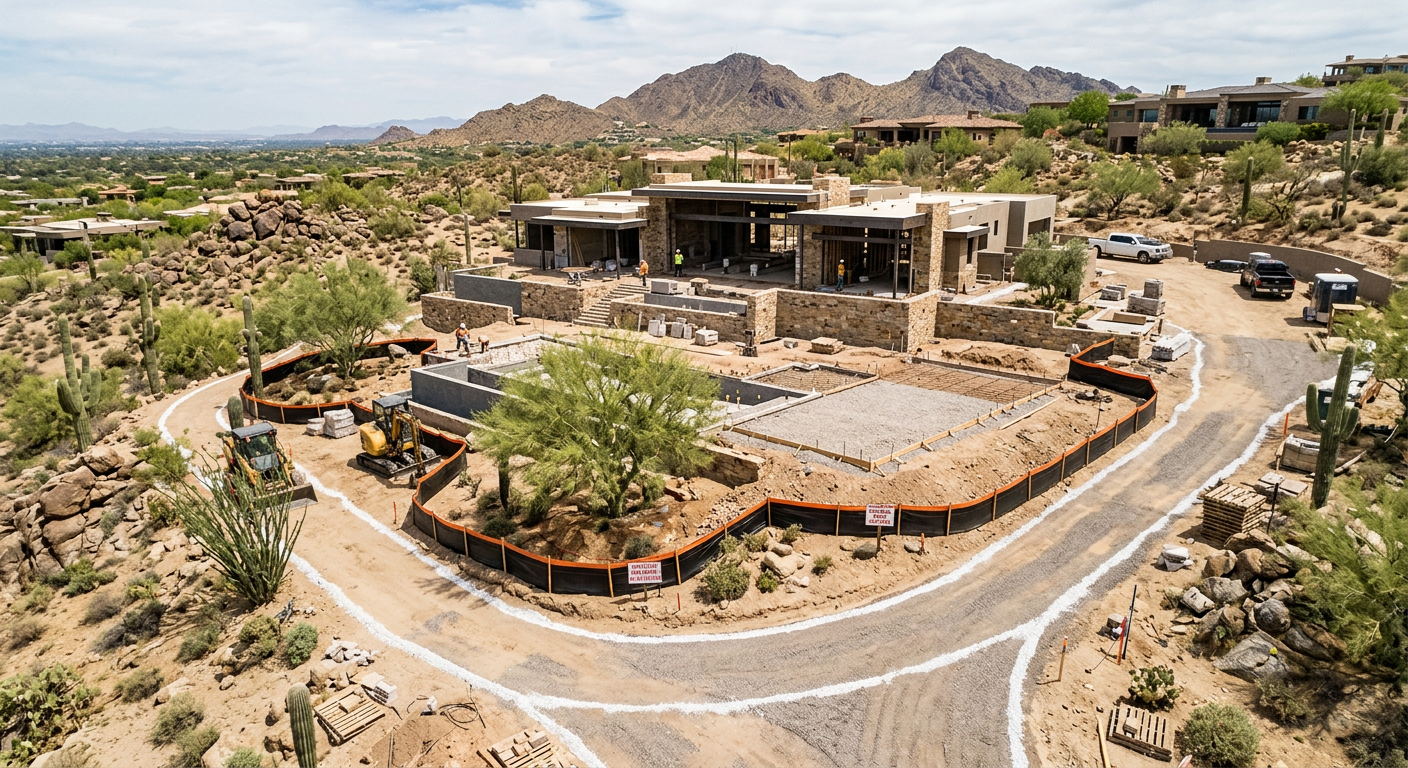
The Preservation Plan Should Lead the Construction Sequence
A preservation plan is more than a tree inventory. It is a working set of decisions that tells the entire project team what must remain undisturbed and how the work will proceed around it.
For a high-end residential project, we recommend making tree protection part of the early coordination process. The plan should identify trees to preserve, document their condition, establish protection limits, and show how construction access can be managed without treating the root zone as extra storage space.
Start With a Site and Tree Assessment
The first step is deciding which trees are viable, significant, and realistically compatible with the proposed home, addition, pool, outdoor living areas, and utility needs. Not every existing tree can or should remain, but that decision should be based on condition, location, species, anticipated construction impacts, and the long-term landscape plan.
This is where a landscape architect and qualified arborist can work together effectively. The arborist evaluates tree health and preservation feasibility. We evaluate how those trees can inform architecture, views, circulation, shade, drainage, irrigation, planting composition, and the outdoor experience of the property.
For homeowners considering an extensive renovation or new residence, our residential landscape architecture services are designed to coordinate the landscape with the architecture, hardscape, planting, irrigation, lighting, pools, and outdoor living spaces.
Fence the Root Zone Before Mobilization
Temporary fencing is one of the clearest, most practical preservation tools on a construction site. It needs to be installed before demolition, grading, deliveries, or equipment traffic begins, not after the work area has already been disturbed.
The University of Arizona's tree and plant protection standards define the tree protection zone around an individual tree by its drip line unless plans indicate otherwise. The same standards call for temporary fencing, three inches of organic mulch, and keeping materials, debris, vehicle traffic, and foot traffic outside the protected area.
A fence only works if the project team respects it. The construction documents should clearly identify the protection zone, and the builder should communicate its importance during site meetings with every trade that enters the property.
Coordinate Utilities, Drainage, and Hardscape Early
The most expensive preservation problems are often created by late changes. A new utility trench, drainage swale, retaining wall, pool line, gate footing, or expanded driveway can cut directly through a root zone if it was not coordinated in the early plans.
Where work must occur near preserved trees, the solution may include rerouting utilities, boring beneath protected roots, hand excavation, air excavation, carefully managed root pruning, or redesigning a hardscape edge. These options are far more realistic when preservation requirements are part of the project schedule before installation begins.
Our landscape architecture services include site planning, planting and irrigation design, construction documents, and construction administration. Those services help create a coordinated record of design intent so the landscape is not left to be resolved through field decisions alone.
Grading, Compaction, and Irrigation Can Decide a Tree's Future
Protecting the visible trunk is not enough. The lasting health of a preserved tree depends on keeping its root environment stable through excavation, grading, water changes, and heavy activity around the site.
Avoid Soil Compaction and Material Storage
Compaction reduces the air spaces roots need for healthy growth. Repeated equipment traffic, parked vehicles, stockpiled stone, dumpsters, and construction materials can all change soil conditions beneath a canopy.
A mature tree's protected area should never become the convenient place to stage materials. Establish a separate staging plan for deliveries, debris, portable facilities, and equipment, then make it clear on the site plan and during construction coordination.
Treat Grade Changes With Care
Even a finished landscape that looks polished can create hidden problems if soil elevations change abruptly around a preserved tree. Excess fill can smother surface roots, while cuts can remove roots or expose them to drying and injury.
When a new patio, pool deck, wall, or driveway must transition near a tree, the landscape plan should study finished grades before work starts. Retaining elements, bridging details, adjusted paving limits, and carefully designed drainage may protect a tree more effectively than attempting to correct damage after the hardscape is installed.
Maintain Tree-Specific Water During Construction
Construction frequently disrupts existing irrigation. A line is capped, an old controller is removed, or a temporary water schedule is overlooked while crews focus on the building work. For a preserved desert tree, that interruption can add drought stress to root disturbance and soil compaction.
We recommend a tree-specific irrigation plan that identifies who is responsible for watering, how water will reach the active root zone, and how irrigation will change as construction progresses. This should be coordinated with temporary access, drainage, and the final irrigation design rather than handled as an informal task.
Preserve Trees Without Compromising the Home Design
Tree preservation does not require settling for an awkward site plan. It requires using the landscape as a design partner early enough to make informed choices.
A preserved tree can frame an arrival court, shade a terrace, soften a view from a great room, create privacy near an outdoor living area, or provide a natural focal point in a courtyard. In Paradise Valley, where architecture, mountain views, and mature desert vegetation often define the character of a property, these decisions can make the completed home feel more established and more connected to its setting.
Janet Waibel, RLA, Owner and Principal of Waibel & Associates Landscape Architecture, brings experience in planning, design, irrigation, sustainable landscapes, and construction coordination. Her work emphasizes thoughtful landscape solutions that support the architecture while respecting valuable site resources.
Planning a Custom Paradise Valley Project?
If you are building or remodeling a home in Paradise Valley, early landscape planning can help protect mature trees while coordinating grading, drainage, hardscape, irrigation, access, and outdoor living areas.
Call (480) 893-3849 to discuss your project with Waibel & Associates, or request a landscape architecture consultation.
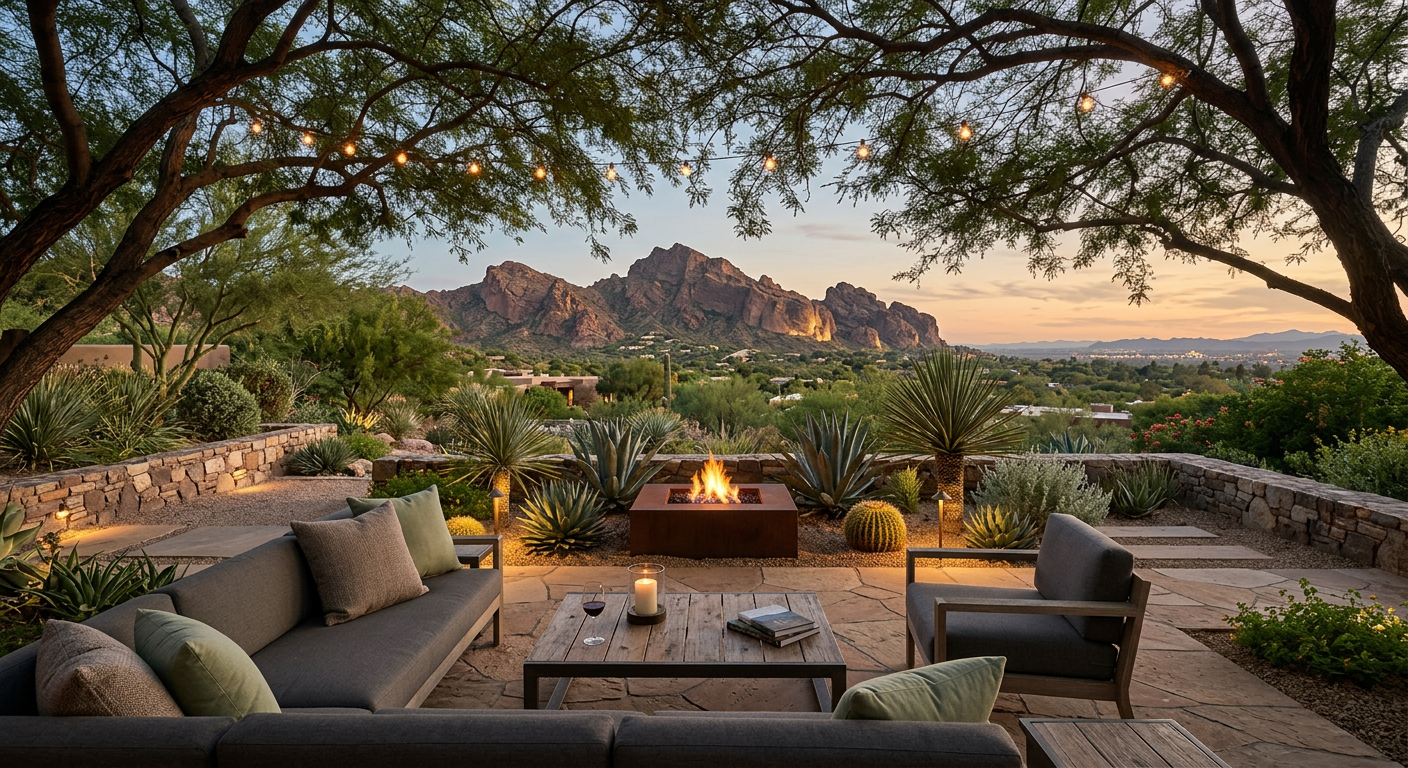
Construction Administration Keeps the Preservation Plan Active
A well-drawn preservation plan still needs observation during construction. Conditions change in the field, trades arrive at different times, and details that seem small on paper can have major consequences around a mature tree.
Construction administration gives the project team a process for reviewing site conditions, answering questions, and maintaining accountability as the work progresses. It can help prevent avoidable conflicts, such as a last-minute trench through a root zone or a proposed grade adjustment that affects a tree selected for preservation.
For projects where long-term landscape performance matters, this level of coordination is particularly valuable. We can help homeowners, architects, builders, and property managers align the completed installation with the original preservation and design intent.
Janet's published work also supports this broader approach to durable landscapes. Homeowners and industry professionals can explore landscape architecture books by Janet Waibel for resources related to sustainable landscape management and landscape construction.
Common Questions About Tree Preservation During Construction
Can a mature tree survive construction near its trunk?
It can, but survival depends on how much of the root zone remains protected. Fencing, limited access, controlled excavation, stable grades, and appropriate irrigation are far more important than trunk wrapping alone.
When should a tree preservation plan be prepared?
It should be prepared during early site planning, before the building footprint, pool, driveway, utilities, and grading are finalized. Early planning gives the design team more options and reduces costly field changes.
Does temporary fencing actually protect a tree?
Yes, when the fencing defines a meaningful root protection area and is enforced throughout the project. It prevents common causes of damage, including compaction, material storage, excavation, and repeated crew access.
Can utilities be installed near a protected tree?
Sometimes, but conventional trenching may not be appropriate. Depending on the tree and site conditions, the team may consider rerouting, boring, hand excavation, or air excavation to reduce root damage.
Can a pool be built near mature desert trees?
Possibly, but the pool shell, deck, drainage, plumbing, access, and excavation limits must be evaluated together. A tree preservation assessment should happen before the pool location is locked into the design.
Who should be involved in protecting trees on a luxury home project?
The homeowner, architect, builder, landscape architect, and qualified arborist should coordinate early. Each professional contributes a different perspective on tree health, site feasibility, design quality, and construction execution.
A Preserved Tree Is a Long-Term Design Investment
The most successful Paradise Valley landscapes do not treat trees as obstacles to work around at the last minute. They recognize mature trees as assets that can shape the architecture, improve outdoor comfort, and give a newly completed property an immediate sense of place.
By identifying valuable trees early, protecting root zones before mobilization, coordinating grading and utilities, and maintaining oversight through construction, we can reduce unnecessary risk while creating a more enduring landscape. The result is a property that feels intentional from the first view at the street to the most private outdoor room.
Talk With an Experienced Arizona Landscape Architect
For a custom home, major remodel, outdoor living environment, irrigation upgrade, or sustainable landscape renovation, Waibel & Associates can help create a landscape plan that protects valuable site features and complements your property's architecture.
Call (480) 893-3849 or contact Waibel & Associates for a landscape architecture consultation.
About Waibel & Associates Landscape Architecture
Waibel & Associates Landscape Architecture is an Arizona landscape architecture firm led by Janet Waibel, RLA, Owner and Principal. The firm provides custom residential landscape architecture, sustainable landscape design, irrigation planning, tree preservation, outdoor living design, site planning, construction documentation, and professional landscape consulting throughout Tempe, Scottsdale, Paradise Valley, Phoenix, North Scottsdale, Carefree, Cave Creek, and surrounding Arizona communities.
Waibel & Associates focuses on thoughtful, high-quality landscapes that complement the architecture of each property while incorporating appropriate plant materials, water-efficient strategies, irrigation technology, and long-term planning.
Janet Waibel is also a published author whose books provide educational resources on sustainable landscape management and landscape construction.
Planning a custom residential or professional landscape project?
Call (480) 893-3849
or
Contact Waibel & Associates →
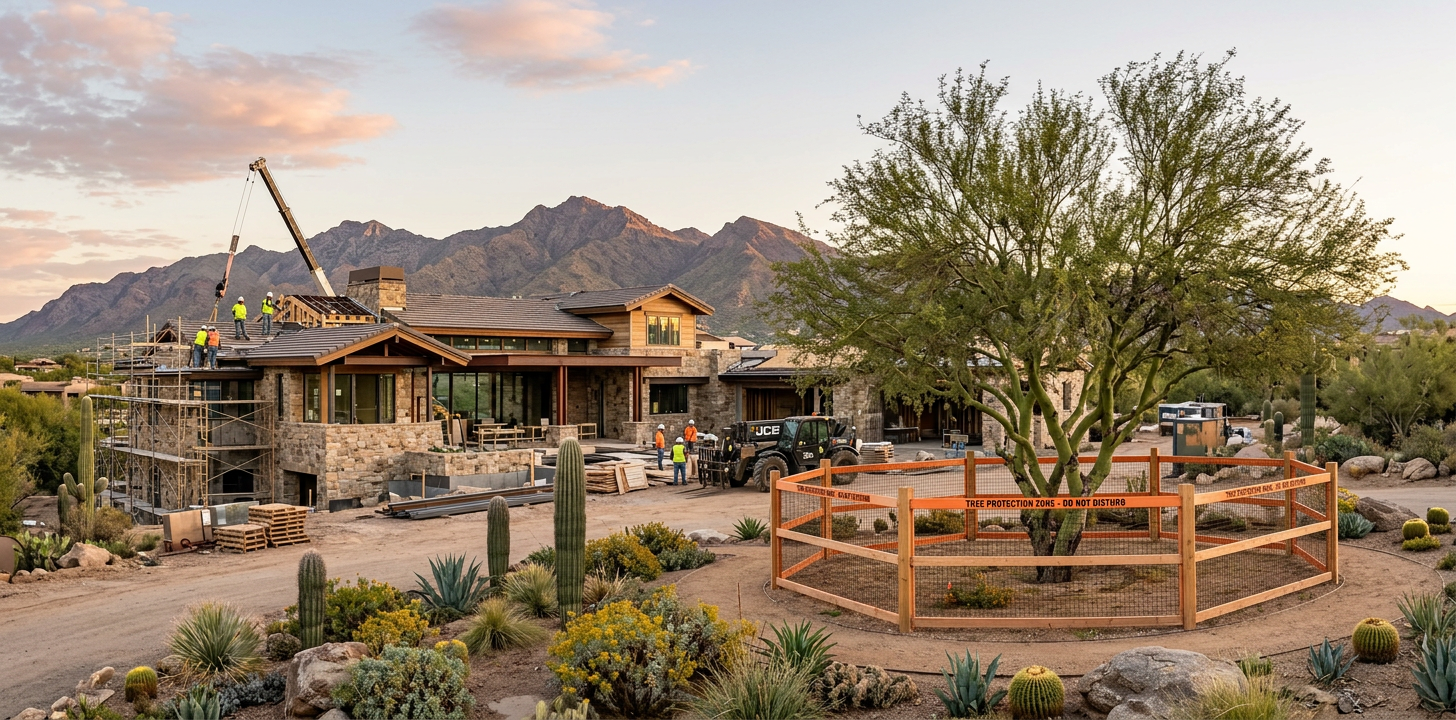
Tree Preservation During Construction Arizona for Luxury Homes
A mature mesquite, palo verde, ironwood, or specimen tree can be one of the most valuable design assets on an Arizona property. It provides scale, shade, seasonal character, and an immediate sense that a custom home belongs on its site. Yet those same trees can be seriously compromised when preservation is treated as a final landscape detail instead of an early construction decision.
For custom homes and major renovations, tree preservation during construction Arizona projects require coordinated site planning before grading, trenching, demolition, material staging, or access routes are established. We recommend identifying trees worth retaining at the very beginning, then designing the building footprint, hardscape, drainage, utilities, irrigation, and construction operations around realistic protection requirements.
Why Mature Trees Need a Construction Protection Plan
Construction damage is often hidden below ground. Heavy vehicles can compact soil, excavation can sever essential roots, stockpiled materials can alter drainage, and even a small grade change can reduce the oxygen available around the root system. A tree may look acceptable when the project is completed, then decline during the following growing seasons.
The University of Arizona Cooperative Extension cautions that construction-related decline may not become apparent for one or two years. Its guidance also notes that raising soil against an established tree's trunk can lead to decline or mortality, which is why preserving original grade at the base of the tree is so important. (extension.arizona.edu)
For high-end residential properties in Scottsdale, Paradise Valley, Phoenix, Tempe, Carefree, and Cave Creek, preservation is about more than saving an existing plant. It is about retaining the shade, maturity, privacy, and distinctive site character that cannot be replaced quickly by new nursery material.
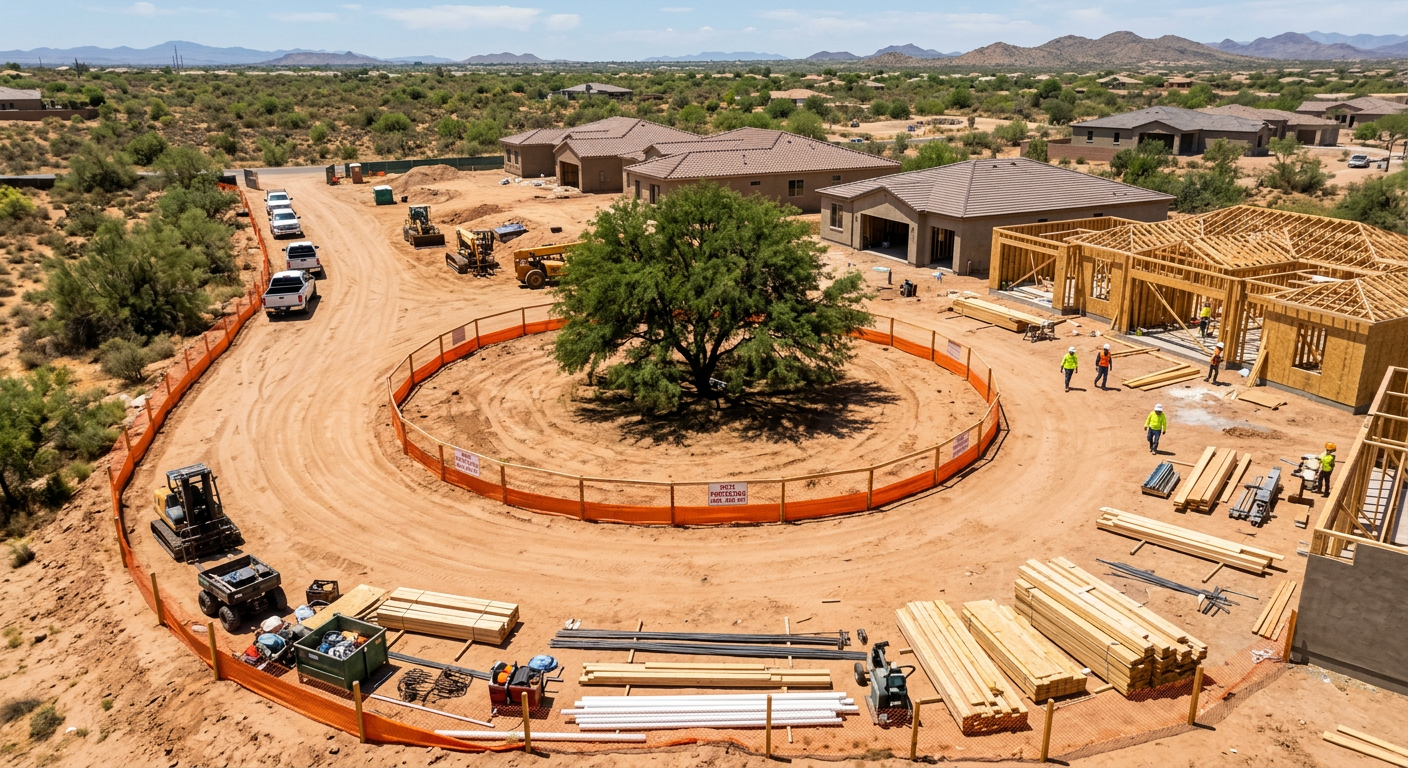
A Practical Tree Preservation During Construction Arizona Strategy
An effective plan should be clear enough for the homeowner, architect, builder, grading contractor, pool contractor, utility trades, and landscape team to follow. It should also be specific to each tree and each part of the site.
Begin With a Tree Inventory and Feasibility Review
We start by documenting existing trees, their general condition, canopy spread, trunk location, visible root flare, relationship to proposed structures, and likely conflicts with grading or utilities. Not every tree should be retained simply because it is mature. A sound assessment considers health, structure, species, future space, irrigation history, and whether the proposed work can occur without creating unacceptable risk.
This early review allows the project team to make informed decisions before the architectural plan or driveway alignment becomes difficult to adjust. It also creates a clear distinction between trees designated to remain, trees that may be relocated or salvaged, and trees planned for removal.
Establish a Real Tree Protection Zone
A tree protection zone is the portion of the site kept free from harmful construction activity. In many cases, the canopy drip line is a useful starting point, but the final protection area should be based on the tree, site conditions, and proposed work rather than a one-size-fits-all rule.
The University of Arizona's construction standards define the protection zone around retained trees by the drip line or perimeter drip line unless plans indicate otherwise. Its specifications call for temporary fencing, mulch, regular irrigation, and protection from equipment, debris, runoff, and soil compaction. (pdc.ufs.arizona.edu)
The fence must be a true physical barrier, not ribbon tied around the trunk. Once installed, the protected area should not become a shortcut, parking area, storage yard, washout location, lunch area, or staging zone.
Coordinate Utilities, Drainage, and Hardscape Before Work Begins
Many tree losses begin with a late utility decision. A new gas line, pool line, electrical conduit, drain, retaining wall, or footing can force excavation through a root zone after the building design appears complete.
We coordinate utility routes and sleeves early, looking for opportunities to avoid protected areas, consolidate utility runs, or use methods that reduce root disturbance where feasible. Drainage also matters. Directing runoff, dewatering discharge, or concentrated irrigation toward a retained tree can be as damaging as drying the root zone.
Paving requires the same level of care. The University of Arizona Cooperative Extension explains that concrete and asphalt limit oxygen exchange to roots more than permeable materials such as gravel, flagstone, and wood chips. Where paving near a retained tree is necessary, the design team should evaluate root impacts, aeration, drainage, and irrigation as an integrated system. (extension.arizona.edu)
Protect Existing Grade and the Root Flare
Grade changes are one of the most common and most underestimated threats to mature trees. Filling soil against the lower trunk can bury the root flare and reduce the gas exchange that established roots need. Cutting grade can remove feeder roots, destabilize larger roots, and expose the remaining root system to heat and drying.
A thoughtful site plan may preserve grade near a valuable tree while transitioning the surrounding landscape with carefully designed walls, slopes, drains, or paving elevations. This is one reason landscape architecture should be part of custom home planning before site work starts.
Maintain Water and Monitor Throughout Construction
Arizona trees need a deliberate water plan during construction, especially when existing irrigation is disrupted. Deep, appropriately spaced watering should support the active root area without keeping the trunk constantly wet. The Arizona Department of Forestry and Fire Management recommends deep, slow watering to approximately 12 to 18 inches and notes that irrigation needs should evolve as the tree and root zone expand. (dffm.az.gov)
We also recommend regular inspections. If fencing is moved, roots are exposed, branches are damaged, or soil is placed within the protection zone, the issue should be addressed immediately. Waiting until landscape installation is underway is usually too late.
Common Mistakes That Put Retained Trees at Risk
Treating Orange Fencing as the Entire Plan
Fencing is essential, but it is only one part of protection. The construction team still needs defined access routes, staging areas, utility coordination, irrigation responsibility, inspection checkpoints, and a process for resolving conflicts in the field.
Allowing Materials or Equipment Inside the Root Zone
Brick pallets, dumpsters, soil piles, portable restrooms, and repeated equipment traffic all create avoidable risk. Soil compaction reduces the pore space that roots need for air and water movement, while spills and debris can damage the soil environment.
Cutting Roots Without a Qualified Review
Roots should not be torn with a backhoe or cut casually to accommodate a field adjustment. If excavation encounters roots near a tree intended for preservation, the project team should pause and evaluate options. Clean root cuts, alternative routing, and specialized methods may reduce harm, but every decision should account for the tree's overall condition and remaining root area.
Removing Irrigation Too Soon
Demolition and rough grading often interrupt an older irrigation system. Without a temporary watering plan, a retained tree can face severe moisture stress during the hottest and dustiest stage of construction.
Assuming a Tree Is Safe Because Its Canopy Is Intact
A healthy-looking canopy does not prove that the root system escaped damage. Root injury, compaction, grade changes, and altered drainage can create symptoms well after the construction team has left the site.
Planning a Custom Landscape Project With Existing Trees?
When you are building or remodeling in Tempe, Scottsdale, Paradise Valley, Phoenix, or the surrounding area, early landscape planning can help protect high-value trees while coordinating outdoor living, hardscape, irrigation, drainage, and planting with the architecture.
For a complete project approach, explore our residential landscape architecture services and landscape architecture services. To discuss your site and project goals, call (480) 893-3849 or request a landscape architecture consultation.
How We Integrate Preservation Into Luxury Residential Design
At Waibel & Associates Landscape Architecture, we approach retained trees as design elements that influence the entire property. Janet Waibel, RLA, Owner and Principal, brings experience in site planning, irrigation design, construction documents, sustainable landscape planning, and construction administration to help project teams make preservation decisions before construction constraints take over.
That may mean shaping a courtyard around a mature shade tree, locating a drive away from a root zone, coordinating sleeves before hardscape installation, or adjusting planting and irrigation to support an existing canopy. The objective is not to preserve every tree at any cost. It is to make sound, well-documented decisions that protect trees with genuine long-term value to the property.
For homeowners, builders, property managers, and design professionals interested in stronger construction and landscape practices, explore landscape architecture books by Janet Waibel. Her published work on sustainable landscape management and landscape construction supports the careful planning that enduring Arizona landscapes require.
Questions Homeowners and Project Teams Ask
When should tree preservation planning begin for an Arizona custom home?
It should begin before the building footprint, driveway, pool, drainage, and utility routes are finalized. Earlier coordination provides more choices and reduces expensive redesigns after grading or excavation begins.
Can a mature tree survive construction near its roots?
Sometimes, but survival depends on the species, condition, extent of root disturbance, soil compaction, grade changes, irrigation, and follow-through during construction. A site-specific assessment is essential.
What is a tree protection zone?
It is a clearly designated area around a tree that is kept free from equipment, traffic, storage, excavation, and other harmful activity. The zone should be physically fenced and shown on construction documents.
Can we install a pool or patio near a retained tree?
Possibly, but the layout, excavation depth, paving type, drainage, and future maintenance access need careful evaluation. Some projects require a revised design to avoid unacceptable root loss or soil compaction.
Why do trees decline after construction is finished?
Damage often occurs underground and may not be visible immediately. Root loss, compacted soil, disrupted irrigation, altered drainage, and buried root flares can affect tree health gradually.
Should irrigation remain active around a protected tree?
Yes, retained trees need an intentional temporary and permanent irrigation strategy. Water should support the active root area while avoiding chronic moisture against the trunk.
Does Phoenix require tree protection plans for all residential projects?
Requirements vary by property type, location, and approval process. Phoenix development review standards can require plant inventory, salvage, and tree protection documentation, including measures to protect critical root zones during construction. Single-family properties may be treated differently, so the applicable jurisdiction and project approvals should be reviewed early. (phoenix.gov)
Preserve What Gives the Property Its Character
The best time to protect a mature Arizona tree is before the first piece of equipment reaches the site. A clear preservation strategy can improve the long-term performance of the landscape, protect established shade, and help a custom home feel rooted in its setting from the day construction is complete.
Talk With an Experienced Arizona Landscape Architect
Whether you are planning a custom home, major residential remodel, outdoor living environment, irrigation upgrade, or sustainable landscape renovation, we can help create a thoughtful design that complements your property and long-term goals.
Call (480) 893-3849 or contact Waibel & Associates to discuss your project.
About Waibel & Associates Landscape Architecture
Waibel & Associates Landscape Architecture is an Arizona landscape architecture firm led by Janet Waibel, RLA, Owner and Principal. The firm provides custom residential landscape architecture, sustainable landscape design, irrigation planning, tree preservation, outdoor living design, site planning, construction documentation, and professional landscape consulting throughout Tempe, Scottsdale, Paradise Valley, Phoenix, North Scottsdale, Carefree, Cave Creek, and surrounding Arizona communities.
Waibel & Associates focuses on thoughtful, high-quality landscapes that complement the architecture of each property while incorporating appropriate plant materials, water-efficient strategies, irrigation technology, and long-term planning.
Janet Waibel is also a published author whose books provide educational resources on sustainable landscape management and landscape construction.
Planning a custom residential or professional landscape project?
Call (480) 893-3849
or
Contact Waibel & Associates →
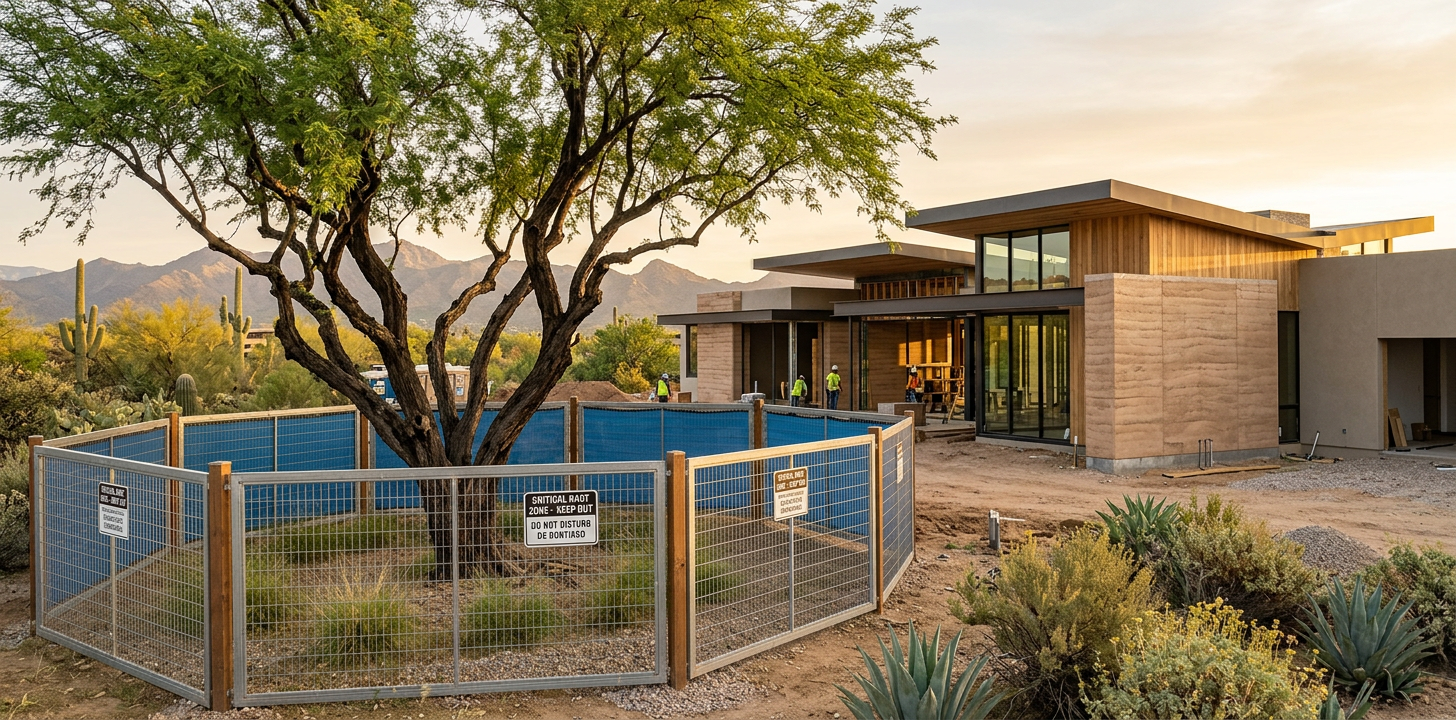
A mature tree can be one of the most valuable features on a custom residential site, yet it is also surprisingly easy to damage before the home is framed. Heavy equipment, trenching, grade changes, material staging, and repeated traffic can affect roots that extend well beyond the visible trunk and canopy.
For homeowners, builders, and architects, tree preservation during construction is not a final landscape detail. It is an early site-planning decision that influences building placement, utilities, drainage, hardscape layout, and the long-term character of the property. When we plan it well, mature trees can remain a defining part of a refined Arizona landscape instead of becoming an expensive loss after construction is complete.
Why Mature Trees Need Protection Before Construction Begins
Trees do not respond to construction damage like a broken paver or scratched wall. Root loss, compacted soil, and changes to drainage may not show obvious symptoms immediately. A tree can appear healthy through the completion of a project, then decline over the following seasons as its root system struggles to support the canopy.
The most common construction-related injuries are root severance, soil compaction, and trunk damage. The National Park Service guidance on protecting trees during construction also emphasizes that storage, debris, excavation, and equipment traffic inside the protected area can compromise root health.
For a luxury home in Scottsdale, Paradise Valley, Phoenix, or the East Valley, preserving an established mesquite, ironwood, palo verde, or other appropriate mature tree can provide something new planting cannot duplicate quickly: scale, shade, visual permanence, and a meaningful connection to the site.
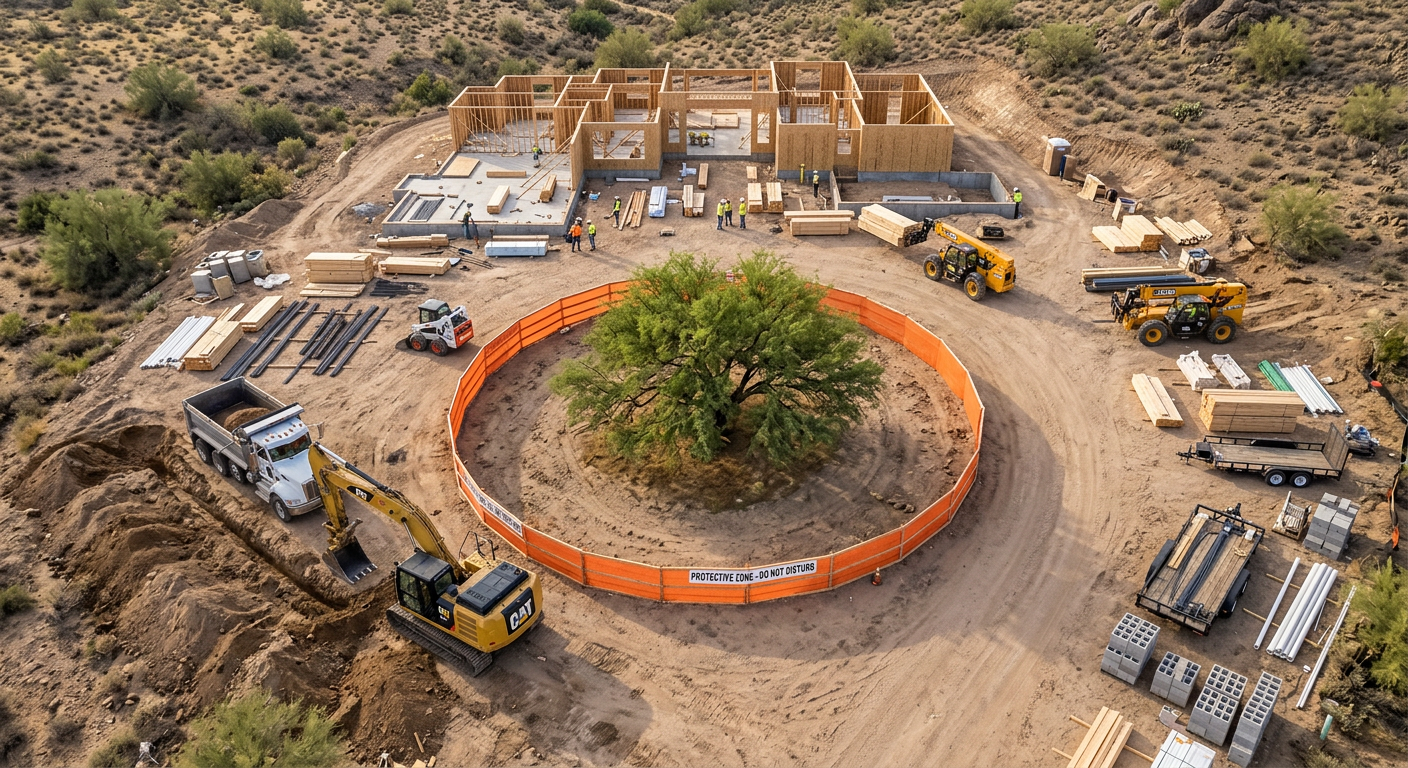
The Tree Protection Zone Is Not a Suggestion
A tree protection zone is the designated area around a retained tree where construction activity is tightly controlled or prohibited. The exact boundary should be determined by the tree species, size, condition, root structure, proposed work, and local requirements. We do not recommend relying on a one-size-fits-all measurement when a valuable tree is involved.
As a useful planning benchmark, the University of Massachusetts Building and Construction Technology program notes that a healthy tree will probably survive when at least 60 percent of its roots remain unaffected by construction. That is why protection must reach beyond the trunk. The real asset is the living soil and root system below grade.
A Practical Tree Preservation Plan for Custom Home Projects
A successful plan is created before clearing, grading, or utility work begins. It should be part of the overall site strategy, not a last-minute instruction taped to a fence.
Start With an Honest Tree Assessment
Not every tree should be saved. We first need to understand each tree's health, structural condition, species, existing stress, and ability to tolerate nearby construction. An arborist can help evaluate high-value trees, identify hazard concerns, and determine which specimens are genuinely viable candidates for preservation.
This matters because forcing a poorly located or declining tree into a new construction plan can create safety, maintenance, and design problems later. Thoughtful preservation means retaining the right trees, in the right locations, with enough protected space to succeed.
Coordinate the Home Footprint and Outdoor Program
The biggest opportunity comes early, when the home footprint, pool, guest house, driveway, walls, outdoor kitchen, and utility routes can still shift. Even modest adjustments to these elements may protect a major root zone and preserve the tree that gives the property its character.
At Waibel & Associates Residential Landscape Architecture, we approach the exterior environment as an extension of the home. That means mature trees, shade patterns, gathering areas, paving, planting, lighting, drainage, and irrigation should be planned together rather than resolved as disconnected parts of the project.
Install Real Protection Fencing Before Site Work
Protection fencing should be sturdy, highly visible, and installed before demolition, grading, clearing, or deliveries begin. It must stay in place throughout the work unless a qualified professional authorizes a specific, carefully managed exception.
Inside that protected zone, establish clear rules:
- No vehicle or equipment traffic
- No soil stockpiles, gravel, lumber, or material storage
- No concrete washout or debris disposal
- No routine trenching or excavation
- No grade changes without professional review
- No casual fence relocation for convenience
The fence is not merely a visual reminder. It helps protect the soil structure, root system, trunk, and lower canopy from the routine decisions that happen on an active jobsite.
Plan Utilities and Drainage With Trees in Mind
Utility trenches are among the most common ways a construction project damages roots. Coordinate water, sewer, electric, gas, drainage, and irrigation routes early so that lines avoid protected root areas whenever feasible. When work near roots is unavoidable, the approach may need to change from conventional excavation to methods that reduce damage.
Drainage also deserves attention. Raising grade can reduce the oxygen available to roots, while lowering grade can remove critical root mass and alter the tree's stability. The National Park Service advises keeping grade changes near a tree's dripline to a minimum, reinforcing why grading should never be treated as separate from tree protection.
Specify Construction-Phase Oversight
Even an excellent plan can fail when no one confirms that it is followed. We recommend identifying who is responsible for fence inspections, documenting approved access points, communicating restrictions at contractor meetings, and reviewing any unexpected field conditions before action is taken.
Construction administration is especially valuable on detailed custom projects because it connects design intent to what is actually built. Our landscape architecture services include site planning, planting and irrigation design, construction documentation, and construction administration that help teams make informed decisions as the work progresses.
Common Mistakes That Put Preserved Trees at Risk
The most damaging actions are often practical shortcuts, not dramatic mistakes. A crew needs a convenient place to park a lift, a contractor needs room for materials, or a trench route changes in the field. Without a clear plan and supervision, the protected area becomes the easiest place to use.
Treating the Dripline as the Entire Root System
The canopy edge is a helpful visual cue, but roots may extend beyond it. A tree's needs vary with species, site history, soil, age, and form. For that reason, a protection zone should be based on an informed evaluation, not just a quick measurement from the branches.
Compacting Soil Around the Tree
Heavy equipment can compress the spaces in soil that hold air and water. Once compaction occurs, correcting it near established roots can be difficult and risky. Keeping traffic and storage outside the protected zone is one of the simplest and most effective preservation measures.
Cutting Roots Without a Plan
Roots are sometimes encountered during excavation for walls, paving, footings, pools, or utilities. Ripping through them with a machine can cause unnecessary injury and leave the tree vulnerable. If roots must be addressed, pause the work and involve the appropriate professional before deciding how to proceed.
Waiting Until the Landscape Installation Phase
By the time planting, irrigation, and finishing work begin, the major damage may already be done. Mature-tree preservation belongs in site planning and construction documents, then continues through active construction and post-construction care.
Planning a Custom Landscape Project?
If you are building or remodeling a home in Tempe, Scottsdale, Paradise Valley, Phoenix, Carefree, Cave Creek, or the East Valley, early landscape planning can help protect mature trees while creating a cohesive outdoor environment. We can coordinate preservation goals with architecture, hardscape, water-efficient planting, irrigation, and outdoor living features.
Request a Landscape Architecture Consultation or call (480) 893-3849 to discuss your project.
Protecting Trees After Construction Ends
The work does not end when the fence comes down. Trees affected by nearby construction may need monitoring, appropriate irrigation, mulch, and an adjustment period while roots recover. Avoid assuming that an established tree will thrive on the same watering schedule as newly installed landscape materials.
In the Sonoran Desert, irrigation planning is particularly important. A preserved tree may need thoughtful seasonal water management that responds to the species, existing root conditions, rainfall, and changes to the surrounding hardscape. This is where landscape architecture and irrigation design work together to support both water responsibility and long-term plant health.
Janet Waibel, RLA, brings experience in planning, construction, irrigation, and sustainable landscapes to this kind of coordination. Her published resources also provide useful context for homeowners and project teams who want to understand the relationship between construction quality, landscape performance, and long-term care. Explore Landscape Architecture Books by Janet Waibel.
Frequently Asked Questions
Can mature trees be preserved during a home remodel?
Yes, when preservation is evaluated early and the design respects the tree's protected root area. The sooner the landscape architect, architect, builder, and arborist coordinate, the more options the team has for protecting valuable trees.
When should tree preservation planning begin?
It should begin before the home footprint, grading, utilities, driveway, pool, and outdoor spaces are finalized. Planning before site disturbance is far more effective than trying to repair damage after construction begins.
What damages trees most during construction?
The most common risks are root cutting, soil compaction, trunk damage, improper grade changes, material storage, and altered drainage. Several small impacts can be just as harmful as one major event.
Can a tree survive if roots are cut for a utility line?
Possibly, but the outcome depends on the tree, the amount and location of root loss, its health, soil conditions, and the quality of follow-up care. Any excavation near a retained tree should be reviewed before the work proceeds.
Do Arizona desert trees need protection during construction?
Yes. Desert-adapted trees are not immune to damage from excavation, compaction, grade changes, or disrupted irrigation. Their suitability for a desert climate does not eliminate their need for protected roots and healthy soil.
Who should coordinate tree protection on a custom project?
A landscape architect can coordinate preservation within the overall site and outdoor-living plan, while an arborist evaluates tree health and protection needs. The builder and all trades also need clear construction documents and jobsite expectations.
Preserve the Site Character You Cannot Recreate Quickly
The best construction projects do more than add a beautiful home. They respect the mature landscape elements that give the property identity, shade, and a sense of belonging in its setting. With early evaluation, clear protection boundaries, smart utility and grading decisions, and on-site follow-through, mature trees have a far better chance of becoming lasting assets to the finished landscape.
Talk With an Experienced Arizona Landscape Architect
Whether you are planning a custom home, a major residential remodel, a pool environment, or a comprehensive landscape renovation, we can help create a site plan that protects key trees and complements the architecture of your property. Waibel & Associates Landscape Architecture serves discerning clients throughout Tempe, Scottsdale, Paradise Valley, Phoenix, North Scottsdale, Carefree, Cave Creek, and surrounding Arizona communities.
Call (480) 893-3849 or contact Waibel & Associates for a landscape architecture consultation.
About Waibel & Associates Landscape Architecture
Waibel & Associates Landscape Architecture is an Arizona landscape architecture firm led by Janet Waibel, RLA, Owner and Principal. The firm provides custom residential landscape architecture, sustainable landscape design, irrigation planning, tree preservation, outdoor living design, site planning, construction documentation, and professional landscape consulting throughout Tempe, Scottsdale, Paradise Valley, Phoenix, North Scottsdale, Carefree, Cave Creek, and surrounding Arizona communities.
Waibel & Associates focuses on thoughtful, high-quality landscapes that complement the architecture of each property while incorporating appropriate plant materials, water-efficient strategies, irrigation technology, and long-term planning.
Janet Waibel is also a published author whose books provide educational resources on sustainable landscape management and landscape construction.
Planning a custom residential or professional landscape project?
Call (480) 893-3849
or
Contact Waibel & Associates