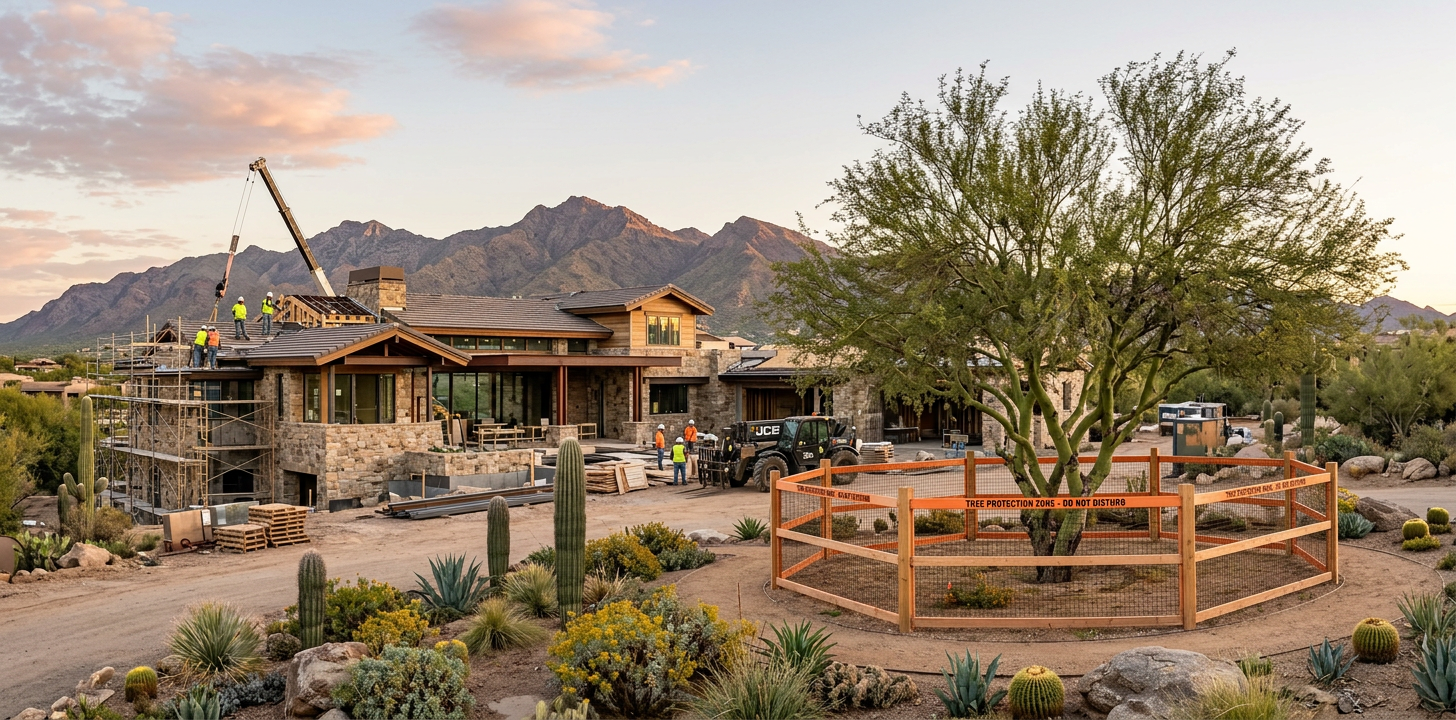
Tree Preservation During Construction Arizona for Luxury Homes
A mature mesquite, palo verde, ironwood, or specimen tree can be one of the most valuable design assets on an Arizona property. It provides scale, shade, seasonal character, and an immediate sense that a custom home belongs on its site. Yet those same trees can be seriously compromised when preservation is treated as a final landscape detail instead of an early construction decision.
For custom homes and major renovations, tree preservation during construction Arizona projects require coordinated site planning before grading, trenching, demolition, material staging, or access routes are established. We recommend identifying trees worth retaining at the very beginning, then designing the building footprint, hardscape, drainage, utilities, irrigation, and construction operations around realistic protection requirements.
Why Mature Trees Need a Construction Protection Plan
Construction damage is often hidden below ground. Heavy vehicles can compact soil, excavation can sever essential roots, stockpiled materials can alter drainage, and even a small grade change can reduce the oxygen available around the root system. A tree may look acceptable when the project is completed, then decline during the following growing seasons.
The University of Arizona Cooperative Extension cautions that construction-related decline may not become apparent for one or two years. Its guidance also notes that raising soil against an established tree's trunk can lead to decline or mortality, which is why preserving original grade at the base of the tree is so important. (extension.arizona.edu)
For high-end residential properties in Scottsdale, Paradise Valley, Phoenix, Tempe, Carefree, and Cave Creek, preservation is about more than saving an existing plant. It is about retaining the shade, maturity, privacy, and distinctive site character that cannot be replaced quickly by new nursery material.
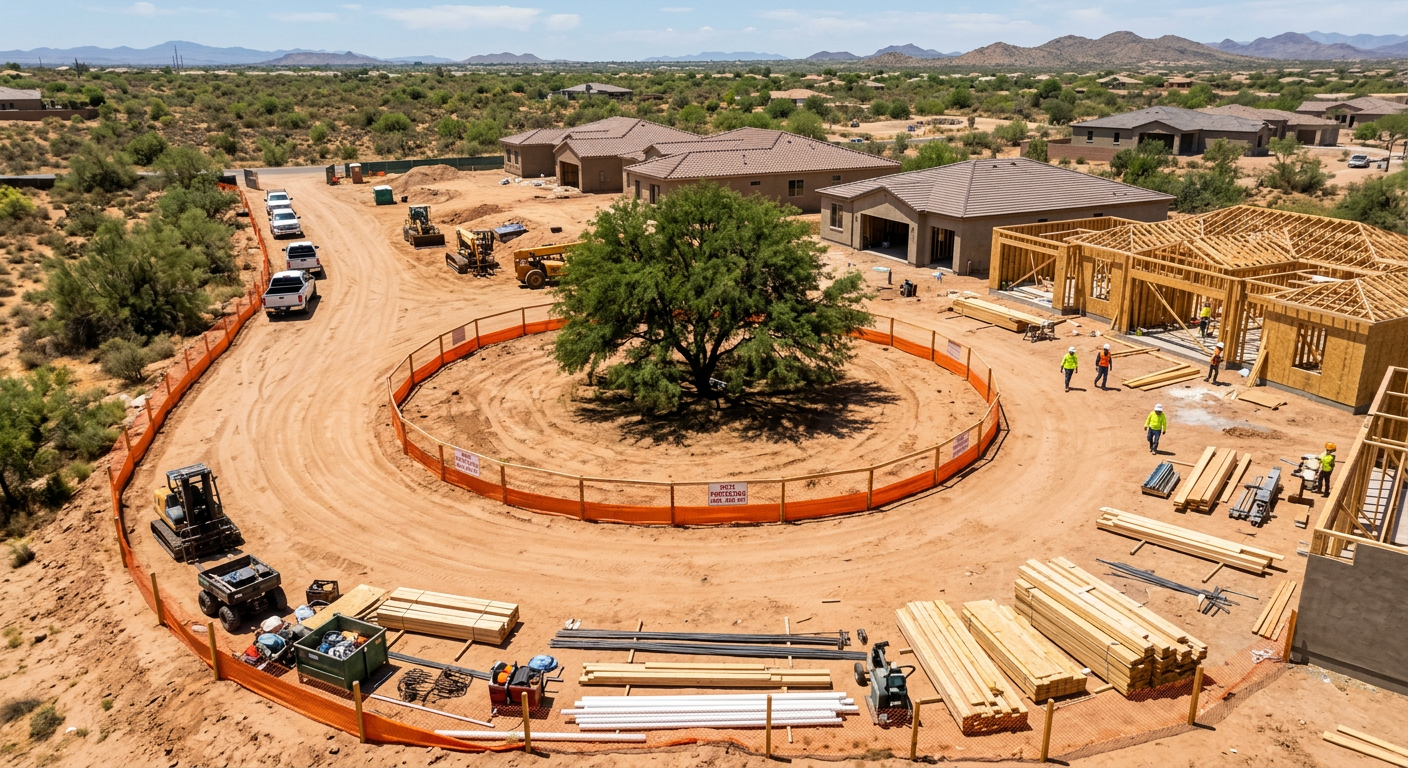
A Practical Tree Preservation During Construction Arizona Strategy
An effective plan should be clear enough for the homeowner, architect, builder, grading contractor, pool contractor, utility trades, and landscape team to follow. It should also be specific to each tree and each part of the site.
Begin With a Tree Inventory and Feasibility Review
We start by documenting existing trees, their general condition, canopy spread, trunk location, visible root flare, relationship to proposed structures, and likely conflicts with grading or utilities. Not every tree should be retained simply because it is mature. A sound assessment considers health, structure, species, future space, irrigation history, and whether the proposed work can occur without creating unacceptable risk.
This early review allows the project team to make informed decisions before the architectural plan or driveway alignment becomes difficult to adjust. It also creates a clear distinction between trees designated to remain, trees that may be relocated or salvaged, and trees planned for removal.
Establish a Real Tree Protection Zone
A tree protection zone is the portion of the site kept free from harmful construction activity. In many cases, the canopy drip line is a useful starting point, but the final protection area should be based on the tree, site conditions, and proposed work rather than a one-size-fits-all rule.
The University of Arizona's construction standards define the protection zone around retained trees by the drip line or perimeter drip line unless plans indicate otherwise. Its specifications call for temporary fencing, mulch, regular irrigation, and protection from equipment, debris, runoff, and soil compaction. (pdc.ufs.arizona.edu)
The fence must be a true physical barrier, not ribbon tied around the trunk. Once installed, the protected area should not become a shortcut, parking area, storage yard, washout location, lunch area, or staging zone.
Coordinate Utilities, Drainage, and Hardscape Before Work Begins
Many tree losses begin with a late utility decision. A new gas line, pool line, electrical conduit, drain, retaining wall, or footing can force excavation through a root zone after the building design appears complete.
We coordinate utility routes and sleeves early, looking for opportunities to avoid protected areas, consolidate utility runs, or use methods that reduce root disturbance where feasible. Drainage also matters. Directing runoff, dewatering discharge, or concentrated irrigation toward a retained tree can be as damaging as drying the root zone.
Paving requires the same level of care. The University of Arizona Cooperative Extension explains that concrete and asphalt limit oxygen exchange to roots more than permeable materials such as gravel, flagstone, and wood chips. Where paving near a retained tree is necessary, the design team should evaluate root impacts, aeration, drainage, and irrigation as an integrated system. (extension.arizona.edu)
Protect Existing Grade and the Root Flare
Grade changes are one of the most common and most underestimated threats to mature trees. Filling soil against the lower trunk can bury the root flare and reduce the gas exchange that established roots need. Cutting grade can remove feeder roots, destabilize larger roots, and expose the remaining root system to heat and drying.
A thoughtful site plan may preserve grade near a valuable tree while transitioning the surrounding landscape with carefully designed walls, slopes, drains, or paving elevations. This is one reason landscape architecture should be part of custom home planning before site work starts.
Maintain Water and Monitor Throughout Construction
Arizona trees need a deliberate water plan during construction, especially when existing irrigation is disrupted. Deep, appropriately spaced watering should support the active root area without keeping the trunk constantly wet. The Arizona Department of Forestry and Fire Management recommends deep, slow watering to approximately 12 to 18 inches and notes that irrigation needs should evolve as the tree and root zone expand. (dffm.az.gov)
We also recommend regular inspections. If fencing is moved, roots are exposed, branches are damaged, or soil is placed within the protection zone, the issue should be addressed immediately. Waiting until landscape installation is underway is usually too late.
Common Mistakes That Put Retained Trees at Risk
Treating Orange Fencing as the Entire Plan
Fencing is essential, but it is only one part of protection. The construction team still needs defined access routes, staging areas, utility coordination, irrigation responsibility, inspection checkpoints, and a process for resolving conflicts in the field.
Allowing Materials or Equipment Inside the Root Zone
Brick pallets, dumpsters, soil piles, portable restrooms, and repeated equipment traffic all create avoidable risk. Soil compaction reduces the pore space that roots need for air and water movement, while spills and debris can damage the soil environment.
Cutting Roots Without a Qualified Review
Roots should not be torn with a backhoe or cut casually to accommodate a field adjustment. If excavation encounters roots near a tree intended for preservation, the project team should pause and evaluate options. Clean root cuts, alternative routing, and specialized methods may reduce harm, but every decision should account for the tree's overall condition and remaining root area.
Removing Irrigation Too Soon
Demolition and rough grading often interrupt an older irrigation system. Without a temporary watering plan, a retained tree can face severe moisture stress during the hottest and dustiest stage of construction.
Assuming a Tree Is Safe Because Its Canopy Is Intact
A healthy-looking canopy does not prove that the root system escaped damage. Root injury, compaction, grade changes, and altered drainage can create symptoms well after the construction team has left the site.
Planning a Custom Landscape Project With Existing Trees?
When you are building or remodeling in Tempe, Scottsdale, Paradise Valley, Phoenix, or the surrounding area, early landscape planning can help protect high-value trees while coordinating outdoor living, hardscape, irrigation, drainage, and planting with the architecture.
For a complete project approach, explore our residential landscape architecture services and landscape architecture services. To discuss your site and project goals, call (480) 893-3849 or request a landscape architecture consultation.
How We Integrate Preservation Into Luxury Residential Design
At Waibel & Associates Landscape Architecture, we approach retained trees as design elements that influence the entire property. Janet Waibel, RLA, Owner and Principal, brings experience in site planning, irrigation design, construction documents, sustainable landscape planning, and construction administration to help project teams make preservation decisions before construction constraints take over.
That may mean shaping a courtyard around a mature shade tree, locating a drive away from a root zone, coordinating sleeves before hardscape installation, or adjusting planting and irrigation to support an existing canopy. The objective is not to preserve every tree at any cost. It is to make sound, well-documented decisions that protect trees with genuine long-term value to the property.
For homeowners, builders, property managers, and design professionals interested in stronger construction and landscape practices, explore landscape architecture books by Janet Waibel. Her published work on sustainable landscape management and landscape construction supports the careful planning that enduring Arizona landscapes require.
Questions Homeowners and Project Teams Ask
When should tree preservation planning begin for an Arizona custom home?
It should begin before the building footprint, driveway, pool, drainage, and utility routes are finalized. Earlier coordination provides more choices and reduces expensive redesigns after grading or excavation begins.
Can a mature tree survive construction near its roots?
Sometimes, but survival depends on the species, condition, extent of root disturbance, soil compaction, grade changes, irrigation, and follow-through during construction. A site-specific assessment is essential.
What is a tree protection zone?
It is a clearly designated area around a tree that is kept free from equipment, traffic, storage, excavation, and other harmful activity. The zone should be physically fenced and shown on construction documents.
Can we install a pool or patio near a retained tree?
Possibly, but the layout, excavation depth, paving type, drainage, and future maintenance access need careful evaluation. Some projects require a revised design to avoid unacceptable root loss or soil compaction.
Why do trees decline after construction is finished?
Damage often occurs underground and may not be visible immediately. Root loss, compacted soil, disrupted irrigation, altered drainage, and buried root flares can affect tree health gradually.
Should irrigation remain active around a protected tree?
Yes, retained trees need an intentional temporary and permanent irrigation strategy. Water should support the active root area while avoiding chronic moisture against the trunk.
Does Phoenix require tree protection plans for all residential projects?
Requirements vary by property type, location, and approval process. Phoenix development review standards can require plant inventory, salvage, and tree protection documentation, including measures to protect critical root zones during construction. Single-family properties may be treated differently, so the applicable jurisdiction and project approvals should be reviewed early. (phoenix.gov)
Preserve What Gives the Property Its Character
The best time to protect a mature Arizona tree is before the first piece of equipment reaches the site. A clear preservation strategy can improve the long-term performance of the landscape, protect established shade, and help a custom home feel rooted in its setting from the day construction is complete.
Talk With an Experienced Arizona Landscape Architect
Whether you are planning a custom home, major residential remodel, outdoor living environment, irrigation upgrade, or sustainable landscape renovation, we can help create a thoughtful design that complements your property and long-term goals.
Call (480) 893-3849 or contact Waibel & Associates to discuss your project.
About Waibel & Associates Landscape Architecture
Waibel & Associates Landscape Architecture is an Arizona landscape architecture firm led by Janet Waibel, RLA, Owner and Principal. The firm provides custom residential landscape architecture, sustainable landscape design, irrigation planning, tree preservation, outdoor living design, site planning, construction documentation, and professional landscape consulting throughout Tempe, Scottsdale, Paradise Valley, Phoenix, North Scottsdale, Carefree, Cave Creek, and surrounding Arizona communities.
Waibel & Associates focuses on thoughtful, high-quality landscapes that complement the architecture of each property while incorporating appropriate plant materials, water-efficient strategies, irrigation technology, and long-term planning.
Janet Waibel is also a published author whose books provide educational resources on sustainable landscape management and landscape construction.
Planning a custom residential or professional landscape project?
Call (480) 893-3849
or
Contact Waibel & Associates →