 Demo Demo
Choosing the right design professional can shape far more than a backyard. It can influence how your home relates to its site, how outdoor rooms feel in every season, how water is managed, and how confidently the project moves from concept to construction.
For Phoenix custom homes and major renovations, how to choose landscape architect phoenix is really a question of fit. We recommend looking beyond attractive photographs and selecting a licensed professional with a clear process, regional knowledge, technical coordination skills, and an approach that supports the architecture of your property.
How to Choose Landscape Architect Phoenix for Your Custom Home Project
A landscape architect should help you make better decisions before construction begins. The right professional considers grading, drainage, plant performance, irrigation, hardscape, lighting, outdoor living, views, privacy, construction detailing, and the relationship between the home and its setting.
Phoenix conditions make that integrated approach especially valuable. The U.S. Environmental Protection Agency reports that outdoor water use can reach as much as 60 percent of total household water use in arid regions. It also notes that inefficient irrigation can waste substantial amounts of water through evaporation, wind, runoff, and overwatering. EPA WaterSense provides useful context for why irrigation planning deserves a serious place in the design conversation.
Start With Licensure, Experience, and Scope
Not every person offering landscape design provides the same level of planning or technical service. A landscape architect is trained to analyze sites and develop coordinated design solutions. For a custom home, estate renovation, HOA improvement, or developer-led project, that distinction matters.
Ask each candidate about their Arizona registration, professional experience, and project types. Then clarify exactly what they provide. A strong scope may include site analysis, conceptual planning, planting design, irrigation design, hardscape layouts, material selection, construction documents, permitting coordination, cost awareness, and construction administration.
A good interview question is simple: “What do we receive at each phase?” The answer should be specific. You should understand whether the firm will provide a concept only, a complete buildable drawing set, installation oversight, or a combination of these services.
Look For Experience That Matches Your Project
A professional who excels at a small planting refresh may not be the best fit for a major residence with retaining walls, a pool environment, custom shade structures, mature trees, detailed paving, and multiple outdoor rooms. Match the scale and complexity of your project to the depth of the firm’s experience.
For example, homeowners building near Camelback Mountain may need careful attention to views, grade changes, heat exposure, and architectural materials. A large Paradise Valley renovation may require phased construction around an occupied home. A Phoenix infill project may need privacy, compact-space planning, and a clear connection between indoor and outdoor living.
How to Choose Landscape Architect Phoenix Based on Design Process
The best portfolio images are meaningful, but they should not be the only evidence you consider. Ask how the firm discovers your priorities and how it transforms them into a plan that can be built well.
A reliable process usually includes these stages:
- Site discovery: Existing trees, utilities, drainage patterns, sun exposure, access, views, soil conditions, and the architecture are evaluated.
- Programming: The team identifies how you want to use the property, from quiet seating areas and poolside entertaining to pet space, guest circulation, and family activity.
- Concept design: Alternative layouts help establish the broad composition and project direction before costly detailing begins.
- Design development: Materials, plants, lighting, water features, irrigation zones, and outdoor-living components become more defined.
- Construction documentation: Detailed plans communicate the intended work to installers and help create a more comparable bidding process.
- Construction support: The designer can help answer field questions and protect the design intent as work progresses.
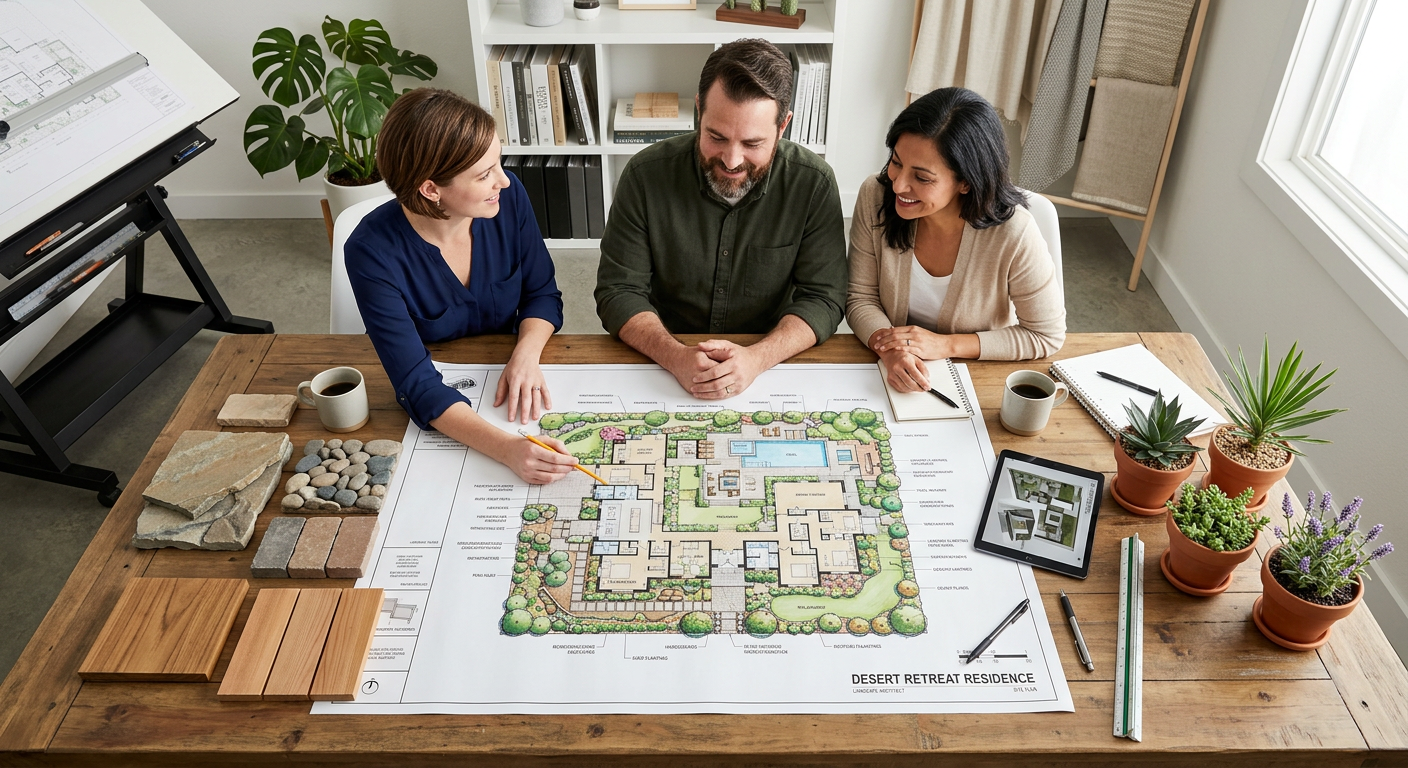
Ask to see examples of drawings, presentation materials, and construction documents, not just finished photographs. Clear documentation often separates a beautiful idea from a well-executed project.
Evaluate Arizona-Specific Technical Knowledge
Phoenix landscapes have to perform under intense sun, heat, monsoon conditions, and a long growing season. Your design professional should be ready to discuss how the proposed landscape will respond to those realities.
Water-Efficient Irrigation Is a Design Issue
Irrigation should not be treated as an afterthought. It needs to align with plant type, exposure, soil conditions, pressure, slope, and hydrozones. The EPA explains that replacing a standard clock-based controller with a WaterSense labeled controller can save an average home up to 15,000 gallons of water annually when it is properly installed and operated. EPA WaterSense Labeled Controllers is a helpful resource for homeowners comparing water-smart options.
Ask candidates how they approach drip irrigation, tree watering, pressure regulation, controller programming, drainage, and seasonal adjustment. Their answers should be practical and connected to the actual site, not a generic promise to use “low-water plants.”
Planting Must Balance Beauty and Performance
A refined Phoenix landscape can include shade trees, flowering accents, architectural succulents, native and adapted species, seasonal color, and carefully composed ground planes. The point is not to make every property look the same. It is to select plant materials that support the home’s style, desired maintenance level, habitat goals, and water-use objectives.
Ask how the firm considers mature tree preservation, root zones, soil improvement, long-term canopy, and plant replacement needs. These choices influence comfort, privacy, and property value for years.
Hardscape and Drainage Need Early Coordination
Stone terraces, drive courts, garden walls, outdoor kitchens, pool decks, fire features, and shade structures all affect grading and drainage. The landscape architect should coordinate these components early, particularly when a project involves a new pool, home addition, or major renovation.
A polished design is not simply a collection of attractive materials. It is a coordinated exterior environment where elevation changes, surface drainage, paving joints, planting beds, lighting, and circulation work together.
Review the Portfolio With Better Questions
When looking at previous projects, ask more than “Do we like this style?” Consider whether the work demonstrates problem-solving and restraint.
Look for signs of thoughtful planning:
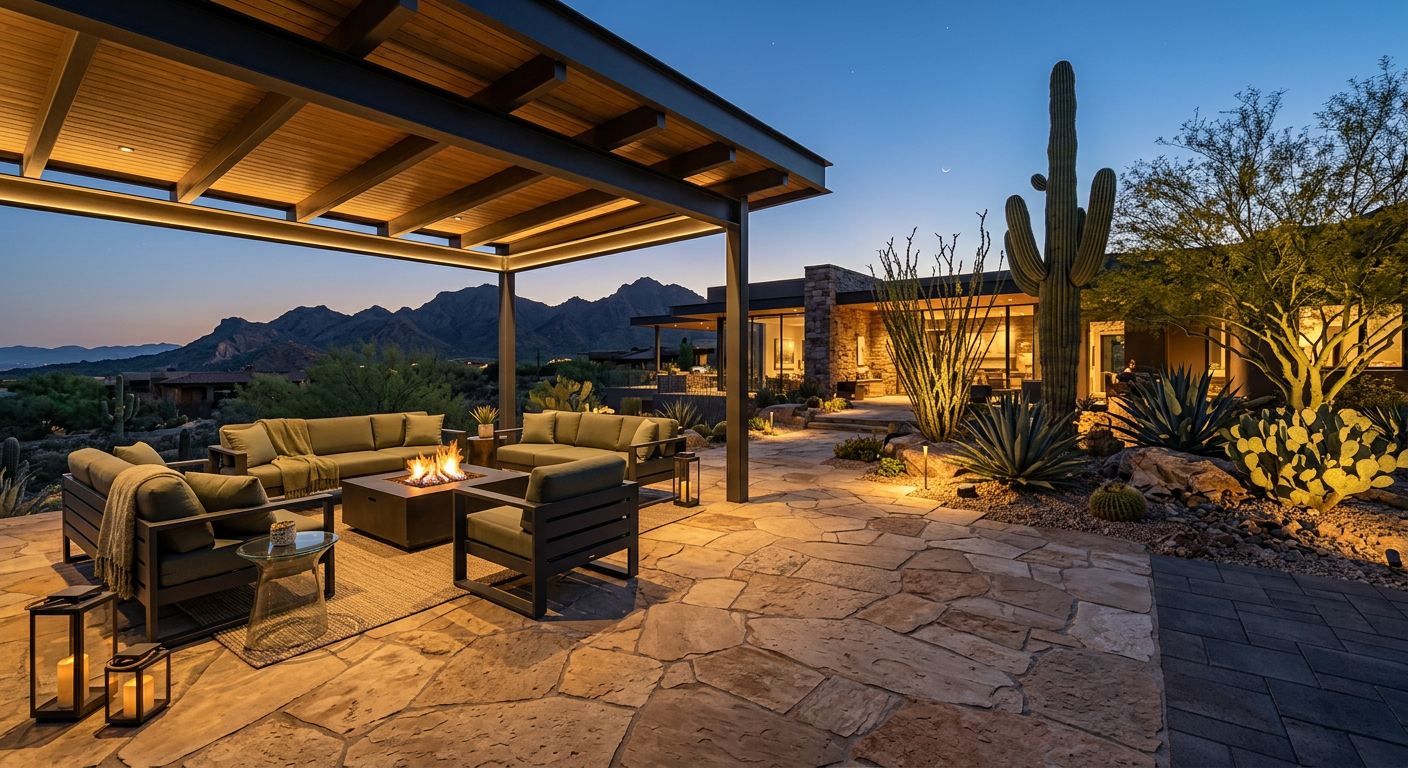
- Outdoor spaces that appear connected to the home’s architecture
- Comfortable shade and seating areas that support daily living
- Plant compositions with texture, scale, and seasonal interest
- Paving and walls that feel appropriate to the property
- Mature trees preserved or thoughtfully integrated
- Clear transitions between public, guest, and private areas
- Details that appear buildable, durable, and well resolved
We also recommend asking for client references on projects similar in scale to yours. Discuss communication, budget alignment, responsiveness during construction, and how well the finished landscape matched the approved plans.
Compare Proposals by Value, Not Just Fee
It is reasonable to compare fees, but a lower design fee can create expensive gaps if the scope is too limited. A concept plan without construction details may leave important decisions to be resolved in the field. That can make contractor pricing difficult to compare and may create avoidable changes during installation.
Review each proposal side by side. Compare the number of meetings, site analysis, design alternatives, drawing deliverables, irrigation planning, materials guidance, coordination with the architect or builder, and construction-phase involvement. Ask what is excluded and how additional services are handled.
For many high-value projects, the most useful question is not “Which proposal costs less?” It is “Which process gives us the clearest path to a cohesive, buildable landscape?”
Planning a Phoenix Landscape With Confidence?
If you are building a custom home or planning a significant renovation, involve landscape architecture before exterior decisions become fixed. Early coordination can help align outdoor rooms, drainage, shade, irrigation, material selections, and construction details with the home itself.
Waibel & Associates provides professional landscape architecture services for thoughtful Arizona projects, including design, consulting, planting and irrigation planning, and construction administration. Call (480) 893-3849 to discuss the scope and goals of your property.
Work Well With Your Architect and Builder
The most successful custom residential landscapes are collaborative. Your landscape architect should be comfortable coordinating with the home architect, builder, pool consultant, civil engineer, lighting professional, and installation team.
Ask how and when the landscape architect communicates with the rest of the project team. Early coordination is particularly important for finished floor elevations, doors and window views, equipment locations, drainage routes, utility sleeves, pool elevations, and structure foundations.
At Waibel & Associates’ residential landscape architecture practice, the focus is on helping outdoor spaces complement the home’s architecture and the way each client lives. For homeowners who want to better understand the firm’s background, learn about Janet Waibel, RLA, and the Waibel & Associates team.
Questions to Ask Before You Hire
Bring a short list of questions to each consultation. The goal is not to interrogate the designer. It is to make sure the working relationship, design process, and deliverables suit your project.
- Are you a registered landscape architect in Arizona?
- What comparable Phoenix, Scottsdale, or Paradise Valley projects have you completed?
- How do you coordinate with our architect, builder, and pool contractor?
- What plans and specifications will we receive?
- How do you address irrigation efficiency, drainage, and plant performance?
- Can you help with mature-tree preservation and soil conditions?
- Do you provide construction administration or installation coordination?
- How do you help clients establish realistic construction budgets?
A knowledgeable professional should welcome these questions. Clear answers at the beginning build confidence before design work begins.
Frequently Asked Questions
What should I look for in a landscape architect in Phoenix?
Look for Arizona registration, relevant custom residential experience, a documented design process, strong technical coordination, and a portfolio that shows work appropriate to the scale and architecture of your property.
When should I hire a landscape architect for a custom home?
Hire a landscape architect during early architectural planning, ideally before exterior elevations, pool placement, grading, utility locations, and major site decisions are final. This creates better coordination and can reduce redesign later.
Is a landscape architect different from a landscaper?
Yes. A landscape architect focuses on site planning and coordinated design, often including construction documentation and technical issues such as grading, irrigation, drainage, hardscape, and planting. An installation contractor builds and maintains landscape improvements, though some firms provide both design and implementation services.
Can landscape architecture reduce water use in Phoenix?
Yes. Water-efficient results come from an integrated approach that includes appropriate plants, hydrozoning, efficient irrigation equipment, shade planning, soil preparation, and seasonal irrigation management.
Should we preserve mature trees during a renovation?
Whenever feasible, mature trees deserve early evaluation because they provide immediate shade, scale, and character. Tree preservation must be balanced with construction access, root protection, long-term health, and the overall site plan.
Do we need construction documents for a residential landscape project?
For a substantial project, detailed documents help clarify the design intent, improve contractor pricing comparisons, coordinate trades, and reduce confusion during construction. The complexity of the project should guide the level of documentation.
A Better Choice Starts With a Better Conversation
Choosing a Phoenix landscape architect is ultimately about selecting a professional who can translate your priorities into a durable, beautiful, and well-coordinated exterior environment. Look for demonstrated experience, thoughtful questions, clear deliverables, regional expertise, and a process that respects both design quality and construction reality.
The right partnership can create more than an attractive setting. It can give your home outdoor spaces that feel natural to the architecture, function beautifully for daily life, and remain valuable as the landscape matures.
Talk With an Experienced Arizona Landscape Architect
Whether you are planning a custom home, major remodel, outdoor living environment, irrigation upgrade, or sustainable landscape renovation, Waibel & Associates can help create a thoughtful design that complements your property and long-term goals.
Call (480) 893-3849 or request a landscape architecture consultation.
About Waibel & Associates Landscape Architecture
Waibel & Associates Landscape Architecture is an Arizona landscape architecture firm led by Janet Waibel, RLA, Owner and Principal. The firm provides custom residential landscape architecture, sustainable landscape design, irrigation planning, tree preservation, outdoor living design, site planning, construction documentation, and professional landscape consulting throughout Tempe, Scottsdale, Paradise Valley, Phoenix, North Scottsdale, Carefree, Cave Creek, and surrounding Arizona communities.
Waibel & Associates focuses on thoughtful, high-quality landscapes that complement the architecture of each property while incorporating appropriate plant materials, water-efficient strategies, irrigation technology, and long-term planning.
Janet Waibel is also a published author whose books provide educational resources on sustainable landscape management and landscape construction.
Planning a custom residential or professional landscape project?
Call (480) 893-3849
or
Contact Waibel & Associates →
Explore Janet Waibel’s Landscape Architecture Books →

Demo Demo
Nemo enim ipsam voluptatem quia voluptas sit aspernatur odit fugitquia consequuntur magni dolores eos qui ratione voluptatem sequi nesciun tosomo. Nemo enim ipsam voluptatem quia voluptas sit aspernatur.