 Demo Demo
A beautiful outdoor environment in Phoenix does not have to depend on excessive irrigation or a sparse field of gravel. The strongest properties balance shade, planting character, outdoor living, hardscape, and water management from the first site-planning decisions.
For a water efficient landscape Phoenix homeowners can enjoy for years, we focus on the relationship between architecture, exposure, soils, drainage, plant maturity, and irrigation. That approach creates a landscape that feels generous and finished while using water with greater purpose.
Why Water Efficiency Belongs in Luxury Landscape Planning
Water efficiency is a design decision, not a finishing touch. When it is considered early, it can protect mature trees, improve outdoor comfort, reduce avoidable maintenance issues, and help every part of the property work together.
The Arizona Department of Water Resources reports that as much as 70 percent of residential water use can occur outdoors. That makes the landscape one of the most meaningful places to improve water performance without sacrificing the quality of a custom home environment. Arizona Department of Water Resources
In Phoenix, the goal is not to remove every plant with higher water needs. It is to make intentional decisions about where a tree canopy is most valuable, where ornamental planting earns its place, which areas need active recreation, and where durable desert-adapted planting will deliver the best long-term result.
A well-planned water-conscious landscape commonly includes:
- Shade trees positioned to support entries, patios, windows, and outdoor gathering spaces
- Hydrozones that separate trees, shrubs, groundcovers, containers, turf, and specialty planting
- Plant palettes selected for the property’s soil, exposure, architecture, and maintenance expectations
- Irrigation equipment suited to each planting area rather than one schedule for the whole site
- Drainage and passive water harvesting that use rainfall as a site asset
- Material choices that support circulation, comfort, and a cohesive architectural character
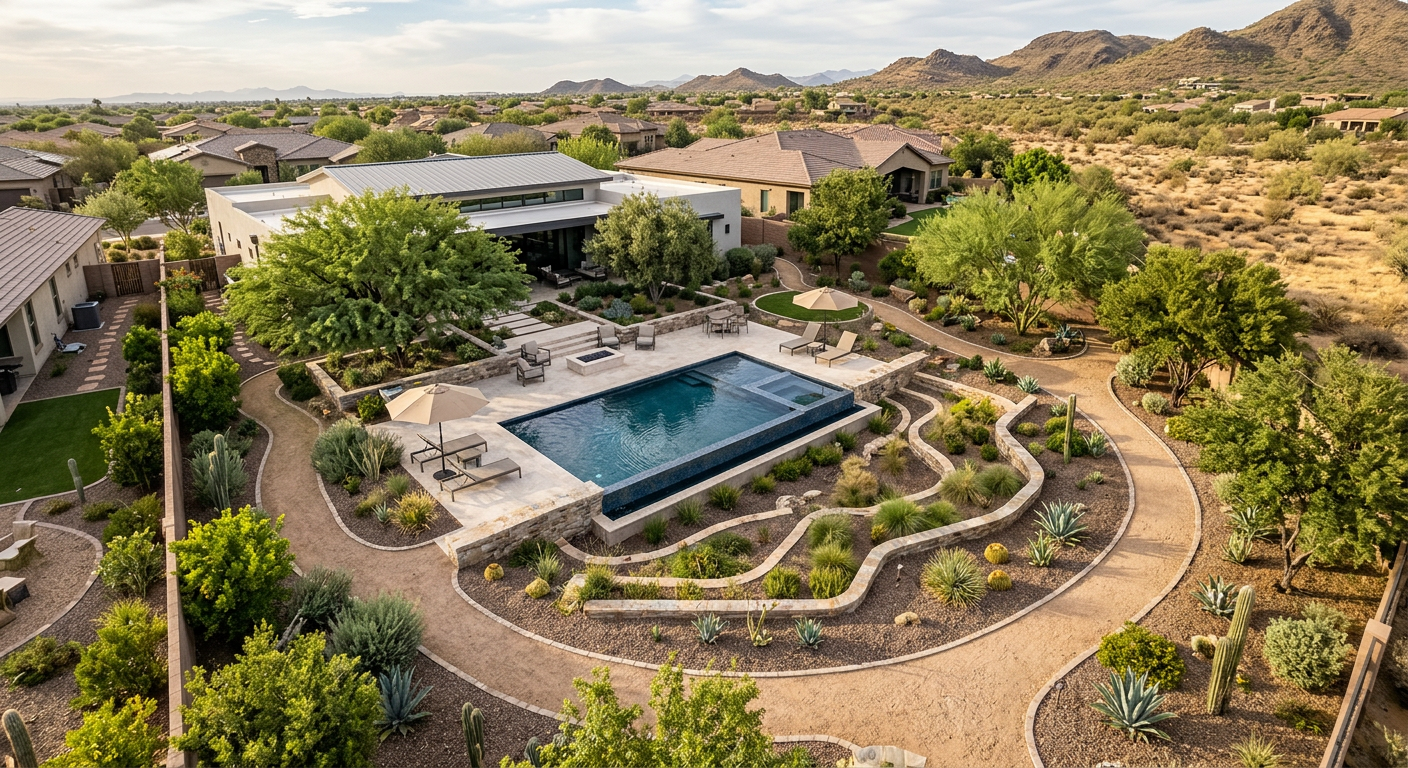
Water Efficient Landscape Phoenix Projects Start With the Site
A water-efficient landscape should respond to the site before individual plants or irrigation products are selected. Sun exposure, grade, views, existing trees, surrounding walls, roof drainage, and outdoor-use patterns all influence how much water a landscape will require and how well it will perform.
Preserve Valuable Trees Before Construction Begins
Mature trees provide scale, shade, and a sense of permanence that new planting cannot replace quickly. They also require protection during demolition, grading, trenching, paving, and utility work. A tree preservation strategy should identify root zones, irrigation needs during construction, finished grades, and access routes before site work begins.
This planning is especially important on remodel projects, where a new pool, patio, driveway, or room addition can unintentionally alter water flow or compact soil around established trees. Preserving a healthy canopy can support both comfort and the character of the property.
Design for Roof Runoff and Monsoon Rain
Rainfall is intermittent in Phoenix, but it should still be considered in the design. Grading, swales, basins, and planted collection areas can slow runoff and direct water toward appropriate plant root zones instead of sending it immediately to the street or storm drain.
The City of Phoenix encourages desert landscaping, low-water-use plants, and passive rainwater-harvesting techniques as part of a more water-conscious approach to residential landscapes. City of Phoenix desert landscape resources
Water harvesting is not a substitute for irrigation in every location. It is a site-planning tool that can reduce dependence on potable water and improve how a property manages rainfall during significant storms.
Use Plant Communities, Not Random Plant Selections
The most successful desert landscapes are layered compositions, not plant lists assembled one specimen at a time. We group plants by water demand, exposure, root depth, visual role, and irrigation method so they can thrive together.
A high-end residential planting design may include broad-canopy shade trees, sculptural accents, flowering shrubs, native or desert-adapted understory planting, and a limited number of higher-attention ornamental areas near key outdoor rooms. This creates a rich experience while keeping water-intensive choices concentrated where they have the greatest visual and functional value.
Separate High-Use Areas From Low-Water Planting
A family lawn, a putting area, a cutting garden, or a poolside container collection may be appropriate for a particular property. These spaces should be designed as purposeful zones with separate irrigation, drainage, and maintenance expectations.
The problem arises when water-intensive planting is scattered across the site or placed on the same valve as trees and drought-tolerant shrubs. A controlled, well-defined use area can be managed thoughtfully. A landscape where every zone has competing needs is harder to maintain and more likely to waste water.
Improve Soil Before Asking Plants to Perform
Compacted soils, caliche layers, construction debris, and poor drainage can limit root development and make irrigation less effective. Soil evaluation and preparation are often overlooked because they are less visible than stone, lighting, or specimen plants, but they affect the health of the entire landscape.
For planting areas, soil improvement can support infiltration, root growth, and more consistent moisture. It also helps prevent the cycle of adding more water to compensate for a soil problem.
Irrigation Design Should Follow the Planting Plan
Efficient irrigation is achieved by delivering appropriate water to the right root zone at the correct rate. It is not achieved simply by installing drip tubing or a smart controller.
For custom homes and substantial renovations, irrigation should be coordinated with planting, drainage, lighting, hardscape, and construction sequencing. Our landscape architecture services include planting and irrigation design, site planning, construction documentation, and construction administration to help align those decisions before installation limits the options.
Create Hydrozones That Match Real Conditions
Hydrozoning places plants with similar water requirements and exposure on the same irrigation valve. Trees, shrubs, turf, containers, shade gardens, sunny ornamental beds, and narrow foundation planting generally should not be managed as one group.
Separate zones offer several advantages:
- Trees can receive broader, deeper watering patterns as their canopy expands
- Low-water shrubs are not overwatered to support more demanding ornamental beds
- Turf, if included, can be managed independently from drip-irrigated planting
- Containers can receive more frequent attention without affecting the rest of the landscape
- Seasonal adjustments become more precise and easier to understand
Select Equipment for the Area It Serves
Drip irrigation can be effective for many planting beds because it applies water near the root zone and avoids spraying walls, paving, and windows. Bubblers or basin irrigation may be appropriate for certain large trees where a broad root area needs to be wetted. Spray irrigation can serve defined turf areas when it is correctly designed, pressure-regulated, and kept away from hardscape.
Equipment selection should also account for soil infiltration. On sloped sites or compacted soils, cycle-and-soak scheduling can help prevent runoff by applying water in shorter intervals that allow time for absorption.
Plan the Landscape Before the Home Is Finished
Early landscape architecture planning gives homeowners, architects, and builders more control over the finished property. It allows irrigation sleeves, drainage routes, retaining conditions, tree protection, utility locations, lighting conduits, and outdoor rooms to be resolved before paving and walls are built.
This is particularly valuable for a custom home or major Phoenix remodel. A late landscape plan can force compromises around pipe routing, planting depth, pool decks, equipment locations, and preservation of existing site features. Early coordination creates a more durable and visually cohesive outdoor environment.
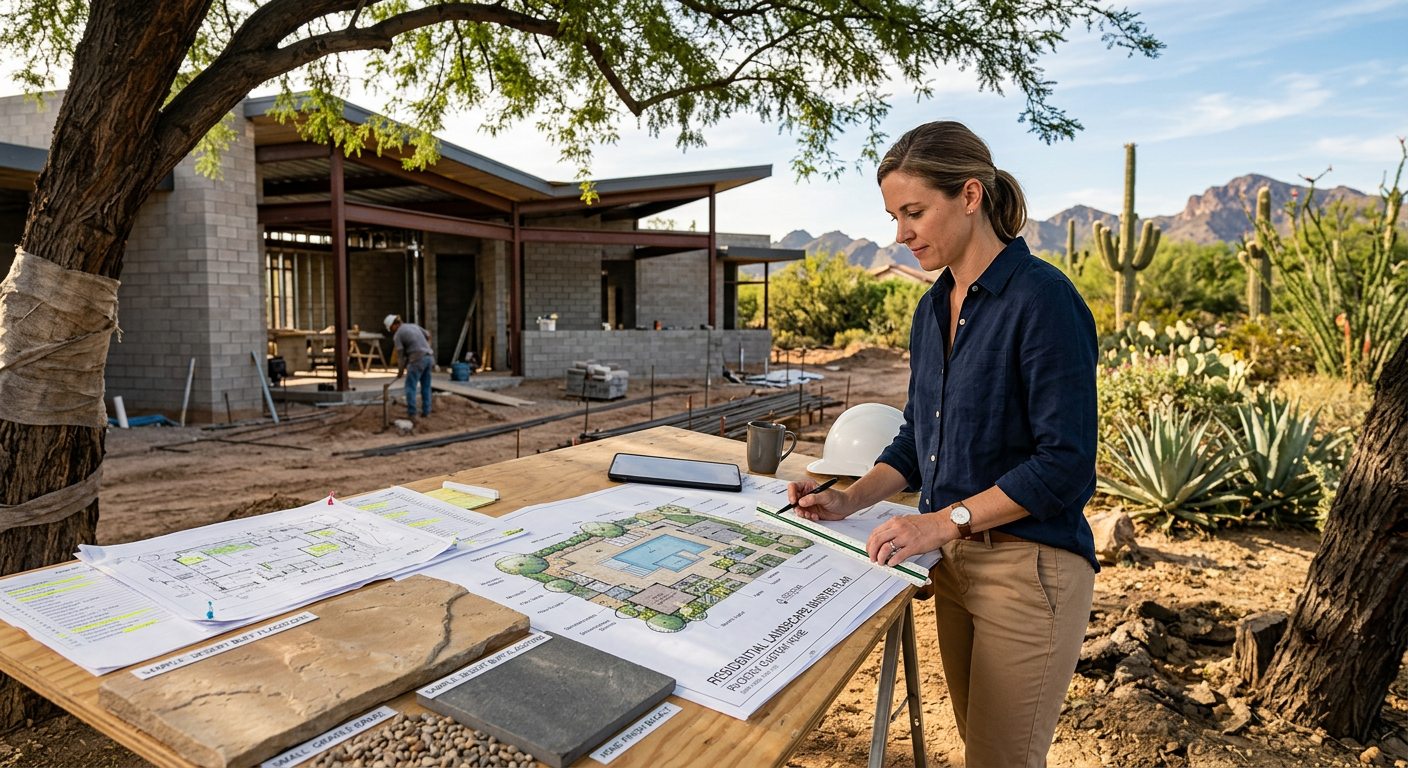
Planning a Custom Landscape Project?
If you are building or remodeling a home in Phoenix, Tempe, Scottsdale, Paradise Valley, or the surrounding area, professional planning can help protect your investment and create a more cohesive outdoor environment from the beginning.
Request a Landscape Architecture Consultation or call (480) 893-3849 to discuss your property.
A Refined Phoenix Landscape Can Be Water-Conscious and Lush
A low-water landscape does not need to feel empty, harsh, or generic. Shade, layered texture, seasonal bloom, sculptural forms, outdoor rooms, thoughtful lighting, and quality materials can create a luxurious setting without relying on a water-intensive palette across the entire site.
The key is proportion. A carefully placed tree canopy may be more valuable than a large area of thirsty planting. A limited ornamental garden near a main entry can have more impact than scattered high-maintenance color throughout the property. A shaded terrace with durable materials and desert-adapted planting can become the most used outdoor space at the home.
Our residential landscape architecture approach considers these decisions as part of one complete property plan. Janet Waibel, RLA, Owner and Principal of Waibel & Associates Landscape Architecture, also shares practical expertise in water-efficient irrigation, construction standards, and long-term landscape care through her published work. Explore Landscape Architecture Books by Janet Waibel for resources on sustainable landscape management and construction.
Frequently Asked Questions
Can a water-efficient Phoenix landscape still include a pool and outdoor kitchen?
Yes. Pools and outdoor kitchens can be part of a water-conscious design when they are planned with shade, drainage, limited high-water planting, efficient irrigation, and durable materials. The objective is to coordinate the whole outdoor environment rather than treating each feature as separate.
Are native plants the only choice for a water-efficient landscape?
No. Native plants can be excellent choices, but a successful Phoenix planting palette may also include desert-adapted species that perform well in local soils and temperatures. Plant selection should be based on water needs, site conditions, maintenance expectations, and design goals.
Is drip irrigation always the best option in Phoenix?
Drip irrigation is often effective for shrubs, perennials, and many planting beds, but it is not the only appropriate method. Mature trees, turf, containers, soil conditions, and grade can require different equipment and valve strategies.
How much lawn should a luxury Phoenix home have?
The right amount depends on how the household uses the property. A small, purposeful lawn for children, pets, or recreation can be appropriate, but it should be located and irrigated as a dedicated zone rather than spread throughout the landscape.
Can an older landscape be renovated to use less water?
Yes. A renovation can improve hydrozoning, replace failing equipment, adjust plant communities, preserve valuable trees, correct drainage issues, and reduce unnecessary turf or water-demanding planting. A site review helps identify which changes will have the greatest impact.
Should irrigation plans be included in construction documents?
Yes, especially for substantial custom homes, remodels, HOA improvements, and commercial properties. Clear irrigation documents help installers, contractors, and future maintenance teams understand valve locations, pipe routes, equipment requirements, and intended planting zones.
Thoughtful Planning Creates Lasting Water Efficiency
The best water-efficient landscapes in Phoenix are not defined by one product or one plant type. They are created through coordinated choices about trees, soil, drainage, irrigation, materials, shade, and long-term care.
When those choices are made early and documented clearly, the result is a landscape that supports the architecture, feels comfortable in the desert climate, and remains easier to manage as it matures.
Discuss Your Phoenix Landscape Architecture Project
For a custom home, major remodel, outdoor living environment, irrigation upgrade, or sustainable landscape renovation, Waibel & Associates can help create a thoughtful design that complements your property and long-term goals.
Contact Waibel & Associates Landscape Architecture or call (480) 893-3849 to begin the conversation.
About Waibel & Associates Landscape Architecture
Waibel & Associates Landscape Architecture is an Arizona landscape architecture firm led by Janet Waibel, RLA, Owner and Principal. The firm provides custom residential landscape architecture, sustainable landscape design, irrigation planning, tree preservation, outdoor living design, site planning, construction documentation, and professional landscape consulting throughout Tempe, Scottsdale, Paradise Valley, Phoenix, North Scottsdale, Carefree, Cave Creek, and surrounding Arizona communities.
Waibel & Associates focuses on thoughtful, high-quality landscapes that complement the architecture of each property while incorporating appropriate plant materials, water-efficient strategies, irrigation technology, and long-term planning.
Janet Waibel is also a published author whose books provide educational resources on sustainable landscape management and landscape construction.
Planning a custom residential or professional landscape project?
Call (480) 893-3849
or
Contact Waibel & Associates →

Demo Demo
Nemo enim ipsam voluptatem quia voluptas sit aspernatur odit fugitquia consequuntur magni dolores eos qui ratione voluptatem sequi nesciun tosomo. Nemo enim ipsam voluptatem quia voluptas sit aspernatur.