 Demo Demo
High End Backyard Design Ideas for Scottsdale Luxury Residences
A memorable backyard is not created by adding more features. It is created by giving every feature a purpose, from the view seen through the home’s glass doors to the comfort of a shaded dining area in late afternoon. For luxury homes in Scottsdale, Paradise Valley, Phoenix, and the East Valley, the strongest outdoor environments feel inevitable, as if the architecture and landscape were designed together from the beginning.
The best high end backyard design ideas combine spatial planning, durable materials, water-wise planting, shade, lighting, and carefully detailed amenities. Instead of treating the yard as a collection of separate purchases, we recommend thinking of it as a complete exterior living environment that supports daily routines, entertaining, privacy, and long-term property value.
Begin With an Outdoor Plan, Not a List of Features
A pool, fire feature, outdoor kitchen, and pergola can all be beautiful. But they will not automatically create a cohesive backyard. Before selecting amenities, establish the overall composition: primary views, circulation routes, sun exposure, grade changes, existing trees, privacy needs, and the relationship between indoor rooms and exterior spaces.
For a custom home or major remodel, the backyard should extend the architectural language of the residence. A contemporary home may call for clean planes, large-format paving, restrained plant masses, and precisely integrated lighting. A more traditional or desert-inspired property may benefit from textured stone, layered planting, intimate courtyards, and a softer progression from house to garden.
At a glance, successful luxury outdoor spaces tend to balance these priorities:
| Design Priority | What It Achieves | Planning Consideration |
|---|---|---|
| Indoor-outdoor connection | A unified home experience | Views, door locations, floor elevations |
| Shade and comfort | More usable time outdoors | Solar orientation, breeze, rooflines |
| Water-wise planting | Beauty with responsible water use | Hydro-zones, soil, irrigation |
| Material continuity | A custom, architectural appearance | Color, texture, slip resistance |
| Layered lighting | Ambiance and safe movement | Glare control, fixture placement |
A professional site analysis can also identify opportunities that are easy to miss, such as preserving a mature specimen tree, framing a mountain view, or shifting a patio to create better shade. Our residential landscape architecture approach considers these decisions as part of one design, rather than asking the homeowner to solve them one feature at a time.
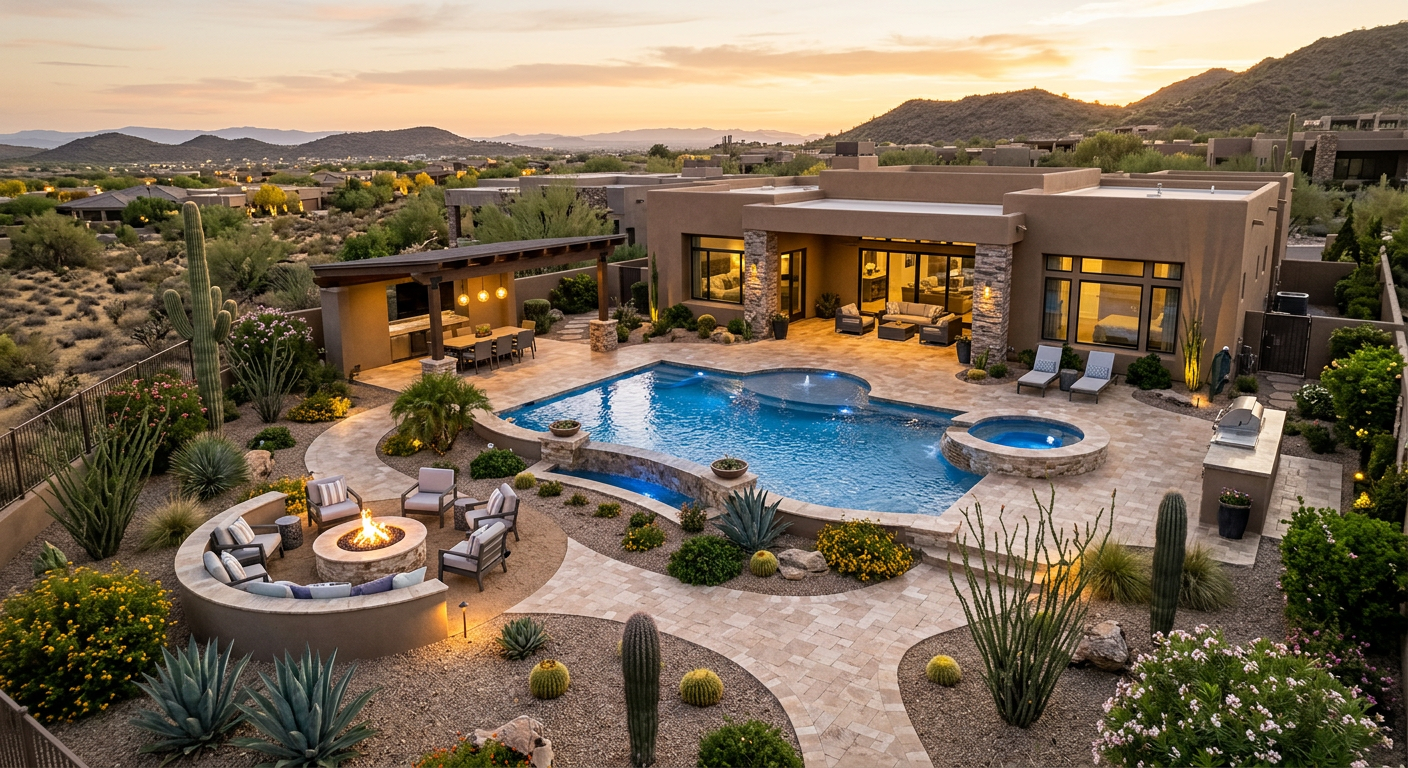
High End Backyard Design Ideas That Add Lasting Value
Create Outdoor Rooms With a Clear Purpose
Luxury backyards work best when they feel like a sequence of intentional rooms rather than one oversized patio. A covered lounge near the family room might serve quiet mornings and casual evenings, while a separate dining terrace supports larger gatherings. A poolside retreat can be positioned for sun and views without interrupting conversations around the kitchen or fire feature.
Use changes in paving, low walls, planting, ceiling treatments, or elevation to define each area without making the yard feel compartmentalized. Thoughtful circulation is essential. Guests should be able to move from the house to the pool, dining area, and landscape without crossing cooking zones or squeezing between furniture.
Make Shade Part of the Architecture
In Arizona, shade is a fundamental design material. Deep overhangs, covered patios, ramadas, pergolas, shade structures, and strategically placed trees can make the difference between an outdoor area that looks impressive and one that is genuinely comfortable.
The most successful structures are scaled to the home and positioned in response to sun angles, not simply placed over a patio after construction. Consider ceiling fans, integrated heaters where appropriate, subtle lighting, and finished ceiling materials that relate to the interior palette. For open views, shade can also be framed to protect comfort while preserving the visual connection to the landscape.
Design a Pool Area as a Resort-Quality Composition
A luxury pool should feel integrated with the entire site. Rather than letting the pool dominate every decision, use its placement, waterline, surrounding paving, planting, and lighting to establish a composed visual experience from inside and outside the home.
Material selection deserves close attention. Coping, deck surfaces, wall finishes, and waterline tile should complement the home’s exterior materials while performing well under desert sun and foot traffic. Consider whether a shallow lounging shelf, spa, water feature, or cabana truly supports the way the household will use the space. The right answer is different for a family-focused property, a second home, or a residence built around entertaining.
Build a Kitchen and Dining Area for Real Use
An outdoor kitchen becomes valuable when it supports how people actually gather. That usually means generous counter space, convenient circulation, weather-resistant storage, well-located utilities, and a nearby dining space that does not require a long walk from the interior kitchen.
Avoid treating appliances as the entire design. The surrounding finishes, backsplash or wall material, shade coverage, seating configuration, and lighting determine whether the area feels polished and useful. A carefully designed beverage station, pizza oven, or serving counter may be more meaningful than a crowded lineup of specialty equipment.
Use Water-Wise Planting and Irrigation as Luxury Features
Sustainable planning is not a compromise in high-end residential work. In fact, resilient desert planting can deliver some of the most striking color, form, fragrance, and seasonal interest in an Arizona landscape. The goal is not to make everything sparse. It is to select plants with a purpose and provide the soil preparation, spacing, irrigation, and maintenance expectations they need to thrive.
The U.S. Environmental Protection Agency reports that outdoor water use can account for as much as 60 percent of household water use in arid regions. It also notes that replacing a clock-based controller with a WaterSense labeled irrigation controller can reduce an average home’s irrigation water use by up to 30 percent. EPA WaterSense
For a refined landscape, group plants by water needs, use irrigation zones that match those needs, and plan for mature sizes rather than installing plants too tightly. Desert trees can establish shade and vertical structure. Accent trees, agaves, flowering shrubs, ornamental grasses, and groundcovers can create a layered garden with seasonal character. When the palette is coordinated with the architecture, drought-tolerant planting looks intentional and elevated.
Preserve Mature Trees and Work With the Site
Established trees can be among the most valuable elements on a property, especially where they provide shade, scale, and a sense of permanence. Before demolition or construction begins, evaluate which trees are worth protecting and what their root zones need to remain viable.
Tree preservation must be integrated into grading, utility routing, hardscape layout, and construction access. It is difficult to protect a tree after these decisions have already been made. The same principle applies to drainage, existing slopes, and views. Good landscape architecture resolves these site realities early, when the design still has room to respond.
Plan a Layered Lighting Experience
Outdoor lighting should make the backyard more inviting after sunset without creating glare or visual clutter. Start with the essential layers: safe paths and steps, gentle illumination at entries, low-level light for seating and dining, and selective accents for important trees, walls, artwork, or water.
Avoid trying to light every plant or surface. Darkness is part of the composition. A restrained approach creates depth and atmosphere, while poorly aimed fixtures can distract from the architecture, disturb neighboring properties, and make a beautiful landscape feel overdesigned.
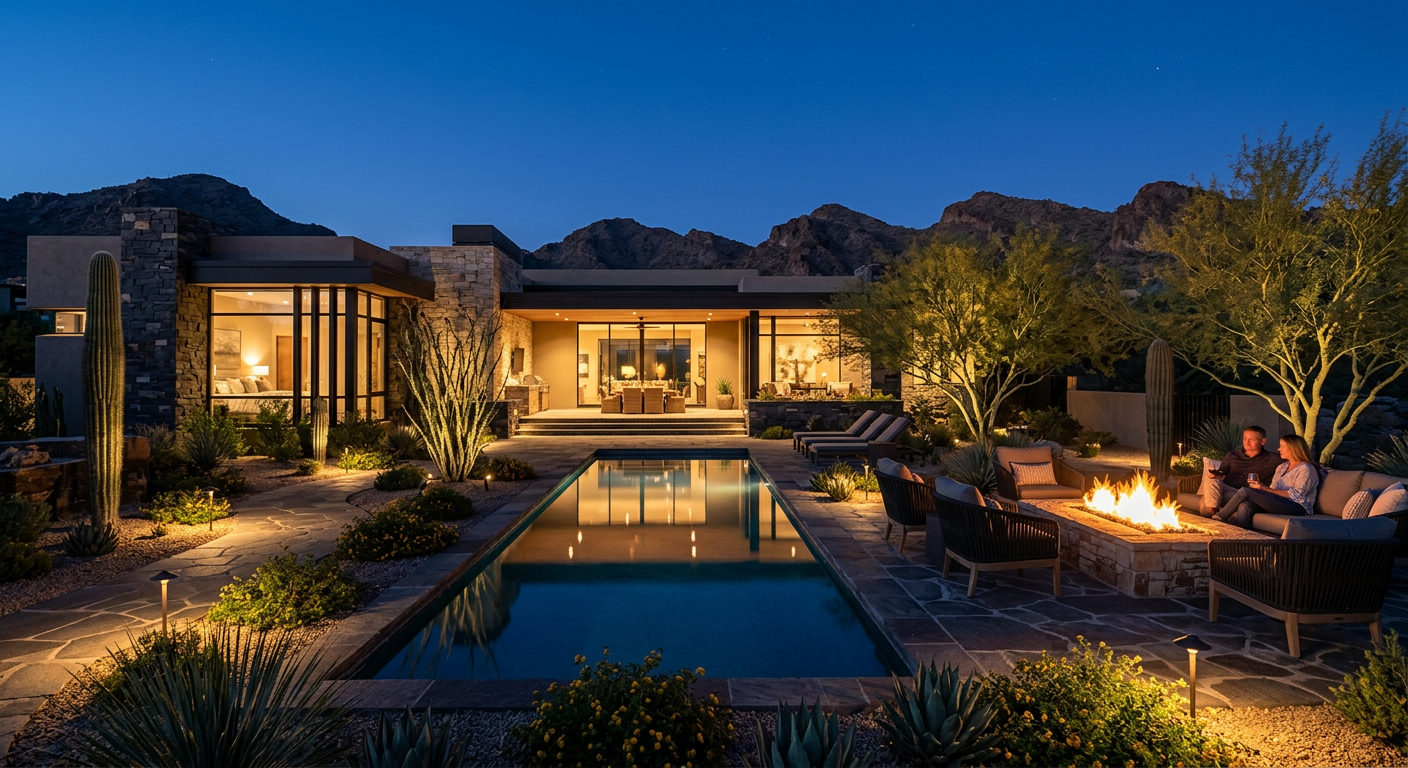
Planning a Custom Backyard in Arizona?
If you are building a custom home or renovating an established property in Scottsdale, Paradise Valley, Tempe, Phoenix, Carefree, Cave Creek, or North Scottsdale, early landscape planning can help align the outdoor environment with the architecture, construction schedule, and long-term budget.
We provide landscape architecture services that can include site planning, planting and irrigation design, construction documentation, and construction administration. To discuss a high-value residential project, call (480) 893-3849 or request a landscape architecture consultation.
Avoid These Common Luxury Backyard Mistakes
A large budget does not protect a project from poor sequencing. One of the most common mistakes is beginning landscape construction after the home is complete, with little coordination between exterior doors, drainage, grading, utility locations, and outdoor amenities. That can lead to expensive revisions and a backyard that feels disconnected from the residence.
Another mistake is choosing too many competing materials and focal points. High-end design often feels quieter than expected because it relies on proportion, repetition, quality materials, and detailed execution. Fewer, better choices usually create a more enduring result.
Finally, do not leave irrigation, drainage, soil improvement, and maintenance access until the end. These systems are foundational to the long-term health of the landscape. Janet Waibel, RLA, brings extensive experience in planning, irrigation, sustainable landscapes, and construction to the work. Homeowners and project teams can also explore landscape architecture books by Janet Waibel for practical education on sustainable landscape management and construction.
Frequently Asked Questions
What makes a backyard design feel high end?
A high-end backyard is cohesive, site-specific, and built with durable materials and thoughtful details. It relates to the architecture of the home, creates comfortable outdoor rooms, and integrates planting, irrigation, lighting, hardscape, and amenities into one complete composition.
Should landscape design begin before a custom home is built?
Yes. Early landscape planning helps coordinate finished floor elevations, views, drainage, pool placement, shade structures, utilities, tree preservation, and exterior room locations. This reduces conflicts during construction and creates a stronger connection between home and landscape.
What are the best plants for a luxury Arizona backyard?
The right plant palette depends on the site, architecture, sun exposure, soil, irrigation capacity, and desired style. A professional plan may combine desert-adapted trees, flowering shrubs, specimen plants, ornamental grasses, and groundcovers for shade, texture, color, and seasonal interest.
Can a luxury backyard be water efficient?
Yes. Water efficiency comes from site-appropriate plants, hydro-zoning, soil preparation, properly designed irrigation, smart controls, and ongoing oversight. These decisions can support a lush, layered appearance while avoiding wasteful watering practices.
Is a landscape architect different from a landscape contractor?
A landscape architect focuses on planning and design, including site analysis, spatial layout, grading concepts, planting, irrigation, materials, construction documents, and coordination. A landscape contractor typically installs the work, although firms may offer both design and construction-related services.
Does Waibel & Associates work on major backyard renovations?
Yes. Waibel & Associates Landscape Architecture works on custom residential landscapes, renovations, aging landscape improvements, irrigation updates, and outdoor living environments throughout the greater Phoenix area.
A Well-Planned Backyard Becomes Part of the Home
The most enduring high end backyard design ideas are not trends. They are decisions that make the property more comfortable, more beautiful, and easier to enjoy across changing seasons and years of ownership. Begin with the site, respect the architecture, invest in shade and infrastructure, and let materials and planting create a distinctive sense of place.
When those decisions are made as one coordinated plan, the backyard can become one of the home’s most valuable living spaces.
Talk With an Experienced Arizona Landscape Architect
Whether you are planning a custom home, major residential remodel, pool environment, outdoor kitchen, irrigation upgrade, or sustainable landscape renovation, we can help create an outdoor setting that complements your property and long-term goals.
Call (480) 893-3849 or contact Waibel & Associates to discuss your project.
About Waibel & Associates Landscape Architecture
Waibel & Associates Landscape Architecture is an Arizona landscape architecture firm led by Janet Waibel, RLA, Owner and Principal. The firm provides custom residential landscape architecture, sustainable landscape design, irrigation planning, tree preservation, outdoor living design, site planning, construction documentation, and professional landscape consulting throughout Tempe, Scottsdale, Paradise Valley, Phoenix, North Scottsdale, Carefree, Cave Creek, and surrounding Arizona communities.
Waibel & Associates focuses on thoughtful, high-quality landscapes that complement the architecture of each property while incorporating appropriate plant materials, water-efficient strategies, irrigation technology, and long-term planning.
Janet Waibel is also a published author whose books provide educational resources on sustainable landscape management and landscape construction.
Planning a custom residential or professional landscape project?
Call (480) 893-3849
or
Contact Waibel & Associates →

Demo Demo
Nemo enim ipsam voluptatem quia voluptas sit aspernatur odit fugitquia consequuntur magni dolores eos qui ratione voluptatem sequi nesciun tosomo. Nemo enim ipsam voluptatem quia voluptas sit aspernatur.