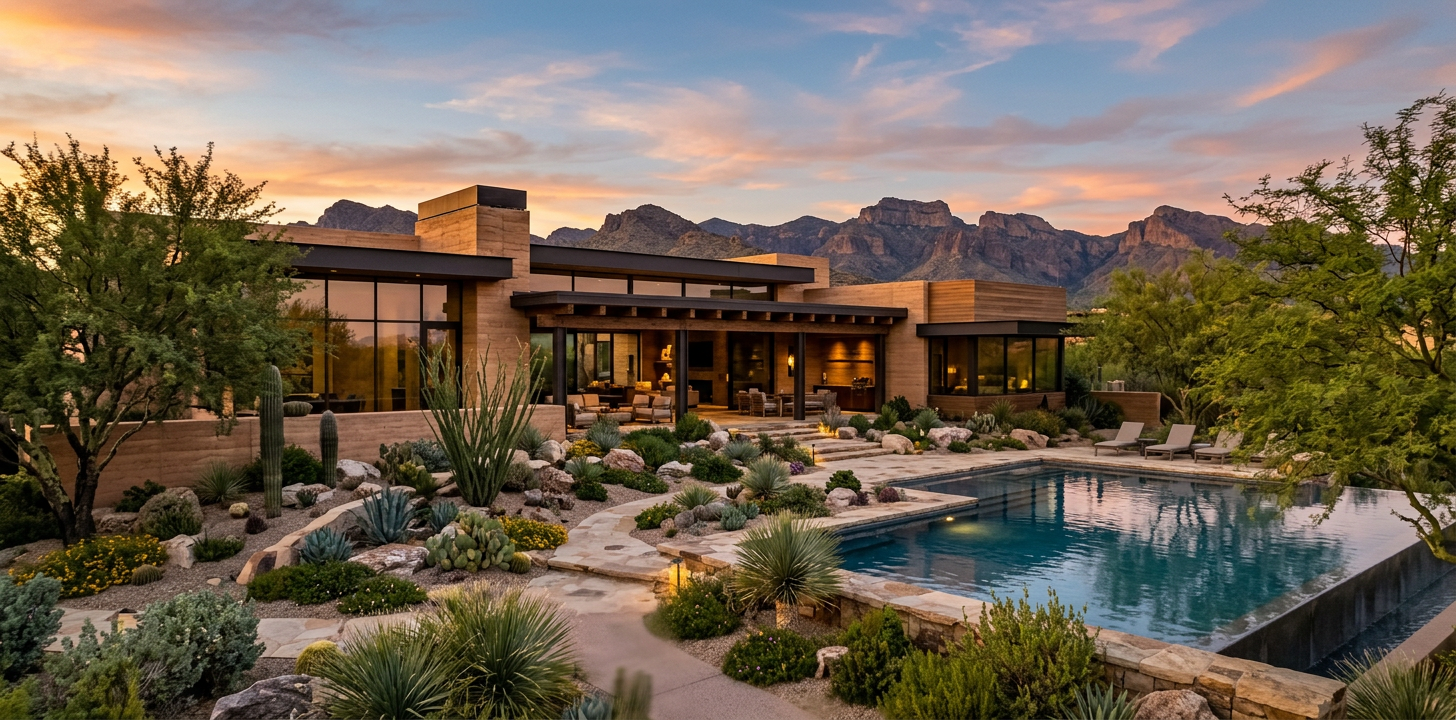
A landscape architect should be involved as early as possible, ideally before a custom home’s architecture, grading, pool layout, or major remodel decisions are fixed. Early coordination gives us room to shape outdoor spaces around how you live, protect valuable site features, and avoid expensive revisions after construction has started.
When to Hire a Landscape Architect for an Arizona Home
For homeowners in Tempe, Scottsdale, Paradise Valley, Phoenix, and the East Valley, when to hire a landscape architect is less about a calendar date than a project decision. If the landscape must coordinate with a new home, substantial remodel, pool, outdoor kitchen, drainage issue, mature trees, significant hardscape, or water-efficient irrigation plan, it is time to involve a professional.
We often see outdoor areas treated as the last item on a construction checklist. That approach can leave patios without useful shade, circulation that conflicts with doors and views, undersized utility areas, compromised trees, and costly changes to walls, paving, drainage, or irrigation. Planning the site early helps the home and landscape feel intentionally connected.
The Best Time Is Before Major Site Decisions Are Locked In
The right time to hire a landscape architect is before the project team finalizes building placement, floor elevations, pool location, major utility routes, and exterior material transitions. This gives the landscape a meaningful role in the overall property plan instead of asking it to solve problems created by earlier decisions.
For a custom home, we recommend beginning landscape planning during architectural design or as soon as a preliminary site plan is available. For a remodel, bring in a landscape architect before demolishing existing hardscape, removing trees, or committing to an addition that changes the relationship between indoor and outdoor spaces.
| Project situation | Best time to engage | Why early planning matters |
|---|---|---|
| Custom home | Schematic architectural design | Coordinates grading, views, entries, and outdoor rooms |
| Major remodel | Before demolition or additions | Protects site assets and connects old and new spaces |
| Pool and outdoor living project | Before pool engineering | Aligns patio levels, shade, planting, and circulation |
| Aging landscape renovation | Before selecting materials | Establishes a cohesive long-term plan |
| HOA or private development work | Before budgeting and approvals | Supports phasing, water goals, and documentation |
A thoughtful plan considers more than planting. We evaluate arrival and entry experience, privacy, views, shade patterns, soil, drainage, irrigation zones, paving, lighting, outdoor living areas, and the way the landscape will mature over time. Our residential landscape architecture process is built around those interconnected decisions.
Clear Signs Your Project Needs a Landscape Architect
You should hire a landscape architect when the property has design decisions that affect several trades, long-term performance, or the relationship between the site and the home. A professional plan is especially valuable when a project is too complex to be solved by choosing plants and materials one area at a time.
You Are Building a Custom Home
A custom home deserves an outdoor environment that is designed with equal care. The driveway, front approach, courtyards, patios, pool, garden spaces, and views should reinforce the architecture rather than compete with it.
Early site planning can also help establish where to preserve open space, create usable shade, locate service areas, manage grade changes, and make room for future additions. These choices are difficult to improve once walls, utilities, and structures are already in place.
You Are Planning a Major Home Remodel
A remodel often changes how the home meets the landscape. New glass doors, expanded kitchens, guest suites, covered patios, and room additions can create opportunities for a stronger indoor-outdoor connection, but only if exterior circulation, levels, drainage, and sightlines are considered together.
This is also an important moment to assess aging paving, undersized planting areas, failing irrigation, and outdoor spaces that no longer support the household’s lifestyle. Instead of replacing elements one by one, a master plan can establish the right sequence for improvements.
Your Outdoor Living Area Involves More Than One Contractor
Pools, shade structures, kitchens, fireplaces, retaining walls, lighting, and planting all affect one another. Hiring a landscape architect before separate contractors begin designing their portions of the project creates a shared design direction and reduces the chance of conflicts between materials, dimensions, drainage, utilities, and access.
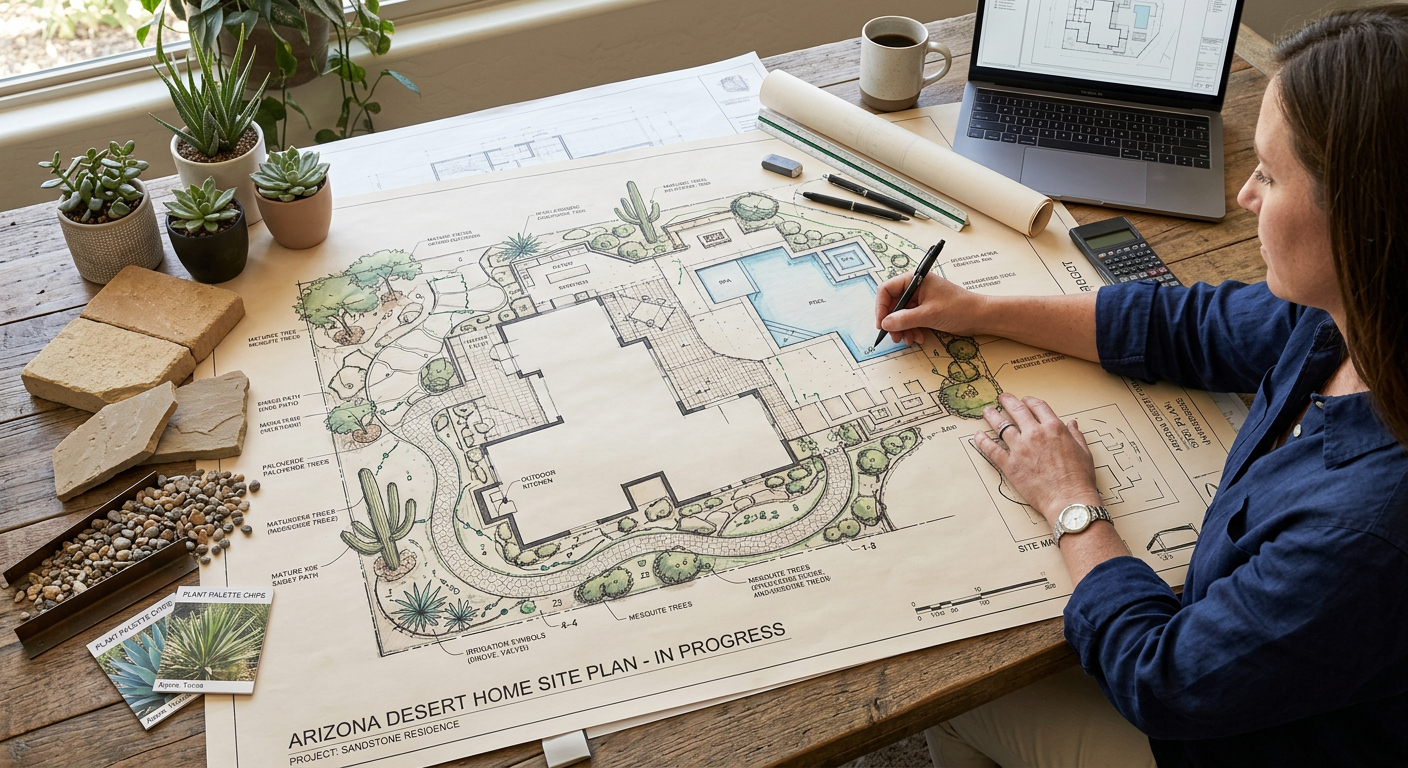
You Want to Preserve Mature Trees or Important Site Features
Mature trees, established desert plants, boulders, natural washes, and view corridors can be among a property’s most valuable assets. They need to be evaluated before construction access, utility trenching, grade changes, or new hardscape are determined.
Tree preservation is not simply a matter of avoiding the trunk. Root zones, soil disturbance, compaction, drainage changes, and construction staging can all affect long-term health. Early planning gives the team a better chance to protect what makes the site distinctive.
You Need Water Efficiency Without a Generic Desert Look
Water-efficient design is most successful when it begins with the site, plant selection, soil conditions, hydrozones, and irrigation design. It should not be treated as an afterthought or reduced to a limited visual style.
The U.S. Environmental Protection Agency reports that outdoor water use represents 30 percent of household water use nationally and can be considerably higher in dry regions. The agency also estimates that as much as half of water used outdoors may be wasted through inefficient irrigation and overwatering. EPA WaterSense
For Arizona properties, water-conscious planning can still support layered planting, seasonal interest, shaded gathering areas, and a refined architectural character. The objective is to match plant materials and irrigation methods to the realities of each exposure, soil condition, and outdoor use area.
Early Landscape Planning Protects the Overall Investment
Hiring a landscape architect early can reduce rework because critical exterior decisions are coordinated before they become expensive field changes. It also helps owners make better choices about what should be built now, what can be phased, and where quality materials will have the greatest visual and functional impact.
At Waibel & Associates, we work from a whole-property perspective. Our landscape architecture services include site planning and analysis, concept design, planting and irrigation design, cost estimating, construction documentation, and construction administration. That scope is useful when a property needs a clear design vision and the technical information to carry it into construction.
For projects involving larger communities, common areas, or aging private landscapes, early planning also makes it easier to establish realistic priorities. Our experience with private development and landscape improvements can inform phasing, water-use objectives, plant renewal, and durable material choices.
Start With a Master Plan When the Work Will Be Phased
A master plan is often the right first step when a homeowner wants to improve a property over several years. It establishes a cohesive final vision while allowing construction to proceed in logical phases, rather than creating a series of unrelated projects.
For example, the first phase may address drainage, utilities, walls, and primary paving. A later phase may add a pool, outdoor kitchen, guest-casita courtyard, or planting refinements. Because the long-term plan has already reserved space, elevations, and utility capacity, each phase supports the next one.
This approach is particularly valuable for older Scottsdale, Paradise Valley, and Phoenix properties where mature vegetation, limited access, changing family needs, and aging infrastructure require careful sequencing. It is also helpful for custom home builders and architects who want a coordinated process from the first site meeting onward.
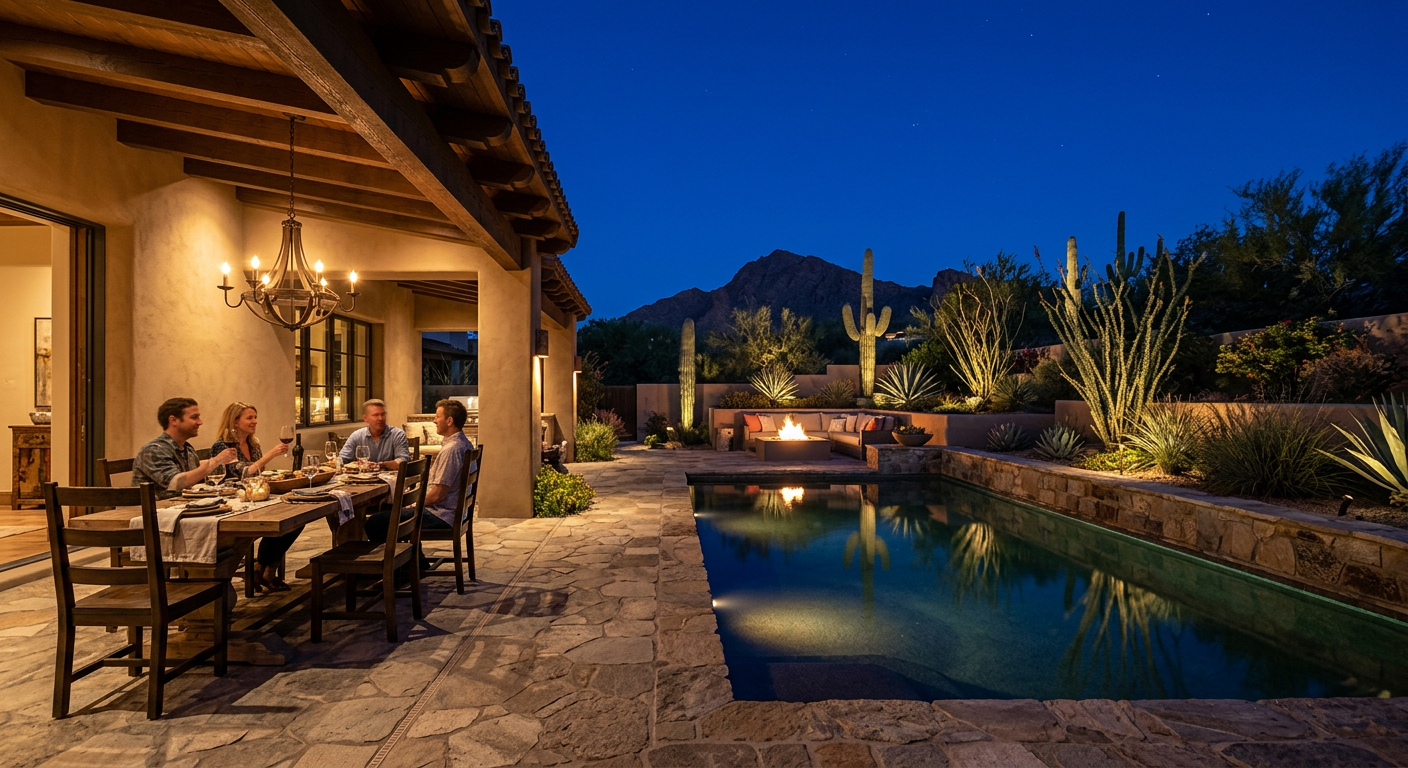
Planning a Custom Landscape Project?
If you are building or remodeling a home in Tempe, Scottsdale, Paradise Valley, Phoenix, or the surrounding area, professional landscape planning can help protect your investment and create a cohesive outdoor environment from the beginning. Call (480) 893-3849 to discuss your project with Waibel & Associates, or request a landscape architecture consultation.
What We Coordinate Before Construction Begins
The earlier we are involved, the more effectively we can coordinate the details that affect both design quality and construction execution. The exact scope varies by property, but early planning commonly addresses:
- Building and landscape relationships, including entrances, courtyards, patios, and key views
- Existing trees, soil conditions, grade changes, and drainage patterns
- Outdoor living features such as pools, kitchens, fire features, shade structures, and seating areas
- Plant palettes that complement the architecture and fit the property’s microclimates
- Irrigation design, hydrozones, controller strategy, and water-efficient distribution methods
- Hardscape materials, walls, steps, lighting, and accessible circulation routes
- Construction documents and coordination with architects, builders, engineers, and installers
Janet Waibel, RLA, Owner and Principal of Waibel & Associates Landscape Architecture, brings planning, design, irrigation, sustainable landscape, and construction experience to these decisions. Homeowners and industry professionals seeking deeper educational resources can also explore landscape architecture books by Janet Waibel, including material focused on sustainable landscape management in the Desert Southwest.
Frequently Asked Questions
Is it too early to hire a landscape architect before my house plans are finished?
No. Preliminary architectural plans are often the ideal point to begin. We can help identify opportunities and constraints that may influence building placement, window views, patio access, grading, and major outdoor spaces before those decisions are difficult to change.
Can a landscape architect work with my architect and custom home builder?
Yes. Collaboration is one of the main reasons to hire a landscape architect early. We can coordinate site planning, materials, elevations, utilities, drainage, and exterior features so the landscape supports the architectural vision and construction schedule.
Do I need a landscape architect for a pool project?
A landscape architect is particularly helpful when the pool is part of a larger outdoor living environment. We can coordinate the pool with paving, shade, planting, lighting, drainage, privacy, irrigation, and circulation throughout the property.
What is the difference between a landscape architect and a landscaper?
A landscape architect provides professional planning and design for the overall site, including spatial organization, grading concepts, planting, irrigation, hardscape, construction documents, and coordination among project consultants. A landscape contractor typically installs or maintains landscape work, though individual firms may offer different combinations of services.
Can a landscape architect help make an Arizona landscape use less water?
Yes. Effective water efficiency begins with plant selection, soil improvement, appropriate hydrozones, irrigation design, and realistic maintenance expectations. We focus on the full landscape system, not simply replacing one material with another.
Should mature trees be evaluated before a remodel begins?
Yes. Mature trees should be reviewed before demolition, grading, utility routing, and construction access are planned. Early evaluation helps identify practical protection measures and prevents avoidable damage to roots, soil, and drainage conditions.
Is a master plan worthwhile if I will build the landscape in phases?
Yes. A master plan gives every phase a shared direction and helps reserve space, utilities, grading, and budget priorities for future work. It can prevent new improvements from limiting the options for a later pool, guest area, outdoor kitchen, or garden renovation.
A Well-Planned Landscape Starts Before the Last Construction Decision
The best time to hire a landscape architect is before the outdoor environment has been reduced to leftover space around the house. Involving the landscape team early gives your property a better chance to function beautifully, conserve resources thoughtfully, and mature into a setting that feels inseparable from the architecture.
For a new custom home, a major remodel, or a significant landscape renovation, begin with the decisions that shape the entire site. A clear plan gives builders and installers better direction, and it gives you a more durable, purposeful result.
Talk With an Experienced Arizona Landscape Architect
We help clients create thoughtful, high-quality landscape plans for custom homes, major remodels, outdoor living environments, irrigation upgrades, and sustainable landscape renovations. To discuss your property and project goals, call (480) 893-3849 or contact Waibel & Associates.
About Waibel & Associates Landscape Architecture
Waibel & Associates Landscape Architecture is an Arizona landscape architecture firm led by Janet Waibel, RLA, Owner and Principal. The firm provides custom residential landscape architecture, sustainable landscape design, irrigation planning, tree preservation, outdoor living design, site planning, construction documentation, and professional landscape consulting throughout Tempe, Scottsdale, Paradise Valley, Phoenix, North Scottsdale, Carefree, Cave Creek, and surrounding Arizona communities.
Waibel & Associates focuses on thoughtful, high-quality landscapes that complement the architecture of each property while incorporating appropriate plant materials, water-efficient strategies, irrigation technology, and long-term planning.
Janet Waibel is also a published author whose books provide educational resources on sustainable landscape management and landscape construction.
Planning a custom residential or professional landscape project?
Call (480) 893-3849
or
Contact Waibel & Associates →
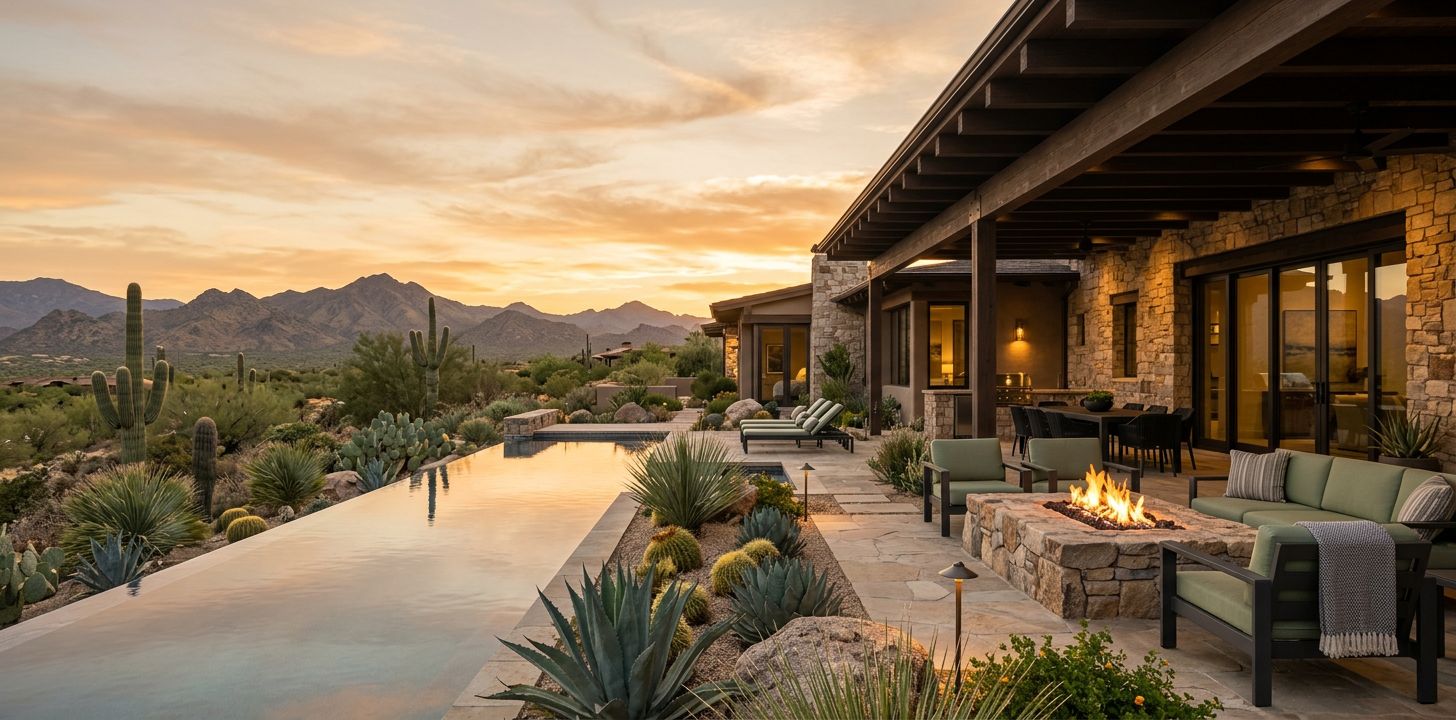
Outdoor Living Design Carefree: Creating Refined Desert Retreats
A remarkable desert property should not force its owners to choose between comfort, architectural character, and responsible water use. The most successful outdoor environments make the transition from indoors to outdoors feel effortless, while respecting the views, grade, exposure, and native character that make Carefree distinctive.
For custom homes and major renovations, outdoor living design Carefree homeowners can rely on begins with a complete site strategy, not a collection of isolated amenities. We consider how terraces, shade, pools, planting, lighting, circulation, and irrigation work together, so the finished landscape feels composed rather than added on over time.
Carefree properties often have expansive Sonoran Desert views, rocky terrain, changing grades, and strong sun exposure. The challenge is not simply adding a patio or fire feature. It is creating outdoor rooms that belong to the home, support the way the owners entertain and relax, and remain functional through Arizona's changing seasons.
Design Priorities for a Carefree Outdoor Environment
A refined outdoor living space needs a clear hierarchy. Before selecting materials or furnishings, we establish where people arrive, gather, dine, cook, rest, and move through the property. This process helps preserve important view corridors while making each outdoor area feel purposeful.
The USDA Natural Resources Conservation Service describes the Carefree soil series as well-drained and formed in mixed alluvium, with slopes commonly ranging from 1 to 8 percent. That is a useful reminder that site-specific grading, drainage, and soil evaluation should guide hardscape and planting decisions, especially on hillside or view-oriented lots.
Start With the Architecture and the Site
The outdoor environment should extend the home's proportions, material palette, and circulation patterns. A contemporary residence may call for broad linear paving, restrained planting masses, and carefully framed views. A more organic desert home may benefit from layered stone, shaded courtyards, and pathways that follow the natural character of the site.
We also study sun angles, wind exposure, privacy, adjacent properties, existing trees, and future maintenance access. These early decisions shape comfort far more than a late-stage furniture selection ever can.
Build Comfort Around Shade
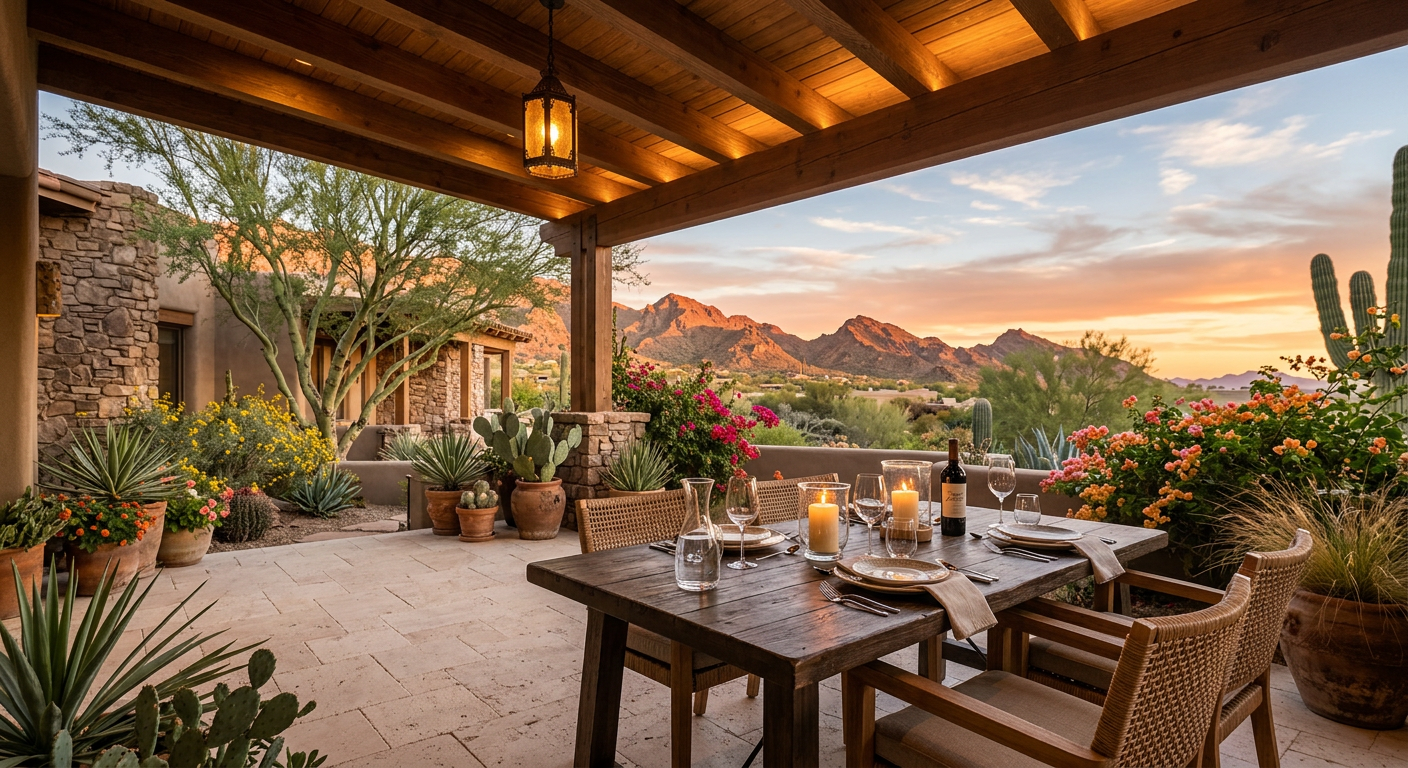
In Carefree, shade is an architectural necessity. Covered patios, deep overhangs, ramadas, pergolas, shade structures, and strategically placed trees can each play a role, but they must be planned in relation to the sun and the intended use of the space.
For example, a dining terrace may need predictable late-afternoon protection, while a pool lounge may benefit from adjustable shade and open sky. A fire feature zone may be best placed where evening views remain visible without exposing guests to prevailing winds.
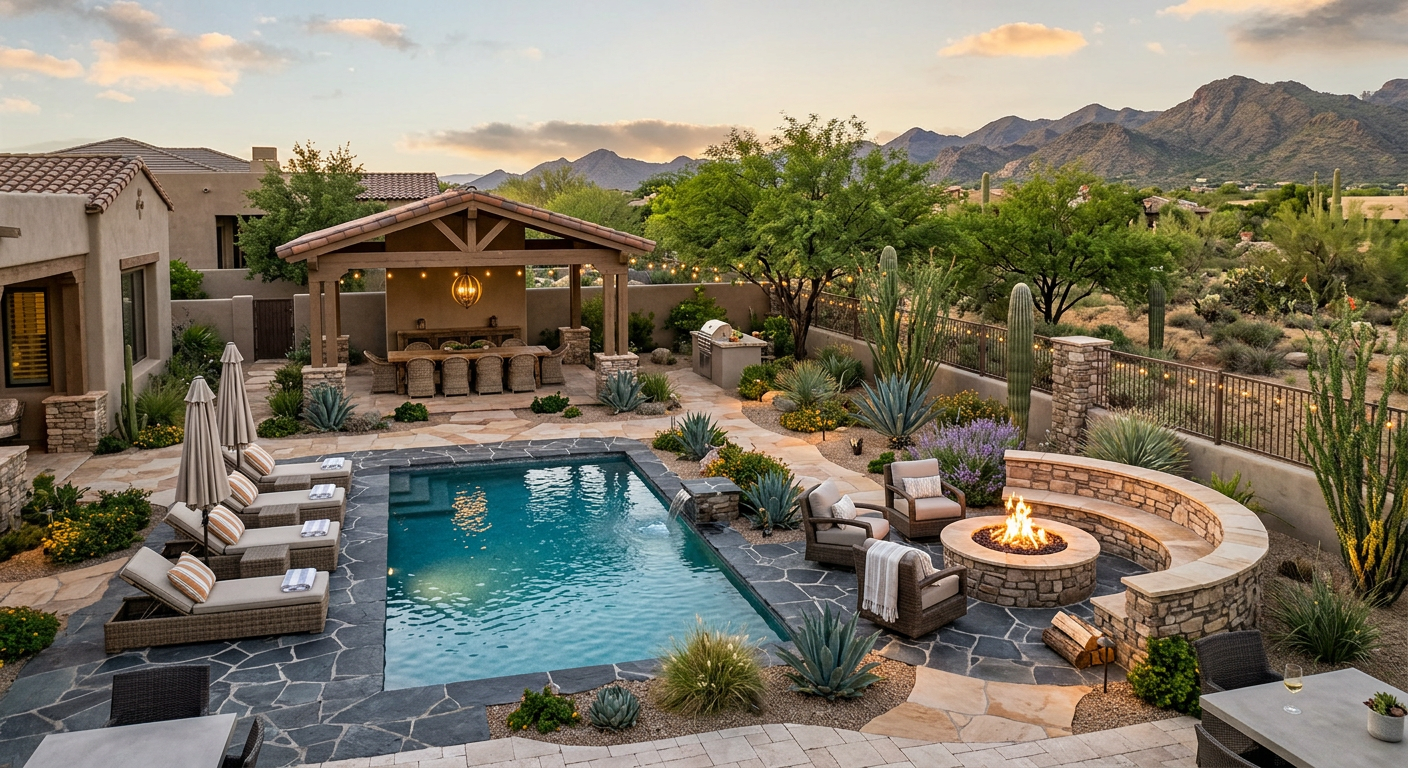
Plan for Long Views and Quiet Privacy
Mountain and desert views are among the most valuable assets on many Carefree properties. Outdoor rooms should frame those views without creating visual clutter or placing tall structures in the wrong locations.
At the same time, privacy still matters. We often use changes in grade, layered planting, low walls, architectural screens, and carefully oriented seating to create enclosure without closing off the landscape. The result can feel open to the desert while remaining comfortable for everyday use.
Outdoor Living Design Carefree Homeowners Can Use Year-Round
The best luxury landscapes are not designed for a single season. They provide different settings for morning coffee, outdoor dining, family gatherings, quiet winter evenings, and warm-weather pool use.
A well-planned landscape can include several outdoor rooms, each with a distinct purpose:
- Arrival and entry spaces that establish a strong first impression and coordinate with the architecture.
- Covered living terraces that support conversation, lounging, and connection to interior living areas.
- Outdoor kitchens and dining areas with convenient circulation, durable surfaces, and appropriate ventilation planning.
- Pool and spa settings that balance sun, shade, safety, views, and access.
- Fire feature areas that encourage use during cooler evenings and create a natural gathering point.
- Garden courts or private retreats that offer a quieter experience away from more active areas.
The key is not adding every possible feature. It is selecting the right mix for the property and the owner's lifestyle, then coordinating it with the broader landscape plan.
Materials Must Perform as Well as They Look
Natural stone, porcelain pavers, concrete, metal, wood-look materials, and specialty finishes can all contribute to a sophisticated outdoor environment. The appropriate selection depends on sun exposure, slip resistance, drainage, maintenance expectations, architectural style, and the relationship between indoor and outdoor flooring.
Material transitions deserve special attention. Poorly resolved edges between paving, planting beds, walls, pool coping, and drainage can make even expensive work feel unfinished. Clear construction documentation helps the builder and landscape contractor understand the intended lines, elevations, and details before installation begins.
Planting Adds Shade, Texture, and Seasonal Interest
A water-efficient landscape does not need to look sparse. Layered desert trees, flowering accents, sculptural agaves, resilient shrubs, grasses, and groundcovers can provide softness, movement, color, and scale while complementing the architecture.
The Arizona Department of Water Resources reports that as much as 70 percent of residential water use in Arizona can occur outdoors. That makes thoughtful plant selection, hydrozoning, and irrigation design important parts of an outdoor living plan, not separate technical tasks to address later.
We avoid treating planting as decoration around hardscape. Instead, we use it to frame views, create shade, soften walls, guide movement, and provide a living counterpoint to stone, steel, glass, and water.
Why Planning Early Protects the Investment
One of the most common issues we see on high-end custom homes is that landscape planning begins after major architectural and site decisions have already been made. By then, pool placement, finished floor elevations, utility routes, retaining walls, and drainage pathways may have limited what is possible outdoors.
Early collaboration allows the landscape architect, architect, interior designer, builder, pool consultant, and other professionals to coordinate the entire property. It also creates an opportunity to protect mature vegetation, plan irrigation sleeves beneath paving, establish grade transitions, and avoid costly changes during installation.
At Waibel & Associates Landscape Architecture, we approach residential work as an extension of the architecture and a long-term investment in the property. Our custom residential landscape architecture process can include site planning, planting design, hardscape coordination, irrigation planning, construction documents, and construction administration.
Planning a Custom Outdoor Environment in Carefree?
If you are building a custom home or renovating an established property in Carefree, early landscape planning can help protect views, coordinate the outdoor amenities, and create a more comfortable desert setting.
Call (480) 893-3849 to discuss your project with Waibel & Associates, or request a landscape architecture consultation.
Details That Separate a Cohesive Landscape From a Collection of Features
Luxury outdoor living is often defined by the work guests do not immediately notice. Proper drainage, carefully located utilities, comfortable step dimensions, integrated lighting, concealed equipment, and durable irrigation components all contribute to a landscape that feels calm and easy to use.
Lighting Should Support the Evening Experience
Landscape lighting should enhance safety, circulation, planting texture, and architectural character without making the property feel over-lit. We consider lighting at entries, paths, steps, walls, specimen trees, dining areas, pool surroundings, and distant view edges.
A restrained lighting plan can create depth after sunset while preserving the calm of the desert night. It should also anticipate access for future adjustments and maintenance.
Water Features Need a Clear Purpose
A water feature can create sound, reflect light, or introduce a focal point near a terrace or entry. It should not be included simply because it is expected in a luxury backyard. The feature needs appropriate scale, equipment access, water management, and a visual relationship to the architecture.
In some properties, a simple linear basin complements the home. In others, a pool, spa, fire feature, and planting composition already provide enough visual activity. A disciplined design process helps owners make that distinction.
Construction Documents Reduce Ambiguity
Detailed plans communicate design intent across the project team. They identify dimensions, materials, planting areas, irrigation zones, elevations, drainage relationships, and other decisions that should not be left to interpretation in the field.
This is especially valuable for complex residential work, where multiple contractors are responsible for interrelated components. It also gives owners a clearer understanding of what is being built and why each element belongs where it does.
Frequently Asked Questions
What should be included in a luxury outdoor living space in Carefree?
The right features depend on the property and the owners' lifestyle. Common elements include covered terraces, outdoor dining, a pool or spa, fire features, shade structures, layered planting, integrated lighting, and seating areas that preserve views and privacy.
When should we hire a landscape architect for a custom home?
We recommend involving a landscape architect during early architectural planning, before pool placement, grading, exterior utility routing, and major hardscape decisions are finalized. This provides more flexibility and helps coordinate the site as a complete environment.
Can a desert landscape feel lush without excessive water use?
Yes. A layered plant palette, appropriate shade trees, thoughtful irrigation zones, soil preparation, and water-efficient plant selection can create a rich, comfortable landscape without relying on high-water-use planting across the property.
How do you make a patio comfortable during hot Carefree afternoons?
Comfort comes from coordinated shade, orientation, air movement, surface materials, planting, and furniture zones. A well-positioned roof extension or shade structure is often more effective than treating heat as an afterthought.
Should existing desert trees be preserved during a landscape renovation?
Mature trees can provide immediate shade, scale, and character, so preservation should be evaluated early. Their root zones, irrigation needs, grade changes, and construction access all need protection if they are to remain viable.
What is the difference between a landscape architect and a landscape contractor?
A landscape architect plans the overall site and design, including spatial organization, materials, planting, irrigation, grading relationships, and construction documentation. A landscape contractor typically builds the work based on approved plans and specifications.
Does Waibel & Associates work with architects and custom home builders?
Yes. We collaborate with architects, builders, homeowners, and other project professionals to coordinate landscape architecture with the home's design, site conditions, construction process, and long-term goals. Learn more about our landscape architecture services.
A Complete Landscape Creates More Than an Attractive Backyard
A successful Carefree outdoor environment feels inseparable from the home and the desert around it. It balances shade and sunlight, privacy and views, durable materials and living plant texture, all while supporting the way the property will be used for years to come.
When outdoor spaces are planned as part of the architecture, they can add comfort, character, and long-term value without compromising the landscape's connection to place. That is the difference between adding amenities and creating a true desert retreat.
Talk With an Experienced Arizona Landscape Architect
Whether you are planning a custom home, major residential remodel, outdoor living environment, irrigation upgrade, or sustainable landscape renovation, we can help create a thoughtful design that complements your property and long-term goals.
Call (480) 893-3849 or contact Waibel & Associates for a landscape architecture consultation.
About Waibel & Associates Landscape Architecture
Waibel & Associates Landscape Architecture is an Arizona landscape architecture firm led by Janet Waibel, RLA, Owner and Principal. The firm provides custom residential landscape architecture, sustainable landscape design, irrigation planning, tree preservation, outdoor living design, site planning, construction documentation, and professional landscape consulting throughout Tempe, Scottsdale, Paradise Valley, Phoenix, North Scottsdale, Carefree, Cave Creek, and surrounding Arizona communities.
Waibel & Associates focuses on thoughtful, high-quality landscapes that complement the architecture of each property while incorporating appropriate plant materials, water-efficient strategies, irrigation technology, and long-term planning.
Janet Waibel is also a published author whose books provide educational resources on sustainable landscape management and landscape construction. Learn more about Janet Waibel and Waibel & Associates or explore Janet Waibel’s landscape architecture books.
Planning a custom residential or professional landscape project?
Call (480) 893-3849
or contact Waibel & Associates
When to Hire a Landscape Architect for Luxury Arizona Homes
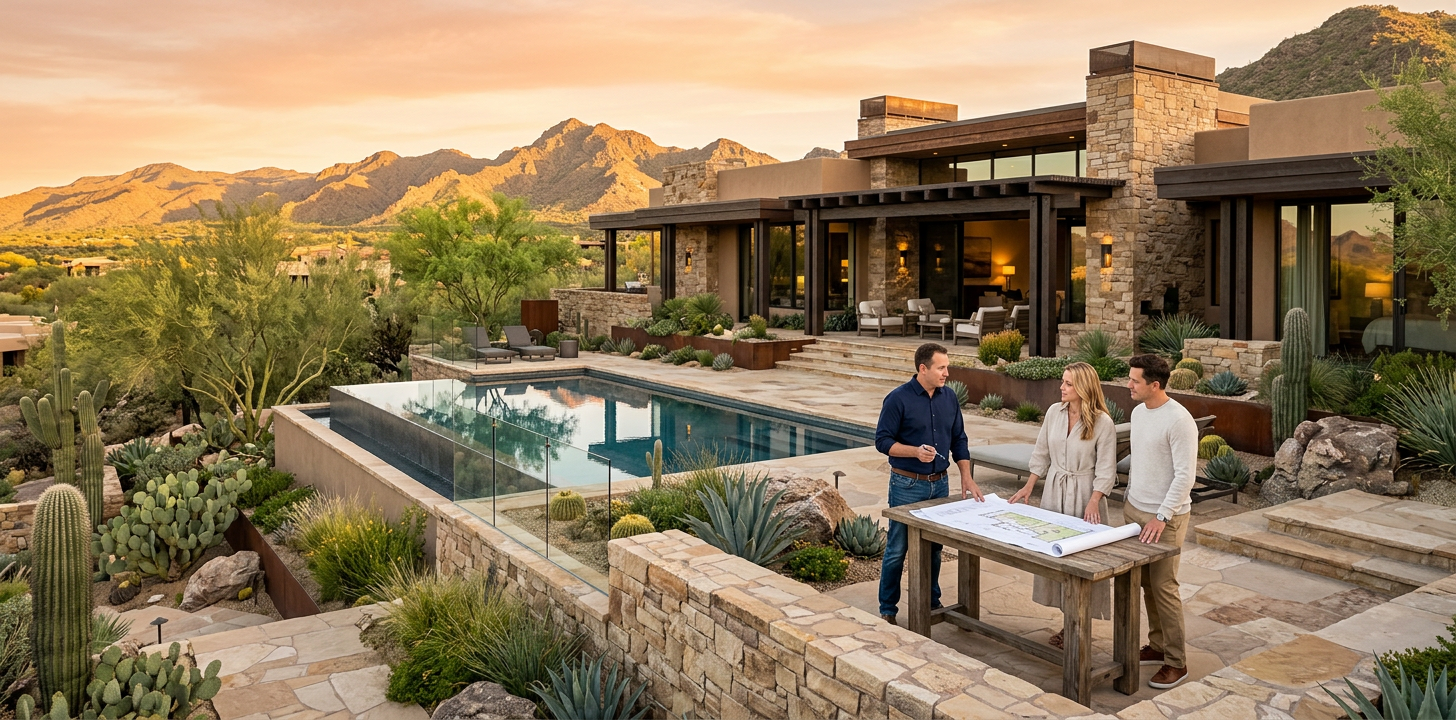
A beautiful outdoor environment rarely happens by selecting plants, paving, and furniture one decision at a time. The best results come from treating the site as part of the home from the beginning, with careful attention to views, circulation, grading, shade, water use, materials, and the way people will actually live outdoors.
So, when should you bring in a professional? When to hire a landscape architect is simple: involve one as early as possible when a project includes a custom home, substantial remodel, major outdoor living improvements, a challenging site, mature trees, drainage concerns, or a meaningful investment in the property. Early planning creates more options and helps prevent costly changes after construction has started.
The Best Time Is Before Key Design Decisions Are Fixed
For a custom home or comprehensive renovation, we recommend beginning landscape architecture during early architectural design, ideally before the building footprint, finished floor elevations, utility routes, and exterior material palette are locked in. This lets the house and site work together rather than asking the landscape to solve problems created later.
A landscape architect can help coordinate the relationship between interior rooms and exterior spaces, determine where shade is most valuable, protect view corridors, establish arrival sequences, and identify locations for patios, pools, kitchens, fire features, gardens, walls, and planting. The result is a more cohesive property, not a collection of disconnected outdoor features.
This matters especially in Scottsdale, Paradise Valley, Tempe, Phoenix, North Scottsdale, Carefree, Cave Creek, and the East Valley, where sun exposure, desert soils, drainage patterns, slope, and water management can strongly influence long-term performance.
Before You Finalize a Custom Home Plan
Many homeowners assume landscape design begins after the home is complete. By then, important opportunities may already be limited. The garage, driveway, pool location, outdoor room connections, utility equipment, drainage routes, and window views can all affect the landscape plan.
Bringing a landscape architect into the design team early helps us evaluate questions such as:
- Where should guests arrive, park, and enter the property?
- Which views should be framed, softened, or screened?
- How can outdoor living areas stay comfortable through changing seasons?
- Where should mature trees be preserved during grading and construction?
- How will grades move water away from structures and toward appropriate landscape areas?
- Which materials will visually connect the landscape to the architecture?
For a better understanding of the scope involved, review our landscape architecture services and how they support coordinated site planning.
Signs You Should Hire a Landscape Architect Before Construction
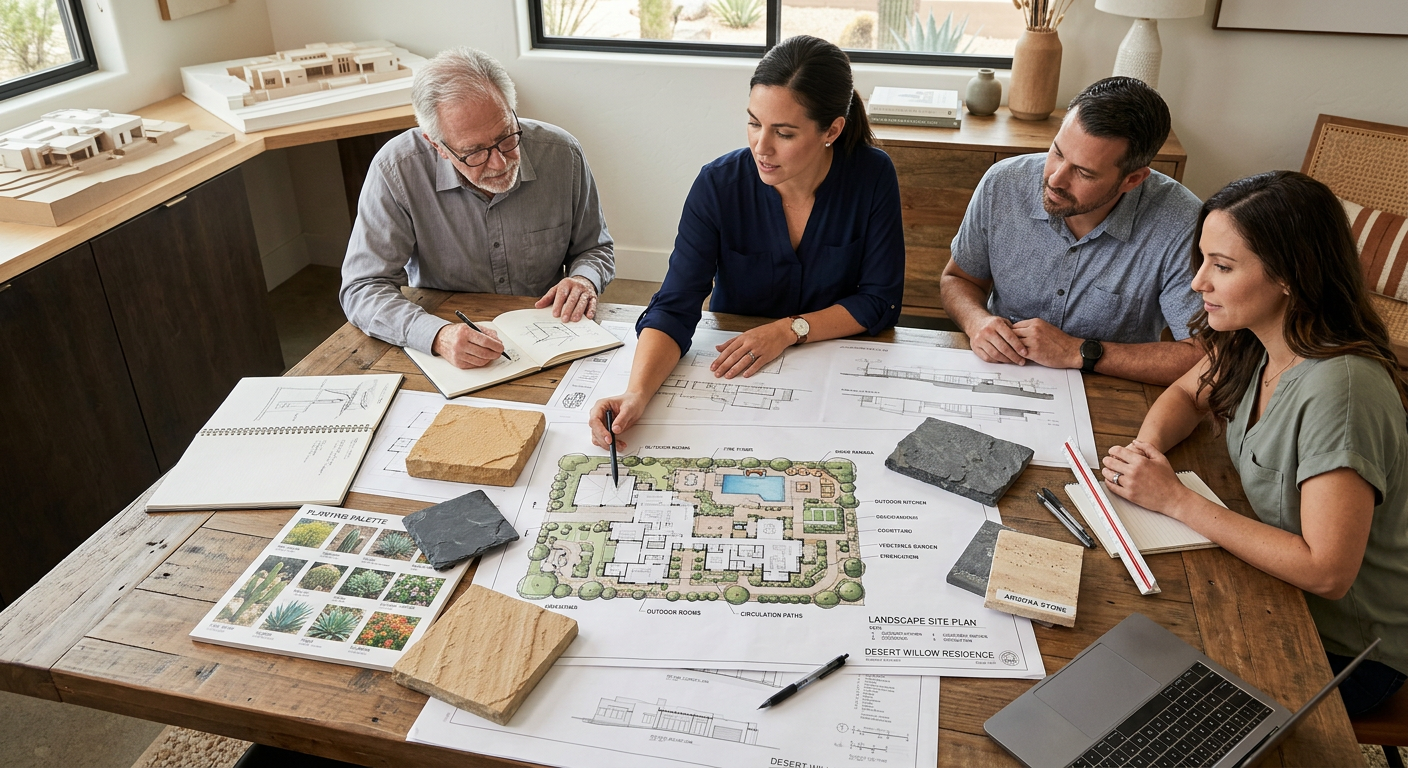
Not every property needs a full landscape architecture process. A small planting refresh or isolated replacement may be appropriate for a specialty contractor. However, the following situations benefit from comprehensive professional planning.
You Are Building a Custom Home
A new custom home creates the clearest opportunity to integrate the site from the ground up. We can coordinate exterior spaces with the architecture, plan for plant growth over time, develop irrigation concepts, and prepare construction documents that clarify the intended design for installers.
When the landscape is planned alongside the home, patios feel connected to interior living areas, windows frame purposeful views, and exterior materials appear intentional. It also allows the project team to consider site access and construction sequencing before newly installed elements are put at risk.
You Are Planning a Major Home Remodel
A significant remodel often changes the way a family uses the property. New doors, larger glazing, a remodeled kitchen, an expanded primary suite, or a new pool can create new expectations for the landscape.
This is a good time to reconsider circulation, privacy, shade, exterior lighting, paving, planting, and the relationship between indoor and outdoor living. Our residential landscape architecture approach is built around these kinds of whole-property decisions.
Your Site Has Slope, Drainage, or Access Challenges
Sloped lots, mountain-adjacent properties, irregular parcels, and sites with complex drainage need more than decorative planting. Grade changes may require retaining solutions, safe circulation routes, intentional planting zones, and careful coordination with architecture and engineering.
A thoughtful site plan addresses how people move through the property and how water moves across it. That work can protect the experience of the finished landscape while reducing avoidable field changes during construction.
Mature Trees or Important Existing Features Need Protection
Established trees can provide immediate scale, shade, and character that new plant material cannot duplicate quickly. Yet construction traffic, grade changes, compaction, and trenching can compromise root zones if preservation is not addressed early.
A landscape architect can assess priorities with the broader project team, identify areas worth protecting, and help organize the site around the resources that add value to the property.
Your Outdoor Wish List Is Growing
A pool, spa, outdoor kitchen, dining terrace, fireplace, shade structure, guest access, dog area, garden, and entertaining space can all fit beautifully on one property. They can also compete for the same square footage.
Professional landscape planning establishes priorities and creates a hierarchy of spaces. Instead of adding features one by one, we create an outdoor environment that feels composed, functional, and appropriate to the home.
Why Early Planning Matters in Arizona
Arizona landscapes need to do more than look good on installation day. They need to perform through intense sun, heat, seasonal storms, changing water needs, and the realities of long-term care.
The U.S. EPA WaterSense program reports that outdoor water use can account for as much as 60 percent of household water use in arid regions. It also states that replacing a clock-based irrigation controller with a WaterSense labeled controller can reduce average home irrigation use by up to 30 percent. Those figures reinforce why planting design, hydrozones, soil conditions, irrigation layout, and controller strategy should be considered together.
A water-efficient landscape does not mean a sparse or generic landscape. It means matching plant materials to exposure and use, grouping plants with compatible water needs, designing irrigation zones that make sense, and investing in durable materials and details that support lasting value.
What a Landscape Architect Adds Beyond Installation
Landscape contractors and specialty installers are essential partners in construction. They often bring valuable hands-on knowledge of materials, equipment, installation methods, and local availability. For straightforward work with a clearly defined scope, an experienced contractor may be the right first contact.
A landscape architect serves a different role. We begin with the overall site and design intent, then organize the technical and aesthetic decisions needed to guide implementation. Depending on the project, that may include site analysis, conceptual design, planting and irrigation plans, hardscape planning, specifications, construction documentation, cost considerations, and construction administration.
At Waibel & Associates Landscape Architecture, Janet Waibel, RLA, and our team help clients connect architecture, outdoor living, sustainable planning, irrigation, and implementation. That broader perspective is particularly valuable when several trades need to work from one coordinated plan.
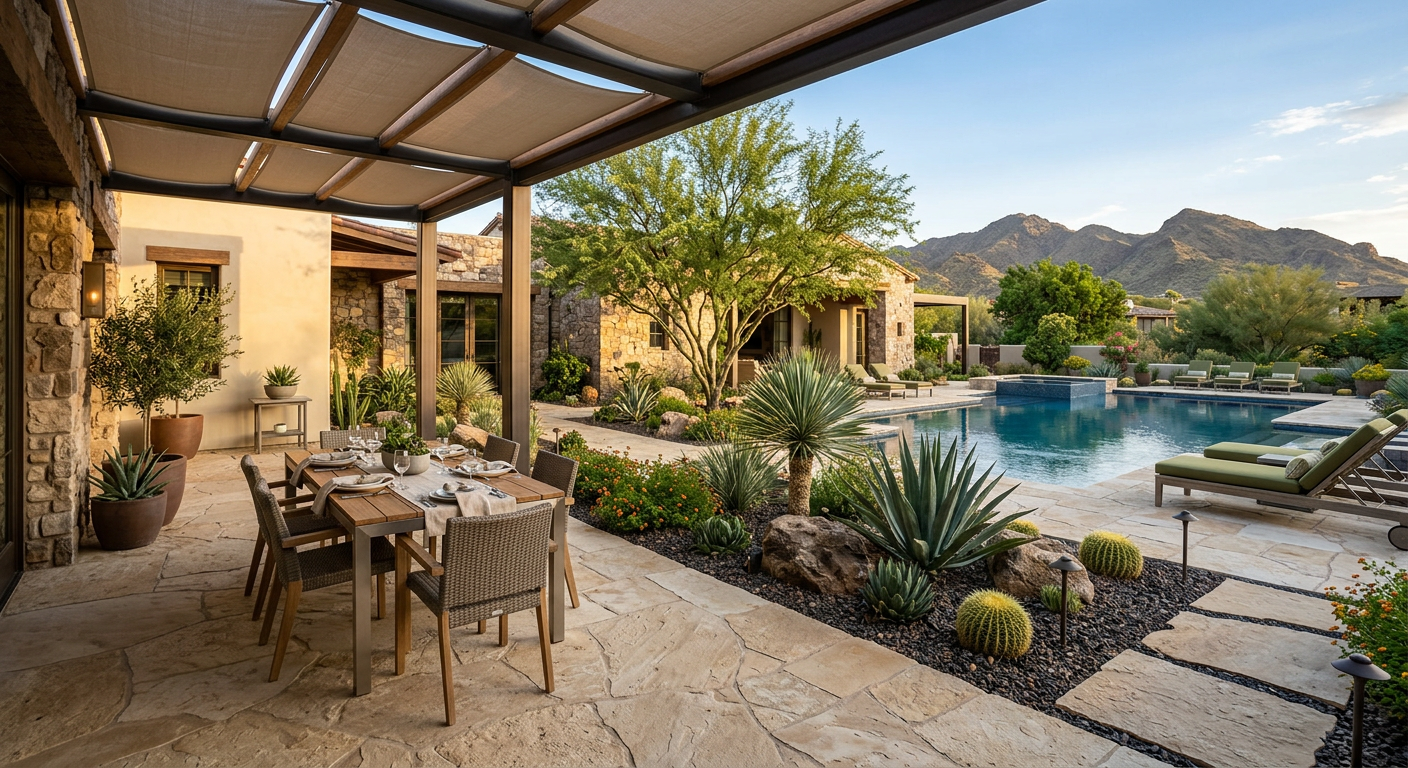
A Practical Hiring Timeline for High-Value Properties
The right timing depends on the scope, but this general sequence helps protect design quality.
During Early Architecture and Site Planning
Engage a landscape architect when the home is still being shaped. This is the ideal phase for site analysis, design direction, exterior circulation, major outdoor rooms, tree preservation, grading coordination, and preliminary budgeting.
Before Pools, Hardscape, and Utilities Are Set
Before pool excavation, patio construction, walls, drainage structures, lighting conduits, and irrigation sleeves are underway, a coordinated plan can help avoid conflicts. This is also the time to make certain that plant areas, equipment access, and service needs are not treated as afterthoughts.
Before Selecting an Installer
A clear design package helps homeowners compare installation proposals based on the same intended scope. It also gives the construction team a shared reference for materials, layout, planting, irrigation, and details.
Janet Waibel's published resources can be helpful for clients and project teams who want a deeper understanding of installation quality and sustainable care. Explore landscape architecture books by Janet Waibel.
Plan Your Landscape Before the Site Limits Your Options
If you are building or remodeling in Tempe, Scottsdale, Paradise Valley, Phoenix, North Scottsdale, Carefree, Cave Creek, or nearby communities, we can help you make important outdoor decisions before they become expensive constraints. A professional landscape architecture process brings clarity to the relationship between your home, site, investment, and long-term goals.
Call (480) 893-3849 or request a landscape architecture consultation with Waibel & Associates.
Questions Homeowners Ask About Hiring a Landscape Architect
When should I hire a landscape architect for a custom home?
Hire a landscape architect during early architectural planning, before the building footprint, grades, pool location, driveway, utilities, and key exterior spaces are finalized. This provides the greatest flexibility and supports a cohesive result.
Is a landscape architect worth it for a major remodel?
Yes, particularly when the remodel changes how the home opens to the outdoors or includes a pool, outdoor kitchen, major hardscape, new planting, irrigation upgrades, drainage work, or mature tree preservation. A coordinated plan helps align those investments.
What is the difference between a landscape architect and a landscaper?
A landscape architect focuses on comprehensive site planning and design, including the relationship between architecture, circulation, grading, planting, irrigation, hardscape, and construction documentation. A landscape contractor typically focuses on installation and may also provide design-build services for defined scopes.
Can a landscape architect help reduce water use in Arizona?
Yes. Water-conscious landscape architecture considers plant selection, shade, hydrozoning, soil conditions, irrigation design, and controller strategy as connected decisions. The goal is to use water thoughtfully while maintaining beauty, comfort, and plant health.
Can mature trees be preserved during a home renovation?
Often, yes, but protection should be planned before construction activity begins. Tree preservation may involve identifying root protection areas, limiting compaction, adjusting grading, and coordinating access and utility routes with the project team.
Do I need a landscape architect before building a pool?
A landscape architect is especially useful before pool construction when the pool is part of a larger outdoor environment. Planning early helps coordinate deck space, shade, views, drainage, planting, lighting, access, equipment screening, and the connection to the house.
The Right Time Is Earlier Than Most People Think
The strongest landscapes are not simply installed after a home is finished. They are planned as a natural extension of the property, with design decisions made early enough to support the architecture, the climate, and the way the owners want to live.
For a custom residence, a major remodel, or an aging landscape ready for meaningful improvement, hiring a landscape architect early can create better choices, clearer construction direction, and a more enduring result.
Talk With an Experienced Arizona Landscape Architect
Whether you are planning a custom home, major residential remodel, outdoor living environment, irrigation upgrade, or sustainable landscape renovation, Waibel & Associates can help create a thoughtful design that complements your property and long-term goals.
Call (480) 893-3849 or contact Waibel & Associates to discuss your project.
About Waibel & Associates Landscape Architecture
Waibel & Associates Landscape Architecture is an Arizona landscape architecture firm led by Janet Waibel, RLA, Owner and Principal. The firm provides custom residential landscape architecture, sustainable landscape design, irrigation planning, tree preservation, outdoor living design, site planning, construction documentation, and professional landscape consulting throughout Tempe, Scottsdale, Paradise Valley, Phoenix, North Scottsdale, Carefree, Cave Creek, and surrounding Arizona communities.
Waibel & Associates focuses on thoughtful, high-quality landscapes that complement the architecture of each property while incorporating appropriate plant materials, water-efficient strategies, irrigation technology, and long-term planning.
Janet Waibel is also a published author whose books provide educational resources on sustainable landscape management and landscape construction.
Planning a custom residential or professional landscape project?
Call (480) 893-3849
or
Contact Waibel & Associates →
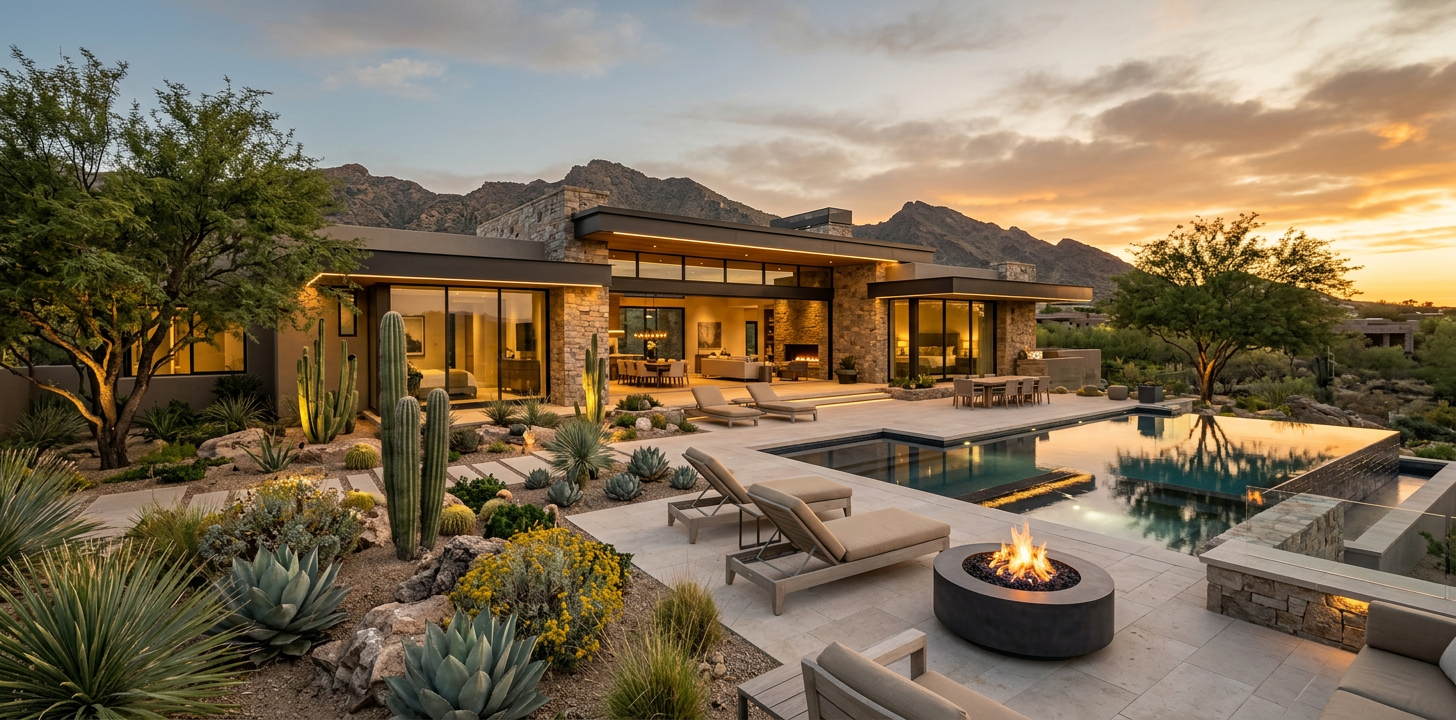
Luxury Landscape Architect Scottsdale: Design for Lasting Value
A remarkable Scottsdale landscape does more than frame a beautiful home. It shapes the arrival sequence, extends daily living outdoors, protects valued site features, and makes architecture feel grounded in its setting.
For homeowners planning a custom build or significant renovation, choosing a luxury landscape architect Scottsdale homeowners can trust is a decision that should happen early, often alongside architectural planning. A professionally planned landscape brings hardscape, planting, irrigation, lighting, drainage, outdoor living, and construction details into one coordinated vision.
What Distinguishes Luxury Residential Landscape Architecture
Luxury is not a longer plant list or a larger pool deck. It is the discipline of making each decision support the property as a whole, from the views seen through interior windows to the way a guest moves from the motor court to the front door.
At its best, custom residential landscape architecture combines creative design with technical coordination. We consider grading, drainage, soil conditions, mature vegetation, privacy, solar exposure, material transitions, irrigation zones, maintenance expectations, and the way the home will be used over time.
| Design Priority | What It Means | Why It Matters |
|---|---|---|
| Architectural connection | Materials and forms support the home | Creates a unified property |
| Outdoor living | Spaces planned around real routines | Improves daily enjoyment |
| Water efficiency | Hydrozones and suitable plant palettes | Reduces waste without sacrificing beauty |
| Construction clarity | Detailed plans and specifications | Helps protect design intent |
A luxury landscape should feel composed, not crowded. Open space, shadows, texture, carefully placed trees, and restrained material selections often create more impact than adding features simply because space is available.
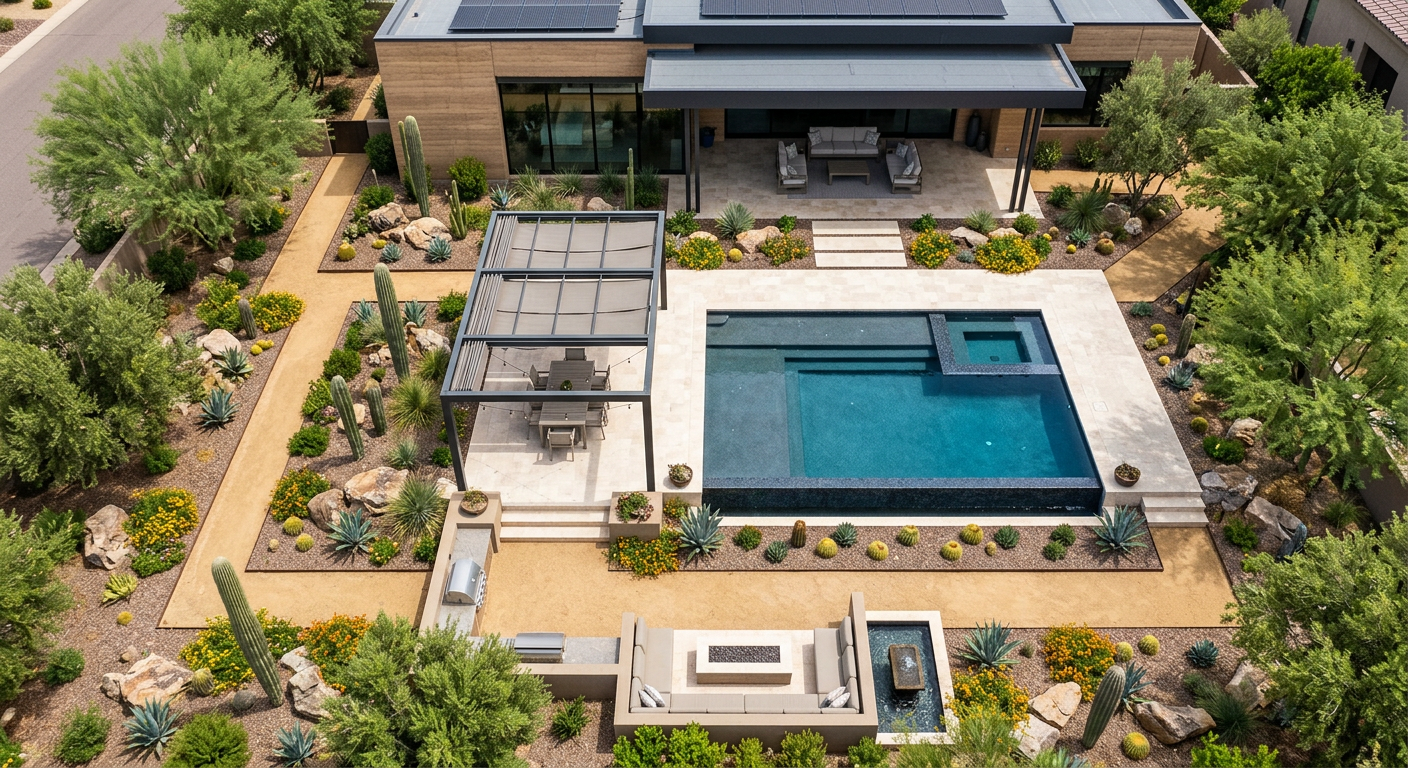
Luxury Landscape Architect Scottsdale Projects Begin With the Site
Every Scottsdale property has a different set of opportunities and constraints. A hillside home, an established estate near Paradise Valley, and a newly built residence in North Scottsdale require different responses, even when the architectural style appears similar.
We begin by understanding the property before prescribing solutions. That may include documenting existing trees, studying sight lines, evaluating drainage patterns, identifying areas of intense reflected heat, and considering how the landscape should relate to neighboring homes and natural desert context.
Preserve What Gives the Property Character
Mature trees and established plant material can provide immediate shade, scale, habitat, and a sense of permanence. When preservation is possible, it should influence building access, utility routes, paving limits, and grading decisions well before construction begins.
Tree protection is not an afterthought added to a construction set. It is part of a site strategy that helps safeguard the elements that make an established property distinctive.
Build Outdoor Rooms With a Purpose
A well-designed outdoor environment creates a sequence of places rather than one oversized patio. Depending on the household, that may include a shaded dining terrace, poolside lounging, a quiet garden court, a fire feature, an outdoor kitchen, a guest approach, or a private morning space off the primary suite.
The important question is not which feature is popular. It is how each space supports the owners' lifestyle while remaining visually connected to the home.
Water-Efficient Design Is Essential to Scottsdale Luxury
Water efficiency and refined design belong together in the Sonoran Desert. The City of Scottsdale notes that 70 percent of residential water use occurs outdoors, making irrigation planning, plant selection, and ongoing system management essential parts of responsible landscape design. City of Scottsdale Water Conservation
A water-wise landscape does not have to look sparse or repetitive. We create richness through layered shade, seasonal color, varied foliage, stone, walls, art, specimen plants, and carefully selected low-water plant communities. The objective is a landscape that feels established and generous while using water with intention.
Design Irrigation as a System, Not an Accessory
Irrigation is often hidden, but its impact is visible everywhere. A thoughtful design separates plants with different water needs, places equipment for access, addresses pressure and coverage, and supports seasonal adjustment.
Scottsdale regulations also emphasize irrigation systems and landscape areas that promote water conservation and prevent overflow or seepage. City of Scottsdale Landscaping Requirements
Choose Materials That Age Well in Desert Conditions
Natural stone, concrete, metal, wood, plaster, and paving all react differently to intense sun, thermal movement, irrigation overspray, and heavy use. Material selections should relate to the architecture, but they also need appropriate detailing, drainage, and realistic maintenance expectations.
This is where professional construction documents matter. They help translate a design concept into information contractors can price, build, and coordinate with confidence.
Planning a Custom Scottsdale Outdoor Environment?
If you are building or remodeling a home in Scottsdale, Paradise Valley, Phoenix, or the East Valley, early landscape planning can help align the architecture, site work, pool, outdoor living areas, and irrigation strategy before costly changes arise in the field.
Call (480) 893-3849 to discuss your project with Waibel & Associates.
Why Timing Matters for a Custom Home or Major Remodel
The most effective time to involve a landscape architect is before building placement, exterior elevations, pool design, and utility planning are fully fixed. Early coordination creates room to protect trees, reserve soil volumes, establish grade transitions, plan drainage, and locate major outdoor spaces where they will feel natural.
When landscape design begins only after the home is nearly complete, key decisions may already be constrained. The result can be compromised shade, awkward circulation, limited planting areas, or expensive revisions to hardscape and irrigation.
For homeowners and project teams, our residential landscape architecture approach supports outdoor spaces that complement the house and respond to how the property will actually be used. Our landscape architecture services also include planning, planting and irrigation design, municipal coordination, and construction administration.
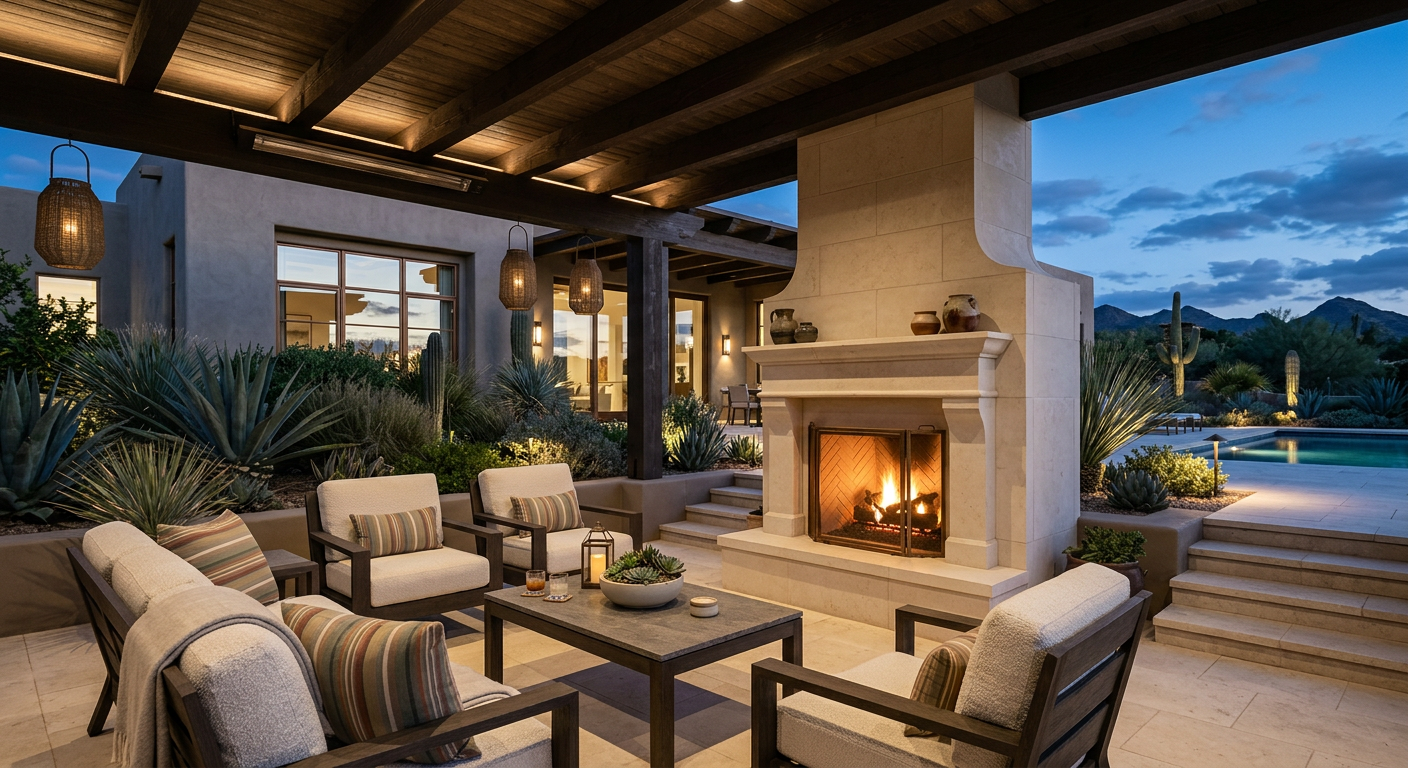
A Professional Process Protects Design Intent
A strong design process provides enough creativity to make the landscape memorable and enough documentation to make it buildable. It also creates a framework for clear decisions as the project moves from concept through installation.
Typical phases may include:
- Site assessment, programming, and design priorities
- Conceptual landscape plans and visual direction
- Planting, hardscape, lighting, and irrigation development
- Construction documents, specifications, and cost coordination
- Collaboration with architects, builders, pool consultants, and specialty trades
- Construction observation or administration as appropriate
Janet Waibel, RLA, Owner and Principal of Waibel & Associates Landscape Architecture, brings experience in landscape design, planning, irrigation, construction documentation, and project implementation. Her perspective is especially valuable when a landscape must balance strong visual character with practical long-range performance.
For homeowners, builders, and property decision-makers who want deeper guidance on sustainable landscapes and construction quality, Janet's published resources are also available through Landscape Architecture Books by Janet Waibel.
How to Select the Right Landscape Architect for a Scottsdale Estate
The right fit is not simply a matter of style. Look for a professional who can listen closely, assess the site, communicate with the project team, and create a design that is both imaginative and technically resolved.
Ask prospective firms how they address these issues:
- How will the landscape relate to the home's architecture and interior views?
- What is the approach to mature trees, shade, drainage, and desert heat?
- How are planting and irrigation designed for long-term performance?
- What level of construction documentation will be provided?
- How will the landscape architect coordinate with the builder, pool contractor, and other consultants?
- Is construction administration available to help maintain quality during installation?
The answers reveal whether the firm is prepared to lead a comprehensive design effort rather than provide a disconnected planting plan.
Frequently Asked Questions
What does a luxury landscape architect in Scottsdale do?
A luxury landscape architect plans the complete exterior environment for a custom property. This can include site planning, hardscape, planting, irrigation, lighting, drainage, outdoor living, tree preservation, construction documents, and coordination with architects and builders.
When should we hire a landscape architect for a custom Scottsdale home?
We recommend involving a landscape architect during early architectural planning. This helps coordinate building placement, views, outdoor rooms, grades, drainage, utilities, pools, shade, and existing vegetation before major decisions are locked in.
Can a water-efficient landscape still feel lush and high-end?
Yes. A sophisticated desert landscape can feel layered, shaded, and visually rich through appropriate trees, plant groupings, stone, art, architectural walls, lighting, and intelligent irrigation design. Luxury comes from composition and quality, not excess water use.
What is the difference between a landscape architect and a landscaper?
A landscape architect provides professional planning and design that can integrate complex site conditions, construction documents, irrigation, grading, and project coordination. A landscape contractor typically installs and maintains landscapes, though responsibilities vary by firm and project.
Can mature trees be preserved during a remodel?
Often, yes, if assessment and protection begin early. Successful preservation depends on tree condition, root zones, construction access, grading, utility routes, and the willingness of the project team to protect the tree throughout construction.
Does Waibel & Associates work with architects and custom home builders?
Yes. We collaborate with architects, builders, pool consultants, and specialty trades to help ensure the exterior environment supports the larger project vision and can be built with clear, coordinated information.
A Landscape Should Be as Considered as the Home It Surrounds
A truly successful Scottsdale landscape is not a finishing layer applied after construction. It is part of the property's architecture, experience, comfort, and long-range value. When site planning, outdoor living, planting, irrigation, and construction details are considered together, the result can feel natural, enduring, and uniquely suited to the home.
Discuss Your Scottsdale Landscape Architecture Project
Whether you are planning a custom home, major residential remodel, outdoor living environment, irrigation upgrade, or sustainable landscape renovation, we can help create a thoughtful design that complements your property and long-term goals.
Call (480) 893-3849 or contact Waibel & Associates to request a landscape architecture consultation.
About Waibel & Associates Landscape Architecture
Waibel & Associates Landscape Architecture is an Arizona landscape architecture firm led by Janet Waibel, RLA, Owner and Principal. The firm provides custom residential landscape architecture, sustainable landscape design, irrigation planning, tree preservation, outdoor living design, site planning, construction documentation, and professional landscape consulting throughout Tempe, Scottsdale, Paradise Valley, Phoenix, North Scottsdale, Carefree, Cave Creek, and surrounding Arizona communities.
Waibel & Associates focuses on thoughtful, high-quality landscapes that complement the architecture of each property while incorporating appropriate plant materials, water-efficient strategies, irrigation technology, and long-term planning.
Janet Waibel is also a published author whose books provide educational resources on sustainable landscape management and landscape construction.
Planning a custom residential or professional landscape project?
Call (480) 893-3849
or
Contact Waibel & Associates
High End Backyard Design Ideas for Scottsdale Luxury Residences
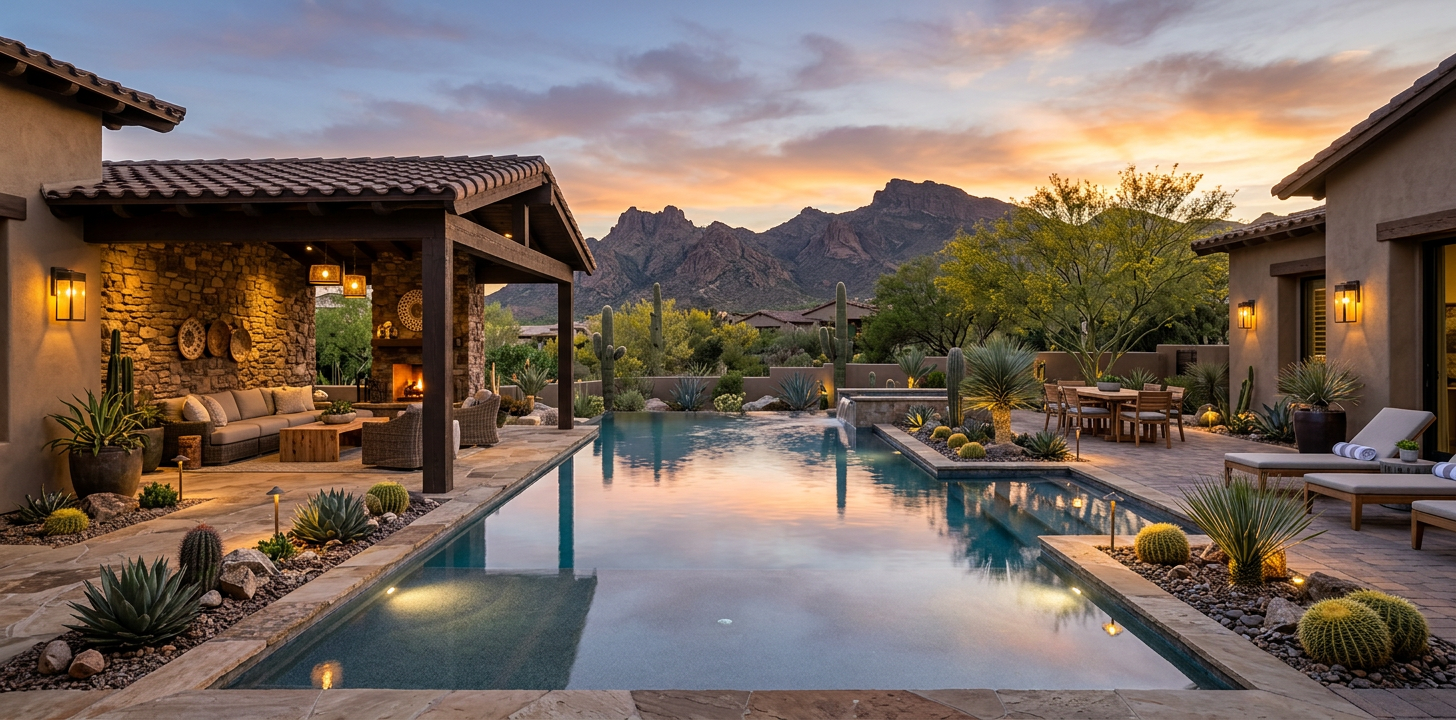
A memorable backyard is not created by adding more features. It is created by giving every feature a purpose, from the view seen through the home’s glass doors to the comfort of a shaded dining area in late afternoon. For luxury homes in Scottsdale, Paradise Valley, Phoenix, and the East Valley, the strongest outdoor environments feel inevitable, as if the architecture and landscape were designed together from the beginning.
The best high end backyard design ideas combine spatial planning, durable materials, water-wise planting, shade, lighting, and carefully detailed amenities. Instead of treating the yard as a collection of separate purchases, we recommend thinking of it as a complete exterior living environment that supports daily routines, entertaining, privacy, and long-term property value.
Begin With an Outdoor Plan, Not a List of Features
A pool, fire feature, outdoor kitchen, and pergola can all be beautiful. But they will not automatically create a cohesive backyard. Before selecting amenities, establish the overall composition: primary views, circulation routes, sun exposure, grade changes, existing trees, privacy needs, and the relationship between indoor rooms and exterior spaces.
For a custom home or major remodel, the backyard should extend the architectural language of the residence. A contemporary home may call for clean planes, large-format paving, restrained plant masses, and precisely integrated lighting. A more traditional or desert-inspired property may benefit from textured stone, layered planting, intimate courtyards, and a softer progression from house to garden.
At a glance, successful luxury outdoor spaces tend to balance these priorities:
| Design Priority | What It Achieves | Planning Consideration |
|---|---|---|
| Indoor-outdoor connection | A unified home experience | Views, door locations, floor elevations |
| Shade and comfort | More usable time outdoors | Solar orientation, breeze, rooflines |
| Water-wise planting | Beauty with responsible water use | Hydro-zones, soil, irrigation |
| Material continuity | A custom, architectural appearance | Color, texture, slip resistance |
| Layered lighting | Ambiance and safe movement | Glare control, fixture placement |
A professional site analysis can also identify opportunities that are easy to miss, such as preserving a mature specimen tree, framing a mountain view, or shifting a patio to create better shade. Our residential landscape architecture approach considers these decisions as part of one design, rather than asking the homeowner to solve them one feature at a time.
High End Backyard Design Ideas That Add Lasting Value
Create Outdoor Rooms With a Clear Purpose
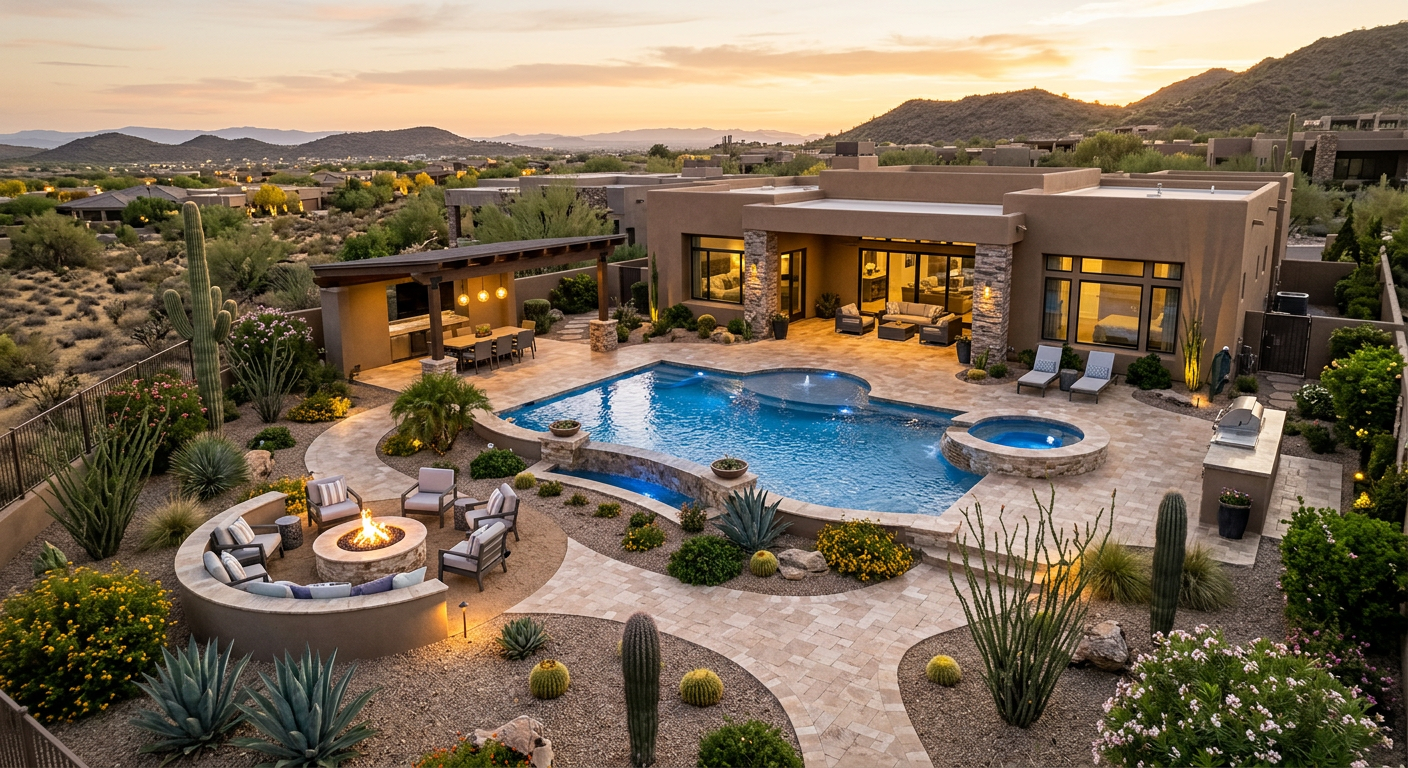
Luxury backyards work best when they feel like a sequence of intentional rooms rather than one oversized patio. A covered lounge near the family room might serve quiet mornings and casual evenings, while a separate dining terrace supports larger gatherings. A poolside retreat can be positioned for sun and views without interrupting conversations around the kitchen or fire feature.
Use changes in paving, low walls, planting, ceiling treatments, or elevation to define each area without making the yard feel compartmentalized. Thoughtful circulation is essential. Guests should be able to move from the house to the pool, dining area, and landscape without crossing cooking zones or squeezing between furniture.
Make Shade Part of the Architecture
In Arizona, shade is a fundamental design material. Deep overhangs, covered patios, ramadas, pergolas, shade structures, and strategically placed trees can make the difference between an outdoor area that looks impressive and one that is genuinely comfortable.
The most successful structures are scaled to the home and positioned in response to sun angles, not simply placed over a patio after construction. Consider ceiling fans, integrated heaters where appropriate, subtle lighting, and finished ceiling materials that relate to the interior palette. For open views, shade can also be framed to protect comfort while preserving the visual connection to the landscape.
Design a Pool Area as a Resort-Quality Composition
A luxury pool should feel integrated with the entire site. Rather than letting the pool dominate every decision, use its placement, waterline, surrounding paving, planting, and lighting to establish a composed visual experience from inside and outside the home.
Material selection deserves close attention. Coping, deck surfaces, wall finishes, and waterline tile should complement the home’s exterior materials while performing well under desert sun and foot traffic. Consider whether a shallow lounging shelf, spa, water feature, or cabana truly supports the way the household will use the space. The right answer is different for a family-focused property, a second home, or a residence built around entertaining.
Build a Kitchen and Dining Area for Real Use
An outdoor kitchen becomes valuable when it supports how people actually gather. That usually means generous counter space, convenient circulation, weather-resistant storage, well-located utilities, and a nearby dining space that does not require a long walk from the interior kitchen.
Avoid treating appliances as the entire design. The surrounding finishes, backsplash or wall material, shade coverage, seating configuration, and lighting determine whether the area feels polished and useful. A carefully designed beverage station, pizza oven, or serving counter may be more meaningful than a crowded lineup of specialty equipment.
Use Water-Wise Planting and Irrigation as Luxury Features
Sustainable planning is not a compromise in high-end residential work. In fact, resilient desert planting can deliver some of the most striking color, form, fragrance, and seasonal interest in an Arizona landscape. The goal is not to make everything sparse. It is to select plants with a purpose and provide the soil preparation, spacing, irrigation, and maintenance expectations they need to thrive.
The U.S. Environmental Protection Agency reports that outdoor water use can account for as much as 60 percent of household water use in arid regions. It also notes that replacing a clock-based controller with a WaterSense labeled irrigation controller can reduce an average home’s irrigation water use by up to 30 percent. EPA WaterSense
For a refined landscape, group plants by water needs, use irrigation zones that match those needs, and plan for mature sizes rather than installing plants too tightly. Desert trees can establish shade and vertical structure. Accent trees, agaves, flowering shrubs, ornamental grasses, and groundcovers can create a layered garden with seasonal character. When the palette is coordinated with the architecture, drought-tolerant planting looks intentional and elevated.
Preserve Mature Trees and Work With the Site
Established trees can be among the most valuable elements on a property, especially where they provide shade, scale, and a sense of permanence. Before demolition or construction begins, evaluate which trees are worth protecting and what their root zones need to remain viable.
Tree preservation must be integrated into grading, utility routing, hardscape layout, and construction access. It is difficult to protect a tree after these decisions have already been made. The same principle applies to drainage, existing slopes, and views. Good landscape architecture resolves these site realities early, when the design still has room to respond.
Plan a Layered Lighting Experience
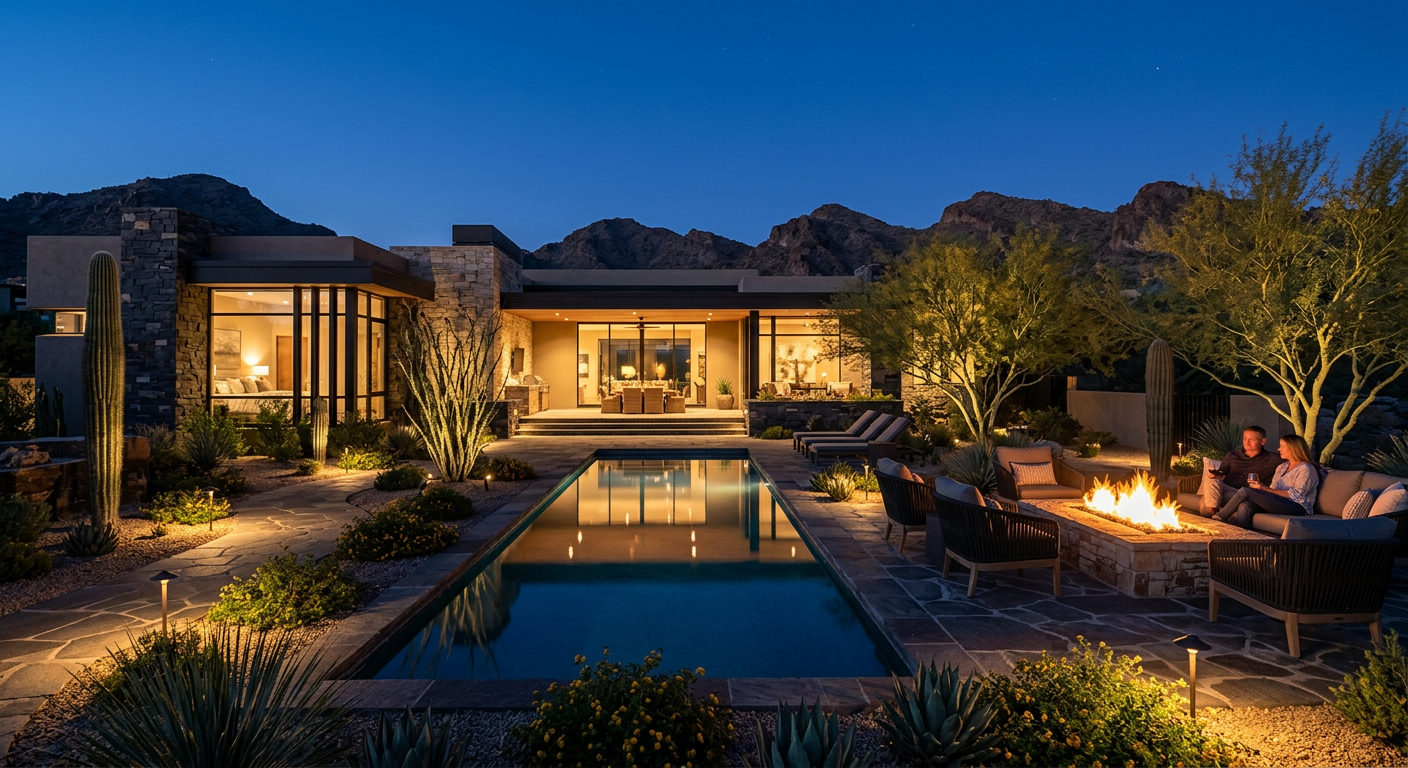
Outdoor lighting should make the backyard more inviting after sunset without creating glare or visual clutter. Start with the essential layers: safe paths and steps, gentle illumination at entries, low-level light for seating and dining, and selective accents for important trees, walls, artwork, or water.
Avoid trying to light every plant or surface. Darkness is part of the composition. A restrained approach creates depth and atmosphere, while poorly aimed fixtures can distract from the architecture, disturb neighboring properties, and make a beautiful landscape feel overdesigned.
Planning a Custom Backyard in Arizona?
If you are building a custom home or renovating an established property in Scottsdale, Paradise Valley, Tempe, Phoenix, Carefree, Cave Creek, or North Scottsdale, early landscape planning can help align the outdoor environment with the architecture, construction schedule, and long-term budget.
We provide landscape architecture services that can include site planning, planting and irrigation design, construction documentation, and construction administration. To discuss a high-value residential project, call (480) 893-3849 or request a landscape architecture consultation.
Avoid These Common Luxury Backyard Mistakes
A large budget does not protect a project from poor sequencing. One of the most common mistakes is beginning landscape construction after the home is complete, with little coordination between exterior doors, drainage, grading, utility locations, and outdoor amenities. That can lead to expensive revisions and a backyard that feels disconnected from the residence.
Another mistake is choosing too many competing materials and focal points. High-end design often feels quieter than expected because it relies on proportion, repetition, quality materials, and detailed execution. Fewer, better choices usually create a more enduring result.
Finally, do not leave irrigation, drainage, soil improvement, and maintenance access until the end. These systems are foundational to the long-term health of the landscape. Janet Waibel, RLA, brings extensive experience in planning, irrigation, sustainable landscapes, and construction to the work. Homeowners and project teams can also explore landscape architecture books by Janet Waibel for practical education on sustainable landscape management and construction.
Frequently Asked Questions
What makes a backyard design feel high end?
A high-end backyard is cohesive, site-specific, and built with durable materials and thoughtful details. It relates to the architecture of the home, creates comfortable outdoor rooms, and integrates planting, irrigation, lighting, hardscape, and amenities into one complete composition.
Should landscape design begin before a custom home is built?
Yes. Early landscape planning helps coordinate finished floor elevations, views, drainage, pool placement, shade structures, utilities, tree preservation, and exterior room locations. This reduces conflicts during construction and creates a stronger connection between home and landscape.
What are the best plants for a luxury Arizona backyard?
The right plant palette depends on the site, architecture, sun exposure, soil, irrigation capacity, and desired style. A professional plan may combine desert-adapted trees, flowering shrubs, specimen plants, ornamental grasses, and groundcovers for shade, texture, color, and seasonal interest.
Can a luxury backyard be water efficient?
Yes. Water efficiency comes from site-appropriate plants, hydro-zoning, soil preparation, properly designed irrigation, smart controls, and ongoing oversight. These decisions can support a lush, layered appearance while avoiding wasteful watering practices.
Is a landscape architect different from a landscape contractor?
A landscape architect focuses on planning and design, including site analysis, spatial layout, grading concepts, planting, irrigation, materials, construction documents, and coordination. A landscape contractor typically installs the work, although firms may offer both design and construction-related services.
Does Waibel & Associates work on major backyard renovations?
Yes. Waibel & Associates Landscape Architecture works on custom residential landscapes, renovations, aging landscape improvements, irrigation updates, and outdoor living environments throughout the greater Phoenix area.
A Well-Planned Backyard Becomes Part of the Home
The most enduring high end backyard design ideas are not trends. They are decisions that make the property more comfortable, more beautiful, and easier to enjoy across changing seasons and years of ownership. Begin with the site, respect the architecture, invest in shade and infrastructure, and let materials and planting create a distinctive sense of place.
When those decisions are made as one coordinated plan, the backyard can become one of the home’s most valuable living spaces.
Talk With an Experienced Arizona Landscape Architect
Whether you are planning a custom home, major residential remodel, pool environment, outdoor kitchen, irrigation upgrade, or sustainable landscape renovation, we can help create an outdoor setting that complements your property and long-term goals.
Call (480) 893-3849 or contact Waibel & Associates to discuss your project.
About Waibel & Associates Landscape Architecture
Waibel & Associates Landscape Architecture is an Arizona landscape architecture firm led by Janet Waibel, RLA, Owner and Principal. The firm provides custom residential landscape architecture, sustainable landscape design, irrigation planning, tree preservation, outdoor living design, site planning, construction documentation, and professional landscape consulting throughout Tempe, Scottsdale, Paradise Valley, Phoenix, North Scottsdale, Carefree, Cave Creek, and surrounding Arizona communities.
Waibel & Associates focuses on thoughtful, high-quality landscapes that complement the architecture of each property while incorporating appropriate plant materials, water-efficient strategies, irrigation technology, and long-term planning.
Janet Waibel is also a published author whose books provide educational resources on sustainable landscape management and landscape construction.
Planning a custom residential or professional landscape project?
Call (480) 893-3849
or
Contact Waibel & Associates →