 Demo Demo
Irrigation Design for Luxury Landscapes in Phoenix Homes
A beautiful high-end landscape in Phoenix should feel effortless, but that appearance depends on a carefully engineered irrigation system below and behind the visible design. Irrigation design for luxury landscapes in Phoenix is not simply a matter of adding drip lines and setting a controller. It is a coordinated plan for plant health, water efficiency, architecture, outdoor living, and long-term stewardship of the property.
We approach irrigation as part of the overall landscape architecture, not an afterthought assigned after paving, planting, lighting, and pool work are already decided. For custom homes and major renovations in Phoenix, Scottsdale, Paradise Valley, and the East Valley, that early coordination can protect mature trees, reduce avoidable water waste, and preserve the clean visual character owners expect from a luxury property.
A Luxury Irrigation System Starts With the Landscape Plan
The best irrigation design begins by defining what each area of the property needs before pipes are sized or valves are selected. A unified plan considers sun exposure, reflected heat, grade changes, soil conditions, drainage, plant maturity, hardscape layout, and how people will use the outdoor rooms.
A courtyard with container specimens, a shaded entry garden, a poolside planting composition, and a perimeter screen may sit within the same property, but they should not automatically share a watering schedule. Each has different exposure, plant material, root depth, and seasonal demand. Separating these needs into practical irrigation zones allows the landscape to receive intentional care rather than one-size-fits-all watering.
For homeowners planning a custom home or substantial renovation, our residential landscape architecture services integrate planting, paving, outdoor living areas, lighting, and irrigation into a cohesive outdoor environment. This helps prevent a common and expensive problem: having to alter completed hardscape or disturb finished planting beds because the irrigation system was not planned early enough.
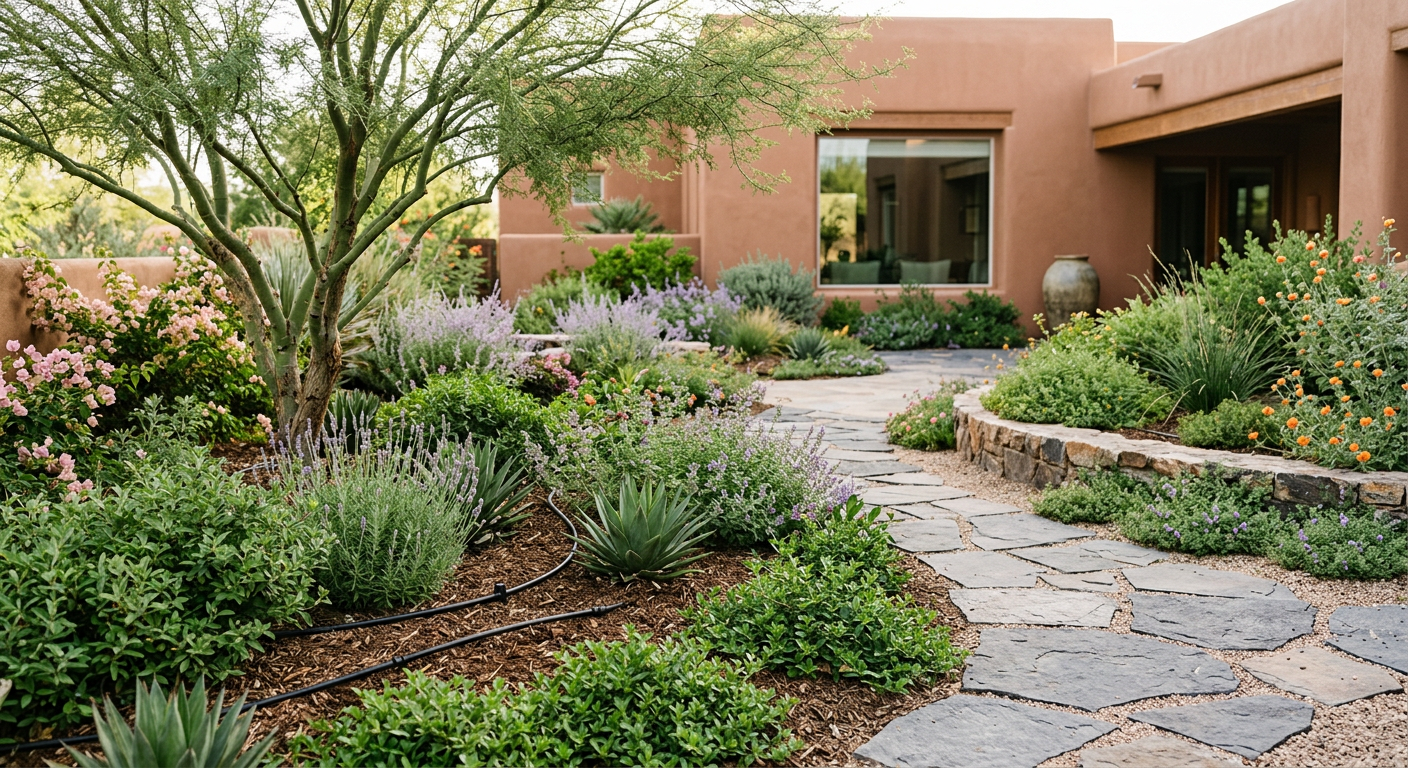
Why Water Efficiency Belongs in High-End Landscape Design
Water-conscious planning does not require a sparse or uninspired landscape. It requires putting water where it delivers the most value, then selecting plants and irrigation methods that support the intended visual result.
The Arizona Department of Water Resources notes that as much as 70 percent of residential water use can occur outdoors, and it emphasizes that regionally appropriate design, plant selection, and irrigation practices can significantly reduce landscape water use. Arizona Department of Water Resources
For a Phoenix-specific example, the U.S. Environmental Protection Agency modeled a typical home on a 10,000-square-foot lot. Its efficient example, using 20 percent less irrigable area, pressure-compensating drip irrigation for non-turf areas, efficient spray components for turf, and a WaterSense-labeled controller, used less than 182,000 gallons annually compared with 261,000 gallons in the baseline example. That represents estimated savings of at least 79,000 gallons, or 30 percent. Actual results depend on the property, installation quality, plant palette, weather, and ongoing management, but the comparison shows why landscape and irrigation must be designed together. U.S. Environmental Protection Agency
Luxury is not measured by the volume of water applied. It is measured by the quality, resilience, and refinement of the landscape over time.
The Design Details That Separate Thoughtful Irrigation From Basic Installation
A high-performing system is shaped by several technical choices that work together. The equipment matters, but the design logic matters more.
Hydrozones That Match Plant Needs
We group compatible plant materials by water requirement, exposure, and irrigation method. A mature desert tree, a shaded ornamental understory, seasonal color, and a small functional turf area should not be managed as if they have identical needs.
Hydrozoning helps avoid the two problems that often appear together in established landscapes: overwatered low-water plants and stressed higher-water plantings. It also makes seasonal adjustments more precise and manageable.
Pressure Regulation and Proper Distribution
Drip irrigation is not automatically efficient if pressure is inconsistent, emitters are poorly spaced, or a zone is overloaded. Pressure-compensating components, appropriate filtration, correctly sized pipe, and accessible valves help deliver water more evenly across the landscape.
For turf or other areas requiring overhead irrigation, head-to-head coverage, matched precipitation rates, and carefully selected nozzles matter. Spray reaching walls, patios, driveways, or the pool deck is a visible sign of poor coordination and a needless use of water.
Smart Controllers With Professional Programming
A weather-based controller can be valuable, but it does not replace design expertise or active oversight. The controller needs a logical zone map, appropriate seasonal programming, rain and freeze responses where applicable, and adjustments as plant material matures.
The EPA’s WaterSense Water Budget Tool was developed to help designers, builders, and property owners compare projected landscape water use by zone against typical new-construction practices. A water budget gives the project team a useful planning framework, while real-time site conditions guide actual scheduling.
Tree Preservation and Root-Zone Protection
Mature trees can be among the most valuable living features of a Phoenix property. Their irrigation needs, existing root zones, and future construction protection should be evaluated before a new pool, retaining wall, driveway, guest casita, or outdoor kitchen is installed.
An irrigation renovation can be an opportunity to correct damaging watering patterns around established trees. The goal is to support healthy root development without saturating the trunk area or creating conflicts with foundations, paving, and drainage.
Designing for Phoenix Heat, Architecture, and Outdoor Living
Phoenix irrigation design must account for more than average temperatures. Heat reflected from glass, masonry, and paving can raise stress levels in narrow planting beds. Slopes can create runoff. Pool decks and outdoor kitchens limit where irrigation components can be placed. A system needs to respond to the actual microclimates created by the home.
This is especially important in luxury landscapes, where water features, fire features, specimen plants, artistic paving, and large outdoor gathering areas may sit close together. We coordinate irrigation sleeves and routing before hardscape is installed, then document key components so future service does not become a guessing game.
For developers, HOAs, and property managers, a well-documented irrigation plan also supports more consistent operations. Our private development and landscape improvement work reflects the value of planning landscapes that are visually strong while remaining practical to manage over time.
What to Address Before Construction Begins
The strongest time to make irrigation decisions is during design development, not when installation is underway. Early decisions reduce field changes and help the project team coordinate between landscape, architecture, civil engineering, pool design, and construction trades.
Before work begins, we recommend confirming:
- The intended plant palette and mature plant sizes
- Areas that will be non-irrigated, minimally irrigated, or regularly irrigated
- Locations of utility connections, valves, controllers, sleeves, and backflow protection
- Existing trees or plants that need protection during grading and construction
- Drainage patterns, including areas where runoff should be directed or captured
- Paving, wall, pool, and outdoor kitchen details that affect pipe routing
- Future access for maintenance, repairs, and controller programming
- A clear irrigation schedule and commissioning process at project completion
This is where professional landscape architecture adds value beyond choosing products. Waibel & Associates landscape architecture services include planting and irrigation design, site planning, and construction administration so the design intent can carry through to installation.
Planning a Custom Phoenix Landscape Project?
If you are building or remodeling a home in Phoenix, Tempe, Scottsdale, Paradise Valley, Carefree, Cave Creek, or North Scottsdale, irrigation should be planned alongside the landscape and architecture, not added after construction decisions are fixed. We can help you create a water-conscious outdoor environment that supports the property’s aesthetic, function, and long-term value.
Request a Landscape Architecture Consultation → or call (480) 893-3849.
The Long-Term Value of a Documented Irrigation Plan
A luxury landscape evolves. Plants grow, shade patterns change, owners add amenities, and property management responsibilities may shift. A documented system gives future owners, contractors, and managers a better starting point than a collection of unidentified valves and improvised controller settings.
We recommend retaining irrigation plans, valve charts, controller information, planting plans, and notes about seasonal adjustments. This record becomes particularly useful when diagnosing a stressed planting area, modifying outdoor living spaces, or planning a phased landscape renovation.
Janet Waibel, RLA, brings decades of planning, design, irrigation, construction, and sustainable landscape experience to this work. Her published resources also support thoughtful long-term landscape stewardship, including information relevant to irrigation efficiency and landscape care. Explore Landscape Architecture Books by Janet Waibel.
Frequently Asked Questions
Is drip irrigation always the right choice for a Phoenix luxury landscape?
Drip irrigation is often an excellent choice for trees, shrubs, groundcovers, and many planted areas, but it is not the only appropriate method. The right approach depends on plant type, layout, maintenance access, soil, slope, and the desired landscape character. Some functional turf or specialized areas may require properly designed overhead irrigation.
Can a water-efficient landscape still include a lawn?
Yes, but lawn should be used intentionally and sized for how the property will be enjoyed. A smaller, well-designed turf area for play, pets, or visual relief can coexist with low-water plantings, shade trees, patios, and outdoor rooms. The key is matching irrigation method and scheduling to the turf area rather than extending turf where it adds little functional value.
When should irrigation design happen in a custom-home project?
Irrigation design should begin during landscape design and before final hardscape and pool construction documents are completed. Early coordination allows sleeves, utilities, drainage, and root-zone protections to be integrated before concrete, stone, walls, and planting are installed.
How often should a Phoenix irrigation system be inspected?
A professional inspection at least seasonally is a sound practice, with additional review after major construction, landscape changes, or unusual water use. Controllers should be adjusted throughout the year because plant demand changes with temperature, rainfall, shade, and maturity.
Can irrigation be upgraded without replacing the entire landscape?
Yes. A phased renovation can address failing valves, poor pressure regulation, inappropriate spray coverage, controller programming, or inefficient zones while preserving valuable plants and hardscape. The best first step is assessing the existing system alongside the landscape’s current and future needs.
Why do mature trees decline after a landscape renovation?
Tree decline can occur when grading, compaction, root disturbance, drainage changes, or abrupt irrigation changes affect the root zone. Protecting established trees requires planning before construction and coordinating all trades around the tree preservation strategy.
A Better Standard for Watering a Luxury Landscape
The most successful Phoenix landscapes are not watered uniformly. They are planned as living systems, with distinct spaces, plant communities, materials, and microclimates working together. Thoughtful irrigation design makes that complexity manageable while protecting the beauty and investment of the property.
When irrigation is integrated with architecture, plant selection, drainage, and outdoor living, the result can look refined in every season while using water more responsibly. That is the standard we believe luxury landscape architecture should meet.
Talk With an Experienced Arizona Landscape Architect
For a custom home, major remodel, outdoor living environment, irrigation upgrade, or sustainable landscape renovation, we can help shape a design that complements your architecture and supports long-term performance. Speak with Waibel & Associates about a tailored landscape architecture approach for your Phoenix-area property.
Call (480) 893-3849 or Contact Waibel & Associates →.
About Waibel & Associates Landscape Architecture
Waibel & Associates Landscape Architecture is an Arizona landscape architecture firm led by Janet Waibel, RLA, Owner and Principal. The firm provides custom residential landscape architecture, sustainable landscape design, irrigation planning, tree preservation, outdoor living design, site planning, construction documentation, and professional landscape consulting throughout Tempe, Scottsdale, Paradise Valley, Phoenix, North Scottsdale, Carefree, Cave Creek, and surrounding Arizona communities.
Waibel & Associates focuses on thoughtful, high-quality landscapes that complement the architecture of each property while incorporating appropriate plant materials, water-efficient strategies, irrigation technology, and long-term planning.
Janet Waibel is also a published author whose books provide educational resources on sustainable landscape management and landscape construction.
Planning a custom residential or professional landscape project?
Call (480) 893-3849
or
Contact Waibel & Associates →

Demo Demo
Nemo enim ipsam voluptatem quia voluptas sit aspernatur odit fugitquia consequuntur magni dolores eos qui ratione voluptatem sequi nesciun tosomo. Nemo enim ipsam voluptatem quia voluptas sit aspernatur.