Water-Efficient Landscape Planning in Arizona for Luxury Homes
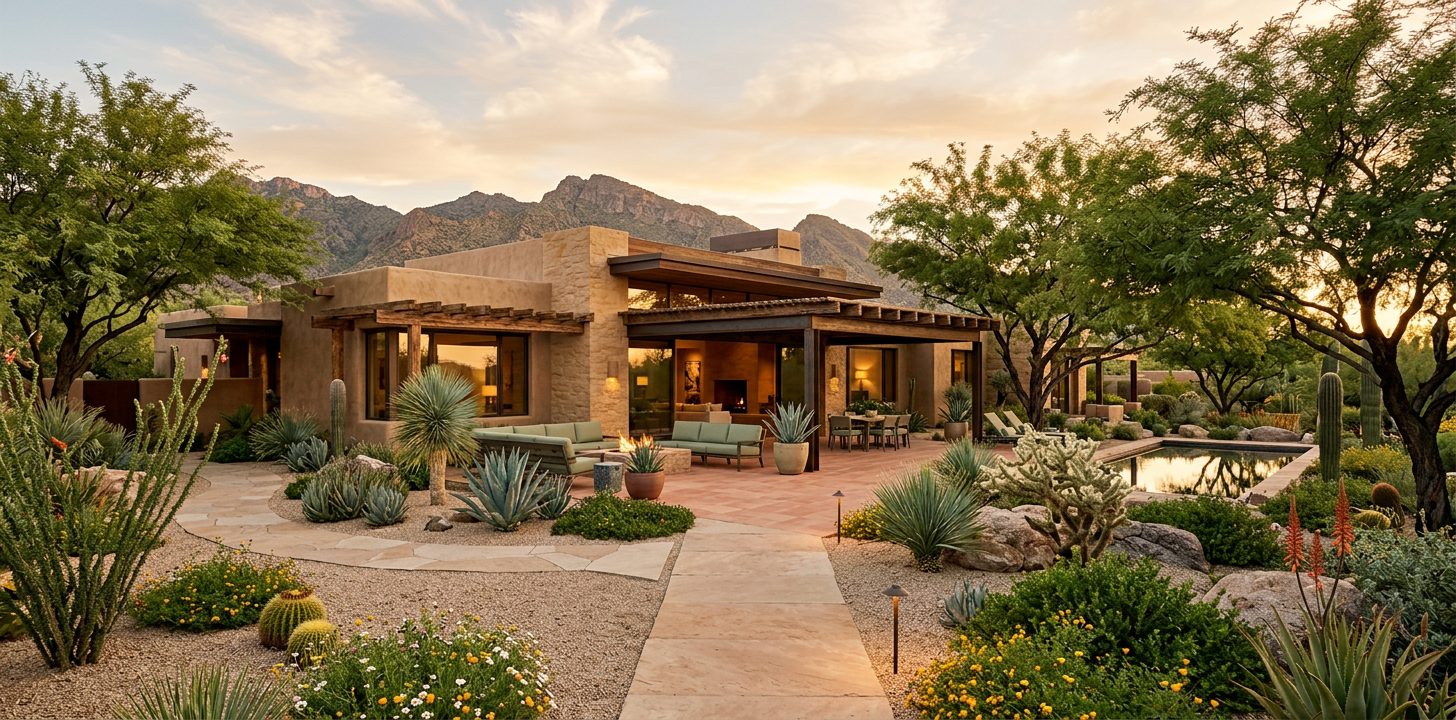
A beautiful Arizona landscape does not need oversized turf or water-intensive planting to feel generous, refined, and comfortable. The strongest properties use shade, plant communities, grading, irrigation, and outdoor living areas as one coordinated system.
Water-efficient landscape planning in Arizona begins long before plants are installed. For custom homes, major remodels, estate properties, and HOA improvements, it means studying how the site handles sun, heat, rain, views, circulation, and long-term maintenance, then making design decisions that support both the architecture and responsible water use.
The stakes are meaningful. The Arizona Department of Water Resources reports that landscaping is the state’s largest use of potable water and that outdoor use can account for as much as 70 percent of residential water use. Thoughtful planning gives owners a practical opportunity to improve efficiency while creating an outdoor environment that feels distinctly suited to the Sonoran Desert.
Water Efficiency Should Shape the Design From the Start
The most successful water-conscious landscapes are not simplified versions of conventional yards. They are carefully composed outdoor environments where every major element has a purpose, from a canopy tree shading a patio to a planted basin receiving roof runoff.
For a luxury residence in Scottsdale, Paradise Valley, Tempe, or North Scottsdale, we begin with the larger site framework. That includes the home’s architectural character, the orientation of windows and outdoor rooms, existing grades, drainage routes, privacy needs, mature trees, and the way the owners expect to live outside.
This early work prevents expensive compromises later. When landscape planning waits until construction is already underway, the project team may lose opportunities to preserve valuable trees, create usable shade, coordinate utilities, direct runoff into planting areas, or establish practical irrigation zones.
Plan Shade Before Filling Beds With Plants
Shade is one of the most valuable forms of landscape performance in Arizona. It can make a pool terrace, outdoor dining space, entry court, or kitchen-adjacent patio more comfortable during much of the year.
We look at where shade will matter most at different times of day. Existing trees may be worth preserving, while new canopy trees, shade structures, screens, and carefully positioned planting can improve comfort without relying on excessive water use. The result is a landscape with a stronger relationship to the home and a more inviting sequence of outdoor rooms.
Treat Grading as a Water Resource Decision
A landscape plan should direct rainfall to places where it can benefit the property. Shallow basins, subtle swales, and properly graded planting areas can help slow, spread, and retain water rather than sending it immediately toward the street or a drain.
The University of Arizona Cooperative Extension notes that passive rainwater harvesting can supplement landscape irrigation and help mitigate stormwater impacts in Arizona and the desert Southwest. On a residential site, this approach must be coordinated with drainage, finished floor elevations, hardscape, and planting requirements, not added as an afterthought.
Build Plant Communities Around Hydrozone Planning
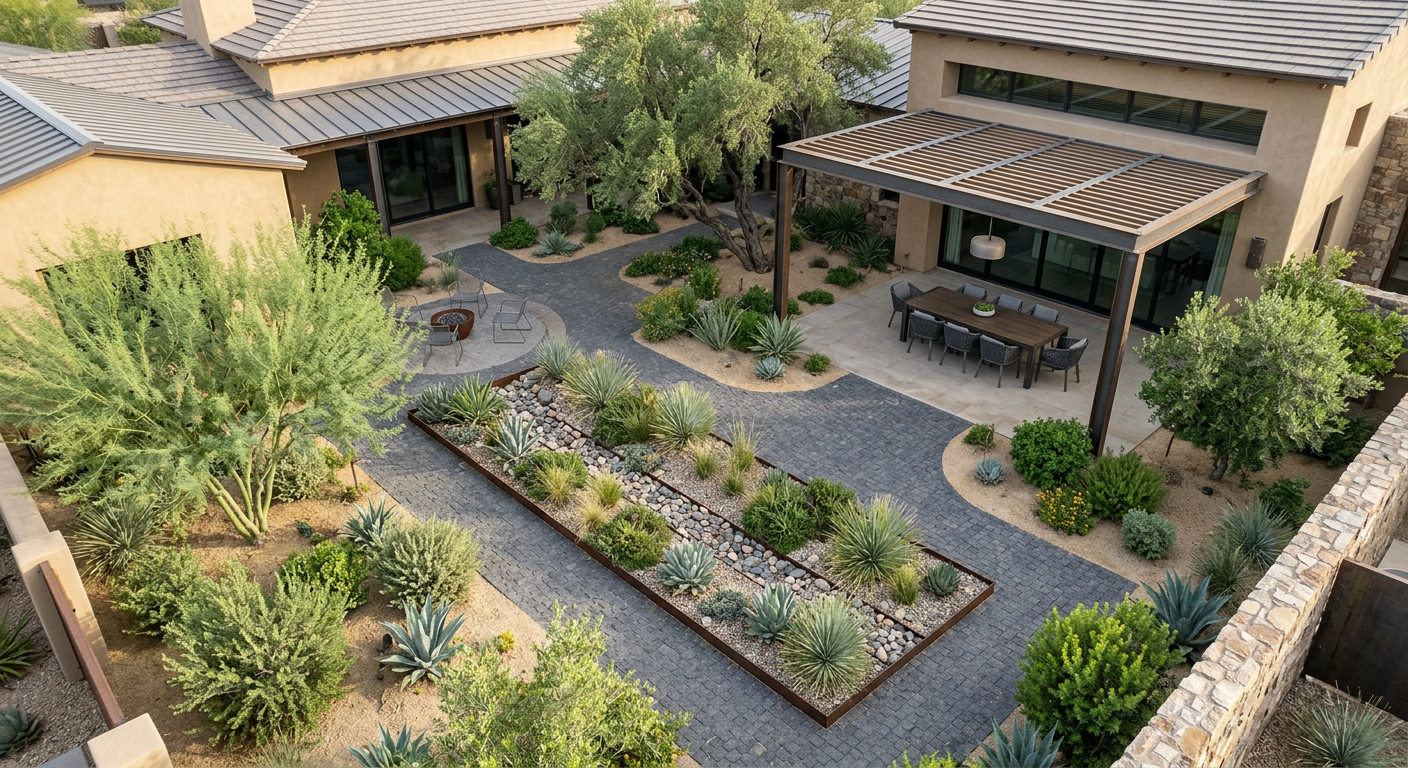
Water-efficient landscape planning in Arizona works best when plants are selected and grouped by their real needs, not simply by color or availability. This practice, often called hydrozoning, allows irrigation schedules to match plant type, sun exposure, soil conditions, and root depth.
A layered landscape can still feel lush. Canopy trees can frame an arrival sequence and shade hardscape. Mid-level shrubs can provide privacy and seasonal character. Succulents, perennials, accents, and groundcovers can add texture near entries, pools, and contemporary walls. The difference is that each layer should be specified for the site and placed with compatible water needs.
A Purposeful Approach to Turf
Turf does not have to disappear from every high-end property. A compact lawn may make sense for a family play area, a formal garden composition, or a specific entertaining space. The key is to make it earn its place.
Large decorative lawns that receive little use often create unnecessary irrigation demand and maintenance pressure. When turf is appropriate, it should be limited, clearly defined, and placed on a separate irrigation zone so it does not dictate the watering schedule for surrounding trees and shrubs.
Soil, Mulch, and Finish Materials Matter
Plant health is not determined by irrigation alone. Soil preparation, drainage, mulch, and finish materials affect root development, moisture retention, evaporation, and maintenance access.
In many Arizona properties, the existing soil may need improvement in targeted planting areas. Organic mulch can help moderate soil temperatures and retain moisture where appropriate, while decorative aggregate and stone finishes should be selected to support the architecture without creating excessive glare or heat around gathering spaces.
For projects requiring coordinated planting, hardscape, outdoor living, and construction details, our residential landscape architecture services help bring those decisions into one cohesive site plan.
Design Irrigation as a Long-Term Operating System
An irrigation system should support the design rather than force every planting area into the same schedule. Proper zoning, pressure regulation, valve access, controller programming, and emitter placement have a direct effect on plant health and water performance.
The EPA WaterSense Water Budget Tool is designed to help builders, developers, landscape designers, and irrigation professionals compare estimated landscape water use with more typical new-construction practices. The larger lesson is valuable for any project: estimate performance by zone and make informed design choices before installation begins.
Separate Zones by Water Need and Exposure
Trees, shrubs, flowering accents, groundcovers, pots, and turf should not automatically share one schedule. A south-facing bed beside reflective paving has different demands than a shaded courtyard planting area. A mature tree requires a different approach than newly installed shrubs.
Hydrozones make those differences manageable. They allow each area to receive irrigation that reflects its intended plant palette, exposure, and establishment needs, helping prevent the common cycle of overwatering some plants while under-supporting others.
Design for Adjustment and Maintenance Access
Even a well-designed landscape changes as plants mature and seasons shift. Controllers need seasonal review, emitters need inspection, and valves need to remain accessible. These operational considerations should be resolved in the construction documents, not left to chance after installation.
Waibel & Associates integrates planting, irrigation, grading, material transitions, and construction coordination through its landscape architecture services. That level of planning helps homeowners, architects, and builders maintain the intended design quality beyond the first season.
Avoid the Water-Efficiency Mistakes That Cost More Later
Many landscapes use more water than necessary because the site plan, plant palette, irrigation design, and maintenance assumptions do not align. A few early decisions can either protect the investment or create years of avoidable corrections.
Replacing Lawn With Gravel Alone
Removing unused turf can be appropriate, but a large field of gravel is not automatically a better landscape. It can increase reflected heat, reduce shade, and make an outdoor space feel unfinished or inhospitable.
A more durable solution often combines lower-water plant communities, shade trees, thoughtfully placed hardscape, and visually composed open areas. Water efficiency should improve the experience of the property, not reduce it to a maintenance shortcut.
Selecting Plants Without Considering Mature Size
A plant that looks appropriate at installation may become overcrowded in a few years. Crowding can cause competition for water, block maintenance access, and require frequent pruning that changes the intended design.
We plan for mature size, canopy spread, root space, and long-term relationships between plants. This protects the composition and helps irrigation remain appropriate as the landscape develops.
Waiting Until Construction to Address Tree Preservation
Mature trees can provide immediate shade, scale, and property value that new planting cannot replace quickly. Yet trees are often damaged when access routes, utilities, grading, or staging areas are established without early coordination.
Tree preservation should be evaluated during site planning. If retention is feasible, the landscape plan can define protection zones and coordinate construction activity around the tree’s root area and canopy needs.
Plan a Landscape That Feels Generous, Not Restrained
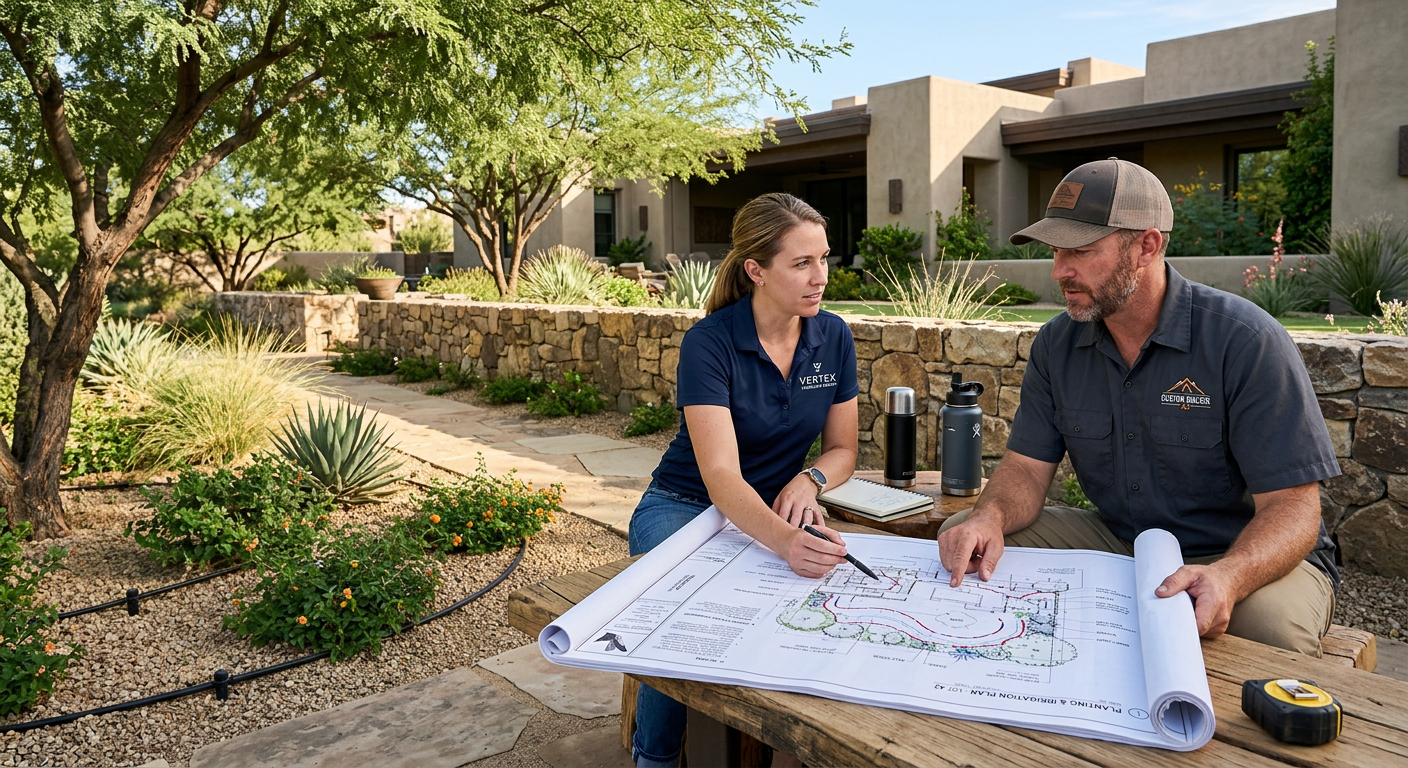
A water-efficient landscape can provide privacy, seasonal interest, shade, outdoor dining, poolside comfort, and a memorable arrival experience. The difference lies in disciplined planning, not in reducing the landscape to the fewest possible plants.
For Day 6 of a progressive planning process, we encourage project teams to move beyond the question, “Which plants use less water?” The more useful question is, “How should the entire property perform over the next decade?” That means establishing a water budget, defining hydrozones, protecting key trees, shaping rainwater movement, and coordinating the irrigation system with the finished design before construction begins.
Janet Waibel, RLA, Owner and Principal of Waibel & Associates Landscape Architecture, brings experience in sustainable landscape planning, irrigation, construction, and long-term landscape management to these decisions. Homeowners and project professionals who want a deeper perspective can explore landscape architecture books by Janet Waibel.
Questions Property Owners Ask About Water-Efficient Landscapes
Can a water-efficient Arizona landscape still look luxurious?
Yes. Luxury comes from thoughtful proportions, shade, material quality, craftsmanship, lighting, healthy planting, and a landscape that complements the architecture. A lower-water plant palette can be layered, sculptural, and visually rich when it is planned for the site.
When should water-efficient landscape planning begin for a custom home?
It should begin during architectural design or early site planning. Early coordination helps reserve space for outdoor rooms, grading, drainage, utilities, mature trees, irrigation zones, and the intended planting structure.
Is drip irrigation always the right choice?
Drip irrigation is often appropriate for trees, shrubs, and many planting beds, but it is not a universal answer. The correct irrigation approach depends on the plant material, soil, exposure, slope, and performance needs of each zone.
Should we remove all turf from an Arizona property?
Not necessarily. A limited lawn can be appropriate when it supports a specific activity or design purpose. It should be sized intentionally and irrigated separately from the rest of the landscape.
Can rainwater harvesting work on a luxury residential property?
Yes. Roof runoff and site drainage can often be directed into properly designed basins and planting areas. The system must be coordinated with grading, hardscape, drainage safety, and the needs of the selected plants.
How often should irrigation schedules be adjusted?
Irrigation should be reviewed seasonally and after significant landscape changes. Plant maturity, weather, repairs, and changes in exposure can all affect the appropriate schedule.
A More Resilient Arizona Landscape Begins With Better Planning
Water efficiency is most effective when it is built into the site plan, not added through isolated substitutions after the design is complete. By connecting shade, grading, plant selection, irrigation, soil preparation, and long-term maintenance, we can create landscapes that feel comfortable, enduring, and appropriate for Arizona.
The goal is not to make a property look less abundant. It is to make every planted area, outdoor room, and irrigation zone work harder for the life of the home.
Discuss Your Custom Landscape Project With Our Team
If you are planning a custom home, major remodel, estate landscape renovation, or water-conscious outdoor living environment in Tempe, Scottsdale, Paradise Valley, Phoenix, North Scottsdale, Carefree, Cave Creek, or the East Valley, we can help coordinate the important decisions before construction limits the options.
Call (480) 893-3849 to discuss your project with Waibel & Associates Landscape Architecture, or request a landscape architecture consultation →.
About Waibel & Associates Landscape Architecture
Waibel & Associates Landscape Architecture is an Arizona landscape architecture firm led by Janet Waibel, RLA, Owner and Principal. The firm provides custom residential landscape architecture, sustainable landscape design, irrigation planning, tree preservation, outdoor living design, site planning, construction documentation, and professional landscape consulting throughout Tempe, Scottsdale, Paradise Valley, Phoenix, North Scottsdale, Carefree, Cave Creek, and surrounding Arizona communities.
Waibel & Associates focuses on thoughtful, high-quality landscapes that complement the architecture of each property while incorporating appropriate plant materials, water-efficient strategies, irrigation technology, and long-term planning.
Janet Waibel is also a published author whose books provide educational resources on sustainable landscape management and landscape construction.
Planning a custom residential or professional landscape project?
Call (480) 893-3849
or
Contact Waibel & Associates →
How to Choose Water-Efficient Plants for Arizona Landscapes
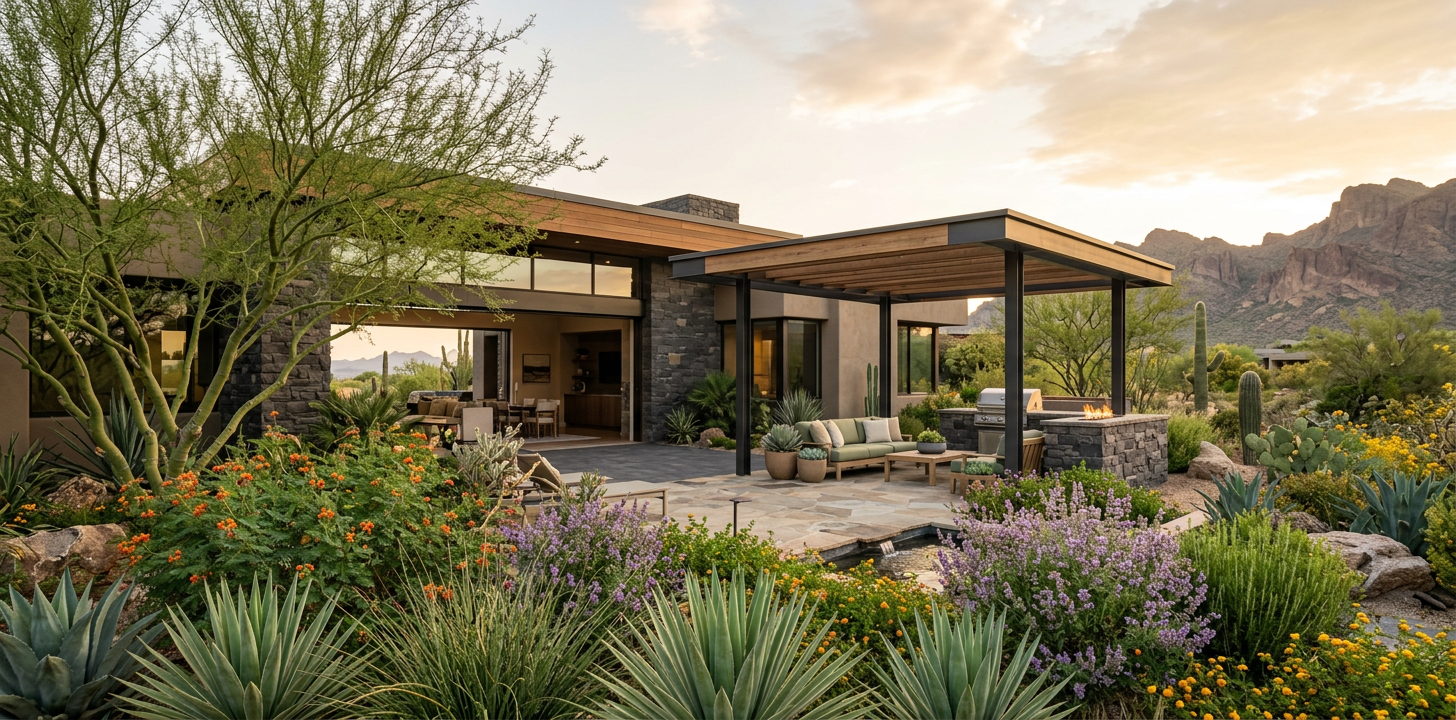
A refined Arizona landscape does not have to look sparse to use water responsibly. The strongest planting plans combine desert-appropriate trees, shrubs, accents, and groundcovers with the specific conditions of the property, including sun exposure, soils, architecture, drainage, and the way outdoor areas will be used.
For homeowners planning a custom home or major renovation, how to choose water efficient plants Arizona is less about finding a short list of “tough” plants and more about creating plant communities that can thrive together. The right decisions at the beginning reduce avoidable replacement costs, simplify irrigation management, protect outdoor comfort, and give the property a clear connection to the Sonoran Desert.
The Arizona Department of Water Resources reports that as much as 70 percent of residential water use can occur outdoors. That makes plant selection, irrigation design, and site planning meaningful long-term decisions, not decorative details. Arizona Department of Water Resources
Begin With the Site, Not the Nursery List
Water-efficient plants are plants that suit their exact location. Before selecting a species, we evaluate the conditions that will determine how well it performs for years rather than how appealing it looks in a nursery container.
A west-facing planting bed beside pale masonry has very different heat exposure than a protected courtyard, even if both are on the same property. Similarly, a tree planted to shade a terrace needs enough soil volume and root space to mature without conflicting with paving, walls, utilities, or a pool.
Map heat, shade, reflected light, and wind
Arizona sunlight is not a single condition. South and west exposures can produce intense afternoon heat, while glass, stucco, stone, and paving may add reflected heat that exceeds what a plant experiences in an open desert setting.
We recommend identifying these conditions before a palette is developed:
- Full and reflected sun, especially around pool decks, west walls, and driveways
- Filtered shade, created by existing trees, patios, and architectural overhangs
- Protected microclimates, such as enclosed courtyards and entry gardens
- Wind-exposed areas, where foliage and soil can dry more quickly
- Low points and drainage paths, which may collect more water than nearby planting beds
University of Arizona Cooperative Extension notes that plants may tolerate full southern sun yet struggle with the reflected light and heat on the west side of a building. University of Arizona Cooperative Extension
Test the soil and account for drainage
Soil is a central part of water efficiency. Compacted soil, caliche layers, poor drainage, and alkaline conditions can keep roots from accessing water effectively, even when irrigation is frequent.
A drought-tolerant plant placed in a poorly drained basin can fail from excess moisture around its roots. In contrast, a plant that requires more consistent moisture may decline quickly in shallow, fast-draining soil beside hot paving. Soil preparation and drainage design should support the intended plant palette instead of asking plants to overcome permanent site limitations.
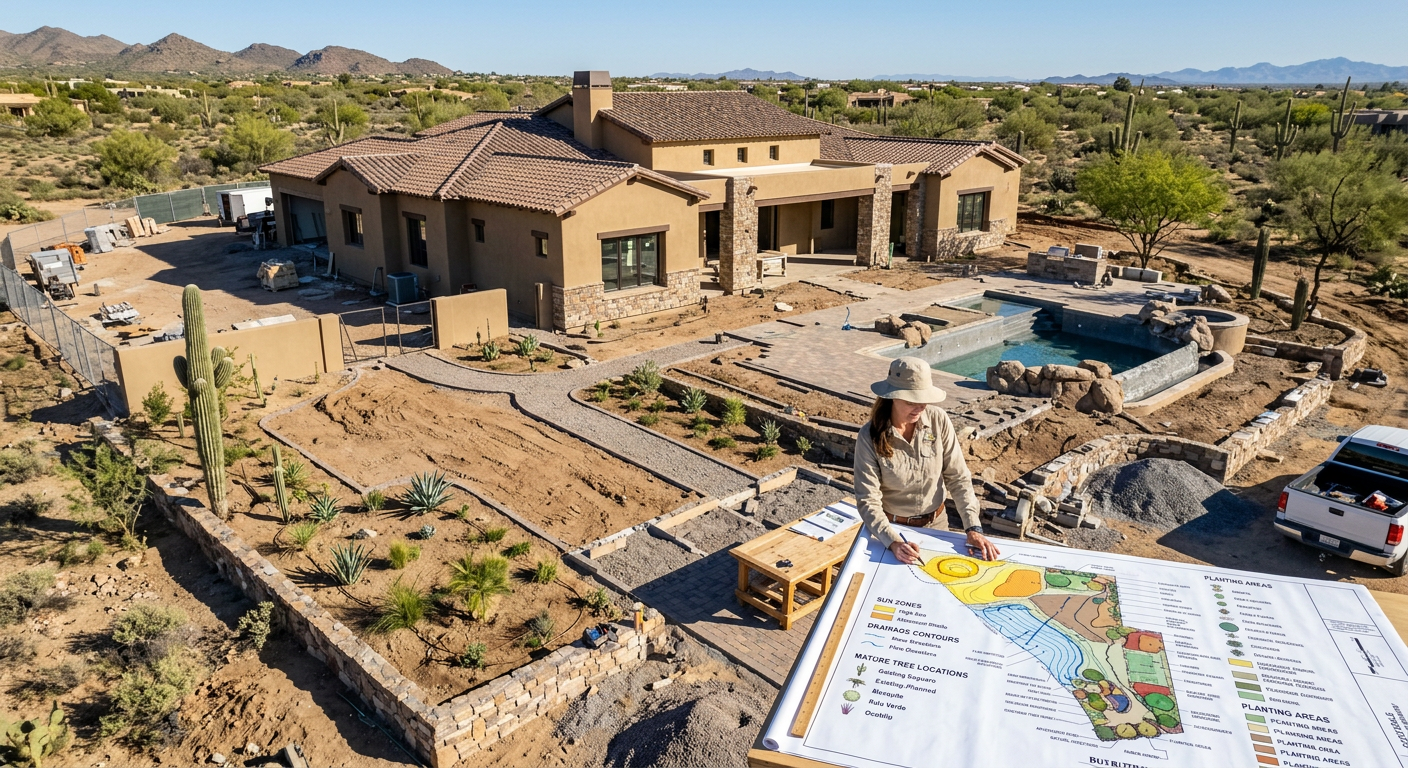
Choose Plants by Water Zone and Mature Function
The most effective approach is to group plants with similar water needs, exposure, and root depth. This practice, often called hydrozoning, allows irrigation to support each area without overwatering or underwatering neighboring plants.
For a high-end residential property, a water-conscious landscape can still include shade, privacy, flowering seasonal interest, sculptural focal points, and an inviting sequence of outdoor rooms. The difference is that each plant is selected for a deliberate role.
| Landscape role | What to evaluate | Water-efficient direction |
|---|---|---|
| Shade trees | Canopy size, root area, exposure | Desert-adapted canopy trees sized for the space |
| Privacy planting | Mature width, density, heat tolerance | Layered screens, not one overplanted hedge |
| Entry accents | Visibility, reflected heat, maintenance | Sculptural plants and restrained flowering color |
| Ground plane | Foot traffic, drainage, glare | Living groundcovers, gravel, boulders, and mulch |
| Courtyard planting | Shade, container use, air movement | Plants matched to protected microclimates |
Separate trees, shrubs, accents, and specialty areas
Large trees should not share the same irrigation schedule as shallow-rooted flowering accents. Containers, vegetable gardens, turf where appropriate, and high-visibility seasonal planting also need their own controlled zones.
This separation helps prevent a common failure: watering the entire property for the most demanding planting bed. Instead, established trees can receive deeper, wider irrigation while accent areas receive a schedule designed around their actual needs.
In Arizona’s low deserts, annual evaporation is estimated at 70 to 80 inches while precipitation generally ranges from 4 to 12 inches. That gap makes a coordinated planting and irrigation strategy especially important, including on properties that use native and desert-adapted material. University of Arizona Cooperative Extension
Plan for mature size, not installation-day size
A plant is not water-efficient if it must be repeatedly cut back, relocated, or replaced because it outgrows its space. Mature height, canopy width, root spread, and clearance from structures should be part of every plant decision.
For example, trees can create valuable shade over a patio, glazing, or outdoor kitchen, but only if their eventual canopy and root system have room to develop. A narrow side yard may be better suited to a carefully scaled screen or vertical planting composition than a row of large trees that will eventually compete with walls and paving.
Native and Desert-Adapted Are Both Valuable, but They Are Not Identical
Native plants can be excellent choices for Arizona properties, but the best water-efficient plant palette is not automatically native-only. Desert-adapted species from climates with comparable heat, soils, and rainfall patterns can also perform well when they are chosen responsibly and placed correctly.
The question is not simply, “Is this plant low water?” A more useful question is, “Can this plant perform well in this exact location with the intended irrigation, soil, maintenance, and architectural context?”
Create a balanced plant community
A sophisticated desert landscape often relies on contrast and repetition. We may use a shade tree to create outdoor comfort, layered shrubs for privacy and softness, architectural succulents as focal points, and lower plantings to connect hardscape with the surrounding landscape.
This approach avoids two extremes: a high-water planting scheme that fights the climate, or an all-gravel installation that increases glare and radiant heat. Plants can provide shade, movement, color, habitat, and visual depth while still supporting thoughtful water use.
For homeowners, architects, and builders evaluating residential projects, our custom residential landscape architecture approach considers planting as one part of a coordinated environment that also includes circulation, hardscape, outdoor living, drainage, and long-term care.
Design the Irrigation System Around the Plants
Even the best plant palette cannot perform as intended when irrigation is treated as an afterthought. A water-efficient landscape requires irrigation zones, emitter placement, controller settings, and maintenance practices that change as plants establish and mature.
Use irrigation that supports roots, not convenience
Trees and large shrubs need water delivered across their developing root zones, not concentrated at the trunk. Drip locations should expand as plants grow, and irrigation timing should be adjusted seasonally based on weather, soil, exposure, and plant maturity.
A smart controller can improve scheduling, but it cannot correct poor zoning, clogged emitters, leaks, shallow root development, or plants grouped with incompatible water needs. Detailed irrigation design for desert landscapes helps coordinate these decisions before installation creates costly constraints.
Incorporate rainwater into the planting plan
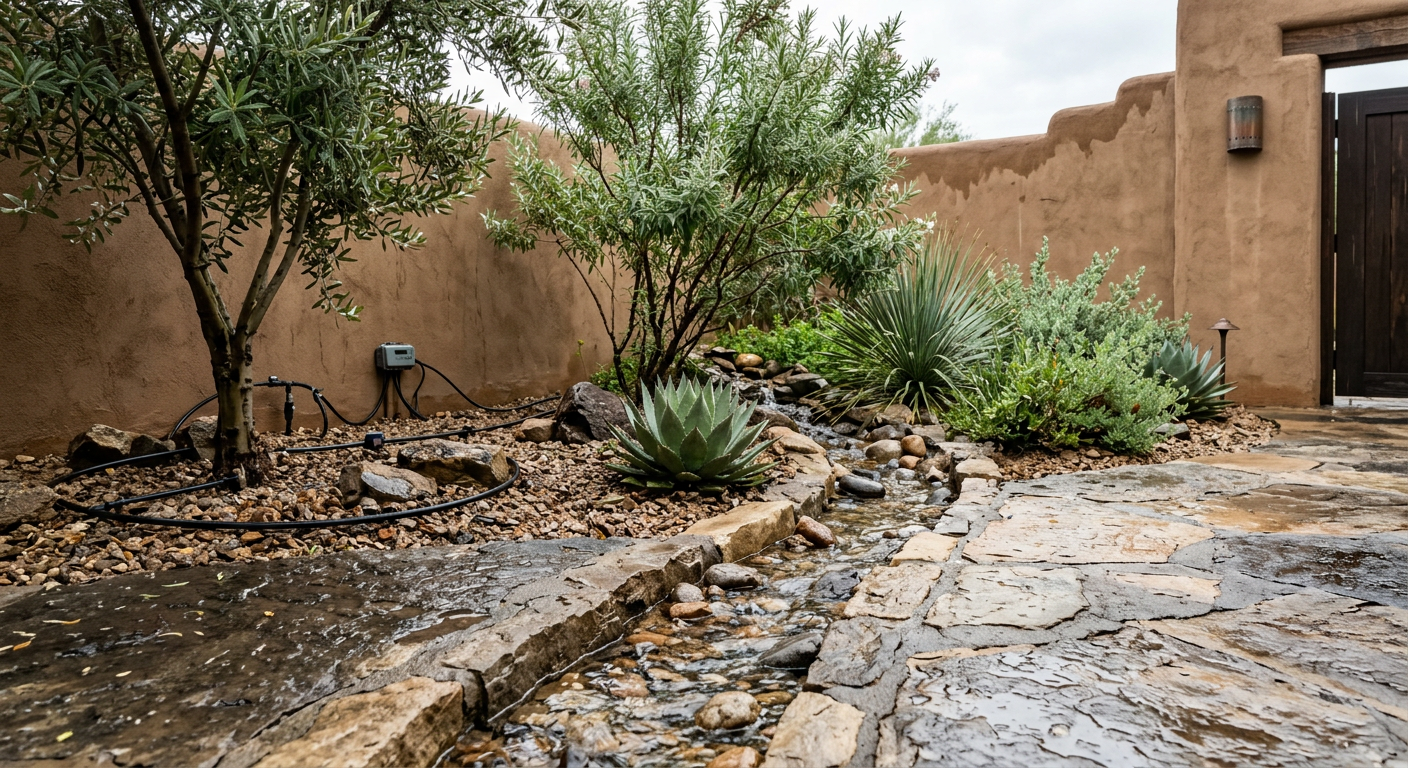
Passive rainwater harvesting can direct runoff from roofs and paving toward planting areas through carefully shaped grades, basins, and swales. It is most successful when the planting palette, drainage plan, soil conditions, and overflow paths are designed together.
Rainwater is not a substitute for all supplemental irrigation in the Phoenix area, especially during long hot periods. It can, however, reduce reliance on potable water and support healthier plant establishment when it is captured where plants can use it.
Avoid the Plant Selection Mistakes That Raise Water Use
A plant palette may contain low-water species and still become inefficient if the design ignores installation quality and future care. We see the same issues repeatedly in aging landscapes and renovation projects.
Selecting plants only for appearance
Flower color, dramatic form, or a fast-growing screen can be appealing, but performance matters more. A plant that requires frequent pruning, supplemental water, or ongoing correction to survive its location is not a durable choice.
Installing too densely
Dense installation can look finished immediately, but it often creates competition for water, light, and root space as plants mature. Thoughtful spacing allows each plant to develop its intended form and makes irrigation management more predictable.
Treating every part of the property the same
A shaded entry, exposed pool perimeter, rear entertaining space, and service side yard should not receive the same plant palette or water schedule. Design quality comes from responding to each area while maintaining a cohesive overall composition.
Ignoring existing trees during a remodel
Mature trees can provide irreplaceable shade and scale. Their root zones, irrigation, grades, and construction access should be evaluated early, particularly when new paving, utilities, or additions are planned. Our landscape architecture services can help project teams coordinate planting, irrigation, hardscape, site planning, and construction documentation as one system.
Plan the Plant Palette Before Finalizing the Outdoor Spaces
Plant selection should begin early, ideally while the architecture, pool, paving, drainage, and outdoor living areas can still be coordinated. This gives the landscape enough room to support shade, privacy, views, circulation, and a durable irrigation layout.
Planning a Custom Arizona Landscape?
If you are building or remodeling in Tempe, Scottsdale, Paradise Valley, Phoenix, North Scottsdale, Carefree, Cave Creek, or the East Valley, we can help develop a plant and irrigation plan that complements the architecture and performs in Arizona conditions.
Call (480) 893-3849 to discuss your project with Waibel & Associates, or request a landscape architecture consultation →
Frequently Asked Questions
What are water-efficient plants for Arizona?
Water-efficient Arizona plants are species that can maintain healthy growth with modest, properly managed irrigation once established. The right selection depends on elevation, sun exposure, soil, drainage, and the specific microclimate on the property.
Do native plants need irrigation in Arizona?
Yes, many native plants need supplemental irrigation during establishment and may need support in highly urbanized, heat-reflective, or hardscape-intensive sites. Mature requirements vary by species, location, and weather conditions.
Can a water-efficient landscape still provide shade and privacy?
Yes. Desert-adapted trees, layered shrubs, vines, and screens can create meaningful shade and privacy when their mature size, exposure, and root requirements are planned correctly.
Is gravel alone a water-efficient landscape solution?
No. Gravel can reduce irrigation demand, but an all-gravel yard can create glare, stored heat, and limited visual comfort. Combining appropriate hardscape with layered low-water planting usually creates a more inviting and resilient result.
How long do low-water plants need regular irrigation after planting?
Most plants need consistent irrigation through an establishment period, even when they are considered drought tolerant. The duration depends on plant size, season, soil, exposure, and irrigation design, with larger trees generally requiring longer support.
Should water-efficient plants be grouped on separate irrigation valves?
Yes. Grouping plants with comparable water needs and exposure on separate valves improves control and prevents one plant category from dictating the schedule for the entire landscape.
A Better Plant Palette Creates a Better Arizona Landscape
Choosing water-efficient plants is a design decision with long-term consequences. When plant communities are matched to the site, grouped by water needs, given enough room to mature, and supported by appropriate irrigation, a landscape can feel generous, shaded, and distinctly Arizona without unnecessary water demand.
For deeper professional perspective on durable planting, irrigation, and landscape care, explore landscape architecture books by Janet Waibel, including resources on sustainable landscape management in the Desert Southwest.
Talk With an Experienced Arizona Landscape Architect
For a custom home, major residential remodel, outdoor living environment, irrigation upgrade, or sustainable landscape renovation, Waibel & Associates can help create a thoughtful plan that complements your property and long-term goals.
Call (480) 893-3849 or contact Waibel & Associates →
About Waibel & Associates Landscape Architecture
Waibel & Associates Landscape Architecture is an Arizona landscape architecture firm led by Janet Waibel, RLA, Owner and Principal. The firm provides custom residential landscape architecture, sustainable landscape design, irrigation planning, tree preservation, outdoor living design, site planning, construction documentation, and professional landscape consulting throughout Tempe, Scottsdale, Paradise Valley, Phoenix, North Scottsdale, Carefree, Cave Creek, and surrounding Arizona communities.
Waibel & Associates focuses on thoughtful, high-quality landscapes that complement the architecture of each property while incorporating appropriate plant materials, water-efficient strategies, irrigation technology, and long-term planning.
Janet Waibel is also a published author whose books provide educational resources on sustainable landscape management and landscape construction.
Planning a custom residential or professional landscape project?
Call (480) 893-3849
or
Contact Waibel & Associates →
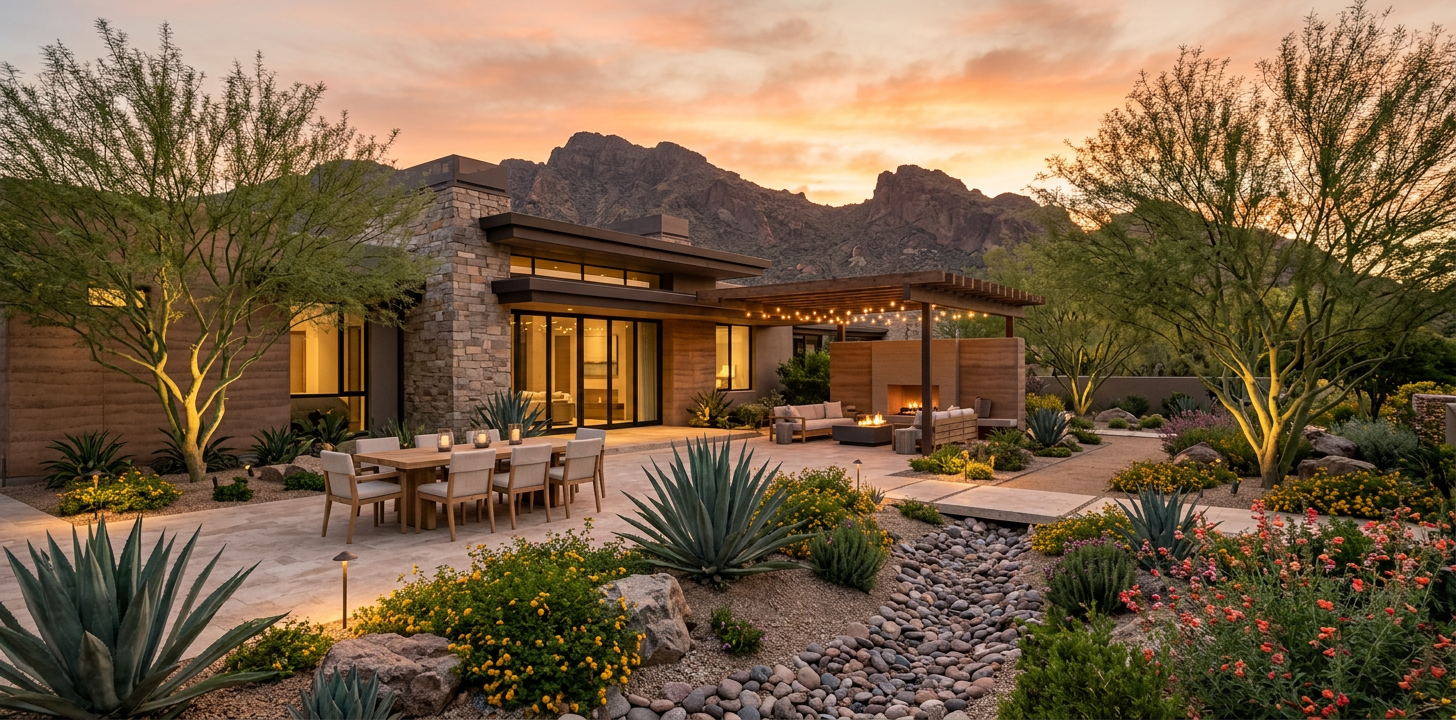
Water Efficient Landscape Design Phoenix for Luxury Outdoor Living
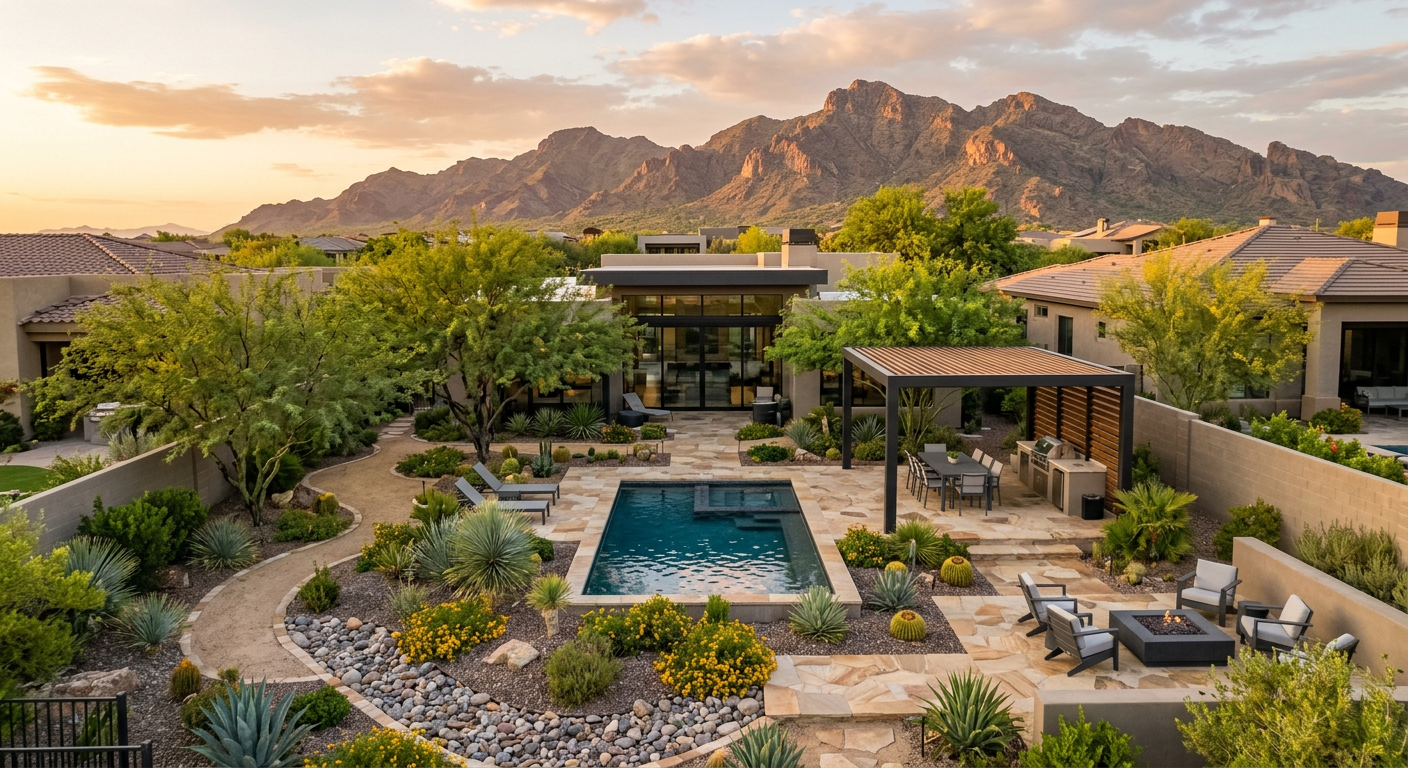
A beautiful Phoenix property does not need to rely on thirsty planting or oversized turf to feel welcoming, lush, and complete. The most successful outdoor environments respond to the home’s architecture, the site’s exposure, how the family lives outdoors, and the realities of the Sonoran Desert.
Water efficient landscape design Phoenix homeowners can rely on begins with professional planning, not a last-minute plant palette. It combines appropriate shade, carefully selected plant communities, irrigation zoning, drainage planning, durable materials, and outdoor living spaces that feel generous without creating unnecessary water demand.
For custom homes, major remodels, communities, and estate properties, we see water efficiency as a design discipline. It is not a stripped-down look. Done well, it creates a more comfortable, more resilient landscape with a clear sense of place.
Why Outdoor Water Planning Matters in Phoenix
The Arizona Department of Water Resources reports that landscaping is the state’s largest use of potable water and that outdoor use can represent as much as 70 percent of residential water use. That makes the landscape plan one of the most meaningful places to improve efficiency without giving up beauty or function. Arizona Department of Water Resources
The City of Phoenix similarly notes that desert-friendly plants can provide varied form, color, and texture while requiring less water and care when they are suited to local soils and weather. City of Phoenix Outdoor Conservation Resources
For high-end residential properties, the goal is not simply to use fewer plants. It is to use plants and materials with intention, so shade, privacy, arrival sequences, views, entertaining areas, and architectural character work together.
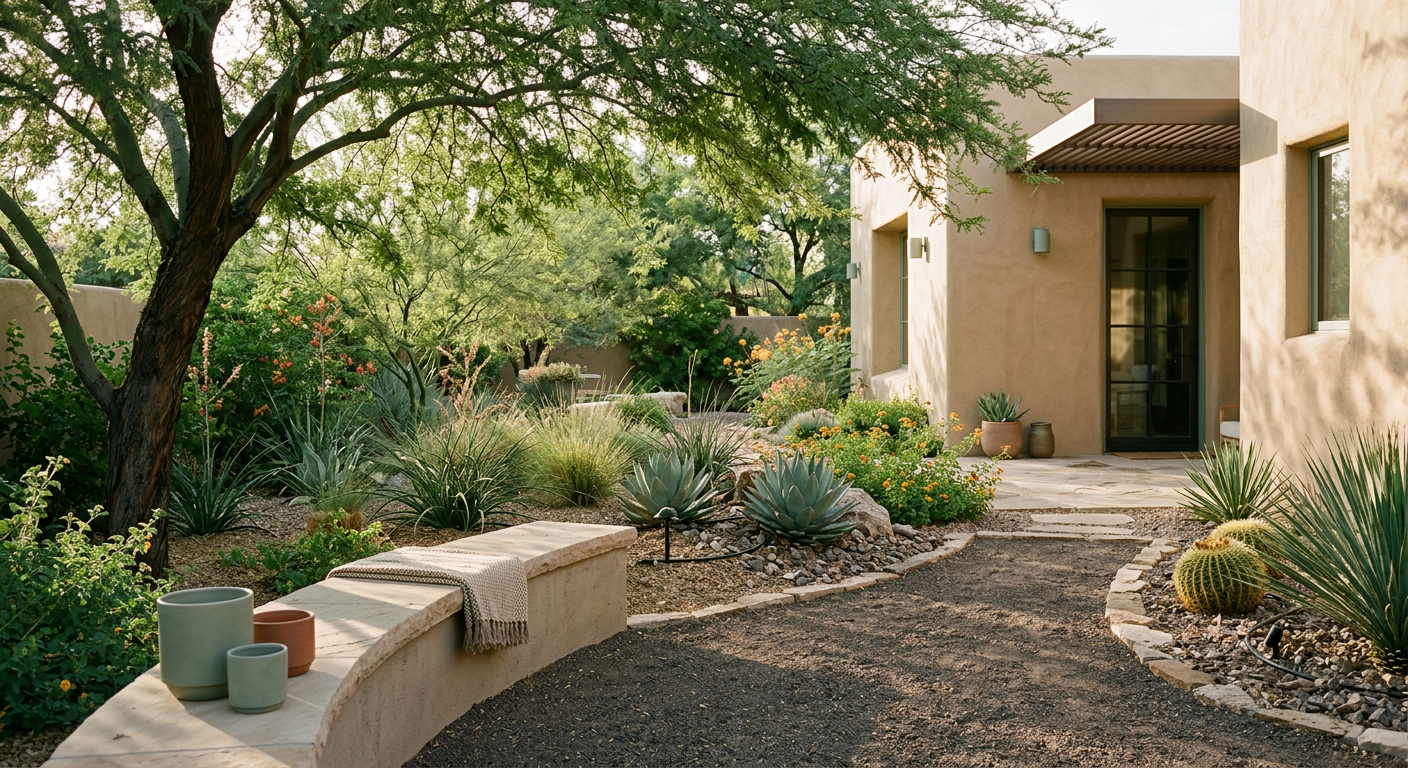
How Water Efficient Landscape Design Phoenix Projects Create Value
A lower-water landscape should be planned as a complete site system. When isolated choices are made without a larger plan, homeowners can end up with poor shade coverage, plants competing for water, drainage problems, or irrigation that is difficult to manage.
Start With Site Analysis and Architectural Integration
We begin by studying sun exposure, existing grades, drainage patterns, views, mature trees, utility constraints, and the circulation between indoor and outdoor rooms. This process identifies where shade is most valuable, where planting can support privacy, and which spaces need durable hardscape for daily use.
This is especially important for custom homes and remodels in Phoenix, Scottsdale, Paradise Valley, and Tempe, where the landscape should reinforce the architectural language rather than compete with it. Explore our approach to custom residential landscape architecture for homes that need coordinated planting, paving, lighting, and outdoor amenities.
Design Plant Communities, Not a Collection of Individual Plants
A strong desert planting design uses trees, shrubs, accents, groundcovers, and seasonal color in purposeful layers. Plants with compatible water needs should be grouped together, while high-water-use areas are limited to places where they serve a specific lifestyle or visual purpose.
Desert-adapted does not have to mean sparse. Canopy trees can cool patios and windows, flowering shrubs can frame views, and sculptural succulents can provide strong form near entries, pools, or contemporary architecture. The key is selecting materials that mature well in the available space and support the intended irrigation strategy.
Make Irrigation Part of the Design, Not an Afterthought
Irrigation is where a thoughtful plan becomes practical. Hydrozone planning separates plant areas with different water needs, allowing trees, shrubs, accent plants, and any turf to receive appropriate schedules rather than one blanket approach.
Drip irrigation, properly located emitters, pressure regulation, seasonal controller adjustments, and accessible valves all matter. The City of Phoenix recommends watering from sundown to sunrise to reduce evaporation and adjusting irrigation frequency with the weather. Phoenix Water Conservation Guidance
At Waibel & Associates, our landscape architecture services include planting and irrigation design, site planning, cost estimating, and construction administration. Those connected decisions help protect the visual quality of the project as it moves from design into installation.
Use Shade and Hardscape Strategically
Hardscape is not automatically water efficient. Large expanses of paving can intensify heat, increase glare, and make an outdoor space less inviting during much of the year. A better approach balances patios, pool decks, paths, permeable areas, shade structures, canopy trees, and planting beds.
We often plan shade first around the outdoor spaces that matter most: kitchen-adjacent patios, lounge areas, pool seating, guest entries, and view-oriented gathering spaces. That creates more usable outdoor living while allowing the planting design to do real environmental work.
Water-Wise Design Choices for Luxury Properties
The right choices depend on the property, architecture, and client priorities, but several principles consistently improve water performance.
- Preserve mature trees when feasible. Existing canopy can provide years of shade value that new planting cannot immediately replace.
- Limit high-water zones. If a green play area or formal lawn is important, keep it purposeful, compact, and separately irrigated.
- Plan for rain where it falls. Grade planting areas and use subtle swales, basins, and drainage routes to direct rainwater into the landscape rather than away from it.
- Improve soil where planting requires it. Appropriate soil preparation supports healthier root systems and reduces the tendency to overwater.
- Specify mulch and finish materials carefully. Materials should support the style of the home while moderating evaporation, protecting soil, and allowing maintenance access.
- Plan for maintenance access. A beautiful landscape needs practical room for pruning, controller adjustments, and long-term care.
According to the Arizona Department of Water Resources’ Phoenix-area outdoor water use study, homes with arid and sparse landscape categories used substantially less water than homes in turf or extensive landscape categories. Phoenix Metropolitan Area Outdoor Water Use Study
Planning a Custom Landscape Project?
If you are building or remodeling a home in Phoenix, Tempe, Scottsdale, Paradise Valley, or the surrounding area, early landscape planning can help protect your investment and create a cohesive outdoor environment from the beginning. We coordinate site planning, outdoor living, planting, irrigation, hardscape, and construction details around the way you want to use the property.
Call (480) 893-3849 to discuss your project with Waibel & Associates, or request a landscape architecture consultation.
Avoid These Common Water-Efficiency Mistakes
A landscape can include attractive low-water plants and still use more water than necessary. The most common reason is a mismatch between the design, irrigation system, and maintenance expectations.
Treating Every Plant Zone the Same
When every area is placed on one irrigation schedule, trees, shrubs, flowering accents, and groundcovers are forced into the same watering pattern. That often leads to overwatering some areas and stressing others. Zoning should reflect plant type, exposure, soil, and root depth.
Replacing Turf With Gravel Alone
Removing a water-demanding lawn can be appropriate, but an all-gravel result may create glare, stored heat, and little ecological or visual benefit. Layered, regionally appropriate planting can bring shade, texture, habitat, and seasonal interest while remaining water conscious.
Designing Without a Construction Plan
Concept imagery can inspire a project, but it does not resolve grades, drainage, plant quantities, irrigation components, material transitions, or installation details. Construction documents reduce ambiguity and give contractors a clearer path to build the intended design.
Janet Waibel, RLA, Owner and Principal of Waibel & Associates Landscape Architecture, brings experience in landscape planning, irrigation, construction, and sustainable design to these decisions. Homeowners and property professionals can also explore landscape architecture books by Janet Waibel for deeper guidance on sustainable landscape management and construction principles.
Questions Phoenix Property Owners Ask
Can a water-efficient landscape still look luxurious?
Yes. Luxury comes from composition, craftsmanship, material quality, shade, proportion, lighting, and a landscape that complements the home. Water-efficient planting can be richly layered and visually refined when it is professionally designed.
When should landscape architecture begin for a custom home?
Landscape planning should begin during architectural design or early site planning. Early coordination helps reserve room for outdoor living, drainage, utilities, tree preservation, views, and appropriate finished grades.
Is drip irrigation always the best choice in Phoenix?
Drip irrigation is often appropriate for trees, shrubs, accents, and many planting beds. The right system depends on plant material, soil conditions, exposure, and the requirements of each zone.
Should we remove all turf from a Phoenix property?
Not necessarily. A limited, purposeful lawn may suit a family’s lifestyle or a specific outdoor space. The important consideration is whether the turf area earns its water use and is separately designed and irrigated for efficient performance.
Can mature trees be protected during a remodel?
Often, yes. Tree preservation should be evaluated early so construction access, grading, utility routes, and root protection measures can be planned before work begins.
Does Waibel & Associates work with architects and custom builders?
Yes. We work with homeowners and project teams on site planning, planting and irrigation design, hardscape planning, construction documentation, and coordination during installation.
A More Resilient Landscape Starts With Better Planning
Water efficiency is most successful when it is built into the design from the beginning. A well-planned Phoenix landscape can create meaningful shade, memorable outdoor rooms, healthy plant growth, and a stronger relationship between the home and its desert setting.
Rather than treating conservation as a limitation, we can use it as a framework for better decisions. The result is an outdoor environment designed to remain beautiful, functional, and manageable through changing seasons.
Talk With an Experienced Arizona Landscape Architect
Whether you are planning a custom home, major residential remodel, outdoor living environment, irrigation upgrade, or sustainable landscape renovation, Waibel & Associates can help create a thoughtful design that complements your property and long-range goals.
Call (480) 893-3849 or contact Waibel & Associates to discuss your project.
About Waibel & Associates Landscape Architecture
Waibel & Associates Landscape Architecture is an Arizona landscape architecture firm led by Janet Waibel, RLA, Owner and Principal. The firm provides custom residential landscape architecture, sustainable landscape design, irrigation planning, tree preservation, outdoor living design, site planning, construction documentation, and professional landscape consulting throughout Tempe, Scottsdale, Paradise Valley, Phoenix, North Scottsdale, Carefree, Cave Creek, and surrounding Arizona communities.
Waibel & Associates focuses on thoughtful, high-quality landscapes that complement the architecture of each property while incorporating appropriate plant materials, water-efficient strategies, irrigation technology, and long-term planning.
Janet Waibel is also a published author whose books provide educational resources on sustainable landscape management and landscape construction.
Planning a custom residential or professional landscape project?
Call (480) 893-3849
or
Contact Waibel & Associates →