 Demo Demo
How to Choose Water-Efficient Plants for Arizona Landscapes
A refined Arizona landscape does not have to look sparse to use water responsibly. The strongest planting plans combine desert-appropriate trees, shrubs, accents, and groundcovers with the specific conditions of the property, including sun exposure, soils, architecture, drainage, and the way outdoor areas will be used.
For homeowners planning a custom home or major renovation, how to choose water efficient plants Arizona is less about finding a short list of “tough” plants and more about creating plant communities that can thrive together. The right decisions at the beginning reduce avoidable replacement costs, simplify irrigation management, protect outdoor comfort, and give the property a clear connection to the Sonoran Desert.
The Arizona Department of Water Resources reports that as much as 70 percent of residential water use can occur outdoors. That makes plant selection, irrigation design, and site planning meaningful long-term decisions, not decorative details. Arizona Department of Water Resources
Begin With the Site, Not the Nursery List
Water-efficient plants are plants that suit their exact location. Before selecting a species, we evaluate the conditions that will determine how well it performs for years rather than how appealing it looks in a nursery container.
A west-facing planting bed beside pale masonry has very different heat exposure than a protected courtyard, even if both are on the same property. Similarly, a tree planted to shade a terrace needs enough soil volume and root space to mature without conflicting with paving, walls, utilities, or a pool.
Map heat, shade, reflected light, and wind
Arizona sunlight is not a single condition. South and west exposures can produce intense afternoon heat, while glass, stucco, stone, and paving may add reflected heat that exceeds what a plant experiences in an open desert setting.
We recommend identifying these conditions before a palette is developed:
- Full and reflected sun, especially around pool decks, west walls, and driveways
- Filtered shade, created by existing trees, patios, and architectural overhangs
- Protected microclimates, such as enclosed courtyards and entry gardens
- Wind-exposed areas, where foliage and soil can dry more quickly
- Low points and drainage paths, which may collect more water than nearby planting beds
University of Arizona Cooperative Extension notes that plants may tolerate full southern sun yet struggle with the reflected light and heat on the west side of a building. University of Arizona Cooperative Extension
Test the soil and account for drainage
Soil is a central part of water efficiency. Compacted soil, caliche layers, poor drainage, and alkaline conditions can keep roots from accessing water effectively, even when irrigation is frequent.
A drought-tolerant plant placed in a poorly drained basin can fail from excess moisture around its roots. In contrast, a plant that requires more consistent moisture may decline quickly in shallow, fast-draining soil beside hot paving. Soil preparation and drainage design should support the intended plant palette instead of asking plants to overcome permanent site limitations.
Choose Plants by Water Zone and Mature Function
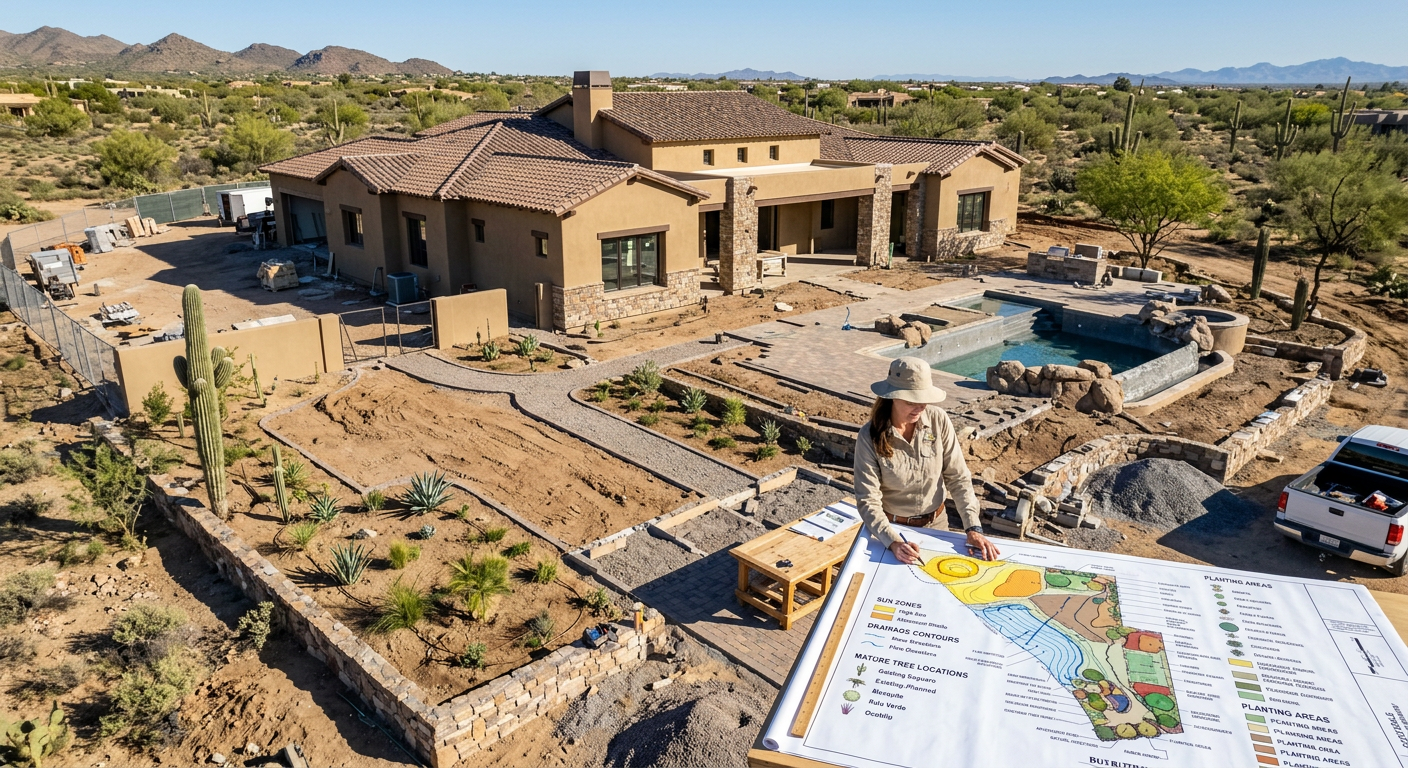
The most effective approach is to group plants with similar water needs, exposure, and root depth. This practice, often called hydrozoning, allows irrigation to support each area without overwatering or underwatering neighboring plants.
For a high-end residential property, a water-conscious landscape can still include shade, privacy, flowering seasonal interest, sculptural focal points, and an inviting sequence of outdoor rooms. The difference is that each plant is selected for a deliberate role.
| Landscape role | What to evaluate | Water-efficient direction |
|---|---|---|
| Shade trees | Canopy size, root area, exposure | Desert-adapted canopy trees sized for the space |
| Privacy planting | Mature width, density, heat tolerance | Layered screens, not one overplanted hedge |
| Entry accents | Visibility, reflected heat, maintenance | Sculptural plants and restrained flowering color |
| Ground plane | Foot traffic, drainage, glare | Living groundcovers, gravel, boulders, and mulch |
| Courtyard planting | Shade, container use, air movement | Plants matched to protected microclimates |
Separate trees, shrubs, accents, and specialty areas
Large trees should not share the same irrigation schedule as shallow-rooted flowering accents. Containers, vegetable gardens, turf where appropriate, and high-visibility seasonal planting also need their own controlled zones.
This separation helps prevent a common failure: watering the entire property for the most demanding planting bed. Instead, established trees can receive deeper, wider irrigation while accent areas receive a schedule designed around their actual needs.
In Arizona’s low deserts, annual evaporation is estimated at 70 to 80 inches while precipitation generally ranges from 4 to 12 inches. That gap makes a coordinated planting and irrigation strategy especially important, including on properties that use native and desert-adapted material. University of Arizona Cooperative Extension
Plan for mature size, not installation-day size
A plant is not water-efficient if it must be repeatedly cut back, relocated, or replaced because it outgrows its space. Mature height, canopy width, root spread, and clearance from structures should be part of every plant decision.
For example, trees can create valuable shade over a patio, glazing, or outdoor kitchen, but only if their eventual canopy and root system have room to develop. A narrow side yard may be better suited to a carefully scaled screen or vertical planting composition than a row of large trees that will eventually compete with walls and paving.
Native and Desert-Adapted Are Both Valuable, but They Are Not Identical
Native plants can be excellent choices for Arizona properties, but the best water-efficient plant palette is not automatically native-only. Desert-adapted species from climates with comparable heat, soils, and rainfall patterns can also perform well when they are chosen responsibly and placed correctly.
The question is not simply, “Is this plant low water?” A more useful question is, “Can this plant perform well in this exact location with the intended irrigation, soil, maintenance, and architectural context?”
Create a balanced plant community
A sophisticated desert landscape often relies on contrast and repetition. We may use a shade tree to create outdoor comfort, layered shrubs for privacy and softness, architectural succulents as focal points, and lower plantings to connect hardscape with the surrounding landscape.
This approach avoids two extremes: a high-water planting scheme that fights the climate, or an all-gravel installation that increases glare and radiant heat. Plants can provide shade, movement, color, habitat, and visual depth while still supporting thoughtful water use.
For homeowners, architects, and builders evaluating residential projects, our custom residential landscape architecture approach considers planting as one part of a coordinated environment that also includes circulation, hardscape, outdoor living, drainage, and long-term care.
Design the Irrigation System Around the Plants
Even the best plant palette cannot perform as intended when irrigation is treated as an afterthought. A water-efficient landscape requires irrigation zones, emitter placement, controller settings, and maintenance practices that change as plants establish and mature.
Use irrigation that supports roots, not convenience
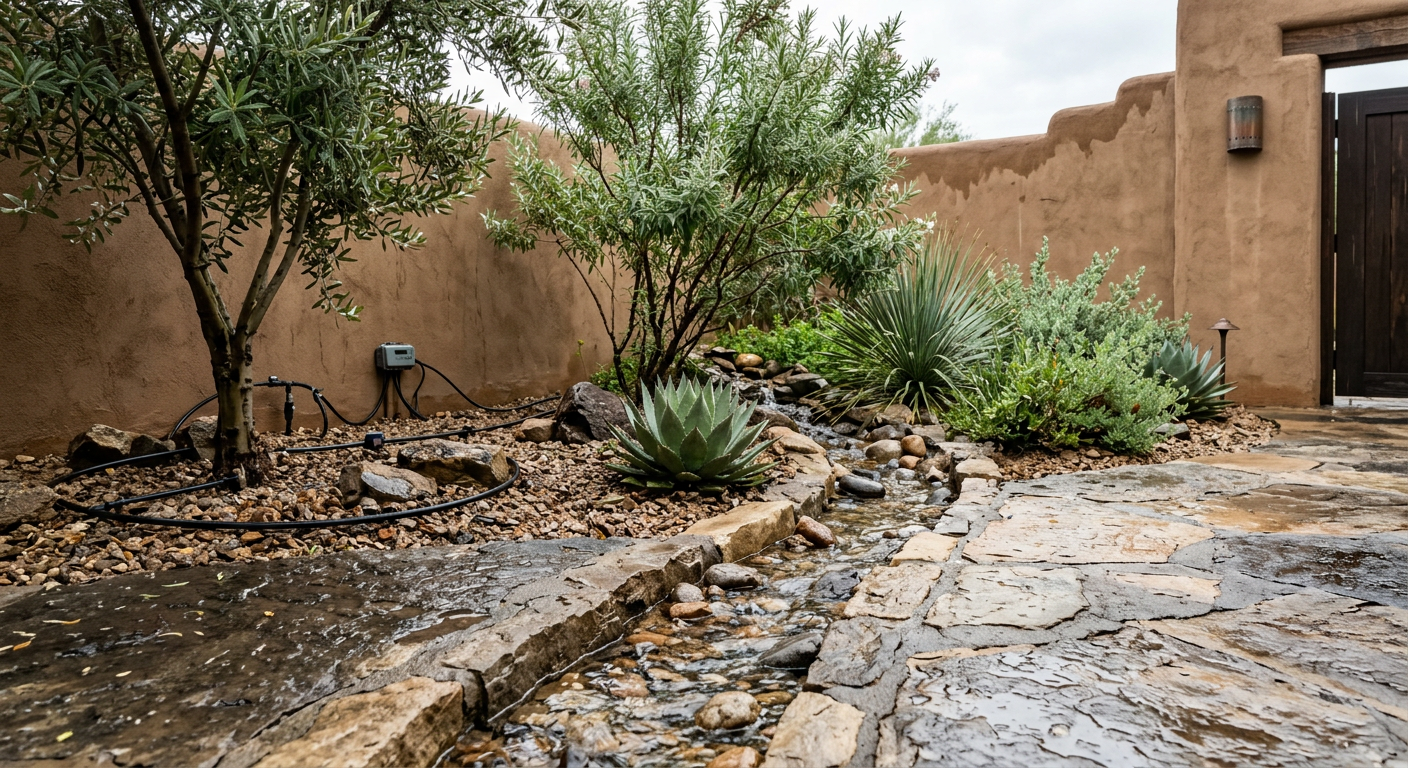
Trees and large shrubs need water delivered across their developing root zones, not concentrated at the trunk. Drip locations should expand as plants grow, and irrigation timing should be adjusted seasonally based on weather, soil, exposure, and plant maturity.
A smart controller can improve scheduling, but it cannot correct poor zoning, clogged emitters, leaks, shallow root development, or plants grouped with incompatible water needs. Detailed irrigation design for desert landscapes helps coordinate these decisions before installation creates costly constraints.
Incorporate rainwater into the planting plan
Passive rainwater harvesting can direct runoff from roofs and paving toward planting areas through carefully shaped grades, basins, and swales. It is most successful when the planting palette, drainage plan, soil conditions, and overflow paths are designed together.
Rainwater is not a substitute for all supplemental irrigation in the Phoenix area, especially during long hot periods. It can, however, reduce reliance on potable water and support healthier plant establishment when it is captured where plants can use it.
Avoid the Plant Selection Mistakes That Raise Water Use
A plant palette may contain low-water species and still become inefficient if the design ignores installation quality and future care. We see the same issues repeatedly in aging landscapes and renovation projects.
Selecting plants only for appearance
Flower color, dramatic form, or a fast-growing screen can be appealing, but performance matters more. A plant that requires frequent pruning, supplemental water, or ongoing correction to survive its location is not a durable choice.
Installing too densely
Dense installation can look finished immediately, but it often creates competition for water, light, and root space as plants mature. Thoughtful spacing allows each plant to develop its intended form and makes irrigation management more predictable.
Treating every part of the property the same
A shaded entry, exposed pool perimeter, rear entertaining space, and service side yard should not receive the same plant palette or water schedule. Design quality comes from responding to each area while maintaining a cohesive overall composition.
Ignoring existing trees during a remodel
Mature trees can provide irreplaceable shade and scale. Their root zones, irrigation, grades, and construction access should be evaluated early, particularly when new paving, utilities, or additions are planned. Our landscape architecture services can help project teams coordinate planting, irrigation, hardscape, site planning, and construction documentation as one system.
Plan the Plant Palette Before Finalizing the Outdoor Spaces
Plant selection should begin early, ideally while the architecture, pool, paving, drainage, and outdoor living areas can still be coordinated. This gives the landscape enough room to support shade, privacy, views, circulation, and a durable irrigation layout.
Planning a Custom Arizona Landscape?
If you are building or remodeling in Tempe, Scottsdale, Paradise Valley, Phoenix, North Scottsdale, Carefree, Cave Creek, or the East Valley, we can help develop a plant and irrigation plan that complements the architecture and performs in Arizona conditions.
Call (480) 893-3849 to discuss your project with Waibel & Associates, or request a landscape architecture consultation →
Frequently Asked Questions
What are water-efficient plants for Arizona?
Water-efficient Arizona plants are species that can maintain healthy growth with modest, properly managed irrigation once established. The right selection depends on elevation, sun exposure, soil, drainage, and the specific microclimate on the property.
Do native plants need irrigation in Arizona?
Yes, many native plants need supplemental irrigation during establishment and may need support in highly urbanized, heat-reflective, or hardscape-intensive sites. Mature requirements vary by species, location, and weather conditions.
Can a water-efficient landscape still provide shade and privacy?
Yes. Desert-adapted trees, layered shrubs, vines, and screens can create meaningful shade and privacy when their mature size, exposure, and root requirements are planned correctly.
Is gravel alone a water-efficient landscape solution?
No. Gravel can reduce irrigation demand, but an all-gravel yard can create glare, stored heat, and limited visual comfort. Combining appropriate hardscape with layered low-water planting usually creates a more inviting and resilient result.
How long do low-water plants need regular irrigation after planting?
Most plants need consistent irrigation through an establishment period, even when they are considered drought tolerant. The duration depends on plant size, season, soil, exposure, and irrigation design, with larger trees generally requiring longer support.
Should water-efficient plants be grouped on separate irrigation valves?
Yes. Grouping plants with comparable water needs and exposure on separate valves improves control and prevents one plant category from dictating the schedule for the entire landscape.
A Better Plant Palette Creates a Better Arizona Landscape
Choosing water-efficient plants is a design decision with long-term consequences. When plant communities are matched to the site, grouped by water needs, given enough room to mature, and supported by appropriate irrigation, a landscape can feel generous, shaded, and distinctly Arizona without unnecessary water demand.
For deeper professional perspective on durable planting, irrigation, and landscape care, explore landscape architecture books by Janet Waibel, including resources on sustainable landscape management in the Desert Southwest.
Talk With an Experienced Arizona Landscape Architect
For a custom home, major residential remodel, outdoor living environment, irrigation upgrade, or sustainable landscape renovation, Waibel & Associates can help create a thoughtful plan that complements your property and long-term goals.
Call (480) 893-3849 or contact Waibel & Associates →
About Waibel & Associates Landscape Architecture
Waibel & Associates Landscape Architecture is an Arizona landscape architecture firm led by Janet Waibel, RLA, Owner and Principal. The firm provides custom residential landscape architecture, sustainable landscape design, irrigation planning, tree preservation, outdoor living design, site planning, construction documentation, and professional landscape consulting throughout Tempe, Scottsdale, Paradise Valley, Phoenix, North Scottsdale, Carefree, Cave Creek, and surrounding Arizona communities.
Waibel & Associates focuses on thoughtful, high-quality landscapes that complement the architecture of each property while incorporating appropriate plant materials, water-efficient strategies, irrigation technology, and long-term planning.
Janet Waibel is also a published author whose books provide educational resources on sustainable landscape management and landscape construction.
Planning a custom residential or professional landscape project?
Call (480) 893-3849
or
Contact Waibel & Associates →

Demo Demo
Nemo enim ipsam voluptatem quia voluptas sit aspernatur odit fugitquia consequuntur magni dolores eos qui ratione voluptatem sequi nesciun tosomo. Nemo enim ipsam voluptatem quia voluptas sit aspernatur.