 Demo Demo
Water Efficient Landscape Design Phoenix for Luxury Outdoor Living
A beautiful Phoenix property does not need to rely on thirsty planting or oversized turf to feel welcoming, lush, and complete. The most successful outdoor environments respond to the home’s architecture, the site’s exposure, how the family lives outdoors, and the realities of the Sonoran Desert.
Water efficient landscape design Phoenix homeowners can rely on begins with professional planning, not a last-minute plant palette. It combines appropriate shade, carefully selected plant communities, irrigation zoning, drainage planning, durable materials, and outdoor living spaces that feel generous without creating unnecessary water demand.
For custom homes, major remodels, communities, and estate properties, we see water efficiency as a design discipline. It is not a stripped-down look. Done well, it creates a more comfortable, more resilient landscape with a clear sense of place.
Why Outdoor Water Planning Matters in Phoenix
The Arizona Department of Water Resources reports that landscaping is the state’s largest use of potable water and that outdoor use can represent as much as 70 percent of residential water use. That makes the landscape plan one of the most meaningful places to improve efficiency without giving up beauty or function. Arizona Department of Water Resources
The City of Phoenix similarly notes that desert-friendly plants can provide varied form, color, and texture while requiring less water and care when they are suited to local soils and weather. City of Phoenix Outdoor Conservation Resources
For high-end residential properties, the goal is not simply to use fewer plants. It is to use plants and materials with intention, so shade, privacy, arrival sequences, views, entertaining areas, and architectural character work together.
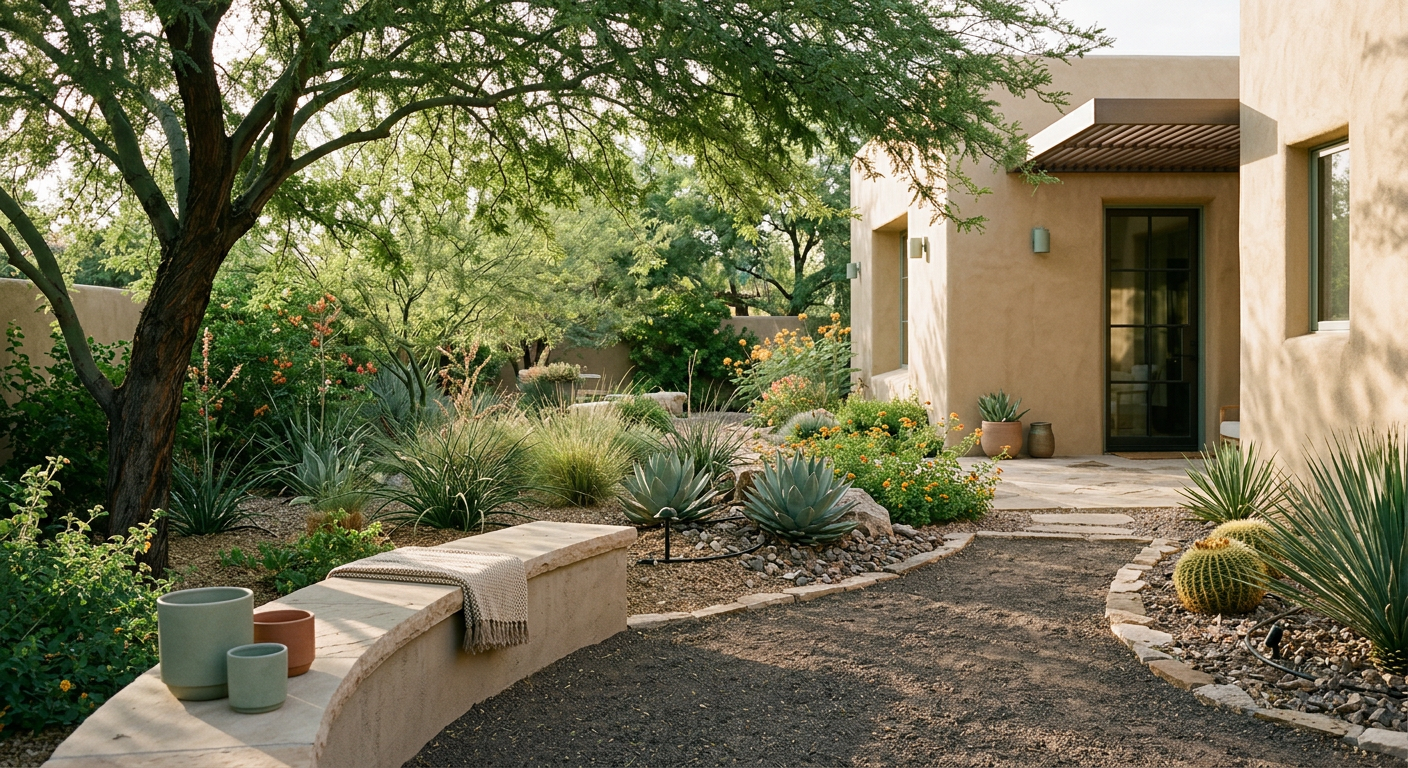
How Water Efficient Landscape Design Phoenix Projects Create Value
A lower-water landscape should be planned as a complete site system. When isolated choices are made without a larger plan, homeowners can end up with poor shade coverage, plants competing for water, drainage problems, or irrigation that is difficult to manage.
Start With Site Analysis and Architectural Integration
We begin by studying sun exposure, existing grades, drainage patterns, views, mature trees, utility constraints, and the circulation between indoor and outdoor rooms. This process identifies where shade is most valuable, where planting can support privacy, and which spaces need durable hardscape for daily use.
This is especially important for custom homes and remodels in Phoenix, Scottsdale, Paradise Valley, and Tempe, where the landscape should reinforce the architectural language rather than compete with it. Explore our approach to custom residential landscape architecture for homes that need coordinated planting, paving, lighting, and outdoor amenities.
Design Plant Communities, Not a Collection of Individual Plants
A strong desert planting design uses trees, shrubs, accents, groundcovers, and seasonal color in purposeful layers. Plants with compatible water needs should be grouped together, while high-water-use areas are limited to places where they serve a specific lifestyle or visual purpose.
Desert-adapted does not have to mean sparse. Canopy trees can cool patios and windows, flowering shrubs can frame views, and sculptural succulents can provide strong form near entries, pools, or contemporary architecture. The key is selecting materials that mature well in the available space and support the intended irrigation strategy.
Make Irrigation Part of the Design, Not an Afterthought
Irrigation is where a thoughtful plan becomes practical. Hydrozone planning separates plant areas with different water needs, allowing trees, shrubs, accent plants, and any turf to receive appropriate schedules rather than one blanket approach.
Drip irrigation, properly located emitters, pressure regulation, seasonal controller adjustments, and accessible valves all matter. The City of Phoenix recommends watering from sundown to sunrise to reduce evaporation and adjusting irrigation frequency with the weather. Phoenix Water Conservation Guidance
At Waibel & Associates, our landscape architecture services include planting and irrigation design, site planning, cost estimating, and construction administration. Those connected decisions help protect the visual quality of the project as it moves from design into installation.
Use Shade and Hardscape Strategically
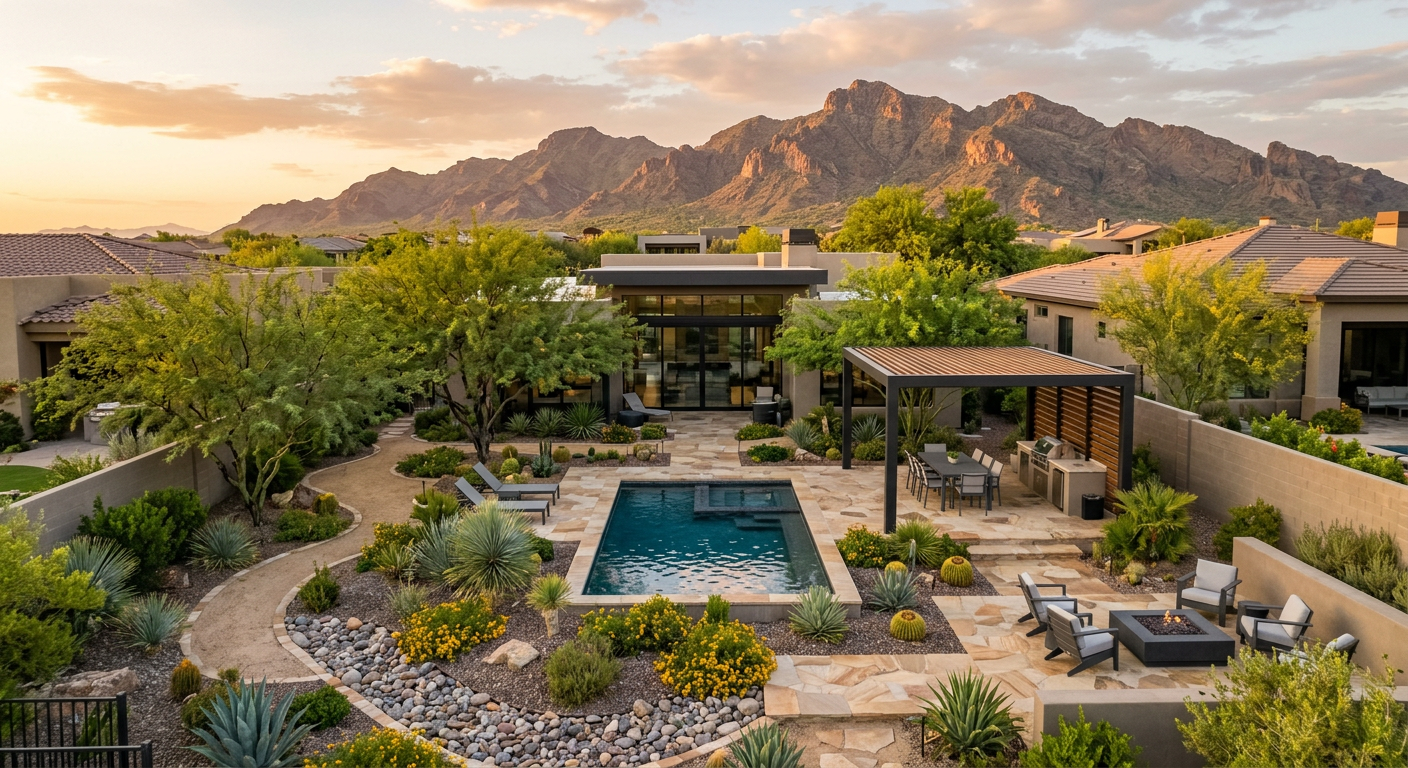
Hardscape is not automatically water efficient. Large expanses of paving can intensify heat, increase glare, and make an outdoor space less inviting during much of the year. A better approach balances patios, pool decks, paths, permeable areas, shade structures, canopy trees, and planting beds.
We often plan shade first around the outdoor spaces that matter most: kitchen-adjacent patios, lounge areas, pool seating, guest entries, and view-oriented gathering spaces. That creates more usable outdoor living while allowing the planting design to do real environmental work.
Water-Wise Design Choices for Luxury Properties
The right choices depend on the property, architecture, and client priorities, but several principles consistently improve water performance.
- Preserve mature trees when feasible. Existing canopy can provide years of shade value that new planting cannot immediately replace.
- Limit high-water zones. If a green play area or formal lawn is important, keep it purposeful, compact, and separately irrigated.
- Plan for rain where it falls. Grade planting areas and use subtle swales, basins, and drainage routes to direct rainwater into the landscape rather than away from it.
- Improve soil where planting requires it. Appropriate soil preparation supports healthier root systems and reduces the tendency to overwater.
- Specify mulch and finish materials carefully. Materials should support the style of the home while moderating evaporation, protecting soil, and allowing maintenance access.
- Plan for maintenance access. A beautiful landscape needs practical room for pruning, controller adjustments, and long-term care.
According to the Arizona Department of Water Resources’ Phoenix-area outdoor water use study, homes with arid and sparse landscape categories used substantially less water than homes in turf or extensive landscape categories. Phoenix Metropolitan Area Outdoor Water Use Study
Planning a Custom Landscape Project?
If you are building or remodeling a home in Phoenix, Tempe, Scottsdale, Paradise Valley, or the surrounding area, early landscape planning can help protect your investment and create a cohesive outdoor environment from the beginning. We coordinate site planning, outdoor living, planting, irrigation, hardscape, and construction details around the way you want to use the property.
Call (480) 893-3849 to discuss your project with Waibel & Associates, or request a landscape architecture consultation.
Avoid These Common Water-Efficiency Mistakes
A landscape can include attractive low-water plants and still use more water than necessary. The most common reason is a mismatch between the design, irrigation system, and maintenance expectations.
Treating Every Plant Zone the Same
When every area is placed on one irrigation schedule, trees, shrubs, flowering accents, and groundcovers are forced into the same watering pattern. That often leads to overwatering some areas and stressing others. Zoning should reflect plant type, exposure, soil, and root depth.
Replacing Turf With Gravel Alone
Removing a water-demanding lawn can be appropriate, but an all-gravel result may create glare, stored heat, and little ecological or visual benefit. Layered, regionally appropriate planting can bring shade, texture, habitat, and seasonal interest while remaining water conscious.
Designing Without a Construction Plan
Concept imagery can inspire a project, but it does not resolve grades, drainage, plant quantities, irrigation components, material transitions, or installation details. Construction documents reduce ambiguity and give contractors a clearer path to build the intended design.
Janet Waibel, RLA, Owner and Principal of Waibel & Associates Landscape Architecture, brings experience in landscape planning, irrigation, construction, and sustainable design to these decisions. Homeowners and property professionals can also explore landscape architecture books by Janet Waibel for deeper guidance on sustainable landscape management and construction principles.
Questions Phoenix Property Owners Ask
Can a water-efficient landscape still look luxurious?
Yes. Luxury comes from composition, craftsmanship, material quality, shade, proportion, lighting, and a landscape that complements the home. Water-efficient planting can be richly layered and visually refined when it is professionally designed.
When should landscape architecture begin for a custom home?
Landscape planning should begin during architectural design or early site planning. Early coordination helps reserve room for outdoor living, drainage, utilities, tree preservation, views, and appropriate finished grades.
Is drip irrigation always the best choice in Phoenix?
Drip irrigation is often appropriate for trees, shrubs, accents, and many planting beds. The right system depends on plant material, soil conditions, exposure, and the requirements of each zone.
Should we remove all turf from a Phoenix property?
Not necessarily. A limited, purposeful lawn may suit a family’s lifestyle or a specific outdoor space. The important consideration is whether the turf area earns its water use and is separately designed and irrigated for efficient performance.
Can mature trees be protected during a remodel?
Often, yes. Tree preservation should be evaluated early so construction access, grading, utility routes, and root protection measures can be planned before work begins.
Does Waibel & Associates work with architects and custom builders?
Yes. We work with homeowners and project teams on site planning, planting and irrigation design, hardscape planning, construction documentation, and coordination during installation.
A More Resilient Landscape Starts With Better Planning
Water efficiency is most successful when it is built into the design from the beginning. A well-planned Phoenix landscape can create meaningful shade, memorable outdoor rooms, healthy plant growth, and a stronger relationship between the home and its desert setting.
Rather than treating conservation as a limitation, we can use it as a framework for better decisions. The result is an outdoor environment designed to remain beautiful, functional, and manageable through changing seasons.
Talk With an Experienced Arizona Landscape Architect
Whether you are planning a custom home, major residential remodel, outdoor living environment, irrigation upgrade, or sustainable landscape renovation, Waibel & Associates can help create a thoughtful design that complements your property and long-range goals.
Call (480) 893-3849 or contact Waibel & Associates to discuss your project.
About Waibel & Associates Landscape Architecture
Waibel & Associates Landscape Architecture is an Arizona landscape architecture firm led by Janet Waibel, RLA, Owner and Principal. The firm provides custom residential landscape architecture, sustainable landscape design, irrigation planning, tree preservation, outdoor living design, site planning, construction documentation, and professional landscape consulting throughout Tempe, Scottsdale, Paradise Valley, Phoenix, North Scottsdale, Carefree, Cave Creek, and surrounding Arizona communities.
Waibel & Associates focuses on thoughtful, high-quality landscapes that complement the architecture of each property while incorporating appropriate plant materials, water-efficient strategies, irrigation technology, and long-term planning.
Janet Waibel is also a published author whose books provide educational resources on sustainable landscape management and landscape construction.
Planning a custom residential or professional landscape project?
Call (480) 893-3849
or
Contact Waibel & Associates →

Demo Demo
Nemo enim ipsam voluptatem quia voluptas sit aspernatur odit fugitquia consequuntur magni dolores eos qui ratione voluptatem sequi nesciun tosomo. Nemo enim ipsam voluptatem quia voluptas sit aspernatur.