 Demo Demo
Landscape Architecture Paradise Valley Custom Homes: Plan Well
A custom home in Paradise Valley deserves more than attractive planting placed after construction is complete. The best outdoor environments are planned as part of the architecture, considering the home's lines, views, grade changes, privacy, arrival sequence, shade, drainage, and the way the owners will actually live outdoors.
For landscape architecture Paradise Valley custom homes, early professional planning helps bring all of those decisions into one cohesive direction. Rather than treating the landscape as a finishing layer, we treat it as an essential part of the property, from the first approach at the street to the most private outdoor rooms behind the home.
Why Landscape Architecture Belongs at the Beginning of a Custom Home
Paradise Valley properties often have generous lots, mountain views, mature desert vegetation, and significant changes in elevation. Those assets can also introduce real design constraints. A driveway may affect a major view corridor. A retaining wall may reshape usable outdoor space. A pool location may influence privacy, shade, circulation, and the relationship between indoor and outdoor living areas.
When landscape architecture starts early, the home and site can support one another. We coordinate exterior spaces with the architect, builder, civil team, and other consultants before decisions become expensive to revise. This is particularly valuable when a project includes a pool, guest house, outdoor kitchen, detached garage, view terrace, sport court, or complex grading.
A useful early-planning checklist includes:
- Property access, arrival experience, and service circulation
- Existing trees, native vegetation, drainage patterns, and significant site features
- Mountain, golf-course, and distant-view opportunities
- Privacy needs from neighboring homes and streets
- Outdoor living zones for dining, gathering, cooking, swimming, and quiet retreat
- Material transitions between the architecture, hardscape, walls, and planting
- Irrigation zones, plant water needs, and long-term management requirements
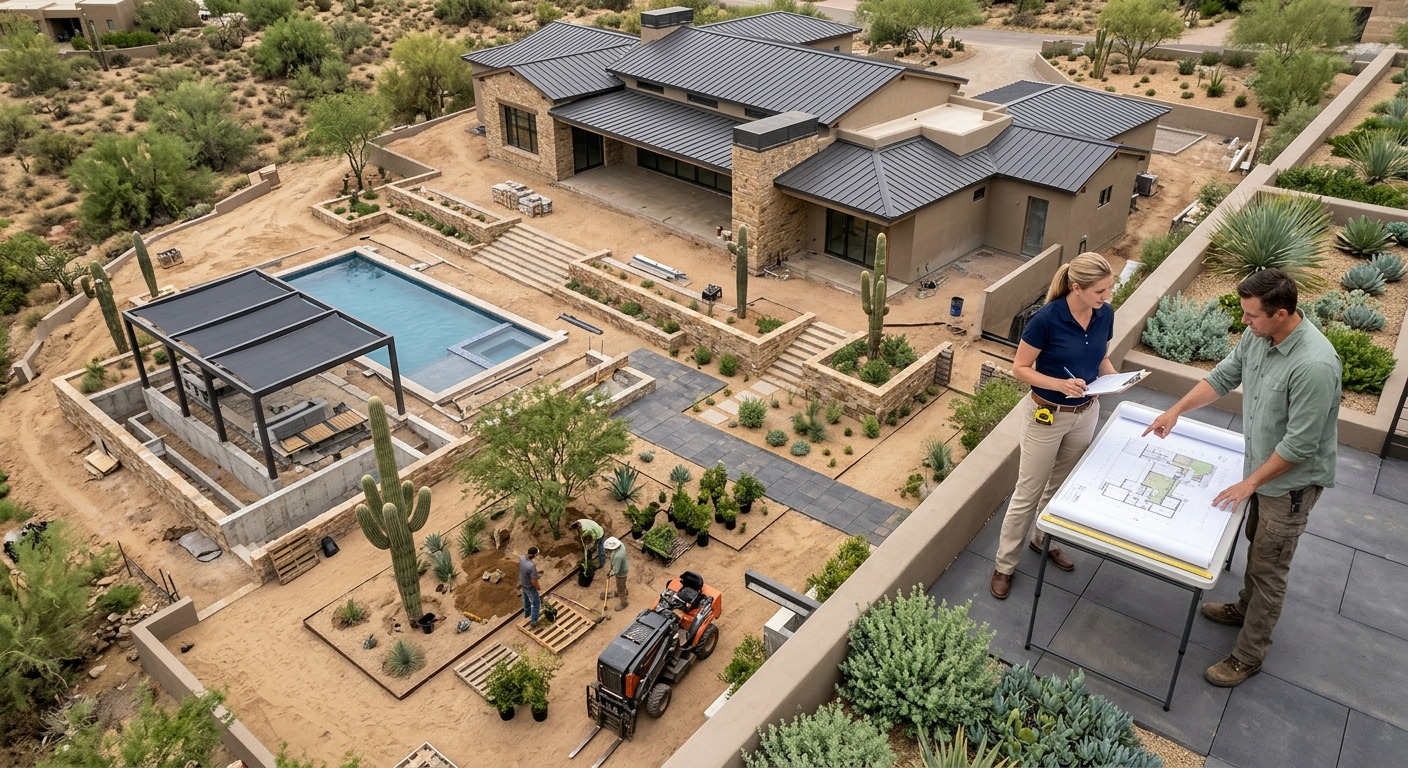
Designing Outdoor Rooms That Complement the Architecture
The most successful luxury residential landscapes do not compete with the home. They extend its architectural language into the site. A contemporary residence may call for strong geometry, restrained plant groupings, crisp paving joints, and carefully framed views. A warm desert-modern or Mediterranean-inspired home may benefit from layered courtyards, textured masonry, shade, and softer transitions from house to garden.
Establish a Clear Sequence of Arrival
The arrival experience sets the tone for the property. We consider the relationship between the street, gate, drive, walk, entry courtyard, and front door so guests experience a deliberate progression rather than an oversized paved area with ornamental planting added around it.
Materials, lighting, specimen plants, walls, and changes in elevation all contribute to this sequence. The objective is not visual excess. It is a sense of place, proportion, and calm that fits the home.
Create Distinct Areas for Outdoor Living
Large properties need structure. Without a thoughtful plan, patios, pools, fire features, and planting beds can feel disconnected or underused. We organize outdoor areas around how the household entertains, relaxes, cooks, moves through the property, and enjoys views at different times of day.
A well-composed plan may include a shaded dining terrace near the kitchen, a more secluded morning garden, a pool environment with usable shade, and a sunset gathering area positioned for the best mountain views. Each space should have a purpose while still feeling part of one complete landscape.
Use Hardscape as an Architectural Material
Hardscape planning has a lasting impact on both appearance and performance. Paving, retaining walls, steps, seat walls, drainage details, and landscape structures should be resolved together, not as separate contractor decisions in the field.
Scale is especially important in Paradise Valley. Broad lots and substantial architecture can accommodate generous materials, but every element still needs proportion. Thoughtful joints, edges, transitions, and elevation changes are often the details that make an outdoor environment feel tailored rather than generic.
Water-Efficient Design Can Still Feel Luxurious
Sustainability in a high-end landscape is not about reducing beauty or comfort. It is about using the right plant, irrigation, soil, shade, and material strategy for the site. The Arizona Department of Water Resources notes that as much as 70 percent of residential water use can occur outdoors, making landscape and irrigation decisions meaningful for both long-term stewardship and operating costs. Arizona Department of Water Resources
For custom residences, we plan water efficiency at the system level. That means grouping plants with similar water needs, selecting appropriate materials for exposure and soil conditions, designing efficient irrigation zones, and avoiding layouts that make maintenance difficult or wasteful.
Plant Selection Should Be Intentional
Desert-adapted planting does not have to look sparse or monotonous. A layered palette can provide shade, seasonal color, sculptural form, fragrance, privacy, and habitat while maintaining a refined aesthetic. The goal is to select plants for their mature scale, water requirements, resilience, and relationship to the architecture.
We also consider how a landscape will look over time. Young plants may appear modest at installation, while mature trees and shrubs reshape views, shade, and circulation. Planning for mature size protects the investment in the landscape and reduces avoidable future renovation.
Irrigation and Soil Are Design Decisions
Irrigation should not be an afterthought. A visually beautiful plan can struggle if the irrigation design ignores plant requirements, exposure, pressure, zoning, or drainage. Soil improvement and finish grades also affect plant establishment, water infiltration, and overall landscape health.
This is why comprehensive planning is valuable. It allows the planting, irrigation, grading, and construction details to reinforce one another from the beginning.
Preserve What Makes the Property Distinctive
Mature trees, natural landforms, and existing desert vegetation can add a quality that new construction cannot quickly replicate. Before clearing a site, we recommend identifying valuable landscape elements and determining whether they can be retained, protected, or incorporated into the design.
Tree preservation requires practical coordination. Root zones, construction access, grade changes, utilities, wall locations, and staging areas all matter. A tree that appears to be retained on paper may still be compromised if construction activities are not planned around it.
Where preservation is not possible, replacement planting should be purposeful. The plan should restore shade, scale, screening, and character over time, rather than simply filling available space.
Planning a Paradise Valley Custom Home Landscape?
If you are building or significantly remodeling a home in Paradise Valley, early landscape planning can help protect key views, coordinate outdoor living features, preserve valuable site elements, and avoid costly revisions later in construction.
Call (480) 893-3849 to discuss your project with Waibel & Associates, or request a landscape architecture consultation.
What a Complete Landscape Architecture Scope Can Include
The right scope depends on the property and project team, but a professional landscape architecture process often includes much more than a planting concept. For a custom home, the work may involve site analysis, conceptual design, detailed plans, specifications, consultant coordination, and construction involvement.
At Waibel & Associates Landscape Architecture, we approach custom residential projects as coordinated environments. Our work can include site planning, landscape renovation, outdoor living design, plant selection, irrigation design, hardscape planning, construction documents, and construction administration.
For homeowners comparing options, there is an important distinction between landscape architecture and installation-only services. An installation contractor can be an essential member of the construction team, particularly when selected for appropriate craftsmanship and project experience. A landscape architect, however, helps establish the site-wide design direction and the documents needed to coordinate many elements before installation begins.
Explore our residential landscape architecture approach to see the types of spaces and planning considerations that can be incorporated into a custom residential project. You can also review our landscape architecture services for more information about design, consulting, and project coordination.
Questions Homeowners Ask About Paradise Valley Landscape Design
When should we hire a landscape architect for a custom home?
We recommend involving a landscape architect during the architectural planning stage, before the house footprint, grades, driveway, pool, and major utility locations are fully locked in. Earlier coordination creates more opportunities to protect views, trees, usable outdoor space, and circulation.
What makes a Paradise Valley landscape different from other Arizona projects?
Many Paradise Valley sites require close attention to mountain views, privacy, significant lot sizes, desert exposure, mature vegetation, and architectural integration. The landscape should respond specifically to the site rather than applying a standard regional palette or layout.
Can a water-efficient landscape include a pool and outdoor kitchen?
Yes. Water-efficient planning addresses the complete site, including plant selection, irrigation zones, shade, soil, and hardscape. A luxury outdoor environment can include pools, kitchens, fire features, and generous entertaining areas while using a thoughtful water-management strategy.
Can mature trees be preserved during construction?
Sometimes, yes, but preservation must be evaluated early and supported by construction coordination. Access routes, grading, walls, utilities, and staging can all affect tree health and viability.
Do we need construction documents for a residential landscape?
For a substantial custom home landscape, detailed construction documents can improve clarity, coordination, pricing, and implementation. They help communicate materials, layout, grading intent, irrigation, planting, and key details to the project team.
How do we choose plants for a luxury desert landscape?
We look beyond immediate appearance. The best selections consider mature size, shade, water needs, exposure, soil conditions, maintenance expectations, seasonal interest, and how plants support the architecture and desired outdoor experience.
A Better Result Comes From a Unified Plan
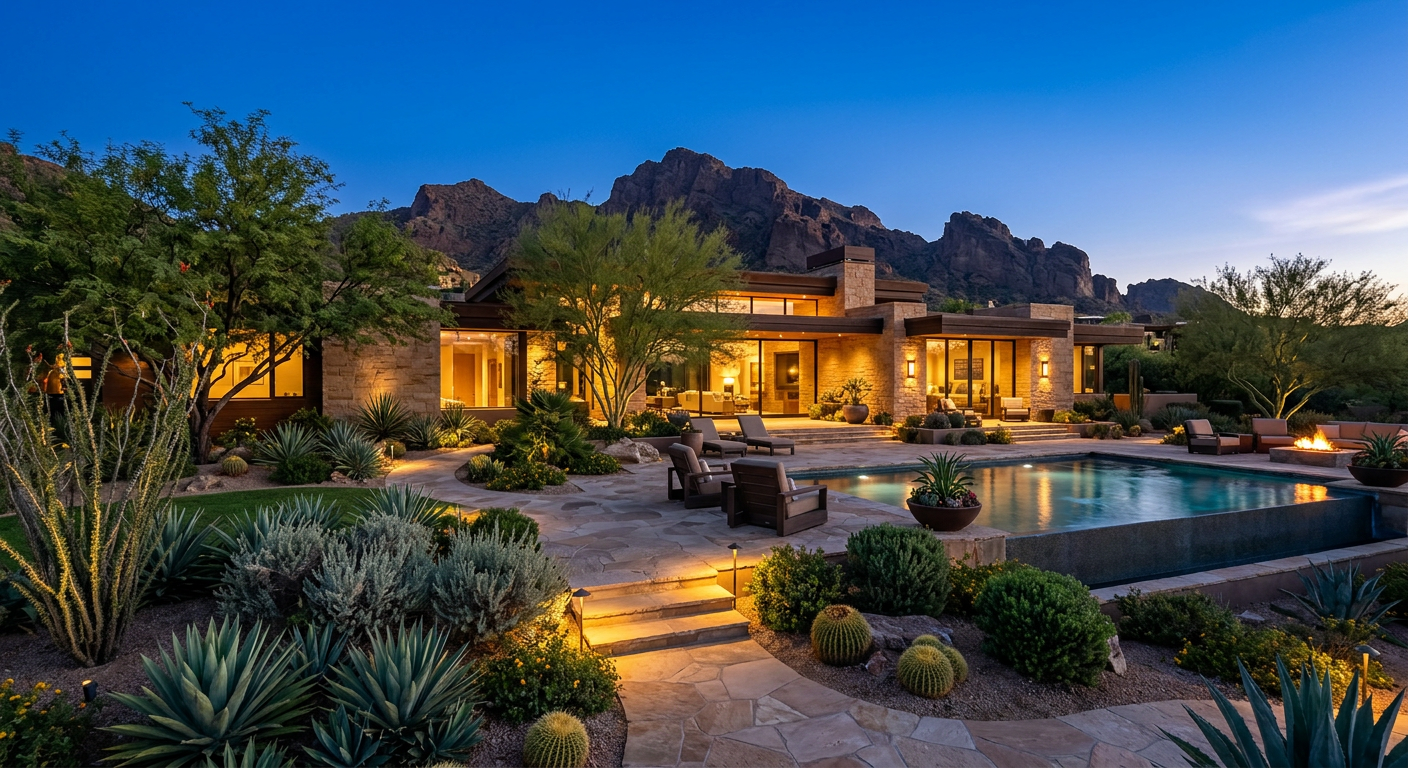
A beautiful Paradise Valley property is more than a home surrounded by planting. It is a series of carefully connected experiences, including arrival, shade, views, privacy, outdoor gathering, material detail, and a landscape that grows more compelling with time.
By planning the site as deliberately as the architecture, homeowners can make confident decisions before construction narrows the options. The result is an outdoor environment that feels integral to the property, appropriate to the desert, and built for long-term enjoyment.
Talk With an Experienced Arizona Landscape Architect
Whether you are planning a custom home, major residential remodel, outdoor living environment, irrigation upgrade, or sustainable landscape renovation, we can help create a thoughtful design that complements your property and long-term goals.
Call (480) 893-3849 or contact Waibel & Associates about your Paradise Valley project.
About Waibel & Associates Landscape Architecture
Waibel & Associates Landscape Architecture is an Arizona landscape architecture firm led by Janet Waibel, RLA, Owner and Principal. The firm provides custom residential landscape architecture, sustainable landscape design, irrigation planning, tree preservation, outdoor living design, site planning, construction documentation, and professional landscape consulting throughout Tempe, Scottsdale, Paradise Valley, Phoenix, North Scottsdale, Carefree, Cave Creek, and surrounding Arizona communities.
Waibel & Associates focuses on thoughtful, high-quality landscapes that complement the architecture of each property while incorporating appropriate plant materials, water-efficient strategies, irrigation technology, and long-term planning.
Janet Waibel is also a published author whose books provide educational resources on sustainable landscape management and landscape construction. Explore Janet Waibel’s Landscape Architecture Books.
Planning a custom residential or professional landscape project?
Call (480) 893-3849
or
Contact Waibel & Associates

Demo Demo
Nemo enim ipsam voluptatem quia voluptas sit aspernatur odit fugitquia consequuntur magni dolores eos qui ratione voluptatem sequi nesciun tosomo. Nemo enim ipsam voluptatem quia voluptas sit aspernatur.