 Demo Demo
Paradise Valley Landscape Architecture for Custom Home Design
A custom home in Paradise Valley deserves an exterior environment designed with the same discipline as its architecture. The strongest properties do not treat the landscape as a final decorative layer. They bring the home, site, views, shade, access, planting, water use, and outdoor living areas into one coordinated plan.
Landscape architecture for Paradise Valley custom homes is especially valuable when a property includes substantial grade changes, mature trees, broad mountain views, pool environments, guest access, or a major remodel. Early planning gives the project team more options to solve those conditions well, before hardscape, utilities, and building decisions become difficult to change.
The Landscape Should Be Part of the Custom Home Design Process
For a custom residence, landscape architecture should begin during architectural planning, not after the home is nearly complete. This allows the exterior spaces to reinforce the home’s proportions, materials, circulation, privacy, and relationship to the desert setting.
A thoughtful plan can coordinate decisions that are often made separately, including:
- Arrival sequence, gates, driveways, and guest parking
- Courtyards, terraces, pools, outdoor kitchens, and fire features
- Views toward Camelback Mountain, Mummy Mountain, or surrounding desert character
- Shade for primary outdoor rooms and high-use gathering spaces
- Planting that provides privacy without closing off important sightlines
- Drainage, grades, retaining conditions, and paving transitions
- Mature tree preservation and construction access
- Irrigation zones matched to plant needs, exposure, and soil conditions
The Town of Paradise Valley’s long-range planning places value on community character, natural open space, and environmental stewardship. Its 2022 General Plan also reflects the importance of maintaining the Town’s primarily residential character and natural setting. For custom homeowners, that makes site-responsive design more than an aesthetic preference. It is part of creating a property that feels appropriate to its location.
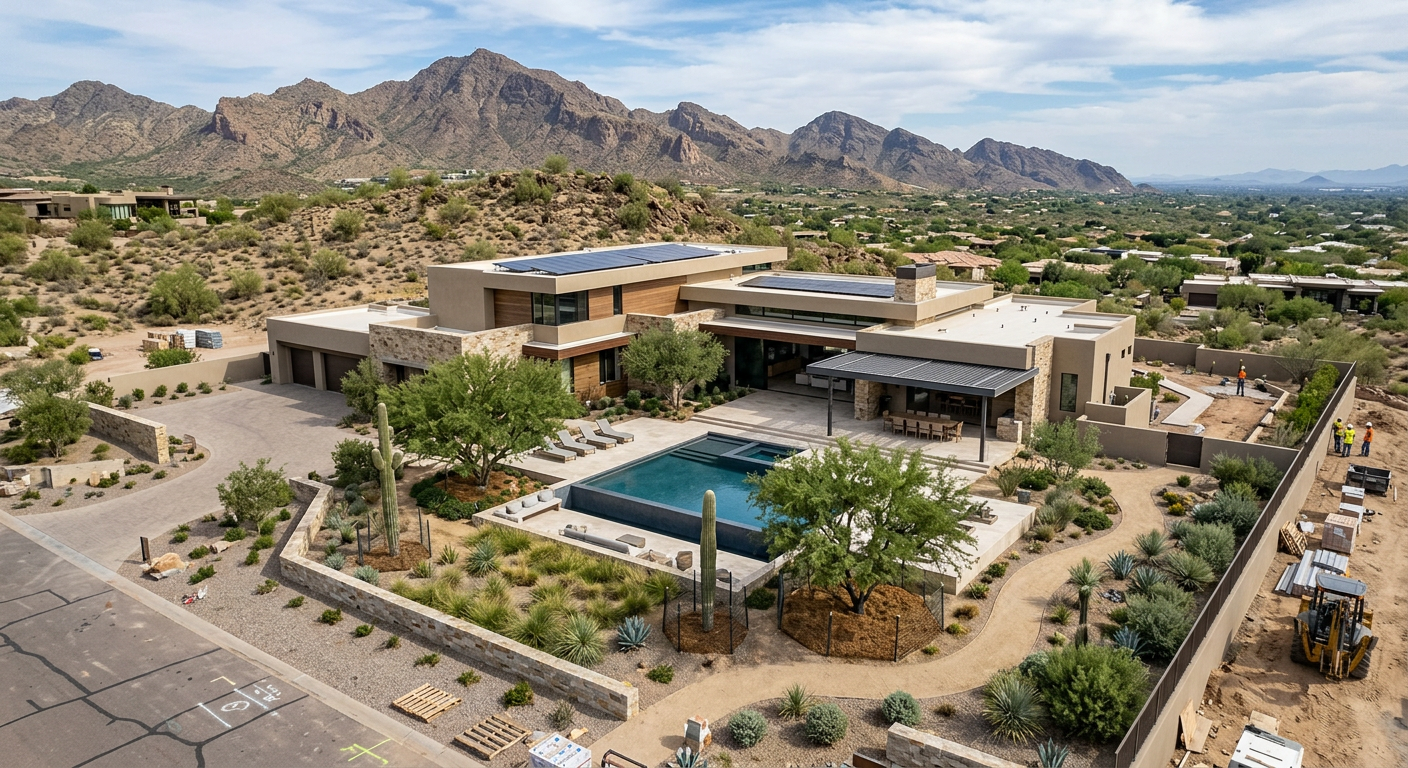
What a Landscape Architect Resolves Before Construction Begins
The best landscape decisions are made while the project still has flexibility. We use early site planning to identify constraints and opportunities before the team commits to locations for walls, paving, utilities, outdoor amenities, and construction access.
Site Conditions That Shape the Design
Every Paradise Valley property has its own combination of exposure, topography, views, established vegetation, neighboring homes, and architectural character. A broad lot may still have limited locations that work comfortably for a pool, covered terrace, guest arrival, or protected outdoor dining area.
We begin by evaluating the site as a complete environment. That includes sun and shade patterns, drainage flow, existing grades, areas of visual sensitivity, mature plant material, utility conflicts, and the way residents will move from interior rooms to exterior spaces. Our approach to site planning in landscape architecture helps establish the framework before detailed planting and material decisions begin.
Architecture, Not Decoration
A landscape should extend the architecture rather than compete with it. A quiet, contemporary residence may call for a restrained plant palette, sculptural forms, broad paving joints, and carefully framed views. A more traditional home may benefit from stronger arrival sequences, layered courtyard planting, textured walls, and outdoor rooms with a greater sense of enclosure.
The goal is not to apply a single desert style to every property. It is to create a durable outdoor composition that belongs to the home, responds to the site, and becomes more compelling as planting matures.
Construction Documents Protect the Design Intent
Custom landscapes involve multiple trades. Clear documents can coordinate layout, dimensions, planting, irrigation, drainage intent, paving, walls, lighting, and key installation details so builders and installers can price and construct the work with greater clarity.
For homeowners and project teams, this reduces costly interpretation in the field. Our landscape architecture services include the planning and documentation needed to support complex residential projects from concept through construction.
A Refined Desert Landscape Can Also Be Water-Conscious
Water efficiency does not require a sparse or generic landscape. It requires appropriate plant communities, sound irrigation design, thoughtful grading, and a clear understanding of where water supports comfort, shade, beauty, and long-term plant health.
The Arizona Department of Water Resources reports that as much as 70 percent of residential water use can occur outdoors. Its landscaping guidance emphasizes regionally appropriate design, low-water-use plant selection, efficient irrigation, and water-harvesting practices. For a Paradise Valley custom home, those principles can be integrated into a landscape that still feels generous and highly tailored.
Layered Planting Creates Depth Without Excess
A strong desert composition can combine shade trees, screening shrubs, flowering accents, groundcovers, specimen plants, and seasonal interest. The difference is that each plant has a purpose. Some create shade near outdoor rooms. Some soften walls. Others frame a view, provide privacy, or establish visual rhythm along a drive or garden path.
Grouping plants by compatible water needs is equally important. It supports more practical irrigation zones and helps avoid the common problem of watering every area of a large property as though it has the same exposure and plant requirements.
Irrigation Must Follow the Design
Irrigation should be designed around planting zones, soil conditions, slope, shade, and plant maturity. It should not be treated as an afterthought once paving and plant locations have already been decided.
For example, a mature tree needs water delivered across its active root zone rather than concentrated near the trunk. High-visibility ornamental beds, containers, turf areas when appropriate, and desert-adapted planting zones often require different equipment and schedules. Our desert landscape irrigation planning resource explains why early coordination helps protect both landscape performance and design quality.
Preserving Valuable Trees and Desert Character
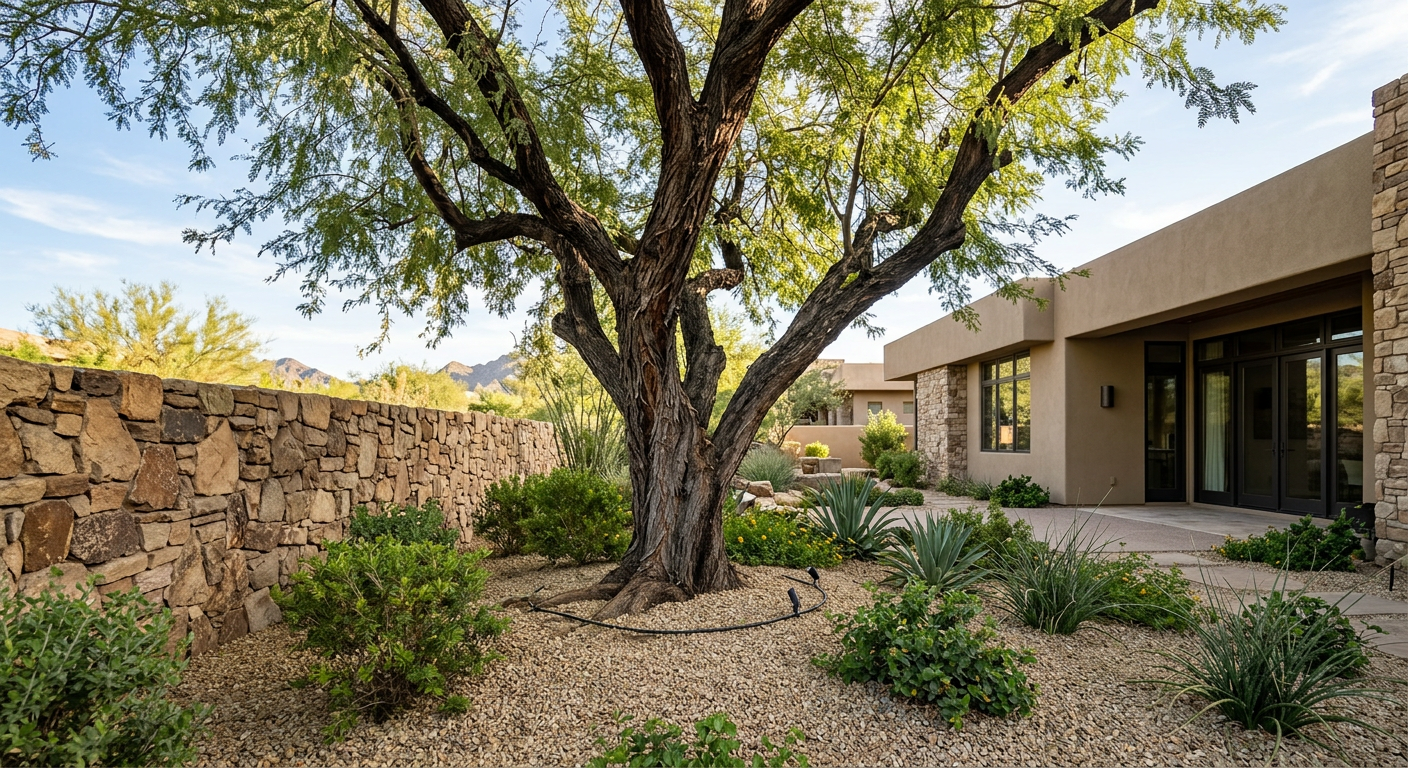
Mature trees and established desert vegetation can be among a Paradise Valley property’s greatest assets. Once removed or damaged through grading, trenching, storage, or poorly planned access, they may take decades to replace.
Tree preservation begins with identifying which plants are worth retaining and then shaping the construction plan around them where feasible. This can influence driveway placement, utility routing, finish grades, wall locations, staging areas, and irrigation transitions. It also requires honest judgment. Some vegetation may be compromised, poorly located, or unsuitable for the future design, while other trees can become the organizing feature of a new landscape.
Planning a Custom Landscape Project?
If you are building or remodeling in Paradise Valley, Scottsdale, Phoenix, Tempe, or the surrounding area, early landscape planning can help protect the investment you are making in the home and create exterior spaces with a clear architectural purpose. We coordinate site planning, outdoor living, planting, irrigation, hardscape, and construction details around the way your property will be used.
Call (480) 893-3849 to discuss your project with Waibel & Associates Landscape Architecture, or request a landscape architecture consultation.
Why Early Collaboration Creates a Better Finished Property
The most expensive landscape decisions are often the ones made too late. Once a pool is set, a driveway is poured, or utilities are installed, the team may have fewer options to improve shade, circulation, privacy, tree protection, drainage, or the relationship between indoor and outdoor rooms.
Bringing landscape architecture into the conversation early helps architects, builders, and homeowners make coordinated decisions. It does not mean every detail must be selected before construction begins. It means the major framework is understood soon enough to avoid compromising the finished property.
For a luxury custom home, that framework typically includes the hierarchy of outdoor spaces, the location of major amenities, pedestrian circulation, service access, primary views, retained vegetation, grade transitions, and water-efficient planting zones. Detailed materials, furnishings, lighting effects, and seasonal planting can then build on a strong foundation.
Janet Waibel, RLA, Owner and Principal of Waibel & Associates Landscape Architecture, brings experience in planning, irrigation, sustainable landscapes, and construction coordination to this process. Homeowners and project professionals who want additional perspective on durable landscape practices can also explore landscape architecture books by Janet Waibel.
Questions Homeowners Ask About Paradise Valley Custom Home Landscapes
When should we hire a landscape architect for a custom home?
The best time is during architectural programming or schematic design. Early involvement allows the landscape architect to coordinate outdoor rooms, grading, utilities, trees, views, drainage, and access before major building decisions limit the options.
Can a landscape architect work with our architect and custom home builder?
Yes. Landscape architecture is most effective when it is coordinated with the architect, builder, civil engineer, pool consultant, lighting professional, and other project partners. Clear communication helps the landscape support the larger project rather than become a separate scope of work.
Can a water-efficient Paradise Valley landscape still feel lush?
Yes. A refined water-conscious landscape can use layered shade, flowering accents, specimen plants, natural stone, pools, courtyards, and rich material contrast. The key is intentional plant selection and irrigation planning, not removing visual interest.
Should we preserve mature trees during a major remodel?
Often, yes, if the trees are healthy, appropriately located, and can be protected during construction. A site assessment helps determine which trees should shape the new design and which plants may need replacement because of condition, conflicts, or long-term suitability.
Does landscape architecture include pool and outdoor kitchen planning?
Yes. A landscape architect can help determine where pools, kitchens, fire features, dining areas, and shade structures fit best in relation to the home, views, sun exposure, privacy, access, and planting.
What is the difference between landscape architecture and a contractor-provided concept?
A contractor-provided concept can be useful for a straightforward installation. Landscape architecture is generally the better fit for a custom home or major renovation involving complex site conditions, architectural integration, grading, mature trees, irrigation, multiple trades, and detailed construction documentation.
A Lasting Landscape Begins With a Clear Site Strategy
A memorable Paradise Valley landscape is not defined by a single feature or plant palette. It is the result of decisions working together, from the first approach to the home through the most private courtyard, pool terrace, garden path, and mountain view.
When the landscape is planned alongside the architecture, it can provide comfort, beauty, shade, privacy, water-conscious performance, and a stronger sense of place. The finished property feels resolved because the exterior was never treated as an afterthought.
Talk With an Experienced Arizona Landscape Architect
For a custom home, major remodel, outdoor living environment, irrigation upgrade, or sustainable landscape renovation, Waibel & Associates can help create a thoughtful design that complements your property and long-term goals.
Call (480) 893-3849 or contact Waibel & Associates to begin the conversation.
About Waibel & Associates Landscape Architecture
Waibel & Associates Landscape Architecture is an Arizona landscape architecture firm led by Janet Waibel, RLA, Owner and Principal. The firm provides custom residential landscape architecture, sustainable landscape design, irrigation planning, tree preservation, outdoor living design, site planning, construction documentation, and professional landscape consulting throughout Tempe, Scottsdale, Paradise Valley, Phoenix, North Scottsdale, Carefree, Cave Creek, and surrounding Arizona communities.
Waibel & Associates focuses on thoughtful, high-quality landscapes that complement the architecture of each property while incorporating appropriate plant materials, water-efficient strategies, irrigation technology, and long-term planning.
Janet Waibel is also a published author whose books provide educational resources on sustainable landscape management and landscape construction.
Planning a custom residential or professional landscape project?
Call (480) 893-3849
or
Contact Waibel & Associates →

Demo Demo
Nemo enim ipsam voluptatem quia voluptas sit aspernatur odit fugitquia consequuntur magni dolores eos qui ratione voluptatem sequi nesciun tosomo. Nemo enim ipsam voluptatem quia voluptas sit aspernatur.