What Is Site Planning in Landscape Architecture? A Complete Guide
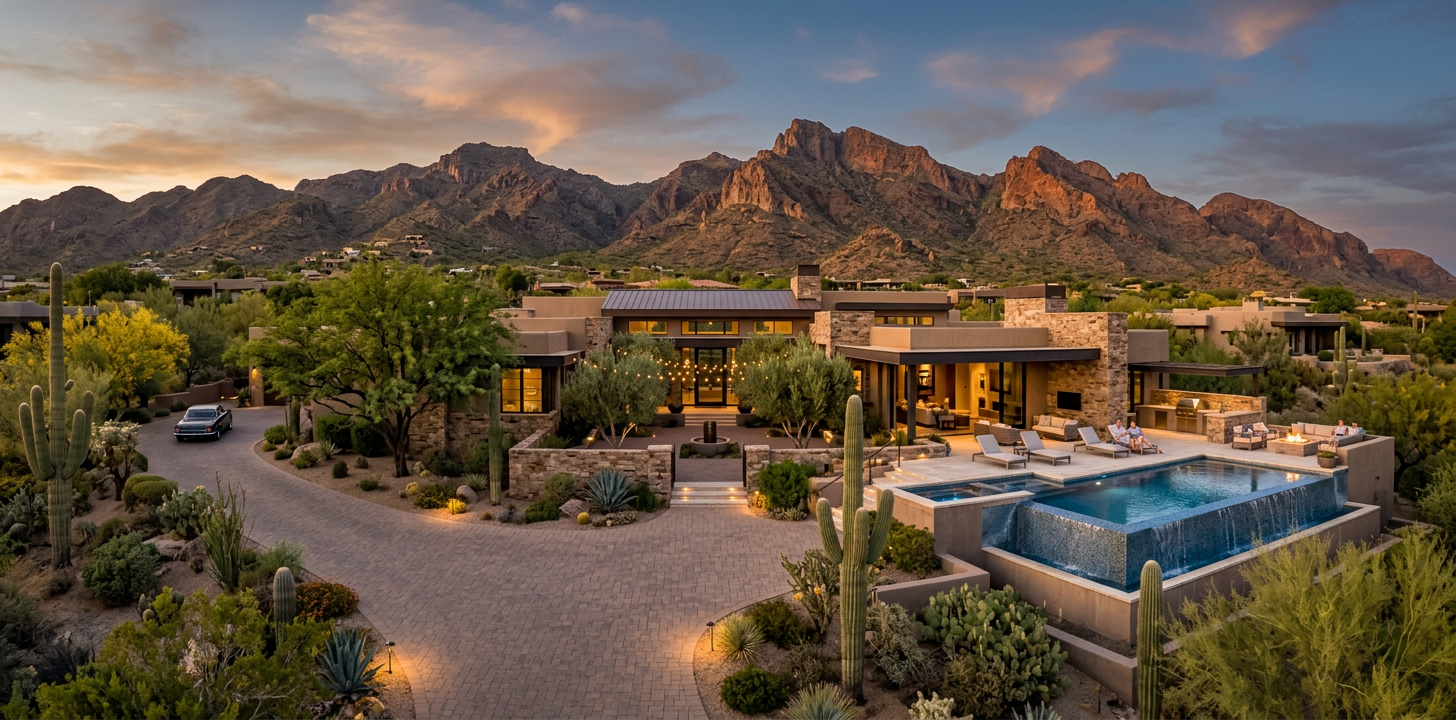
A successful outdoor environment does not begin with selecting plants, pavers, or outdoor furniture. It begins with understanding the property itself, including its opportunities, constraints, architecture, drainage, views, circulation, and long-term needs.
So, what is site planning in landscape architecture? It is the early-stage process of organizing how land will work before detailed landscape design and construction begin. We study the site, establish priorities, and create a practical framework for outdoor spaces that fit the home, the climate, and the people who will use them.
For a custom home, major remodel, estate renovation, HOA improvement, or private development project in Tempe, Scottsdale, Paradise Valley, Phoenix, or the East Valley, site planning helps prevent expensive decisions from being made in isolation. It brings the landscape into the larger architectural conversation while there is still time to make meaningful adjustments.
Site Planning in Landscape Architecture Defines the Big Decisions
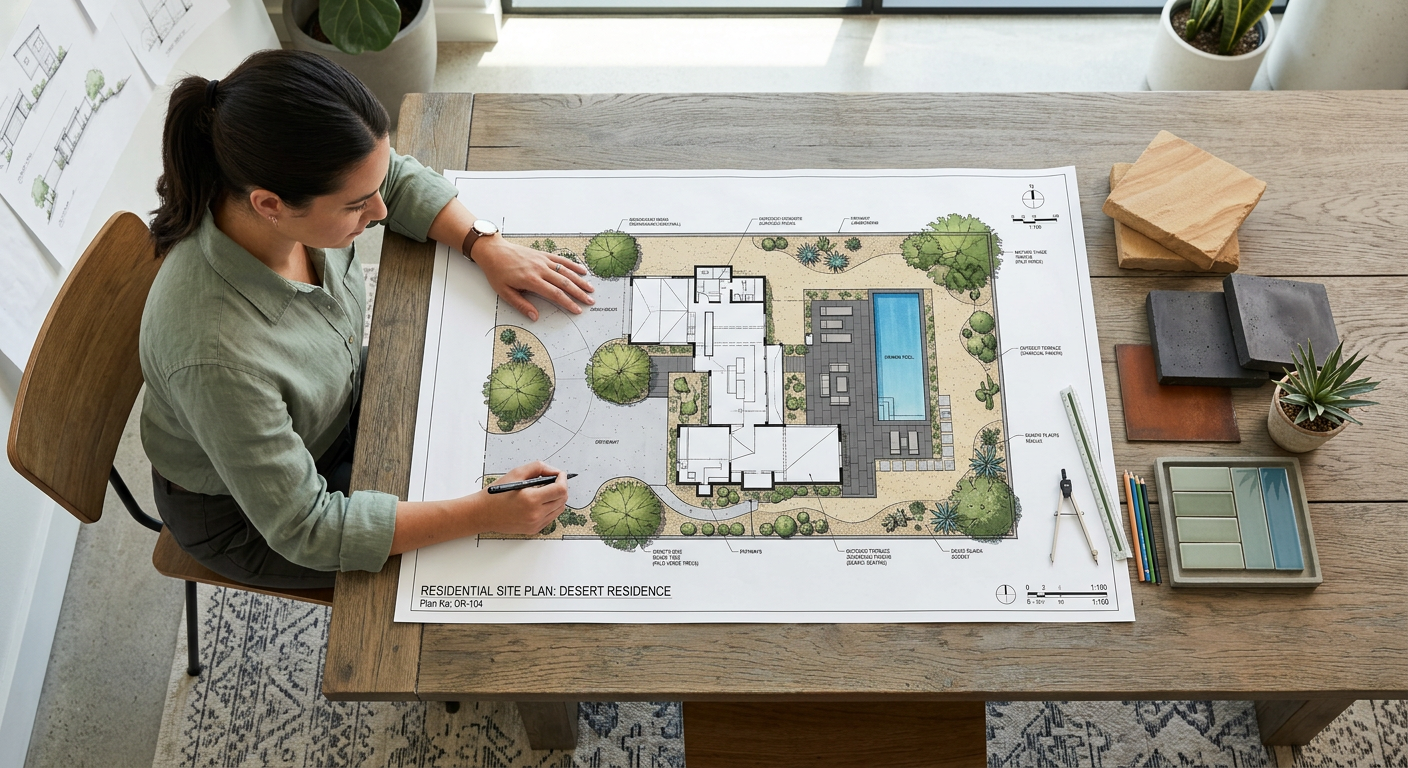
Site planning is the bridge between a property as it exists and a landscape that can be built, used, and maintained successfully. Rather than starting with individual features, we first determine where each function belongs and how it relates to the rest of the property.
A site plan may guide decisions such as building placement, arrival sequence, driveway alignment, guest parking, grading concepts, pool and patio locations, views, privacy, service access, tree preservation, and outdoor living areas. On a residential project, it also gives the architect, homeowner, builder, and consultants a common framework for coordination.
| Site Planning Focus | Questions We Resolve | Long-Term Benefit |
|---|---|---|
| Site conditions | What must be protected or accommodated? | Fewer avoidable conflicts |
| Space organization | Where should each outdoor use occur? | Better daily function |
| Circulation | How will people, vehicles, and service access move? | Safer, clearer movement |
| Water and grading | Where will water go? | More resilient landscape |
| Architectural fit | How will exterior spaces extend the home? | Stronger property character |
Site planning is not a decorative exercise. It is a decision-making process that helps a project use land responsibly and express the architecture with intention.
What We Evaluate Before Designing the Landscape
Every site has physical realities that influence what will work well. A careful analysis allows us to shape outdoor areas around those conditions rather than forcing a standard solution onto the property.
Topography, Drainage, and Soil
Grades affect much more than appearance. They influence drainage, retaining conditions, accessibility, privacy, irrigation performance, and where patios or pools can sit comfortably. We review how water currently moves across the property and consider how improvements may change those patterns.
Soil also matters. Compaction, drainage characteristics, salinity concerns, and planting conditions can influence plant health and material choices. Addressing these conditions in the planning phase supports healthier plants and reduces future corrective work.
Existing Trees, Vegetation, and Natural Features
Mature trees can be among a property’s most valuable landscape assets, especially in established Tempe, Paradise Valley, and Scottsdale neighborhoods. We identify vegetation and features that deserve protection, then consider construction access, grade changes, and utility routes that could affect them.
Preservation is not simply a note on a drawing. It requires practical coordination so that root zones, trunk clearances, and existing growing conditions are considered before construction logistics take over.
Sun, Shade, Wind, Views, and Privacy
Arizona outdoor living must be planned for the seasons, not just photographed beautifully. We assess summer sun exposure, afternoon heat, prevailing winds, view corridors, neighboring windows, and where shade will be most meaningful.
That analysis may shape the placement of a covered terrace, pool deck, dining area, fire feature, entry court, or garden retreat. It also informs plant selection and the need for shade structures, trees, walls, or screens.
Access, Utilities, and Municipal Requirements
A well-composed plan must still be buildable. We consider entries, gates, service routes, equipment locations, utility conflicts, emergency access, easements, and the practical sequence of construction.
Depending on the project, site planning may also support municipal review, HOA requirements, or coordination with civil engineering and architecture. These early conversations can protect the design from last-minute compromises.
How the Site Planning Process Works
Although every property is different, our process generally moves from information gathering to clear decisions and then detailed documentation.
Document the Existing Conditions
We begin by reviewing available surveys, architectural plans, site photographs, client priorities, and known constraints. A site visit allows us to understand the qualities that are difficult to see on paper, such as the experience of arrival, important views, sun exposure, mature vegetation, and the relationship between indoor and outdoor rooms.
Establish a Functional Program
Next, we identify what the property needs to do. For a luxury residence, the program may include an arrival court, guest parking, a pool, entertaining terraces, outdoor kitchen, family recreation area, quiet garden spaces, pet areas, service functions, and generous planting zones.
The goal is not to add every possible feature. It is to prioritize the uses that support the owner’s lifestyle and arrange them with enough room to feel comfortable, connected, and intentional.
Develop the Spatial Framework
We then organize the primary spaces and connections. This is where we determine the broad relationships between the home, landscape, hardscape, circulation routes, views, shade, and planting structure.
At this stage, a strong plan often reveals useful tradeoffs. A larger pool may affect tree preservation. A more private patio may change a view. A generous entry sequence may require a different approach to driveway geometry. Making those choices early is far less disruptive than changing finished work later.
Coordinate the Design for Construction
Once the framework is approved, detailed landscape architecture can proceed. This can include planting plans, irrigation design, hardscape layouts, lighting coordination, materials, details, specifications, construction documents, and construction administration.
Waibel & Associates provides site planning and landscape architecture services that connect early analysis with detailed design documentation, helping the project team move from concept to installation with greater clarity.
Why Site Planning Matters in Arizona
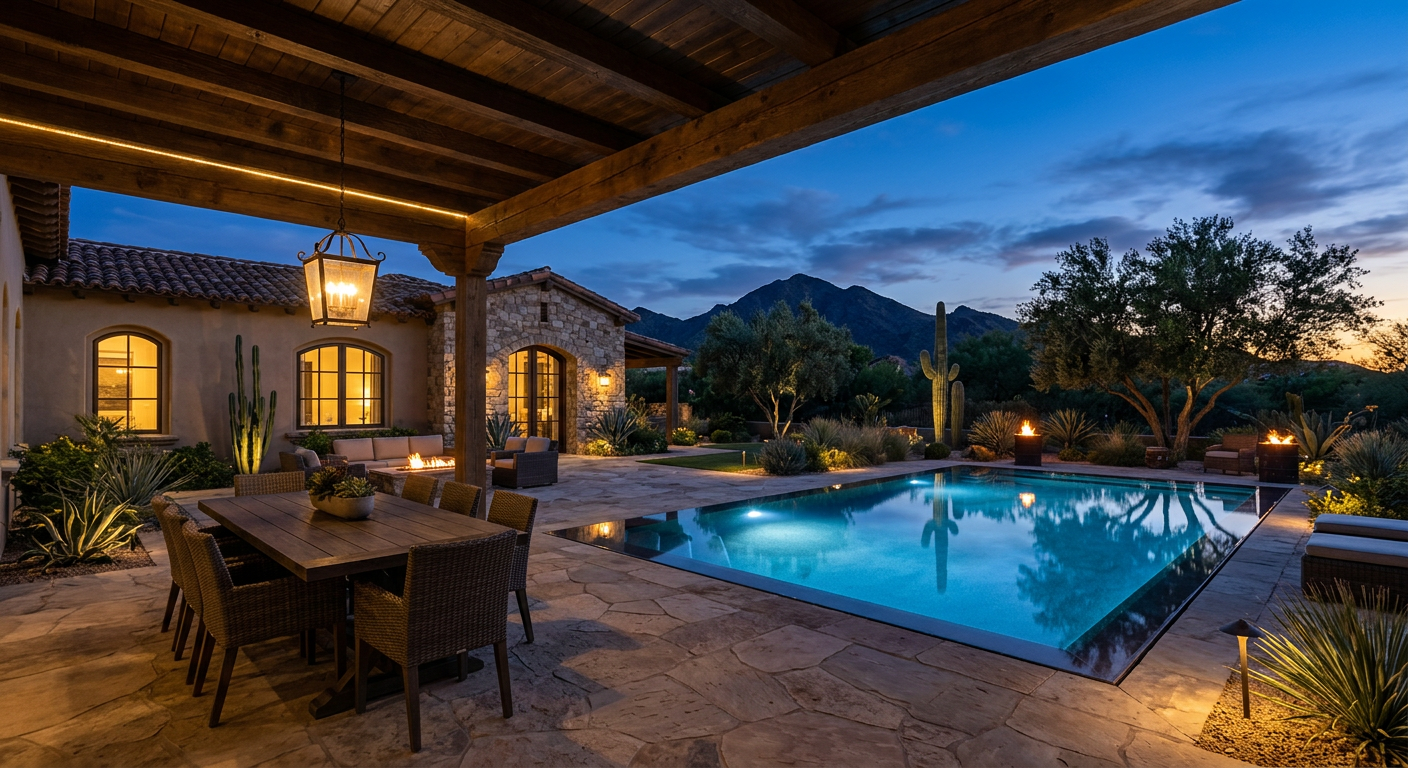
In the desert Southwest, planning decisions have a direct effect on comfort, water use, and landscape performance. Appropriate planting, soil preparation, hydrozones, and irrigation systems need to work together, particularly where intense heat and limited rainfall place greater demands on outdoor spaces.
The U.S. Environmental Protection Agency reports that residential outdoor water use in the United States totals nearly 8 billion gallons each day, largely for landscape irrigation. Its guidance also emphasizes a holistic approach to water-smart landscape design. EPA WaterSense provides useful context for why site planning, plant placement, and irrigation coordination belong in the same conversation. (epa.gov)
For high-end properties, water efficiency should not mean an underdesigned exterior. It means locating plants where they can thrive, providing shade where people will use it, shaping grades to manage water responsibly, and designing irrigation zones around plant needs and exposure. The resulting landscape can be both generous and disciplined.
Our residential landscape architecture approach is built around this kind of coordination, including architecture, paving, planting, irrigation, lighting, and outdoor living features.
Site Planning Versus Landscape Design
These terms overlap, but they are not identical. Site planning focuses on the overall organization of land and the primary decisions that govern the project. Landscape design develops the character, material palette, planting composition, construction details, and experiential quality of the exterior environment.
Think of site planning as establishing the structure of the project. Landscape design gives that structure form, texture, comfort, and identity. Both are necessary, but a detailed planting plan cannot solve a poorly located patio, an awkward vehicle route, inadequate drainage, or an overlooked view.
This is why we recommend bringing a landscape architect into the process early, ideally while a custom home or major renovation is still being planned. Janet Waibel, RLA, Owner and Principal of Waibel & Associates Landscape Architecture, has experience guiding projects from planning and conceptual layout through construction documents and implementation. Learn more about Janet Waibel and the firm. (waibel-la.com)
Planning a Custom Landscape Project?
If you are building or remodeling a home in Tempe, Scottsdale, Paradise Valley, Phoenix, Carefree, Cave Creek, or the surrounding area, early landscape planning can help protect your investment and create an outdoor environment that belongs with the architecture from the beginning.
Call (480) 893-3849 to discuss your project with Waibel & Associates, or request a landscape architecture consultation →.
Questions Homeowners Ask About Site Planning
When should we hire a landscape architect for site planning?
We recommend involving a landscape architect as early as possible, ideally during architectural programming or schematic design. Early collaboration gives the team more flexibility to coordinate outdoor spaces, drainage, utilities, trees, views, and circulation before key decisions are fixed.
Does site planning include pools and outdoor kitchens?
Yes. Site planning helps determine the best location, relationship, access, privacy, shade, and service considerations for pools, outdoor kitchens, fire features, dining terraces, and other outdoor living elements. Detailed design follows after the overall arrangement is established.
Can site planning help preserve mature trees?
Yes. A landscape architect can identify trees and vegetation worth preserving, then coordinate construction access, grading, utilities, and improvement locations to reduce avoidable impacts. The earlier this work occurs, the more options a project team typically has.
Is site planning useful for a landscape renovation?
Absolutely. A renovation often has more constraints than a new home because it must work around existing structures, utilities, irrigation, vegetation, and established circulation patterns. A site plan helps determine which elements should be retained, reconfigured, or replaced.
Does site planning address water efficiency?
It should. Site planning establishes the conditions for water-efficient landscape design by considering exposure, shade, planting zones, soil, grading, and irrigation infrastructure together. These decisions support a landscape that is appropriate for Arizona’s climate without sacrificing usability or beauty.
What should we bring to the first site planning meeting?
Bring a current survey if available, architectural plans, photographs, inspiration images, a list of desired uses, and any HOA or municipal information you have received. We also encourage clients to share how they live outdoors, entertain, arrive home, and use their property day to day.
The Strongest Landscapes Start With a Clear Plan
A refined exterior environment is not the result of isolated choices. It comes from organizing the property thoughtfully, responding to its constraints, and coordinating the design before construction makes changes costly.
Whether the project is a custom home, a major remodel, or an aging landscape ready for a new direction, site planning creates the foundation for a landscape that feels natural to the architecture and works beautifully over time.
Talk With an Experienced Arizona Landscape Architect
We can help you evaluate your property, clarify priorities, and develop a cohesive direction for a custom residential landscape, outdoor living environment, irrigation upgrade, or sustainable landscape renovation.
Call (480) 893-3849 or contact Waibel & Associates → to begin the conversation.
About Waibel & Associates Landscape Architecture
Waibel & Associates Landscape Architecture is an Arizona landscape architecture firm led by Janet Waibel, RLA, Owner and Principal. The firm provides custom residential landscape architecture, sustainable landscape design, irrigation planning, tree preservation, outdoor living design, site planning, construction documentation, and professional landscape consulting throughout Tempe, Scottsdale, Paradise Valley, Phoenix, North Scottsdale, Carefree, Cave Creek, and surrounding Arizona communities. ([waibel-la.com](https://waibel-la.com/))
Waibel & Associates focuses on thoughtful, high-quality landscapes that complement the architecture of each property while incorporating appropriate plant materials, water-efficient strategies, irrigation technology, and long-term planning.
Janet Waibel is also a published author whose books provide educational resources on sustainable landscape management and landscape construction. Explore Janet Waibel’s Landscape Architecture Books → ([waibel-la.com](https://waibel-la.com/our-books/))
Planning a custom residential or professional landscape project?
Call (480) 893-3849
or
Contact Waibel & Associates →
Water Efficient Landscape Design Phoenix for Luxury Outdoor Living
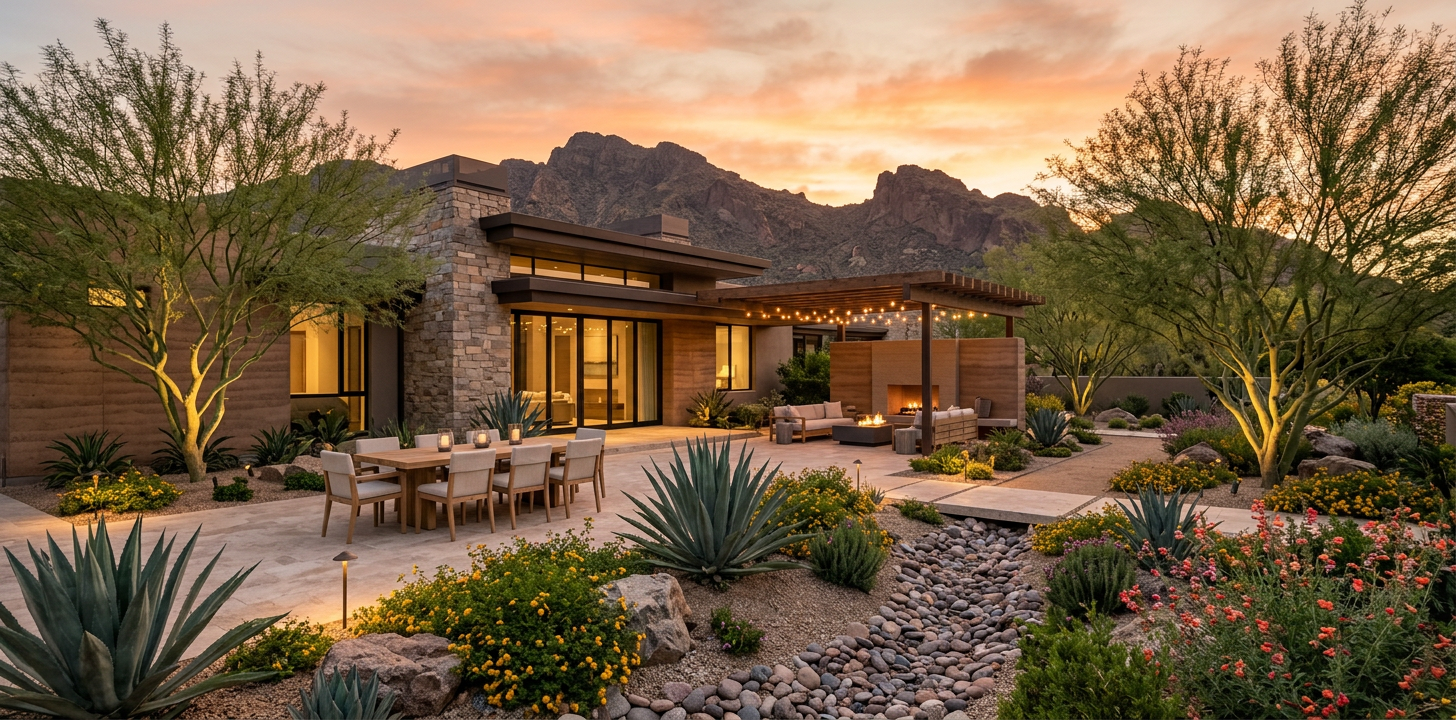
A beautiful Phoenix property does not need to rely on thirsty planting or oversized turf to feel welcoming, lush, and complete. The most successful outdoor environments respond to the home’s architecture, the site’s exposure, how the family lives outdoors, and the realities of the Sonoran Desert.
Water efficient landscape design Phoenix homeowners can rely on begins with professional planning, not a last-minute plant palette. It combines appropriate shade, carefully selected plant communities, irrigation zoning, drainage planning, durable materials, and outdoor living spaces that feel generous without creating unnecessary water demand.
For custom homes, major remodels, communities, and estate properties, we see water efficiency as a design discipline. It is not a stripped-down look. Done well, it creates a more comfortable, more resilient landscape with a clear sense of place.
Why Outdoor Water Planning Matters in Phoenix
The Arizona Department of Water Resources reports that landscaping is the state’s largest use of potable water and that outdoor use can represent as much as 70 percent of residential water use. That makes the landscape plan one of the most meaningful places to improve efficiency without giving up beauty or function. Arizona Department of Water Resources
The City of Phoenix similarly notes that desert-friendly plants can provide varied form, color, and texture while requiring less water and care when they are suited to local soils and weather. City of Phoenix Outdoor Conservation Resources
For high-end residential properties, the goal is not simply to use fewer plants. It is to use plants and materials with intention, so shade, privacy, arrival sequences, views, entertaining areas, and architectural character work together.
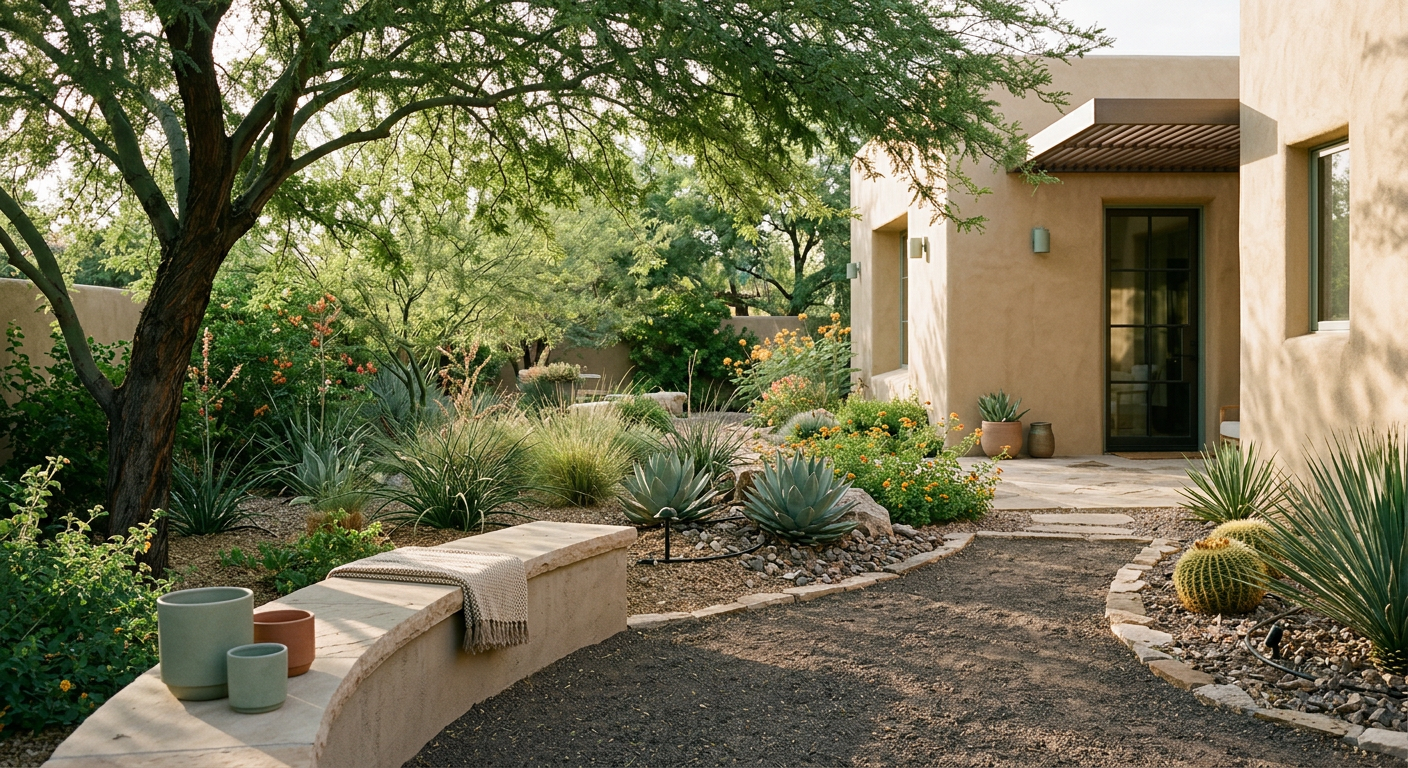
How Water Efficient Landscape Design Phoenix Projects Create Value
A lower-water landscape should be planned as a complete site system. When isolated choices are made without a larger plan, homeowners can end up with poor shade coverage, plants competing for water, drainage problems, or irrigation that is difficult to manage.
Start With Site Analysis and Architectural Integration
We begin by studying sun exposure, existing grades, drainage patterns, views, mature trees, utility constraints, and the circulation between indoor and outdoor rooms. This process identifies where shade is most valuable, where planting can support privacy, and which spaces need durable hardscape for daily use.
This is especially important for custom homes and remodels in Phoenix, Scottsdale, Paradise Valley, and Tempe, where the landscape should reinforce the architectural language rather than compete with it. Explore our approach to custom residential landscape architecture for homes that need coordinated planting, paving, lighting, and outdoor amenities.
Design Plant Communities, Not a Collection of Individual Plants
A strong desert planting design uses trees, shrubs, accents, groundcovers, and seasonal color in purposeful layers. Plants with compatible water needs should be grouped together, while high-water-use areas are limited to places where they serve a specific lifestyle or visual purpose.
Desert-adapted does not have to mean sparse. Canopy trees can cool patios and windows, flowering shrubs can frame views, and sculptural succulents can provide strong form near entries, pools, or contemporary architecture. The key is selecting materials that mature well in the available space and support the intended irrigation strategy.
Make Irrigation Part of the Design, Not an Afterthought
Irrigation is where a thoughtful plan becomes practical. Hydrozone planning separates plant areas with different water needs, allowing trees, shrubs, accent plants, and any turf to receive appropriate schedules rather than one blanket approach.
Drip irrigation, properly located emitters, pressure regulation, seasonal controller adjustments, and accessible valves all matter. The City of Phoenix recommends watering from sundown to sunrise to reduce evaporation and adjusting irrigation frequency with the weather. Phoenix Water Conservation Guidance
At Waibel & Associates, our landscape architecture services include planting and irrigation design, site planning, cost estimating, and construction administration. Those connected decisions help protect the visual quality of the project as it moves from design into installation.
Use Shade and Hardscape Strategically
Hardscape is not automatically water efficient. Large expanses of paving can intensify heat, increase glare, and make an outdoor space less inviting during much of the year. A better approach balances patios, pool decks, paths, permeable areas, shade structures, canopy trees, and planting beds.
We often plan shade first around the outdoor spaces that matter most: kitchen-adjacent patios, lounge areas, pool seating, guest entries, and view-oriented gathering spaces. That creates more usable outdoor living while allowing the planting design to do real environmental work.
Water-Wise Design Choices for Luxury Properties
The right choices depend on the property, architecture, and client priorities, but several principles consistently improve water performance.
- Preserve mature trees when feasible. Existing canopy can provide years of shade value that new planting cannot immediately replace.
- Limit high-water zones. If a green play area or formal lawn is important, keep it purposeful, compact, and separately irrigated.
- Plan for rain where it falls. Grade planting areas and use subtle swales, basins, and drainage routes to direct rainwater into the landscape rather than away from it.
- Improve soil where planting requires it. Appropriate soil preparation supports healthier root systems and reduces the tendency to overwater.
- Specify mulch and finish materials carefully. Materials should support the style of the home while moderating evaporation, protecting soil, and allowing maintenance access.
- Plan for maintenance access. A beautiful landscape needs practical room for pruning, controller adjustments, and long-term care.
According to the Arizona Department of Water Resources’ Phoenix-area outdoor water use study, homes with arid and sparse landscape categories used substantially less water than homes in turf or extensive landscape categories. Phoenix Metropolitan Area Outdoor Water Use Study
Planning a Custom Landscape Project?
If you are building or remodeling a home in Phoenix, Tempe, Scottsdale, Paradise Valley, or the surrounding area, early landscape planning can help protect your investment and create a cohesive outdoor environment from the beginning. We coordinate site planning, outdoor living, planting, irrigation, hardscape, and construction details around the way you want to use the property.
Call (480) 893-3849 to discuss your project with Waibel & Associates, or request a landscape architecture consultation.
Avoid These Common Water-Efficiency Mistakes
A landscape can include attractive low-water plants and still use more water than necessary. The most common reason is a mismatch between the design, irrigation system, and maintenance expectations.
Treating Every Plant Zone the Same
When every area is placed on one irrigation schedule, trees, shrubs, flowering accents, and groundcovers are forced into the same watering pattern. That often leads to overwatering some areas and stressing others. Zoning should reflect plant type, exposure, soil, and root depth.
Replacing Turf With Gravel Alone
Removing a water-demanding lawn can be appropriate, but an all-gravel result may create glare, stored heat, and little ecological or visual benefit. Layered, regionally appropriate planting can bring shade, texture, habitat, and seasonal interest while remaining water conscious.
Designing Without a Construction Plan
Concept imagery can inspire a project, but it does not resolve grades, drainage, plant quantities, irrigation components, material transitions, or installation details. Construction documents reduce ambiguity and give contractors a clearer path to build the intended design.
Janet Waibel, RLA, Owner and Principal of Waibel & Associates Landscape Architecture, brings experience in landscape planning, irrigation, construction, and sustainable design to these decisions. Homeowners and property professionals can also explore landscape architecture books by Janet Waibel for deeper guidance on sustainable landscape management and construction principles.
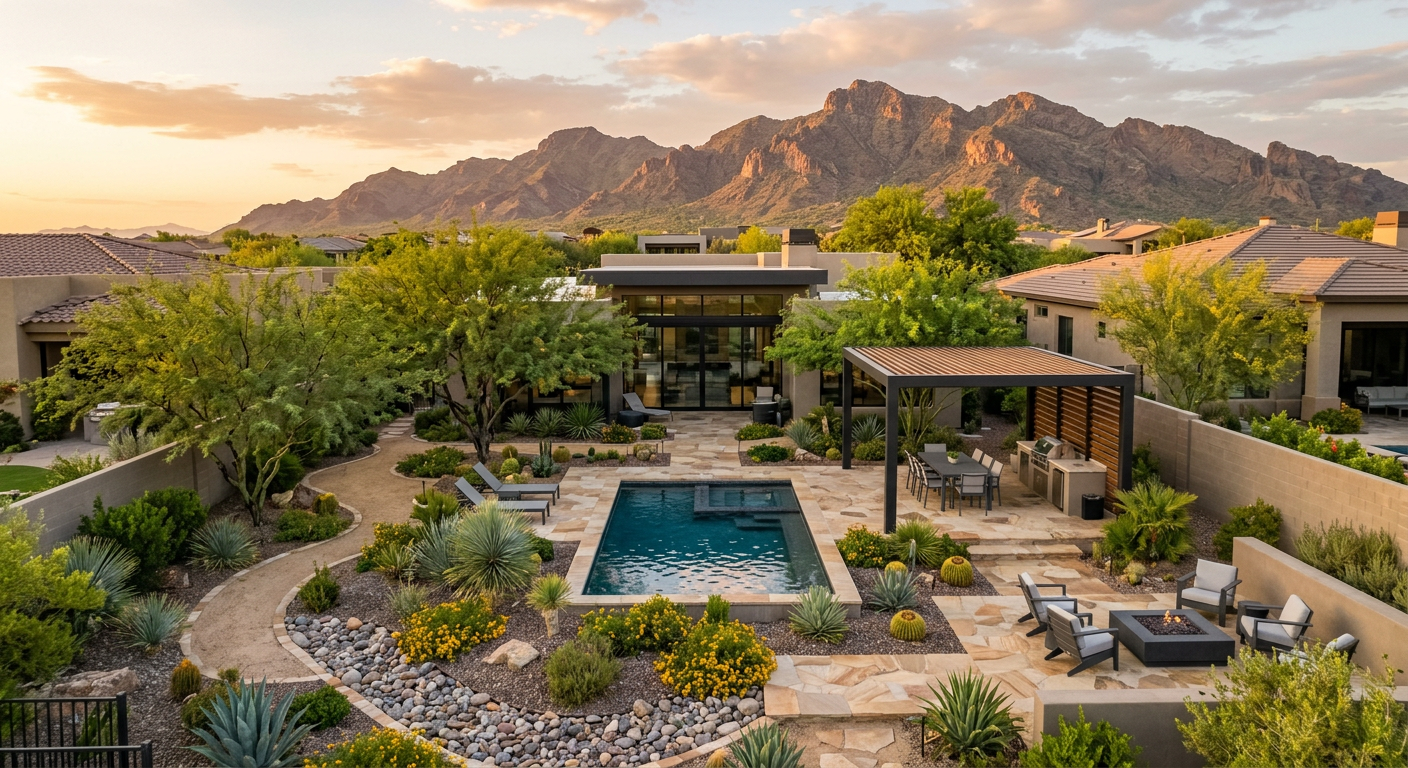
Questions Phoenix Property Owners Ask
Can a water-efficient landscape still look luxurious?
Yes. Luxury comes from composition, craftsmanship, material quality, shade, proportion, lighting, and a landscape that complements the home. Water-efficient planting can be richly layered and visually refined when it is professionally designed.
When should landscape architecture begin for a custom home?
Landscape planning should begin during architectural design or early site planning. Early coordination helps reserve room for outdoor living, drainage, utilities, tree preservation, views, and appropriate finished grades.
Is drip irrigation always the best choice in Phoenix?
Drip irrigation is often appropriate for trees, shrubs, accents, and many planting beds. The right system depends on plant material, soil conditions, exposure, and the requirements of each zone.
Should we remove all turf from a Phoenix property?
Not necessarily. A limited, purposeful lawn may suit a family’s lifestyle or a specific outdoor space. The important consideration is whether the turf area earns its water use and is separately designed and irrigated for efficient performance.
Can mature trees be protected during a remodel?
Often, yes. Tree preservation should be evaluated early so construction access, grading, utility routes, and root protection measures can be planned before work begins.
Does Waibel & Associates work with architects and custom builders?
Yes. We work with homeowners and project teams on site planning, planting and irrigation design, hardscape planning, construction documentation, and coordination during installation.
A More Resilient Landscape Starts With Better Planning
Water efficiency is most successful when it is built into the design from the beginning. A well-planned Phoenix landscape can create meaningful shade, memorable outdoor rooms, healthy plant growth, and a stronger relationship between the home and its desert setting.
Rather than treating conservation as a limitation, we can use it as a framework for better decisions. The result is an outdoor environment designed to remain beautiful, functional, and manageable through changing seasons.
Talk With an Experienced Arizona Landscape Architect
Whether you are planning a custom home, major residential remodel, outdoor living environment, irrigation upgrade, or sustainable landscape renovation, Waibel & Associates can help create a thoughtful design that complements your property and long-range goals.
Call (480) 893-3849 or contact Waibel & Associates to discuss your project.
About Waibel & Associates Landscape Architecture
Waibel & Associates Landscape Architecture is an Arizona landscape architecture firm led by Janet Waibel, RLA, Owner and Principal. The firm provides custom residential landscape architecture, sustainable landscape design, irrigation planning, tree preservation, outdoor living design, site planning, construction documentation, and professional landscape consulting throughout Tempe, Scottsdale, Paradise Valley, Phoenix, North Scottsdale, Carefree, Cave Creek, and surrounding Arizona communities.
Waibel & Associates focuses on thoughtful, high-quality landscapes that complement the architecture of each property while incorporating appropriate plant materials, water-efficient strategies, irrigation technology, and long-term planning.
Janet Waibel is also a published author whose books provide educational resources on sustainable landscape management and landscape construction.
Planning a custom residential or professional landscape project?
Call (480) 893-3849
or
Contact Waibel & Associates →
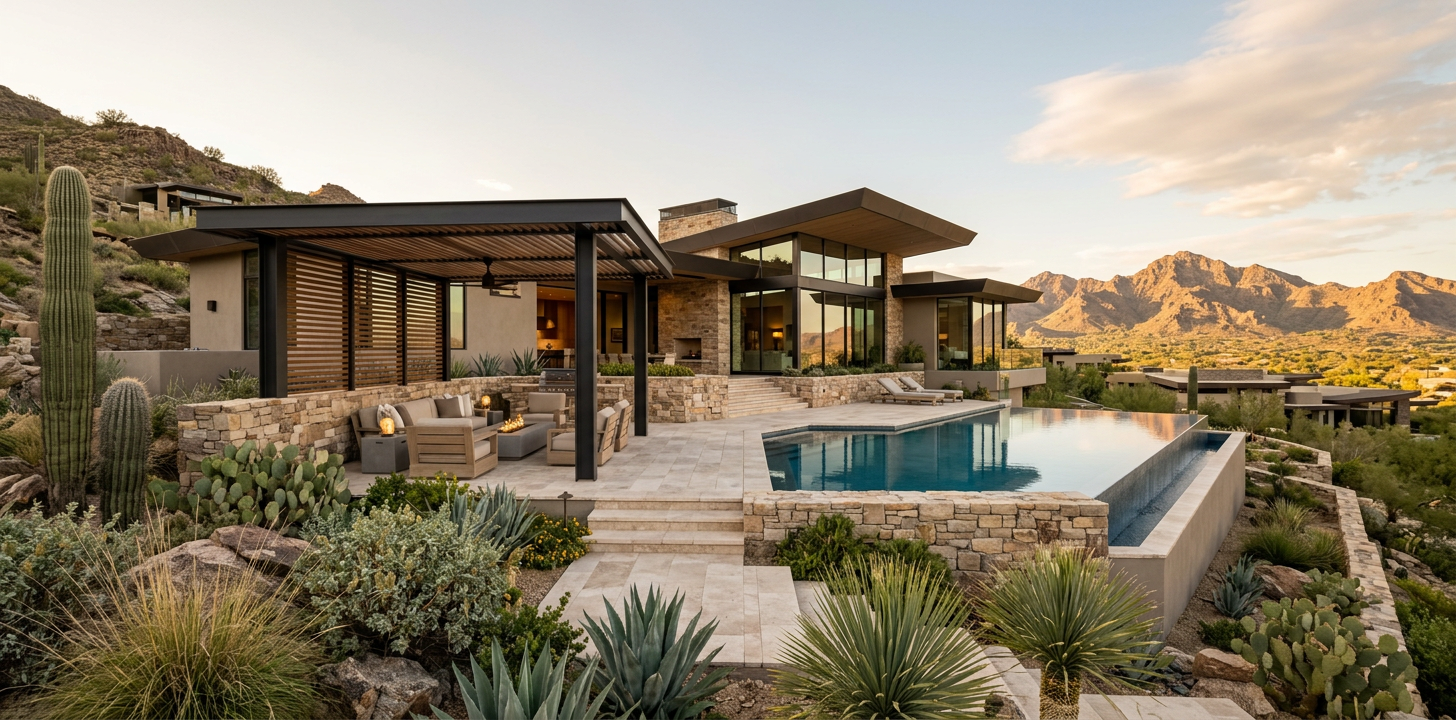
Landscape Architecture Paradise Valley Custom Homes: Plan Well
A custom home in Paradise Valley deserves more than attractive planting placed after construction is complete. The best outdoor environments are planned as part of the architecture, considering the home's lines, views, grade changes, privacy, arrival sequence, shade, drainage, and the way the owners will actually live outdoors.
For landscape architecture Paradise Valley custom homes, early professional planning helps bring all of those decisions into one cohesive direction. Rather than treating the landscape as a finishing layer, we treat it as an essential part of the property, from the first approach at the street to the most private outdoor rooms behind the home.
Why Landscape Architecture Belongs at the Beginning of a Custom Home
Paradise Valley properties often have generous lots, mountain views, mature desert vegetation, and significant changes in elevation. Those assets can also introduce real design constraints. A driveway may affect a major view corridor. A retaining wall may reshape usable outdoor space. A pool location may influence privacy, shade, circulation, and the relationship between indoor and outdoor living areas.
When landscape architecture starts early, the home and site can support one another. We coordinate exterior spaces with the architect, builder, civil team, and other consultants before decisions become expensive to revise. This is particularly valuable when a project includes a pool, guest house, outdoor kitchen, detached garage, view terrace, sport court, or complex grading.
A useful early-planning checklist includes:
- Property access, arrival experience, and service circulation
- Existing trees, native vegetation, drainage patterns, and significant site features
- Mountain, golf-course, and distant-view opportunities
- Privacy needs from neighboring homes and streets
- Outdoor living zones for dining, gathering, cooking, swimming, and quiet retreat
- Material transitions between the architecture, hardscape, walls, and planting
- Irrigation zones, plant water needs, and long-term management requirements
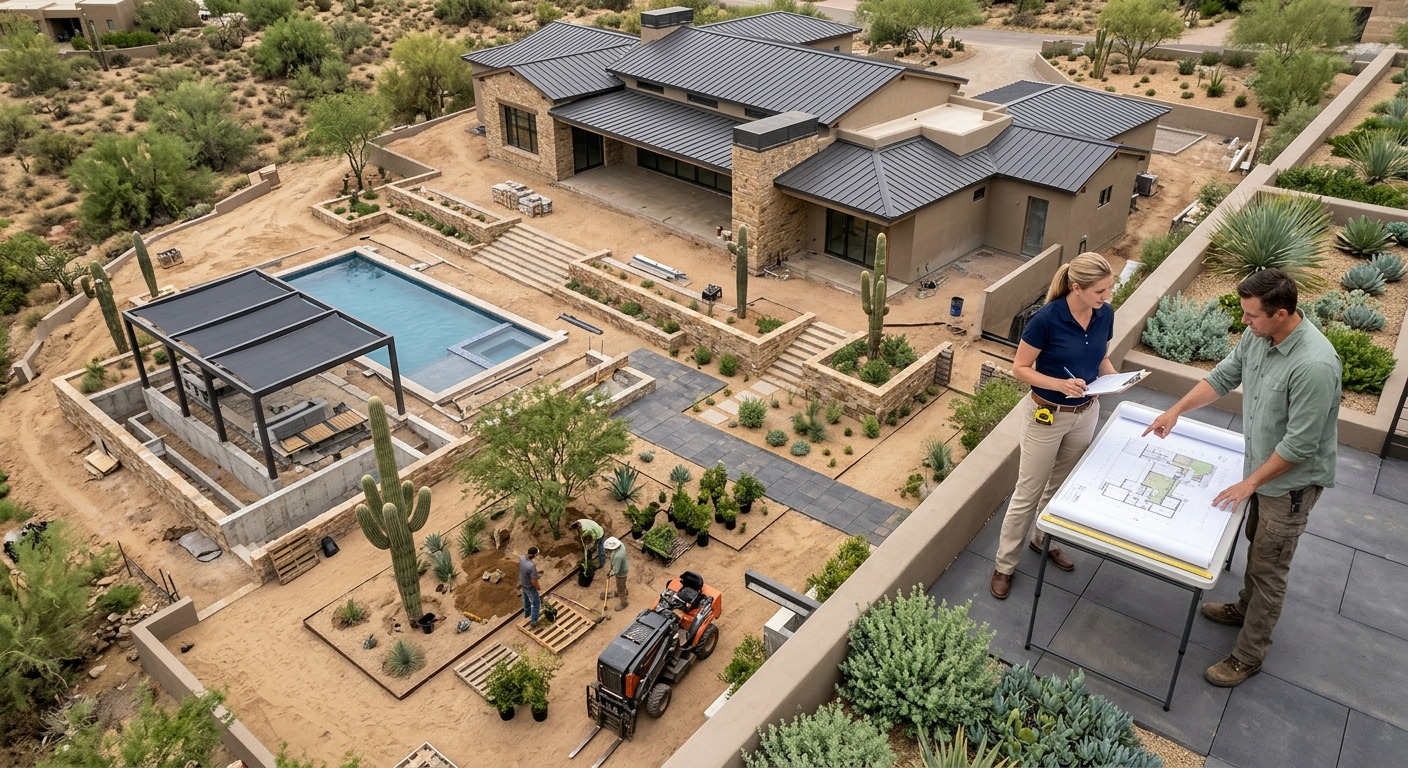
Designing Outdoor Rooms That Complement the Architecture
The most successful luxury residential landscapes do not compete with the home. They extend its architectural language into the site. A contemporary residence may call for strong geometry, restrained plant groupings, crisp paving joints, and carefully framed views. A warm desert-modern or Mediterranean-inspired home may benefit from layered courtyards, textured masonry, shade, and softer transitions from house to garden.
Establish a Clear Sequence of Arrival
The arrival experience sets the tone for the property. We consider the relationship between the street, gate, drive, walk, entry courtyard, and front door so guests experience a deliberate progression rather than an oversized paved area with ornamental planting added around it.
Materials, lighting, specimen plants, walls, and changes in elevation all contribute to this sequence. The objective is not visual excess. It is a sense of place, proportion, and calm that fits the home.
Create Distinct Areas for Outdoor Living
Large properties need structure. Without a thoughtful plan, patios, pools, fire features, and planting beds can feel disconnected or underused. We organize outdoor areas around how the household entertains, relaxes, cooks, moves through the property, and enjoys views at different times of day.
A well-composed plan may include a shaded dining terrace near the kitchen, a more secluded morning garden, a pool environment with usable shade, and a sunset gathering area positioned for the best mountain views. Each space should have a purpose while still feeling part of one complete landscape.
Use Hardscape as an Architectural Material
Hardscape planning has a lasting impact on both appearance and performance. Paving, retaining walls, steps, seat walls, drainage details, and landscape structures should be resolved together, not as separate contractor decisions in the field.
Scale is especially important in Paradise Valley. Broad lots and substantial architecture can accommodate generous materials, but every element still needs proportion. Thoughtful joints, edges, transitions, and elevation changes are often the details that make an outdoor environment feel tailored rather than generic.
Water-Efficient Design Can Still Feel Luxurious
Sustainability in a high-end landscape is not about reducing beauty or comfort. It is about using the right plant, irrigation, soil, shade, and material strategy for the site. The Arizona Department of Water Resources notes that as much as 70 percent of residential water use can occur outdoors, making landscape and irrigation decisions meaningful for both long-term stewardship and operating costs. Arizona Department of Water Resources
For custom residences, we plan water efficiency at the system level. That means grouping plants with similar water needs, selecting appropriate materials for exposure and soil conditions, designing efficient irrigation zones, and avoiding layouts that make maintenance difficult or wasteful.
Plant Selection Should Be Intentional
Desert-adapted planting does not have to look sparse or monotonous. A layered palette can provide shade, seasonal color, sculptural form, fragrance, privacy, and habitat while maintaining a refined aesthetic. The goal is to select plants for their mature scale, water requirements, resilience, and relationship to the architecture.
We also consider how a landscape will look over time. Young plants may appear modest at installation, while mature trees and shrubs reshape views, shade, and circulation. Planning for mature size protects the investment in the landscape and reduces avoidable future renovation.
Irrigation and Soil Are Design Decisions
Irrigation should not be an afterthought. A visually beautiful plan can struggle if the irrigation design ignores plant requirements, exposure, pressure, zoning, or drainage. Soil improvement and finish grades also affect plant establishment, water infiltration, and overall landscape health.
This is why comprehensive planning is valuable. It allows the planting, irrigation, grading, and construction details to reinforce one another from the beginning.
Preserve What Makes the Property Distinctive
Mature trees, natural landforms, and existing desert vegetation can add a quality that new construction cannot quickly replicate. Before clearing a site, we recommend identifying valuable landscape elements and determining whether they can be retained, protected, or incorporated into the design.
Tree preservation requires practical coordination. Root zones, construction access, grade changes, utilities, wall locations, and staging areas all matter. A tree that appears to be retained on paper may still be compromised if construction activities are not planned around it.
Where preservation is not possible, replacement planting should be purposeful. The plan should restore shade, scale, screening, and character over time, rather than simply filling available space.
Planning a Paradise Valley Custom Home Landscape?
If you are building or significantly remodeling a home in Paradise Valley, early landscape planning can help protect key views, coordinate outdoor living features, preserve valuable site elements, and avoid costly revisions later in construction.
Call (480) 893-3849 to discuss your project with Waibel & Associates, or request a landscape architecture consultation.
What a Complete Landscape Architecture Scope Can Include
The right scope depends on the property and project team, but a professional landscape architecture process often includes much more than a planting concept. For a custom home, the work may involve site analysis, conceptual design, detailed plans, specifications, consultant coordination, and construction involvement.
At Waibel & Associates Landscape Architecture, we approach custom residential projects as coordinated environments. Our work can include site planning, landscape renovation, outdoor living design, plant selection, irrigation design, hardscape planning, construction documents, and construction administration.
For homeowners comparing options, there is an important distinction between landscape architecture and installation-only services. An installation contractor can be an essential member of the construction team, particularly when selected for appropriate craftsmanship and project experience. A landscape architect, however, helps establish the site-wide design direction and the documents needed to coordinate many elements before installation begins.
Explore our residential landscape architecture approach to see the types of spaces and planning considerations that can be incorporated into a custom residential project. You can also review our landscape architecture services for more information about design, consulting, and project coordination.
Questions Homeowners Ask About Paradise Valley Landscape Design
When should we hire a landscape architect for a custom home?
We recommend involving a landscape architect during the architectural planning stage, before the house footprint, grades, driveway, pool, and major utility locations are fully locked in. Earlier coordination creates more opportunities to protect views, trees, usable outdoor space, and circulation.
What makes a Paradise Valley landscape different from other Arizona projects?
Many Paradise Valley sites require close attention to mountain views, privacy, significant lot sizes, desert exposure, mature vegetation, and architectural integration. The landscape should respond specifically to the site rather than applying a standard regional palette or layout.
Can a water-efficient landscape include a pool and outdoor kitchen?
Yes. Water-efficient planning addresses the complete site, including plant selection, irrigation zones, shade, soil, and hardscape. A luxury outdoor environment can include pools, kitchens, fire features, and generous entertaining areas while using a thoughtful water-management strategy.
Can mature trees be preserved during construction?
Sometimes, yes, but preservation must be evaluated early and supported by construction coordination. Access routes, grading, walls, utilities, and staging can all affect tree health and viability.
Do we need construction documents for a residential landscape?
For a substantial custom home landscape, detailed construction documents can improve clarity, coordination, pricing, and implementation. They help communicate materials, layout, grading intent, irrigation, planting, and key details to the project team.
How do we choose plants for a luxury desert landscape?
We look beyond immediate appearance. The best selections consider mature size, shade, water needs, exposure, soil conditions, maintenance expectations, seasonal interest, and how plants support the architecture and desired outdoor experience.
A Better Result Comes From a Unified Plan
A beautiful Paradise Valley property is more than a home surrounded by planting. It is a series of carefully connected experiences, including arrival, shade, views, privacy, outdoor gathering, material detail, and a landscape that grows more compelling with time.
By planning the site as deliberately as the architecture, homeowners can make confident decisions before construction narrows the options. The result is an outdoor environment that feels integral to the property, appropriate to the desert, and built for long-term enjoyment.
Talk With an Experienced Arizona Landscape Architect
Whether you are planning a custom home, major residential remodel, outdoor living environment, irrigation upgrade, or sustainable landscape renovation, we can help create a thoughtful design that complements your property and long-term goals.
Call (480) 893-3849 or contact Waibel & Associates about your Paradise Valley project.
About Waibel & Associates Landscape Architecture
Waibel & Associates Landscape Architecture is an Arizona landscape architecture firm led by Janet Waibel, RLA, Owner and Principal. The firm provides custom residential landscape architecture, sustainable landscape design, irrigation planning, tree preservation, outdoor living design, site planning, construction documentation, and professional landscape consulting throughout Tempe, Scottsdale, Paradise Valley, Phoenix, North Scottsdale, Carefree, Cave Creek, and surrounding Arizona communities.
Waibel & Associates focuses on thoughtful, high-quality landscapes that complement the architecture of each property while incorporating appropriate plant materials, water-efficient strategies, irrigation technology, and long-term planning.
Janet Waibel is also a published author whose books provide educational resources on sustainable landscape management and landscape construction. Explore Janet Waibel’s Landscape Architecture Books.
Planning a custom residential or professional landscape project?
Call (480) 893-3849
or
Contact Waibel & Associates
Janet Waibel Sustainable Landscape Design for Luxury Arizona Homes
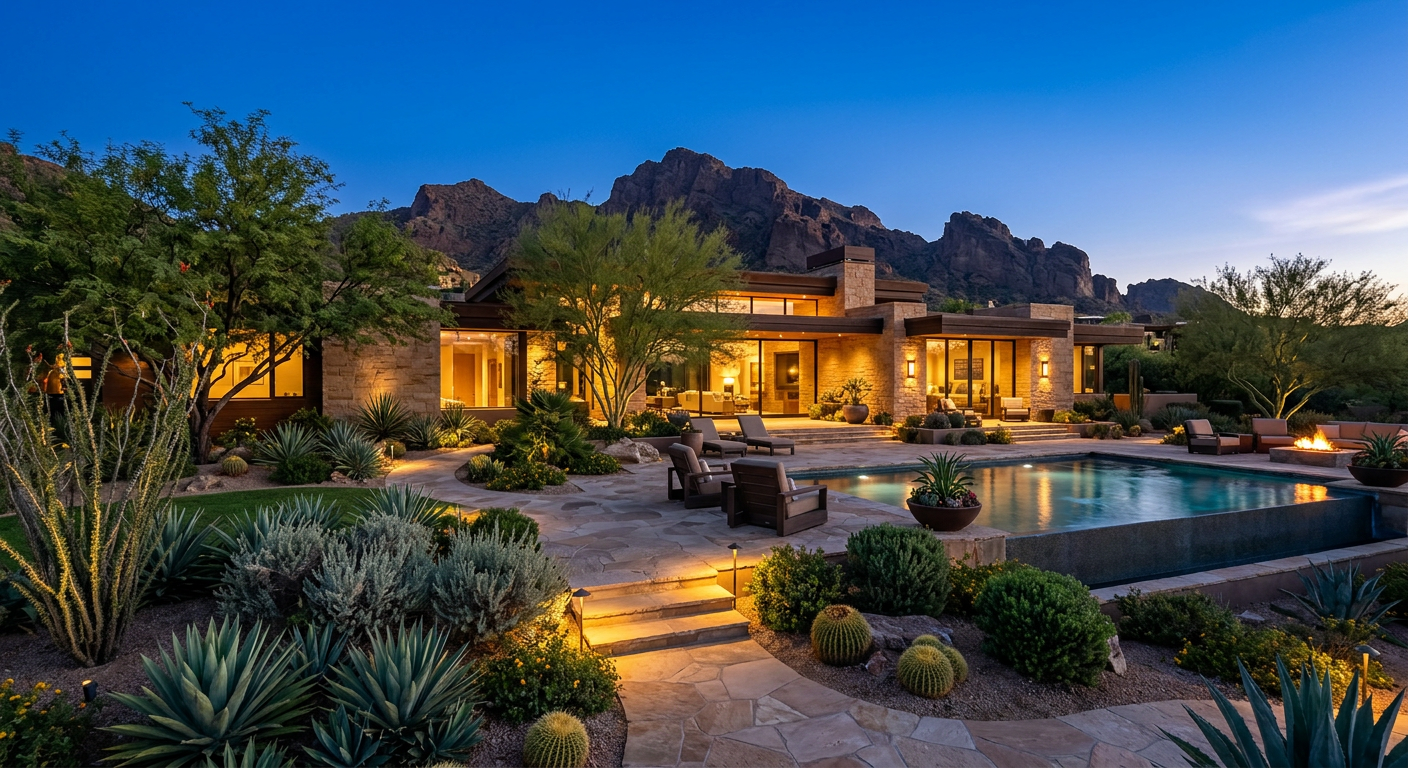
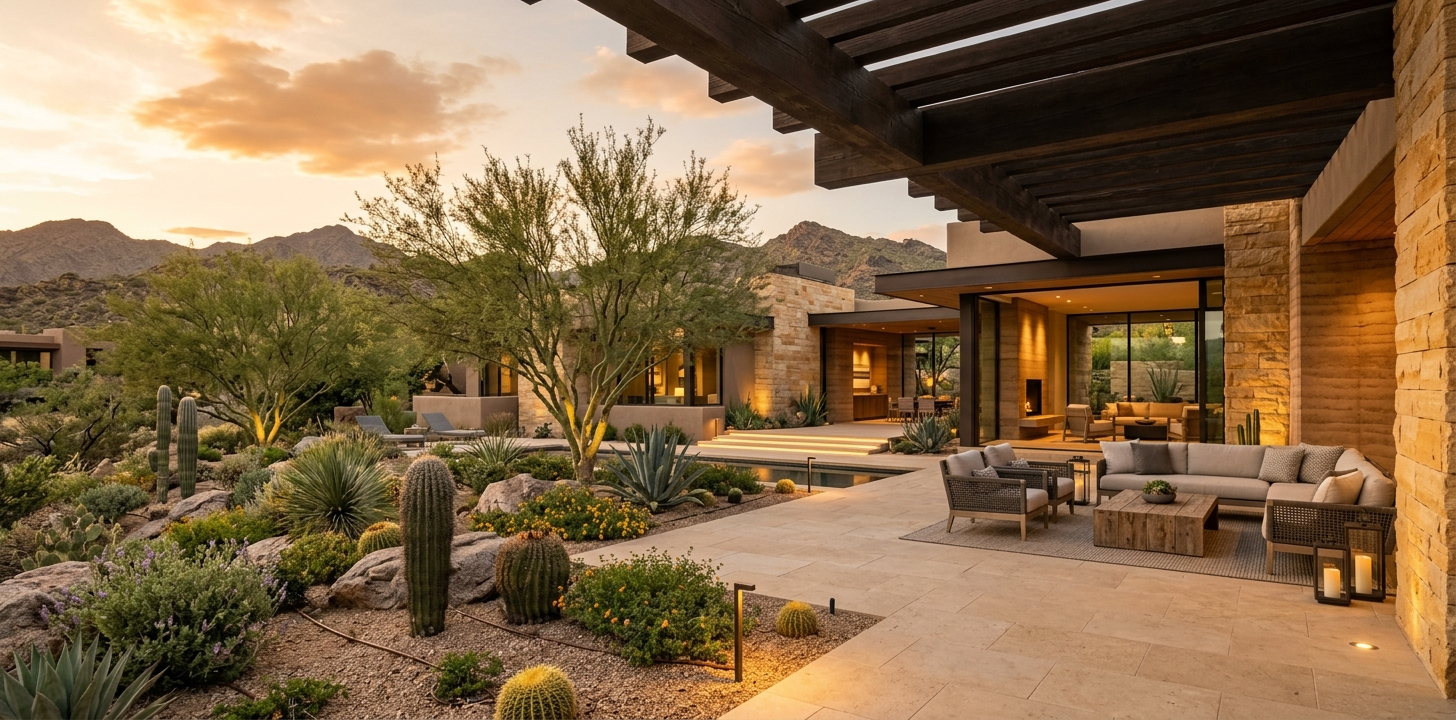
A beautiful Arizona landscape should do more than look good on the day it is installed. It should support the architecture, work comfortably through extreme heat, use water thoughtfully, mature with character, and remain manageable over time.
That is the thinking behind Janet Waibel sustainable landscape design. Rather than treating sustainability as a limited plant palette or a decorative trend, we view it as a complete design process that considers site conditions, outdoor living, drainage, soil, irrigation, plant selection, materials, construction quality, and future care.
For custom homes and major remodels in Scottsdale, Paradise Valley, Tempe, Phoenix, and the East Valley, this approach creates landscapes that feel intentional from the front arrival sequence to the most private outdoor rooms.
Sustainable Design Means More Than Using Desert Plants
Sustainability is often reduced to a simple choice between lawn and low-water plants. Plant selection matters, but it is only one part of a resilient, high-quality landscape. A well-planned property begins with how people move through it, where shade is needed, what views should be framed or screened, and how hardscape and planting relate to the home.
We use a site-based process that brings these decisions together early. This is especially valuable when a residence is being designed or substantially remodeled, because utilities, grading, drainage, pool placement, outdoor kitchens, walls, lighting, and irrigation can be coordinated before costly conflicts appear in construction.
Janet Waibel, RLA, Owner and Principal of Waibel & Associates Landscape Architecture, describes the goal clearly: “Our landscapes create beauty and add value, but they also make sense.” Read more about this design philosophy and Janet’s professional background on our About Janet Waibel and Waibel & Associates page.
The need for this level of planning is practical as well as aesthetic. The Arizona Department of Water Resources reports that as much as 70 percent of residential water use in Arizona can occur outdoors. Thoughtful landscape architecture gives homeowners more control over one of the property’s most significant ongoing resource demands.
Janet Waibel Sustainable Landscape Design Begins With the Site
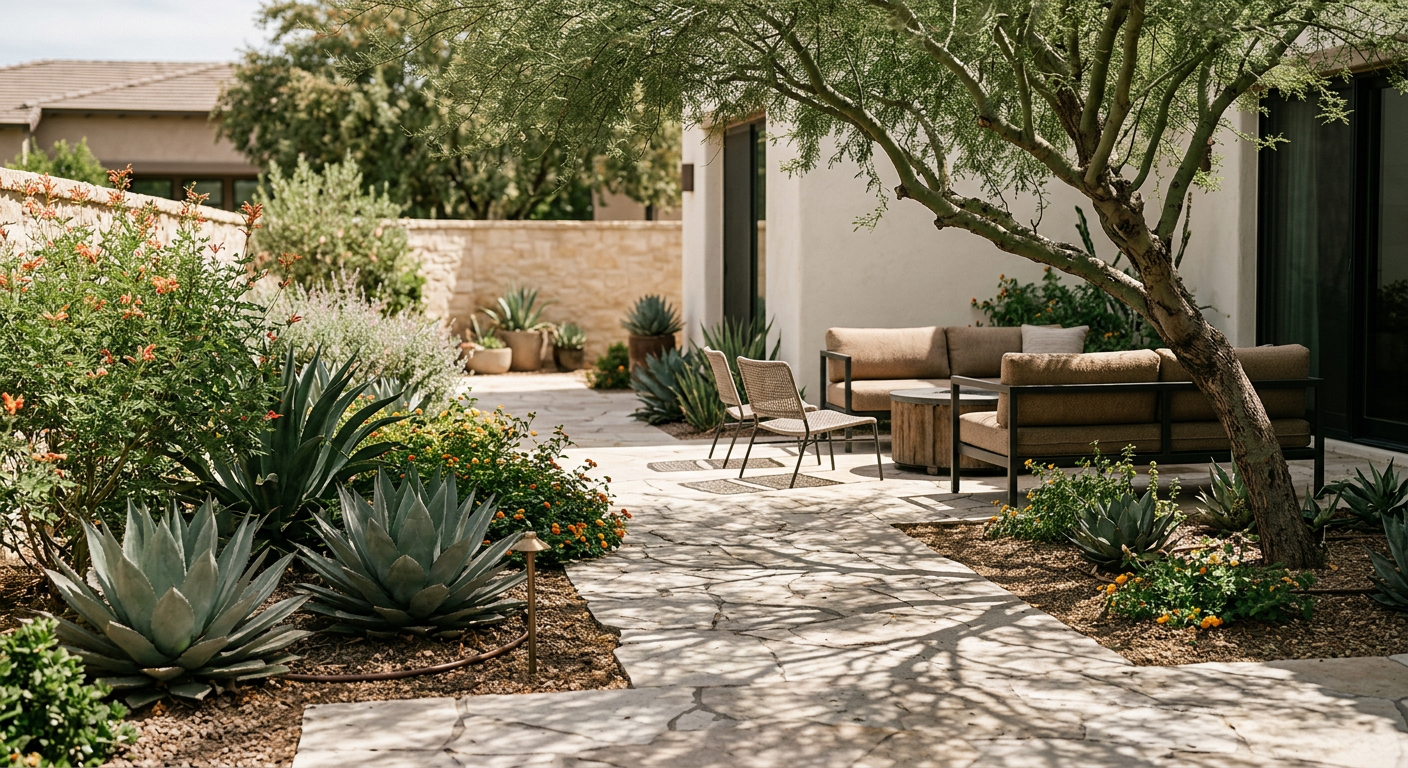
A sustainable landscape should belong to its setting. We begin by studying the site’s exposure, topography, existing vegetation, soil conditions, drainage patterns, access, views, privacy needs, and architectural language. Those observations influence every later choice.
Preserve Valuable Existing Assets
Mature trees can provide immediate scale, shade, habitat, and visual permanence that newly installed material cannot replicate for years. When preservation is feasible, it should be evaluated before demolition, grading, trenching, and staging areas are established.
Tree preservation is not simply a matter of leaving a tree in place. Root zones, irrigation changes, grade changes, compaction, drainage, and construction access all require careful coordination. This is why site planning and construction documentation are so important for a landscape that must perform beyond installation day.
Create Outdoor Rooms That Match the Home
High-end outdoor living should feel integrated with the residence, not added as an afterthought. We consider how patios, fireplaces, pools, shade structures, kitchens, garden spaces, entries, and walkways support daily life and entertaining.
Materials should also respond to the architecture. A contemporary Scottsdale home may call for clean jointing, restrained plant masses, and strong specimen forms, while a more traditional Paradise Valley property may benefit from layered shade, textured planting, and a softer sequence of outdoor spaces.
Our residential landscape architecture services are built around this level of coordination, including planting, paving, irrigation, lighting, pools, spas, kitchens, and other outdoor living features.
Water Efficiency Depends on Design and Irrigation Working Together
Efficient irrigation cannot correct a poor planting plan, and a beautiful planting plan will not succeed with poorly designed irrigation. Sustainable landscape design requires both systems to work together by hydrozone, which means grouping plant materials with similar water needs and delivering water appropriately to each area.
The U.S. Environmental Protection Agency notes that residential outdoor water use in the United States totals nearly 8 billion gallons daily, primarily for landscape irrigation. Its WaterSense outdoor guidance also emphasizes a holistic approach that combines water-smart planting, proper watering, and efficient irrigation equipment.
For Arizona properties, we typically look beyond controller upgrades. Effective irrigation planning may include:
- Separating trees, shrubs, groundcovers, and seasonal color into appropriate irrigation zones
- Selecting drip, spray, or other delivery methods based on the planting and site conditions
- Addressing pressure, filtration, distribution uniformity, and coverage
- Allowing for plant establishment while avoiding permanent overwatering
- Coordinating irrigation with soil improvement, drainage, and mulch strategies
- Providing access for inspection and future adjustments
The Arizona Department of Water Resources also maintains region-specific low-water-use plant resources and irrigation guidance. These tools are useful references, but every luxury residential landscape still needs a plan shaped around the individual property rather than a generic formula.
Planning a Custom Landscape Project?
If you are building or remodeling a home in Tempe, Scottsdale, Paradise Valley, Phoenix, or the surrounding area, professional landscape planning can protect your investment and create a cohesive outdoor environment from the beginning.
Call (480) 893-3849 to discuss your project with Waibel & Associates, or request a landscape architecture consultation.
Durable Materials and Soil Strategy Protect the Investment
Sustainability is also about durability. A hardscape material that is poorly detailed, a wall without appropriate drainage, or planting installed into compromised soil can create expensive problems that undermine the project’s appearance and function.
We plan materials with performance in mind, including paving transitions, wall construction, drainage paths, edging, mulch, and the interface between hardscape and planting. Soil improvement may be equally important, particularly where construction has compacted native soil or where plant material needs support during establishment.
A thoughtful material and soil strategy helps the landscape handle heat, irrigation cycles, foot traffic, and seasonal change while reducing avoidable repairs. It also helps create the refined, composed appearance clients expect from a custom property.
Construction Documents Help Preserve Design Intent
A design concept is only the beginning. To carry an integrated landscape into construction, contractors and trades need clear information about layout, grades, materials, planting, irrigation, lighting coordination, and details.
Our landscape architecture services include site planning, planting and irrigation design, cost estimating, construction documents, and construction administration. This continuity helps us coordinate with architects, builders, pool professionals, and installers so that the final work reflects the intended design.
For homeowners and project teams who want to understand the practical side of durable landscapes, Janet’s published resources are also valuable. Explore Landscape Architecture Books by Janet Waibel, including Sustainable Landscape Management: A Guide to Care in the Desert Southwest and Landscape Construction for Urban Landscape Sustainability.
Questions We Hear About Sustainable Landscape Design
What makes a landscape sustainable in Arizona?
A sustainable Arizona landscape is designed for the site, climate, architecture, and intended use. It combines regionally appropriate planting, efficient irrigation, soil and drainage planning, durable materials, and a realistic strategy for long-term care.
Does sustainable landscape design mean the property will look sparse?
No. A water-conscious landscape can be layered, shaded, colorful, sculptural, and highly refined. The objective is not to eliminate plant material, but to select and arrange it purposefully while matching irrigation to actual needs.
When should we hire a landscape architect for a custom home?
We recommend involving a landscape architect during early architectural and site planning. That timing allows the outdoor environment, grading, utility routes, tree preservation, pool areas, and outdoor living spaces to be coordinated before construction decisions limit the options.
Can an older Scottsdale or Paradise Valley landscape become more water efficient?
Yes. A renovation can improve water performance through irrigation upgrades, revised hydrozones, plant replacement, soil work, reduced runoff, shade planning, and more appropriate material selection. The best scope depends on the site and what should be preserved.
Is a smart controller enough to make irrigation sustainable?
A smart controller can be helpful, but it cannot resolve incorrect zoning, poor pressure, inadequate coverage, leaking components, or plants with incompatible water needs. Design, equipment, installation, and management must work together.
Can mature trees be preserved during a major remodel?
Often, yes, but preservation must be assessed before construction begins. Root protection, grade changes, drainage, trenching, irrigation, and contractor access all affect whether a tree can remain healthy through the work.
Does Waibel & Associates work with architects and custom builders?
Yes. We collaborate with homeowners, architects, builders, developers, HOAs, and property managers on landscape architecture that complements the property and supports an orderly construction process.
A Better Landscape Is Designed for Its Full Life
The most successful Arizona landscapes balance beauty with real-world performance. They give homeowners places to gather, rest, and enjoy the outdoors, while respecting water, climate, materials, and the long view of how a property will mature.
That is the value of designing the landscape as an essential part of the architecture. With early planning and clear documentation, a custom outdoor environment can feel more coherent, durable, and personal for years to come. Learn more about our work through Waibel & Associates Landscape Architecture.
Talk With an Experienced Arizona Landscape Architect
Whether you are planning a custom home, a major residential remodel, an outdoor living environment, irrigation improvements, or a sustainable landscape renovation, we can help create a thoughtful design that complements your property and long-term goals.
Call (480) 893-3849 or contact Waibel & Associates to discuss your landscape architecture project.
About Waibel & Associates Landscape Architecture
Waibel & Associates Landscape Architecture is an Arizona landscape architecture firm led by Janet Waibel, RLA, Owner and Principal. The firm provides custom residential landscape architecture, sustainable landscape design, irrigation planning, tree preservation, outdoor living design, site planning, construction documentation, and professional landscape consulting throughout Tempe, Scottsdale, Paradise Valley, Phoenix, North Scottsdale, Carefree, Cave Creek, and surrounding Arizona communities.
Waibel & Associates focuses on thoughtful, high-quality landscapes that complement the architecture of each property while incorporating appropriate plant materials, water-efficient strategies, irrigation technology, and long-term planning.
Janet Waibel is also a published author whose books provide educational resources on sustainable landscape management and landscape construction.
Planning a custom residential or professional landscape project?
Call (480) 893-3849
or
Contact Waibel & Associates →
When to Hire a Landscape Architect for Luxury Arizona Homes
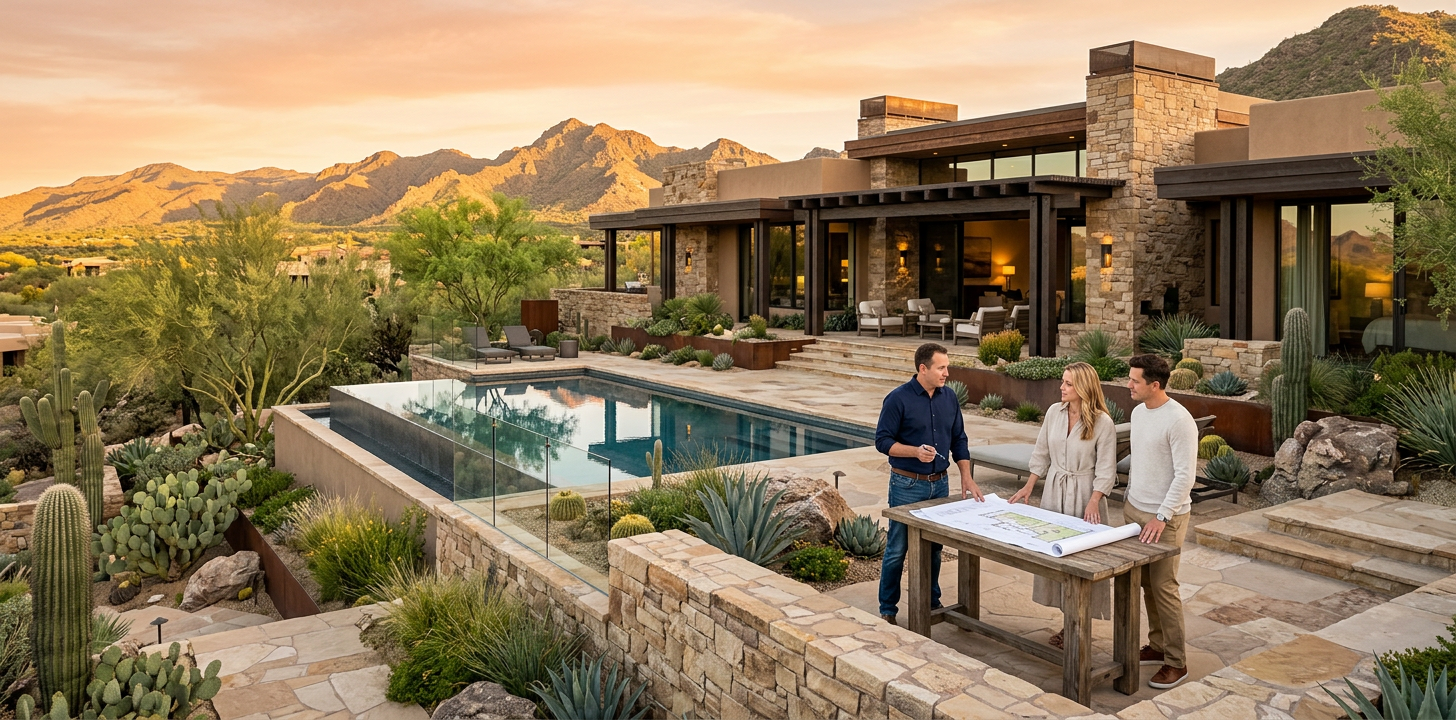
A beautiful outdoor environment rarely happens by selecting plants, paving, and furniture one decision at a time. The best results come from treating the site as part of the home from the beginning, with careful attention to views, circulation, grading, shade, water use, materials, and the way people will actually live outdoors.
So, when should you bring in a professional? When to hire a landscape architect is simple: involve one as early as possible when a project includes a custom home, substantial remodel, major outdoor living improvements, a challenging site, mature trees, drainage concerns, or a meaningful investment in the property. Early planning creates more options and helps prevent costly changes after construction has started.
The Best Time Is Before Key Design Decisions Are Fixed
For a custom home or comprehensive renovation, we recommend beginning landscape architecture during early architectural design, ideally before the building footprint, finished floor elevations, utility routes, and exterior material palette are locked in. This lets the house and site work together rather than asking the landscape to solve problems created later.
A landscape architect can help coordinate the relationship between interior rooms and exterior spaces, determine where shade is most valuable, protect view corridors, establish arrival sequences, and identify locations for patios, pools, kitchens, fire features, gardens, walls, and planting. The result is a more cohesive property, not a collection of disconnected outdoor features.
This matters especially in Scottsdale, Paradise Valley, Tempe, Phoenix, North Scottsdale, Carefree, Cave Creek, and the East Valley, where sun exposure, desert soils, drainage patterns, slope, and water management can strongly influence long-term performance.
Before You Finalize a Custom Home Plan
Many homeowners assume landscape design begins after the home is complete. By then, important opportunities may already be limited. The garage, driveway, pool location, outdoor room connections, utility equipment, drainage routes, and window views can all affect the landscape plan.
Bringing a landscape architect into the design team early helps us evaluate questions such as:
- Where should guests arrive, park, and enter the property?
- Which views should be framed, softened, or screened?
- How can outdoor living areas stay comfortable through changing seasons?
- Where should mature trees be preserved during grading and construction?
- How will grades move water away from structures and toward appropriate landscape areas?
- Which materials will visually connect the landscape to the architecture?
For a better understanding of the scope involved, review our landscape architecture services and how they support coordinated site planning.
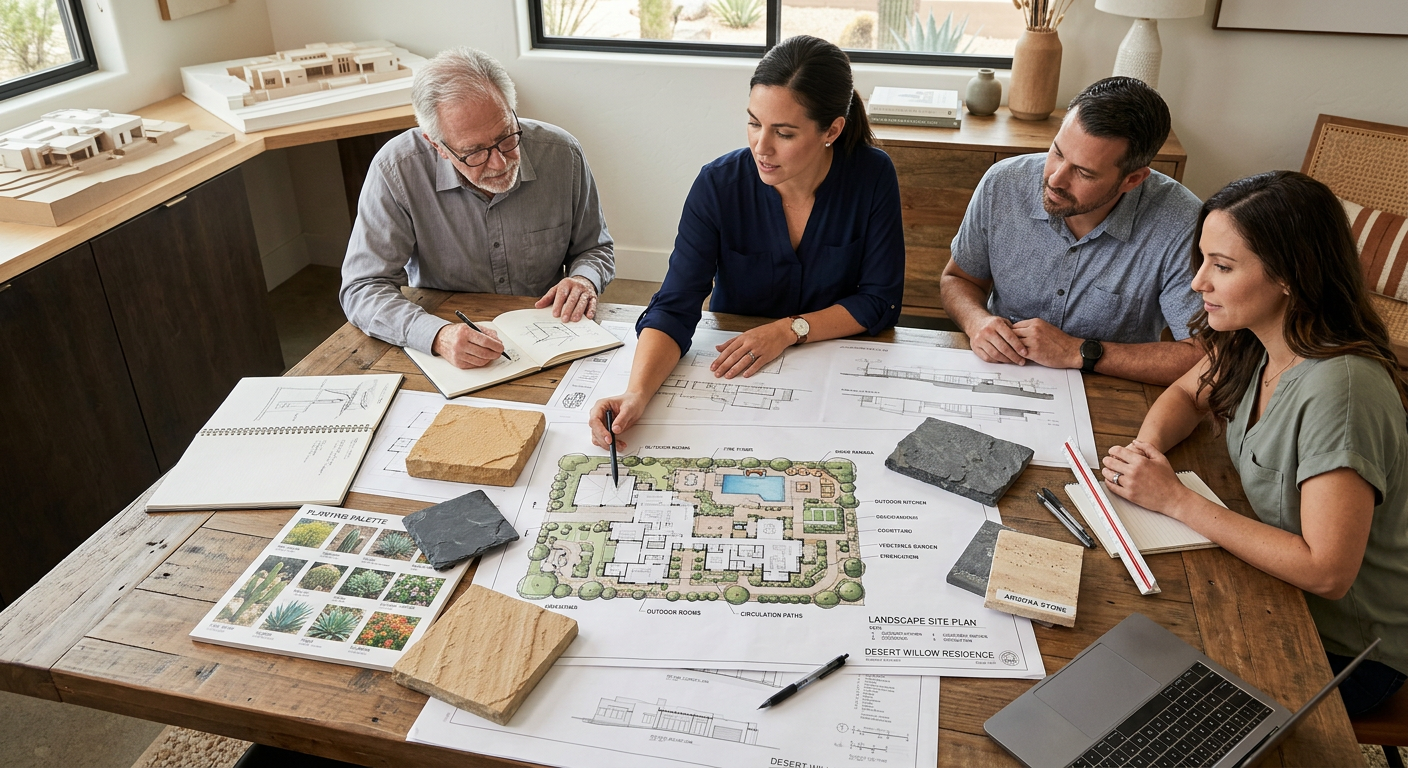
Signs You Should Hire a Landscape Architect Before Construction
Not every property needs a full landscape architecture process. A small planting refresh or isolated replacement may be appropriate for a specialty contractor. However, the following situations benefit from comprehensive professional planning.
You Are Building a Custom Home
A new custom home creates the clearest opportunity to integrate the site from the ground up. We can coordinate exterior spaces with the architecture, plan for plant growth over time, develop irrigation concepts, and prepare construction documents that clarify the intended design for installers.
When the landscape is planned alongside the home, patios feel connected to interior living areas, windows frame purposeful views, and exterior materials appear intentional. It also allows the project team to consider site access and construction sequencing before newly installed elements are put at risk.
You Are Planning a Major Home Remodel
A significant remodel often changes the way a family uses the property. New doors, larger glazing, a remodeled kitchen, an expanded primary suite, or a new pool can create new expectations for the landscape.
This is a good time to reconsider circulation, privacy, shade, exterior lighting, paving, planting, and the relationship between indoor and outdoor living. Our residential landscape architecture approach is built around these kinds of whole-property decisions.
Your Site Has Slope, Drainage, or Access Challenges
Sloped lots, mountain-adjacent properties, irregular parcels, and sites with complex drainage need more than decorative planting. Grade changes may require retaining solutions, safe circulation routes, intentional planting zones, and careful coordination with architecture and engineering.
A thoughtful site plan addresses how people move through the property and how water moves across it. That work can protect the experience of the finished landscape while reducing avoidable field changes during construction.
Mature Trees or Important Existing Features Need Protection
Established trees can provide immediate scale, shade, and character that new plant material cannot duplicate quickly. Yet construction traffic, grade changes, compaction, and trenching can compromise root zones if preservation is not addressed early.
A landscape architect can assess priorities with the broader project team, identify areas worth protecting, and help organize the site around the resources that add value to the property.
Your Outdoor Wish List Is Growing
A pool, spa, outdoor kitchen, dining terrace, fireplace, shade structure, guest access, dog area, garden, and entertaining space can all fit beautifully on one property. They can also compete for the same square footage.
Professional landscape planning establishes priorities and creates a hierarchy of spaces. Instead of adding features one by one, we create an outdoor environment that feels composed, functional, and appropriate to the home.
Why Early Planning Matters in Arizona
Arizona landscapes need to do more than look good on installation day. They need to perform through intense sun, heat, seasonal storms, changing water needs, and the realities of long-term care.
The U.S. EPA WaterSense program reports that outdoor water use can account for as much as 60 percent of household water use in arid regions. It also states that replacing a clock-based irrigation controller with a WaterSense labeled controller can reduce average home irrigation use by up to 30 percent. Those figures reinforce why planting design, hydrozones, soil conditions, irrigation layout, and controller strategy should be considered together.
A water-efficient landscape does not mean a sparse or generic landscape. It means matching plant materials to exposure and use, grouping plants with compatible water needs, designing irrigation zones that make sense, and investing in durable materials and details that support lasting value.
What a Landscape Architect Adds Beyond Installation
Landscape contractors and specialty installers are essential partners in construction. They often bring valuable hands-on knowledge of materials, equipment, installation methods, and local availability. For straightforward work with a clearly defined scope, an experienced contractor may be the right first contact.
A landscape architect serves a different role. We begin with the overall site and design intent, then organize the technical and aesthetic decisions needed to guide implementation. Depending on the project, that may include site analysis, conceptual design, planting and irrigation plans, hardscape planning, specifications, construction documentation, cost considerations, and construction administration.
At Waibel & Associates Landscape Architecture, Janet Waibel, RLA, and our team help clients connect architecture, outdoor living, sustainable planning, irrigation, and implementation. That broader perspective is particularly valuable when several trades need to work from one coordinated plan.
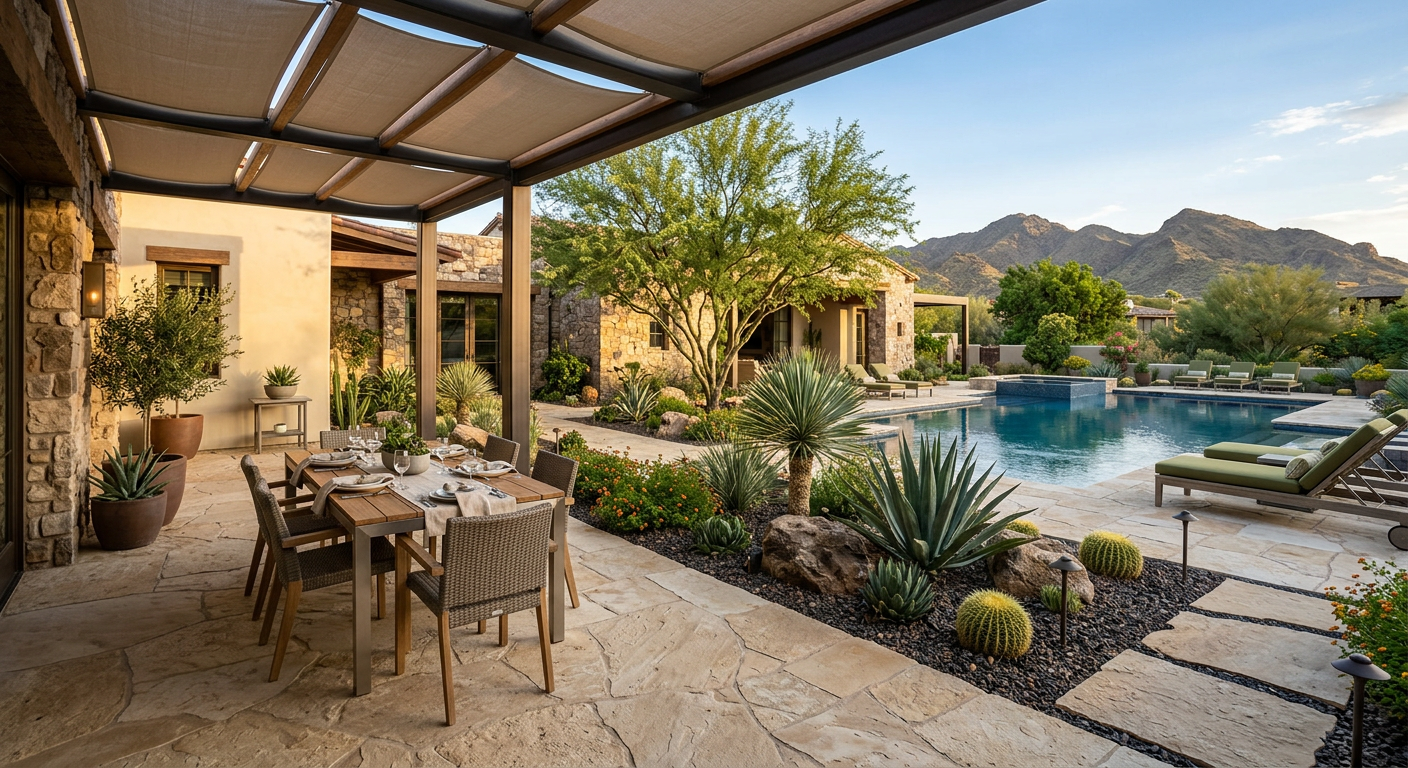
A Practical Hiring Timeline for High-Value Properties
The right timing depends on the scope, but this general sequence helps protect design quality.
During Early Architecture and Site Planning
Engage a landscape architect when the home is still being shaped. This is the ideal phase for site analysis, design direction, exterior circulation, major outdoor rooms, tree preservation, grading coordination, and preliminary budgeting.
Before Pools, Hardscape, and Utilities Are Set
Before pool excavation, patio construction, walls, drainage structures, lighting conduits, and irrigation sleeves are underway, a coordinated plan can help avoid conflicts. This is also the time to make certain that plant areas, equipment access, and service needs are not treated as afterthoughts.
Before Selecting an Installer
A clear design package helps homeowners compare installation proposals based on the same intended scope. It also gives the construction team a shared reference for materials, layout, planting, irrigation, and details.
Janet Waibel's published resources can be helpful for clients and project teams who want a deeper understanding of installation quality and sustainable care. Explore landscape architecture books by Janet Waibel.
Plan Your Landscape Before the Site Limits Your Options
If you are building or remodeling in Tempe, Scottsdale, Paradise Valley, Phoenix, North Scottsdale, Carefree, Cave Creek, or nearby communities, we can help you make important outdoor decisions before they become expensive constraints. A professional landscape architecture process brings clarity to the relationship between your home, site, investment, and long-term goals.
Call (480) 893-3849 or request a landscape architecture consultation with Waibel & Associates.
Questions Homeowners Ask About Hiring a Landscape Architect
When should I hire a landscape architect for a custom home?
Hire a landscape architect during early architectural planning, before the building footprint, grades, pool location, driveway, utilities, and key exterior spaces are finalized. This provides the greatest flexibility and supports a cohesive result.
Is a landscape architect worth it for a major remodel?
Yes, particularly when the remodel changes how the home opens to the outdoors or includes a pool, outdoor kitchen, major hardscape, new planting, irrigation upgrades, drainage work, or mature tree preservation. A coordinated plan helps align those investments.
What is the difference between a landscape architect and a landscaper?
A landscape architect focuses on comprehensive site planning and design, including the relationship between architecture, circulation, grading, planting, irrigation, hardscape, and construction documentation. A landscape contractor typically focuses on installation and may also provide design-build services for defined scopes.
Can a landscape architect help reduce water use in Arizona?
Yes. Water-conscious landscape architecture considers plant selection, shade, hydrozoning, soil conditions, irrigation design, and controller strategy as connected decisions. The goal is to use water thoughtfully while maintaining beauty, comfort, and plant health.
Can mature trees be preserved during a home renovation?
Often, yes, but protection should be planned before construction activity begins. Tree preservation may involve identifying root protection areas, limiting compaction, adjusting grading, and coordinating access and utility routes with the project team.
Do I need a landscape architect before building a pool?
A landscape architect is especially useful before pool construction when the pool is part of a larger outdoor environment. Planning early helps coordinate deck space, shade, views, drainage, planting, lighting, access, equipment screening, and the connection to the house.
The Right Time Is Earlier Than Most People Think
The strongest landscapes are not simply installed after a home is finished. They are planned as a natural extension of the property, with design decisions made early enough to support the architecture, the climate, and the way the owners want to live.
For a custom residence, a major remodel, or an aging landscape ready for meaningful improvement, hiring a landscape architect early can create better choices, clearer construction direction, and a more enduring result.
Talk With an Experienced Arizona Landscape Architect
Whether you are planning a custom home, major residential remodel, outdoor living environment, irrigation upgrade, or sustainable landscape renovation, Waibel & Associates can help create a thoughtful design that complements your property and long-term goals.
Call (480) 893-3849 or contact Waibel & Associates to discuss your project.
About Waibel & Associates Landscape Architecture
Waibel & Associates Landscape Architecture is an Arizona landscape architecture firm led by Janet Waibel, RLA, Owner and Principal. The firm provides custom residential landscape architecture, sustainable landscape design, irrigation planning, tree preservation, outdoor living design, site planning, construction documentation, and professional landscape consulting throughout Tempe, Scottsdale, Paradise Valley, Phoenix, North Scottsdale, Carefree, Cave Creek, and surrounding Arizona communities.
Waibel & Associates focuses on thoughtful, high-quality landscapes that complement the architecture of each property while incorporating appropriate plant materials, water-efficient strategies, irrigation technology, and long-term planning.
Janet Waibel is also a published author whose books provide educational resources on sustainable landscape management and landscape construction.
Planning a custom residential or professional landscape project?
Call (480) 893-3849
or
Contact Waibel & Associates →
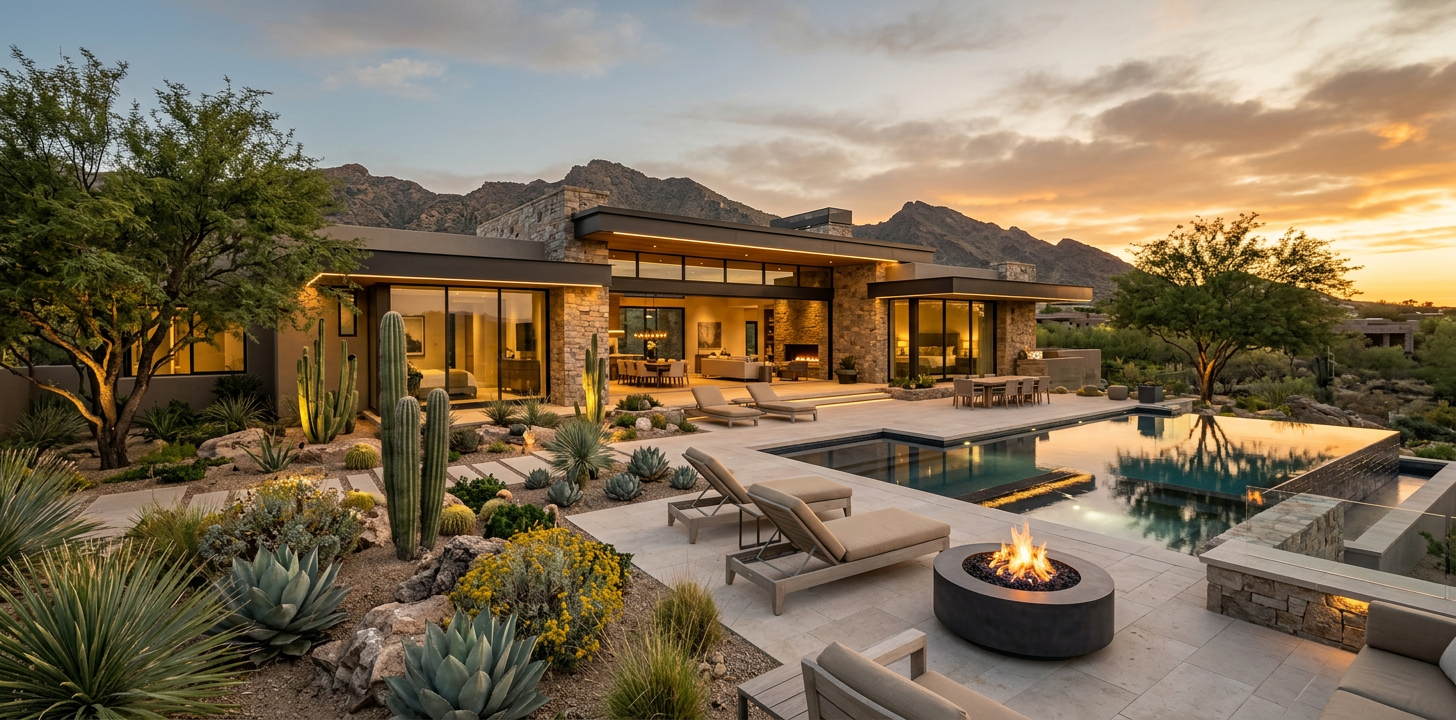
Luxury Landscape Architect Scottsdale: Design for Lasting Value
A remarkable Scottsdale landscape does more than frame a beautiful home. It shapes the arrival sequence, extends daily living outdoors, protects valued site features, and makes architecture feel grounded in its setting.
For homeowners planning a custom build or significant renovation, choosing a luxury landscape architect Scottsdale homeowners can trust is a decision that should happen early, often alongside architectural planning. A professionally planned landscape brings hardscape, planting, irrigation, lighting, drainage, outdoor living, and construction details into one coordinated vision.
What Distinguishes Luxury Residential Landscape Architecture
Luxury is not a longer plant list or a larger pool deck. It is the discipline of making each decision support the property as a whole, from the views seen through interior windows to the way a guest moves from the motor court to the front door.
At its best, custom residential landscape architecture combines creative design with technical coordination. We consider grading, drainage, soil conditions, mature vegetation, privacy, solar exposure, material transitions, irrigation zones, maintenance expectations, and the way the home will be used over time.
| Design Priority | What It Means | Why It Matters |
|---|---|---|
| Architectural connection | Materials and forms support the home | Creates a unified property |
| Outdoor living | Spaces planned around real routines | Improves daily enjoyment |
| Water efficiency | Hydrozones and suitable plant palettes | Reduces waste without sacrificing beauty |
| Construction clarity | Detailed plans and specifications | Helps protect design intent |
A luxury landscape should feel composed, not crowded. Open space, shadows, texture, carefully placed trees, and restrained material selections often create more impact than adding features simply because space is available.
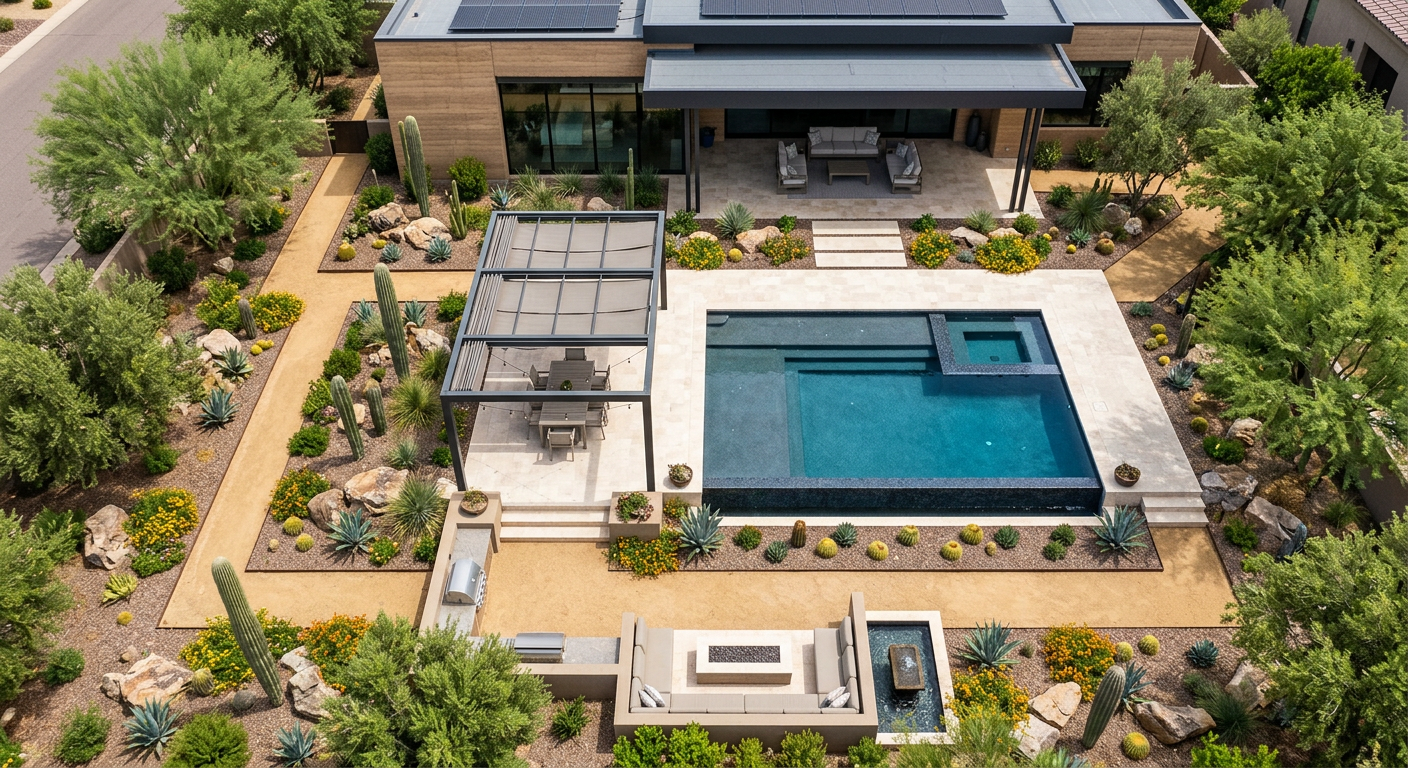
Luxury Landscape Architect Scottsdale Projects Begin With the Site
Every Scottsdale property has a different set of opportunities and constraints. A hillside home, an established estate near Paradise Valley, and a newly built residence in North Scottsdale require different responses, even when the architectural style appears similar.
We begin by understanding the property before prescribing solutions. That may include documenting existing trees, studying sight lines, evaluating drainage patterns, identifying areas of intense reflected heat, and considering how the landscape should relate to neighboring homes and natural desert context.
Preserve What Gives the Property Character
Mature trees and established plant material can provide immediate shade, scale, habitat, and a sense of permanence. When preservation is possible, it should influence building access, utility routes, paving limits, and grading decisions well before construction begins.
Tree protection is not an afterthought added to a construction set. It is part of a site strategy that helps safeguard the elements that make an established property distinctive.
Build Outdoor Rooms With a Purpose
A well-designed outdoor environment creates a sequence of places rather than one oversized patio. Depending on the household, that may include a shaded dining terrace, poolside lounging, a quiet garden court, a fire feature, an outdoor kitchen, a guest approach, or a private morning space off the primary suite.
The important question is not which feature is popular. It is how each space supports the owners' lifestyle while remaining visually connected to the home.
Water-Efficient Design Is Essential to Scottsdale Luxury
Water efficiency and refined design belong together in the Sonoran Desert. The City of Scottsdale notes that 70 percent of residential water use occurs outdoors, making irrigation planning, plant selection, and ongoing system management essential parts of responsible landscape design. City of Scottsdale Water Conservation
A water-wise landscape does not have to look sparse or repetitive. We create richness through layered shade, seasonal color, varied foliage, stone, walls, art, specimen plants, and carefully selected low-water plant communities. The objective is a landscape that feels established and generous while using water with intention.
Design Irrigation as a System, Not an Accessory
Irrigation is often hidden, but its impact is visible everywhere. A thoughtful design separates plants with different water needs, places equipment for access, addresses pressure and coverage, and supports seasonal adjustment.
Scottsdale regulations also emphasize irrigation systems and landscape areas that promote water conservation and prevent overflow or seepage. City of Scottsdale Landscaping Requirements
Choose Materials That Age Well in Desert Conditions
Natural stone, concrete, metal, wood, plaster, and paving all react differently to intense sun, thermal movement, irrigation overspray, and heavy use. Material selections should relate to the architecture, but they also need appropriate detailing, drainage, and realistic maintenance expectations.
This is where professional construction documents matter. They help translate a design concept into information contractors can price, build, and coordinate with confidence.
Planning a Custom Scottsdale Outdoor Environment?
If you are building or remodeling a home in Scottsdale, Paradise Valley, Phoenix, or the East Valley, early landscape planning can help align the architecture, site work, pool, outdoor living areas, and irrigation strategy before costly changes arise in the field.
Call (480) 893-3849 to discuss your project with Waibel & Associates.
Why Timing Matters for a Custom Home or Major Remodel
The most effective time to involve a landscape architect is before building placement, exterior elevations, pool design, and utility planning are fully fixed. Early coordination creates room to protect trees, reserve soil volumes, establish grade transitions, plan drainage, and locate major outdoor spaces where they will feel natural.
When landscape design begins only after the home is nearly complete, key decisions may already be constrained. The result can be compromised shade, awkward circulation, limited planting areas, or expensive revisions to hardscape and irrigation.
For homeowners and project teams, our residential landscape architecture approach supports outdoor spaces that complement the house and respond to how the property will actually be used. Our landscape architecture services also include planning, planting and irrigation design, municipal coordination, and construction administration.
A Professional Process Protects Design Intent
A strong design process provides enough creativity to make the landscape memorable and enough documentation to make it buildable. It also creates a framework for clear decisions as the project moves from concept through installation.
Typical phases may include:
- Site assessment, programming, and design priorities
- Conceptual landscape plans and visual direction
- Planting, hardscape, lighting, and irrigation development
- Construction documents, specifications, and cost coordination
- Collaboration with architects, builders, pool consultants, and specialty trades
- Construction observation or administration as appropriate
Janet Waibel, RLA, Owner and Principal of Waibel & Associates Landscape Architecture, brings experience in landscape design, planning, irrigation, construction documentation, and project implementation. Her perspective is especially valuable when a landscape must balance strong visual character with practical long-range performance.
For homeowners, builders, and property decision-makers who want deeper guidance on sustainable landscapes and construction quality, Janet's published resources are also available through Landscape Architecture Books by Janet Waibel.
How to Select the Right Landscape Architect for a Scottsdale Estate
The right fit is not simply a matter of style. Look for a professional who can listen closely, assess the site, communicate with the project team, and create a design that is both imaginative and technically resolved.
Ask prospective firms how they address these issues:
- How will the landscape relate to the home's architecture and interior views?
- What is the approach to mature trees, shade, drainage, and desert heat?
- How are planting and irrigation designed for long-term performance?
- What level of construction documentation will be provided?
- How will the landscape architect coordinate with the builder, pool contractor, and other consultants?
- Is construction administration available to help maintain quality during installation?
The answers reveal whether the firm is prepared to lead a comprehensive design effort rather than provide a disconnected planting plan.
Frequently Asked Questions
What does a luxury landscape architect in Scottsdale do?
A luxury landscape architect plans the complete exterior environment for a custom property. This can include site planning, hardscape, planting, irrigation, lighting, drainage, outdoor living, tree preservation, construction documents, and coordination with architects and builders.
When should we hire a landscape architect for a custom Scottsdale home?
We recommend involving a landscape architect during early architectural planning. This helps coordinate building placement, views, outdoor rooms, grades, drainage, utilities, pools, shade, and existing vegetation before major decisions are locked in.
Can a water-efficient landscape still feel lush and high-end?
Yes. A sophisticated desert landscape can feel layered, shaded, and visually rich through appropriate trees, plant groupings, stone, art, architectural walls, lighting, and intelligent irrigation design. Luxury comes from composition and quality, not excess water use.
What is the difference between a landscape architect and a landscaper?
A landscape architect provides professional planning and design that can integrate complex site conditions, construction documents, irrigation, grading, and project coordination. A landscape contractor typically installs and maintains landscapes, though responsibilities vary by firm and project.
Can mature trees be preserved during a remodel?
Often, yes, if assessment and protection begin early. Successful preservation depends on tree condition, root zones, construction access, grading, utility routes, and the willingness of the project team to protect the tree throughout construction.
Does Waibel & Associates work with architects and custom home builders?
Yes. We collaborate with architects, builders, pool consultants, and specialty trades to help ensure the exterior environment supports the larger project vision and can be built with clear, coordinated information.
A Landscape Should Be as Considered as the Home It Surrounds
A truly successful Scottsdale landscape is not a finishing layer applied after construction. It is part of the property's architecture, experience, comfort, and long-range value. When site planning, outdoor living, planting, irrigation, and construction details are considered together, the result can feel natural, enduring, and uniquely suited to the home.
Discuss Your Scottsdale Landscape Architecture Project
Whether you are planning a custom home, major residential remodel, outdoor living environment, irrigation upgrade, or sustainable landscape renovation, we can help create a thoughtful design that complements your property and long-term goals.
Call (480) 893-3849 or contact Waibel & Associates to request a landscape architecture consultation.
About Waibel & Associates Landscape Architecture
Waibel & Associates Landscape Architecture is an Arizona landscape architecture firm led by Janet Waibel, RLA, Owner and Principal. The firm provides custom residential landscape architecture, sustainable landscape design, irrigation planning, tree preservation, outdoor living design, site planning, construction documentation, and professional landscape consulting throughout Tempe, Scottsdale, Paradise Valley, Phoenix, North Scottsdale, Carefree, Cave Creek, and surrounding Arizona communities.
Waibel & Associates focuses on thoughtful, high-quality landscapes that complement the architecture of each property while incorporating appropriate plant materials, water-efficient strategies, irrigation technology, and long-term planning.
Janet Waibel is also a published author whose books provide educational resources on sustainable landscape management and landscape construction.
Planning a custom residential or professional landscape project?
Call (480) 893-3849
or
Contact Waibel & Associates
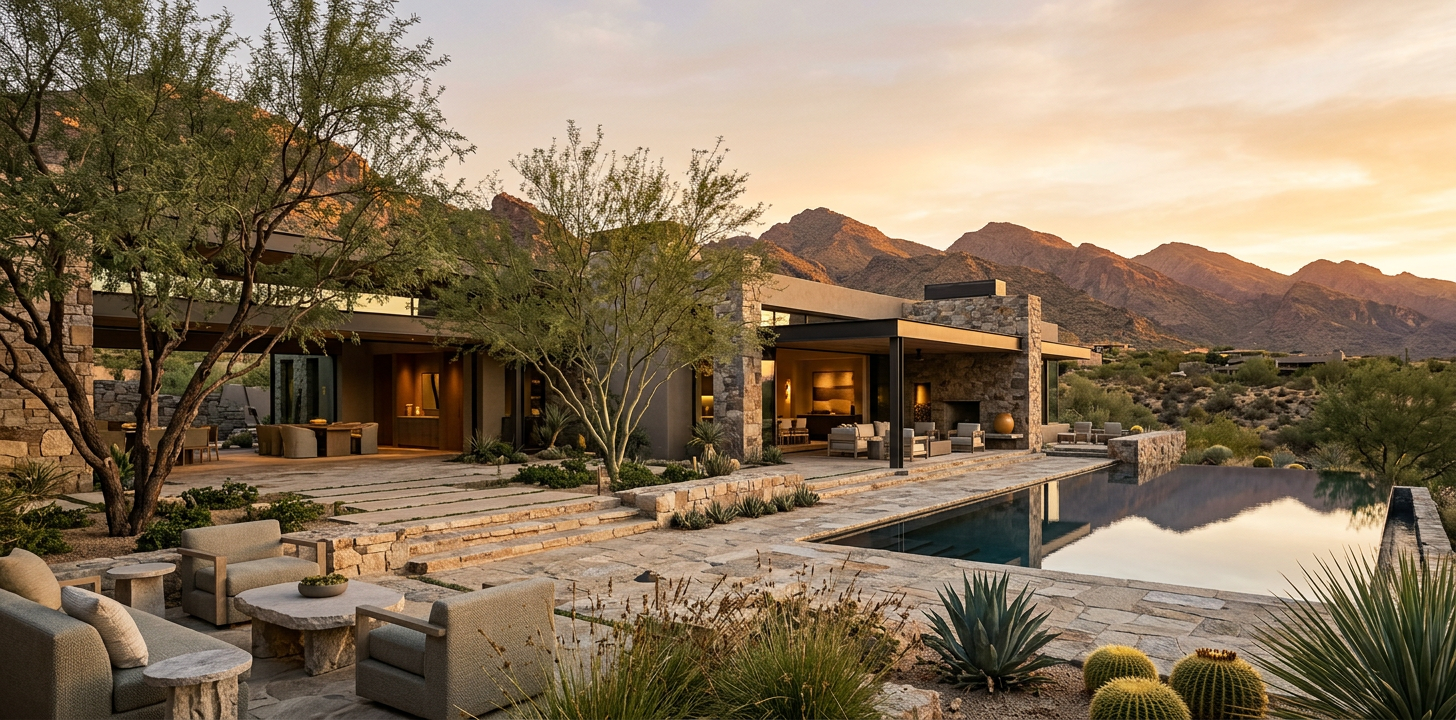
Choosing the right design professional can shape far more than a backyard. It can influence how your home relates to its site, how outdoor rooms feel in every season, how water is managed, and how confidently the project moves from concept to construction.
For Phoenix custom homes and major renovations, how to choose landscape architect phoenix is really a question of fit. We recommend looking beyond attractive photographs and selecting a licensed professional with a clear process, regional knowledge, technical coordination skills, and an approach that supports the architecture of your property.
How to Choose Landscape Architect Phoenix for Your Custom Home Project
A landscape architect should help you make better decisions before construction begins. The right professional considers grading, drainage, plant performance, irrigation, hardscape, lighting, outdoor living, views, privacy, construction detailing, and the relationship between the home and its setting.
Phoenix conditions make that integrated approach especially valuable. The U.S. Environmental Protection Agency reports that outdoor water use can reach as much as 60 percent of total household water use in arid regions. It also notes that inefficient irrigation can waste substantial amounts of water through evaporation, wind, runoff, and overwatering. EPA WaterSense provides useful context for why irrigation planning deserves a serious place in the design conversation.
Start With Licensure, Experience, and Scope
Not every person offering landscape design provides the same level of planning or technical service. A landscape architect is trained to analyze sites and develop coordinated design solutions. For a custom home, estate renovation, HOA improvement, or developer-led project, that distinction matters.
Ask each candidate about their Arizona registration, professional experience, and project types. Then clarify exactly what they provide. A strong scope may include site analysis, conceptual planning, planting design, irrigation design, hardscape layouts, material selection, construction documents, permitting coordination, cost awareness, and construction administration.
A good interview question is simple: “What do we receive at each phase?” The answer should be specific. You should understand whether the firm will provide a concept only, a complete buildable drawing set, installation oversight, or a combination of these services.
Look For Experience That Matches Your Project
A professional who excels at a small planting refresh may not be the best fit for a major residence with retaining walls, a pool environment, custom shade structures, mature trees, detailed paving, and multiple outdoor rooms. Match the scale and complexity of your project to the depth of the firm’s experience.
For example, homeowners building near Camelback Mountain may need careful attention to views, grade changes, heat exposure, and architectural materials. A large Paradise Valley renovation may require phased construction around an occupied home. A Phoenix infill project may need privacy, compact-space planning, and a clear connection between indoor and outdoor living.
How to Choose Landscape Architect Phoenix Based on Design Process
The best portfolio images are meaningful, but they should not be the only evidence you consider. Ask how the firm discovers your priorities and how it transforms them into a plan that can be built well.
A reliable process usually includes these stages:
- Site discovery: Existing trees, utilities, drainage patterns, sun exposure, access, views, soil conditions, and the architecture are evaluated.
- Programming: The team identifies how you want to use the property, from quiet seating areas and poolside entertaining to pet space, guest circulation, and family activity.
- Concept design: Alternative layouts help establish the broad composition and project direction before costly detailing begins.
- Design development: Materials, plants, lighting, water features, irrigation zones, and outdoor-living components become more defined.
- Construction documentation: Detailed plans communicate the intended work to installers and help create a more comparable bidding process.
- Construction support: The designer can help answer field questions and protect the design intent as work progresses.
Ask to see examples of drawings, presentation materials, and construction documents, not just finished photographs. Clear documentation often separates a beautiful idea from a well-executed project.
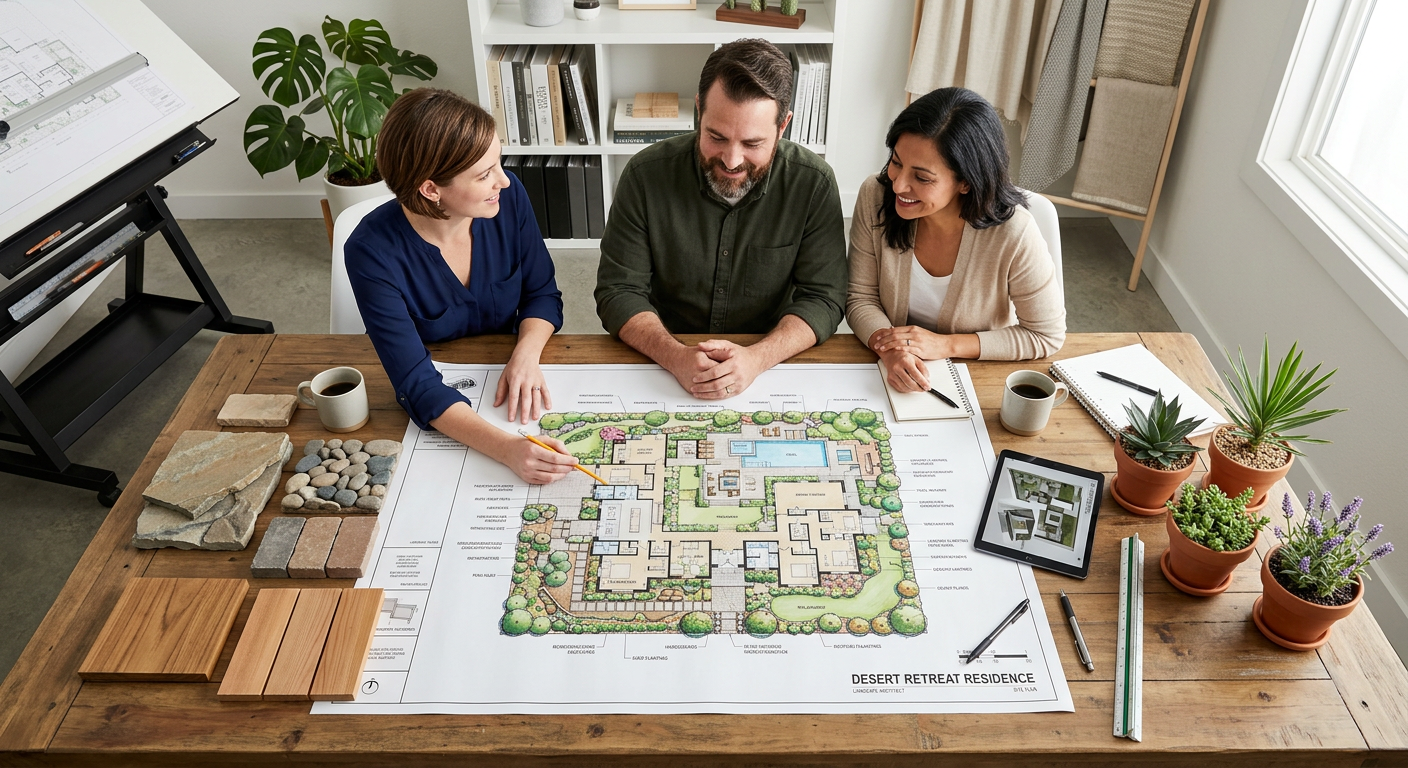
Evaluate Arizona-Specific Technical Knowledge
Phoenix landscapes have to perform under intense sun, heat, monsoon conditions, and a long growing season. Your design professional should be ready to discuss how the proposed landscape will respond to those realities.
Water-Efficient Irrigation Is a Design Issue
Irrigation should not be treated as an afterthought. It needs to align with plant type, exposure, soil conditions, pressure, slope, and hydrozones. The EPA explains that replacing a standard clock-based controller with a WaterSense labeled controller can save an average home up to 15,000 gallons of water annually when it is properly installed and operated. EPA WaterSense Labeled Controllers is a helpful resource for homeowners comparing water-smart options.
Ask candidates how they approach drip irrigation, tree watering, pressure regulation, controller programming, drainage, and seasonal adjustment. Their answers should be practical and connected to the actual site, not a generic promise to use “low-water plants.”
Planting Must Balance Beauty and Performance
A refined Phoenix landscape can include shade trees, flowering accents, architectural succulents, native and adapted species, seasonal color, and carefully composed ground planes. The point is not to make every property look the same. It is to select plant materials that support the home’s style, desired maintenance level, habitat goals, and water-use objectives.
Ask how the firm considers mature tree preservation, root zones, soil improvement, long-term canopy, and plant replacement needs. These choices influence comfort, privacy, and property value for years.
Hardscape and Drainage Need Early Coordination
Stone terraces, drive courts, garden walls, outdoor kitchens, pool decks, fire features, and shade structures all affect grading and drainage. The landscape architect should coordinate these components early, particularly when a project involves a new pool, home addition, or major renovation.
A polished design is not simply a collection of attractive materials. It is a coordinated exterior environment where elevation changes, surface drainage, paving joints, planting beds, lighting, and circulation work together.
Review the Portfolio With Better Questions
When looking at previous projects, ask more than “Do we like this style?” Consider whether the work demonstrates problem-solving and restraint.
Look for signs of thoughtful planning:
- Outdoor spaces that appear connected to the home’s architecture
- Comfortable shade and seating areas that support daily living
- Plant compositions with texture, scale, and seasonal interest
- Paving and walls that feel appropriate to the property
- Mature trees preserved or thoughtfully integrated
- Clear transitions between public, guest, and private areas
- Details that appear buildable, durable, and well resolved
We also recommend asking for client references on projects similar in scale to yours. Discuss communication, budget alignment, responsiveness during construction, and how well the finished landscape matched the approved plans.
Compare Proposals by Value, Not Just Fee
It is reasonable to compare fees, but a lower design fee can create expensive gaps if the scope is too limited. A concept plan without construction details may leave important decisions to be resolved in the field. That can make contractor pricing difficult to compare and may create avoidable changes during installation.
Review each proposal side by side. Compare the number of meetings, site analysis, design alternatives, drawing deliverables, irrigation planning, materials guidance, coordination with the architect or builder, and construction-phase involvement. Ask what is excluded and how additional services are handled.
For many high-value projects, the most useful question is not “Which proposal costs less?” It is “Which process gives us the clearest path to a cohesive, buildable landscape?”
Planning a Phoenix Landscape With Confidence?
If you are building a custom home or planning a significant renovation, involve landscape architecture before exterior decisions become fixed. Early coordination can help align outdoor rooms, drainage, shade, irrigation, material selections, and construction details with the home itself.
Waibel & Associates provides professional landscape architecture services for thoughtful Arizona projects, including design, consulting, planting and irrigation planning, and construction administration. Call (480) 893-3849 to discuss the scope and goals of your property.
Work Well With Your Architect and Builder
The most successful custom residential landscapes are collaborative. Your landscape architect should be comfortable coordinating with the home architect, builder, pool consultant, civil engineer, lighting professional, and installation team.
Ask how and when the landscape architect communicates with the rest of the project team. Early coordination is particularly important for finished floor elevations, doors and window views, equipment locations, drainage routes, utility sleeves, pool elevations, and structure foundations.
At Waibel & Associates’ residential landscape architecture practice, the focus is on helping outdoor spaces complement the home’s architecture and the way each client lives. For homeowners who want to better understand the firm’s background, learn about Janet Waibel, RLA, and the Waibel & Associates team.
Questions to Ask Before You Hire
Bring a short list of questions to each consultation. The goal is not to interrogate the designer. It is to make sure the working relationship, design process, and deliverables suit your project.
- Are you a registered landscape architect in Arizona?
- What comparable Phoenix, Scottsdale, or Paradise Valley projects have you completed?
- How do you coordinate with our architect, builder, and pool contractor?
- What plans and specifications will we receive?
- How do you address irrigation efficiency, drainage, and plant performance?
- Can you help with mature-tree preservation and soil conditions?
- Do you provide construction administration or installation coordination?
- How do you help clients establish realistic construction budgets?
A knowledgeable professional should welcome these questions. Clear answers at the beginning build confidence before design work begins.
Frequently Asked Questions
What should I look for in a landscape architect in Phoenix?
Look for Arizona registration, relevant custom residential experience, a documented design process, strong technical coordination, and a portfolio that shows work appropriate to the scale and architecture of your property.
When should I hire a landscape architect for a custom home?
Hire a landscape architect during early architectural planning, ideally before exterior elevations, pool placement, grading, utility locations, and major site decisions are final. This creates better coordination and can reduce redesign later.
Is a landscape architect different from a landscaper?
Yes. A landscape architect focuses on site planning and coordinated design, often including construction documentation and technical issues such as grading, irrigation, drainage, hardscape, and planting. An installation contractor builds and maintains landscape improvements, though some firms provide both design and implementation services.
Can landscape architecture reduce water use in Phoenix?
Yes. Water-efficient results come from an integrated approach that includes appropriate plants, hydrozoning, efficient irrigation equipment, shade planning, soil preparation, and seasonal irrigation management.
Should we preserve mature trees during a renovation?
Whenever feasible, mature trees deserve early evaluation because they provide immediate shade, scale, and character. Tree preservation must be balanced with construction access, root protection, long-term health, and the overall site plan.
Do we need construction documents for a residential landscape project?
For a substantial project, detailed documents help clarify the design intent, improve contractor pricing comparisons, coordinate trades, and reduce confusion during construction. The complexity of the project should guide the level of documentation.
A Better Choice Starts With a Better Conversation
Choosing a Phoenix landscape architect is ultimately about selecting a professional who can translate your priorities into a durable, beautiful, and well-coordinated exterior environment. Look for demonstrated experience, thoughtful questions, clear deliverables, regional expertise, and a process that respects both design quality and construction reality.
The right partnership can create more than an attractive setting. It can give your home outdoor spaces that feel natural to the architecture, function beautifully for daily life, and remain valuable as the landscape matures.
Talk With an Experienced Arizona Landscape Architect
Whether you are planning a custom home, major remodel, outdoor living environment, irrigation upgrade, or sustainable landscape renovation, Waibel & Associates can help create a thoughtful design that complements your property and long-term goals.
Call (480) 893-3849 or request a landscape architecture consultation.
About Waibel & Associates Landscape Architecture
Waibel & Associates Landscape Architecture is an Arizona landscape architecture firm led by Janet Waibel, RLA, Owner and Principal. The firm provides custom residential landscape architecture, sustainable landscape design, irrigation planning, tree preservation, outdoor living design, site planning, construction documentation, and professional landscape consulting throughout Tempe, Scottsdale, Paradise Valley, Phoenix, North Scottsdale, Carefree, Cave Creek, and surrounding Arizona communities.
Waibel & Associates focuses on thoughtful, high-quality landscapes that complement the architecture of each property while incorporating appropriate plant materials, water-efficient strategies, irrigation technology, and long-term planning.
Janet Waibel is also a published author whose books provide educational resources on sustainable landscape management and landscape construction.
Planning a custom residential or professional landscape project?
Call (480) 893-3849
or
Contact Waibel & Associates →
Explore Janet Waibel’s Landscape Architecture Books →
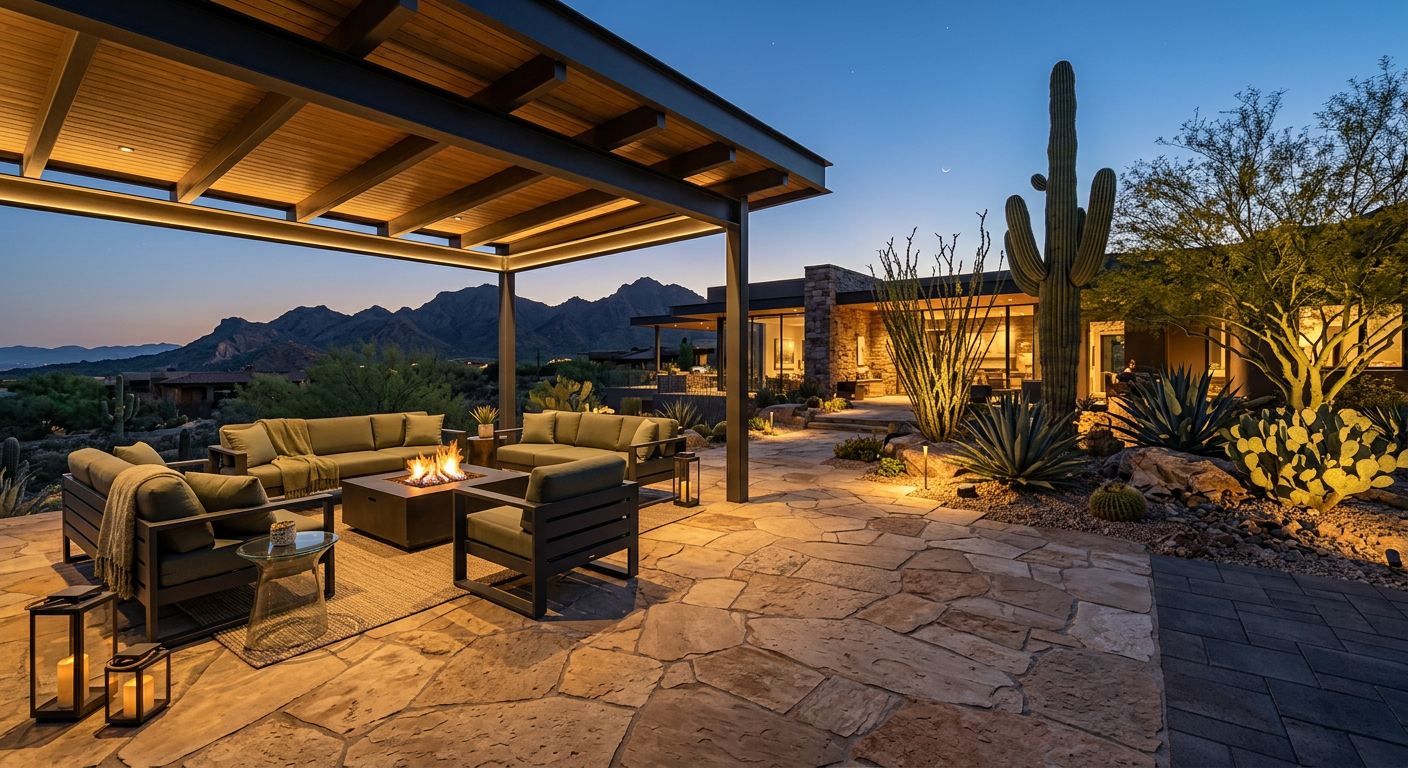
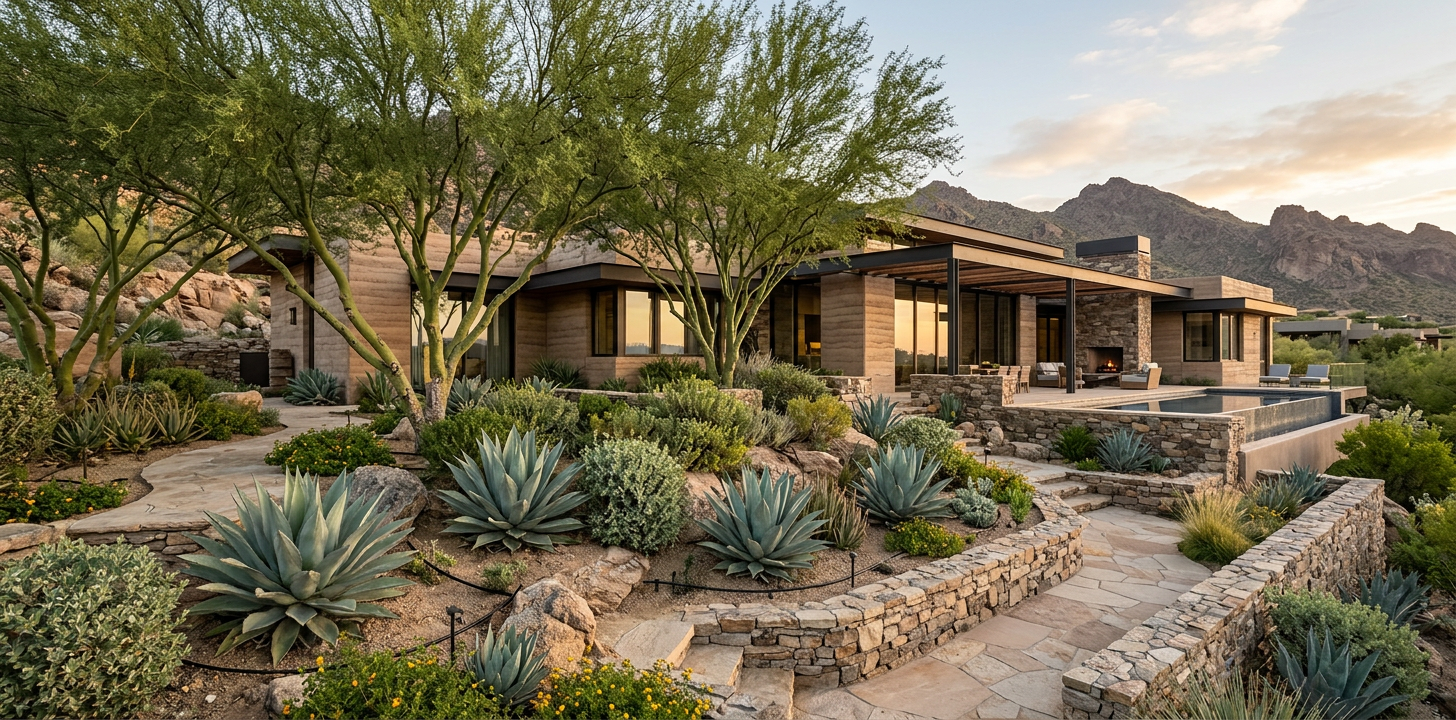
Irrigation Design for Desert Landscape: An Arizona Home Guide
A beautiful Arizona landscape is not created by watering everything the same way. It comes from matching water delivery, plant needs, soil conditions, architecture, and seasonal weather into one coordinated system that supports the property for years.
For custom homes and major remodels, irrigation design for desert landscape should be treated as a core part of landscape architecture, not as a utility decision made after plants and hardscape are already selected. The right approach protects mature trees, supports outdoor living areas, reduces avoidable runoff, and helps the landscape look intentional through the hottest parts of the year.
At Waibel & Associates, we plan irrigation as part of a complete site strategy for residential landscapes in Tempe, Scottsdale, Paradise Valley, Phoenix, and surrounding communities. That means considering the entire property, from exposed entries and pool environments to shaded courtyards, slopes, specimen trees, and planting beds.
Why Desert Irrigation Requires a Design-First Approach
Arizona's low desert creates a demanding environment for landscape plants. The University of Arizona Cooperative Extension notes that annual evaporation in Arizona's low deserts can reach 70 to 80 inches, while annual precipitation commonly ranges from 4 to 12 inches. That gap is why supplemental irrigation, plant selection, soil preparation, and water harvesting need to work together rather than operate as separate decisions. University of Arizona Cooperative Extension (extension.arizona.edu)
A well-designed system does not simply mean using less water. It means applying the appropriate amount of water, in the appropriate location, at the appropriate rate, for each part of the landscape. Mature trees, native shrubs, ornamental planting, seasonal color, turf, and container gardens do not share the same root depth, exposure, or irrigation needs.
The Environmental Protection Agency reports that residential outdoor water use in the United States totals nearly 8 billion gallons per day, mainly for landscape irrigation. It also notes that inefficient methods and overwatering can waste a substantial portion of outdoor water use. EPA WaterSense (epa.gov)
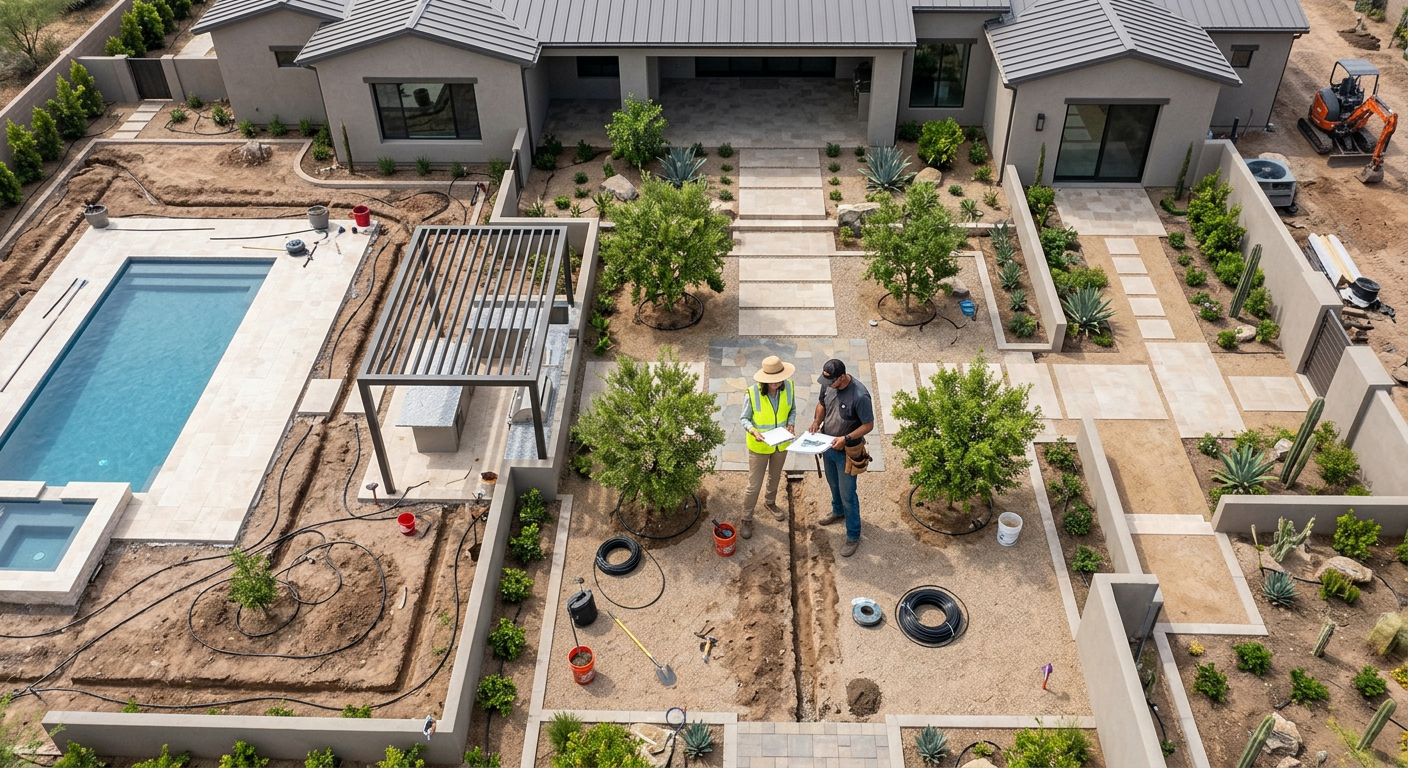
Irrigation Design for Desert Landscape Begins With Hydrozones
Hydrozoning is the practice of grouping plants with similar water requirements, exposure, and irrigation methods on the same valve. It is one of the most important decisions in a water-efficient residential landscape because it prevents a high-water-use planting area from dictating the schedule for the entire property.
A custom landscape may include several distinct hydrozones:
- Established desert trees and large shrubs, which need broad, deep watering patterns that expand as roots grow.
- Native and desert-adapted planting areas, which generally benefit from measured drip irrigation and thoughtful seasonal adjustments.
- High-visibility ornamental beds, which may include plants with more frequent water needs near entries, patios, or pools.
- Turf or groundcover areas, when appropriate for the property and lifestyle, which require separate equipment and scheduling from drip-irrigated planting.
- Containers and specialty gardens, which often need their own controlled zone because their soil volume and exposure are very different from in-ground plantings.
The University of Arizona specifically recommends placing trees, shrubs, groundcovers, and turf on separate valves because their requirements differ. It also advises allowing irrigation systems to evolve as plants mature, including moving emitters toward the expanding canopy edge where active roots are located. University of Arizona Cooperative Extension (extension.arizona.edu)
Tree Preservation Must Influence Irrigation Layout
Trees are long-term landscape assets. During a remodel or new construction process, existing trees can be damaged when irrigation is removed too early, rerouted without a plan, or concentrated near the trunk rather than across the root zone.
For mature trees worth preserving, we consider canopy spread, existing grade, future paving, drainage, and construction access before determining irrigation locations. Water should support the active root area, not create a constantly wet trunk zone. This is especially important when a property is being transformed from an older landscape into a more architectural and water-conscious outdoor environment.
Drip Irrigation, Bubblers, and Sprays Each Have a Proper Role
Drip irrigation is often an excellent choice for desert-adapted planting beds because it applies water slowly near the root zone. The EPA states that microirrigation systems can use 20 to 50 percent less water than conventional sprinkler systems, while reducing runoff and evaporation when they are properly designed and maintained. EPA WaterSense Microirrigation (epa.gov)
Still, drip is not a universal answer. A thoughtful irrigation plan selects equipment according to the planting design and site conditions.
Drip Irrigation for Shrubs, Accent Plants, and Narrow Planting Beds
Drip works well for desert shrubs, perennials, specimen agaves, entry planting, and narrow beds along architecture or walls. It allows water to reach the root zone without sending spray onto windows, paving, walls, or adjacent gravel.
A quality drip system needs more than tubing and emitters. It also needs appropriate filtration, pressure regulation, accessible valves, and a layout that can be adjusted as plants grow. Poorly placed emitters can leave one side of a plant dry while repeatedly saturating another area.
Bubblers for Broad Root Zones and Larger Trees
Bubblers or basin-style irrigation can be useful where a larger volume of water needs to spread through a broad root zone. Their design must account for soil infiltration, basin size, grade, and the need to keep water away from trunks and foundations.
This method is not a shortcut. If water is applied faster than the soil can absorb it, it will run toward paving, collect in low points, or bypass the root zone entirely. On sloped properties in North Scottsdale, Carefree, or Cave Creek, careful grading and cycle-and-soak scheduling can be as important as the emitter choice.
Spray Irrigation for Purposeful Turf Areas
Where a client wants turf for a defined recreational area, spray irrigation should be isolated from drip zones. Spray components require correct pressure, matched precipitation rates, head-to-head coverage, and careful placement so water stays on the intended planting area rather than sidewalks or driveways.
The EPA recommends pressure-regulating spray sprinkler bodies to help reduce waste associated with high pressure. It also advises homeowners to direct sprinklers away from hardscape and inspect systems routinely for leaks, clogs, and damaged components. EPA WaterSense Watering Tips (epa.gov)
Design the System Around Soil, Grade, and Architecture
An irrigation controller cannot correct a system that ignores the site. Desert soils may be rocky, compacted, caliche-heavy, sandy, or altered by previous construction. Each condition affects infiltration and the length of time water should run.
We evaluate the relationship between water and the built environment before construction documents are finalized. That includes drainage routes, finish grades, retaining walls, pool decks, walkways, driveway edges, utility locations, and the irrigation sleeves needed beneath hardscape. Planning these components early helps avoid disruptive future cutting, exposed pipe, and compromised planting areas.
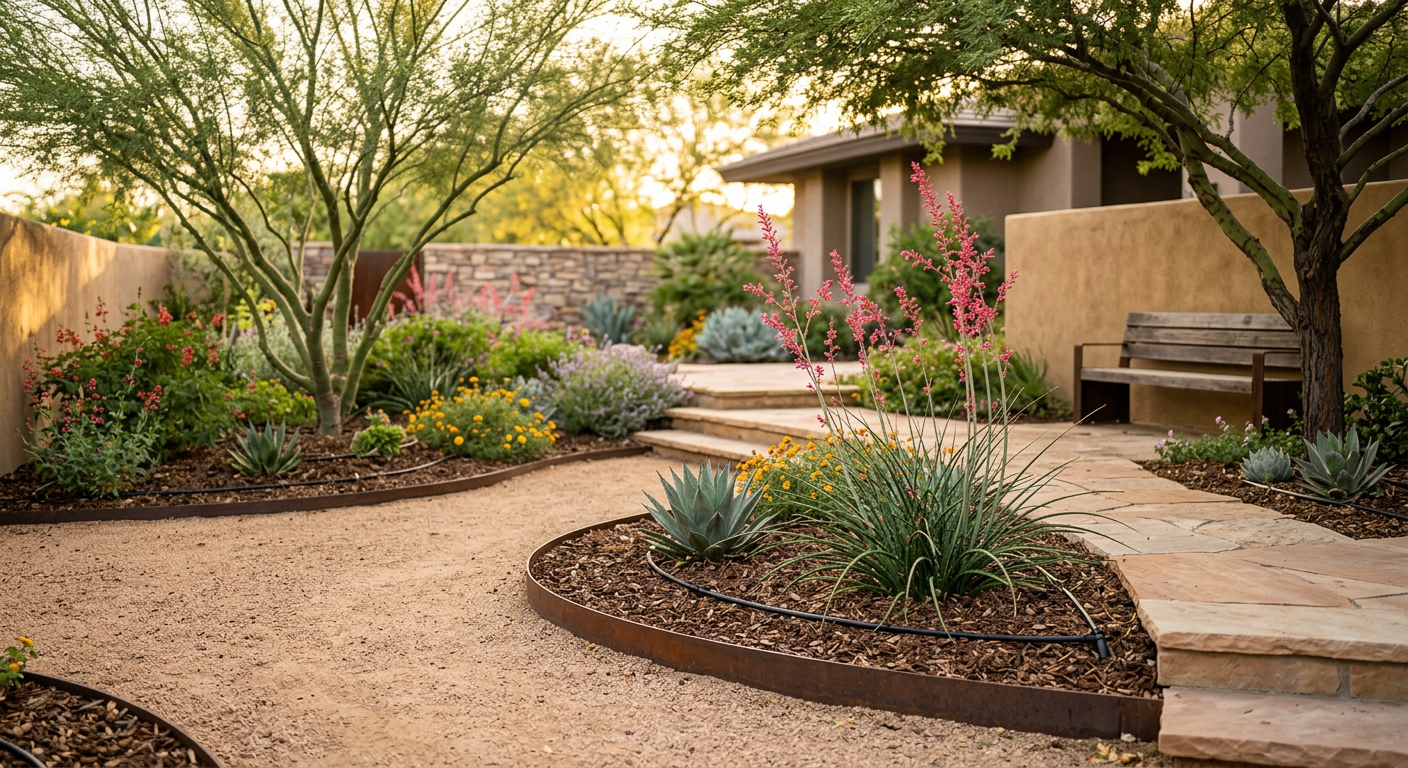
Seasonal Scheduling Is Part of the Design
Even the best layout needs seasonal management. A fixed schedule throughout the year encourages waste in cooler months and can stress plants during periods of intense heat, wind, or changing monsoon patterns.
Smart controllers can support better scheduling by using weather or soil-moisture information, but they still need correct programming and field observation. The most reliable process pairs technology with periodic inspections: verify emitter output, flush filters, locate leaks, inspect plant health, and adjust runtimes as the landscape matures.
For major renovations, irrigation documentation also gives owners, builders, and future maintenance teams a clear record of valve locations, pipe routes, equipment, and design intent. It is a practical investment that makes a complex landscape easier to steward over time.
Planning a Custom Desert Landscape Project?
If you are building or remodeling a home in Tempe, Scottsdale, Paradise Valley, Phoenix, or the surrounding area, professional irrigation planning can protect your investment and help create a more cohesive, water-efficient outdoor environment.
We invite you to review our residential landscape architecture approach and landscape architecture services. To discuss your property, call (480) 893-3849 or request a landscape architecture consultation.
Common Irrigation Mistakes in Luxury Desert Landscapes
Treating Every Plant Zone the Same
A single schedule for trees, shrubs, groundcover, and ornamental planting almost always produces uneven results. Some plants receive too much water while others receive too little. Separate zones create more control and support healthier, longer-lived landscapes.
Installing Irrigation After Hardscape Is Complete
Waiting until patios, walls, pool decks, and paving are installed can limit pipe routes and create expensive revisions. Irrigation sleeves, valve locations, drainage, lighting conduits, and root-zone protection should be coordinated before construction begins.
Forgetting That Plants Grow
A young tree may begin with a small root zone, but its water needs and root spread change significantly as it matures. Emitters that stay near the trunk can lead to shallow root development and poor canopy health. The irrigation system should be designed for adjustment.
Relying on a Controller Without Inspection
Controllers are useful tools, not a replacement for professional observation. A clogged filter, damaged line, displaced emitter, or leaking valve can affect plant health long before a homeowner notices a problem.
Separating Water Efficiency From Design Quality
A water-conscious landscape does not need to look sparse or generic. Strong plant composition, shade, texture, seasonal interest, carefully selected materials, and outdoor living spaces can create a distinctive residential environment while using water more responsibly.
Practical Priorities for Builders, HOAs, and Property Managers
For larger custom properties and managed landscapes, irrigation planning should be documented with the same seriousness as lighting, drainage, and hardscape. A clear plan helps teams understand intended plant water use, valve groupings, pressure requirements, controller programming, and long-term maintenance expectations.
This is also where landscape architecture adds value beyond the installation phase. Waibel & Associates provides planting and irrigation design, site planning, construction documentation, and construction administration to help the completed work reflect the original design intent. Learn more about Waibel & Associates Landscape Architecture and our work with private development and landscape improvements.
Janet Waibel, RLA, Owner and Principal of Waibel & Associates Landscape Architecture, also brings published expertise in sustainable landscape management and landscape construction. For owners and professionals who want a deeper reference on irrigation efficiency and durable landscape practices, explore landscape architecture books by Janet Waibel.
Frequently Asked Questions
What is the best irrigation method for a desert landscape?
Drip irrigation is often a strong choice for trees, shrubs, perennials, and narrow planting beds because it applies water gradually at the root zone. The best method still depends on the plant palette, soil, grade, and whether the area includes turf, large trees, or specialty planting.
Should desert trees be watered with drip irrigation?
They can be, provided the system is designed with enough emitters and the emitters are moved outward as the canopy expands. Larger trees may also benefit from carefully designed bubblers or basins that wet a broad root zone without soaking the trunk.
How often should desert landscape irrigation run?
The correct frequency changes with season, plant type, exposure, soil, and irrigation equipment. Rather than copying a generic schedule, we recommend establishing schedules based on observed plant response and the amount of water the system actually delivers.
Can a water-efficient landscape still feel lush and high-end?
Yes. A refined desert landscape can use shade trees, layered planting, flowering accents, sculptural plants, pools, patios, lighting, and material contrast to create a rich outdoor experience. Water efficiency comes from intentional planning, not from eliminating design.
Why should irrigation be designed before landscape construction?
Early planning coordinates pipes, sleeves, valves, drainage, root zones, paving, and planting areas before installation begins. This reduces costly changes later and gives the completed landscape a more organized, durable foundation.
Do smart irrigation controllers save water in Arizona?
They can help by adjusting schedules based on weather or soil moisture data, but only when the irrigation layout, programming, and maintenance are sound. A smart controller cannot compensate for clogged emitters, poor hydrozoning, leaks, or water applied faster than the soil can absorb it.
Does Waibel & Associates work on irrigation upgrades for existing landscapes?
Yes. We work with aging landscapes, major remodels, custom residences, private developments, and managed properties where irrigation improvements need to be coordinated with planting, hardscape, drainage, and long-term maintenance goals.
A Better Irrigation System Supports a Better Landscape
The strongest desert landscapes are designed as complete environments. Irrigation is part of that environment, supporting architecture, trees, planting composition, outdoor living, long-term maintenance, and responsible water use.
When irrigation design is considered early, homeowners and project teams gain more control over performance and appearance. The result is not simply a system that waters plants. It is a landscape foundation that helps a custom property remain healthy, attractive, and appropriate for the Arizona desert.
Talk With an Experienced Arizona Landscape Architect
Whether you are planning a custom home, major residential remodel, outdoor living environment, irrigation upgrade, or sustainable landscape renovation, Waibel & Associates can help create a thoughtful design that complements your property and long-term goals.
Call (480) 893-3849 or contact Waibel & Associates to discuss your project.
About Waibel & Associates Landscape Architecture
Waibel & Associates Landscape Architecture is an Arizona landscape architecture firm led by Janet Waibel, RLA, Owner and Principal. The firm provides custom residential landscape architecture, sustainable landscape design, irrigation planning, tree preservation, outdoor living design, site planning, construction documentation, and professional landscape consulting throughout Tempe, Scottsdale, Paradise Valley, Phoenix, North Scottsdale, Carefree, Cave Creek, and surrounding Arizona communities.
Waibel & Associates focuses on thoughtful, high-quality landscapes that complement the architecture of each property while incorporating appropriate plant materials, water-efficient strategies, irrigation technology, and long-term planning.
Janet Waibel is also a published author whose books provide educational resources on sustainable landscape management and landscape construction.
Planning a custom residential or professional landscape project?
Call (480) 893-3849
or
Contact Waibel & Associates →
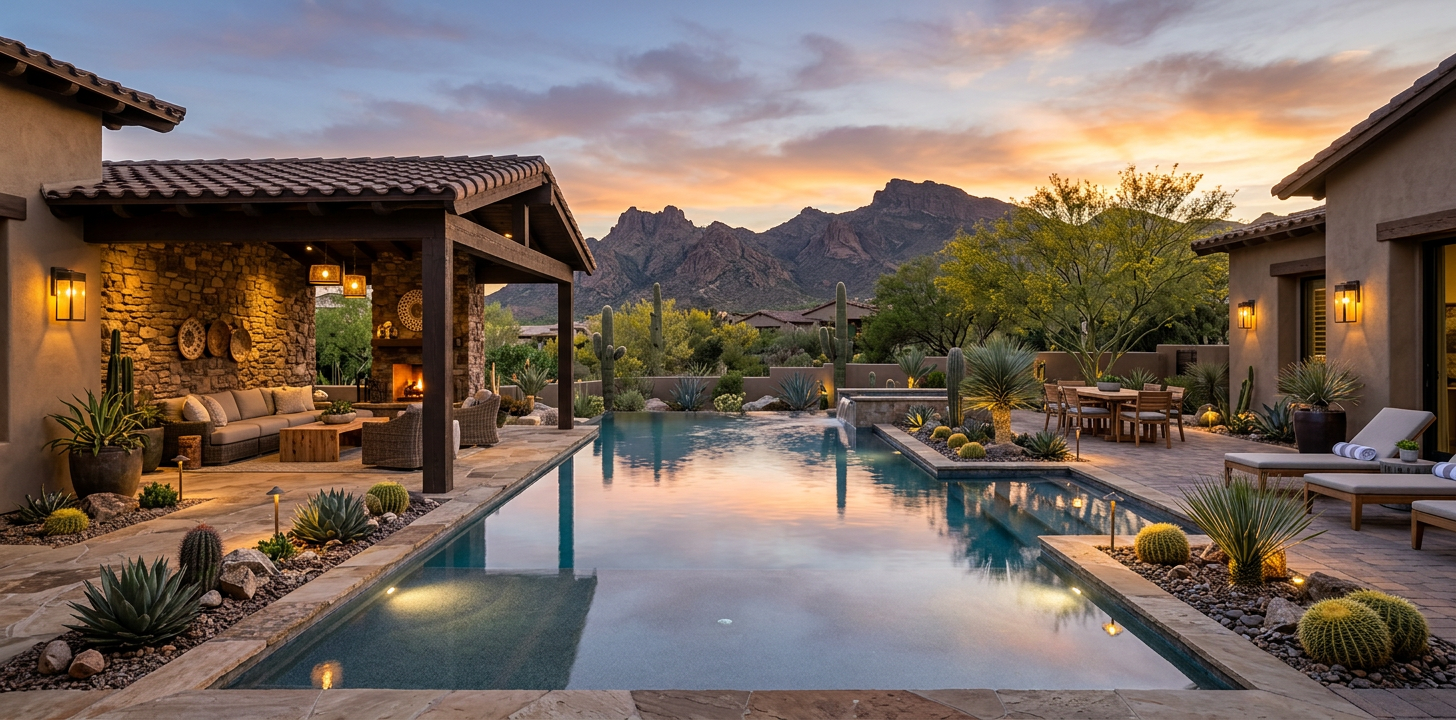
High End Backyard Design Ideas for Scottsdale Luxury Residences
A memorable backyard is not created by adding more features. It is created by giving every feature a purpose, from the view seen through the home’s glass doors to the comfort of a shaded dining area in late afternoon. For luxury homes in Scottsdale, Paradise Valley, Phoenix, and the East Valley, the strongest outdoor environments feel inevitable, as if the architecture and landscape were designed together from the beginning.
The best high end backyard design ideas combine spatial planning, durable materials, water-wise planting, shade, lighting, and carefully detailed amenities. Instead of treating the yard as a collection of separate purchases, we recommend thinking of it as a complete exterior living environment that supports daily routines, entertaining, privacy, and long-term property value.
Begin With an Outdoor Plan, Not a List of Features
A pool, fire feature, outdoor kitchen, and pergola can all be beautiful. But they will not automatically create a cohesive backyard. Before selecting amenities, establish the overall composition: primary views, circulation routes, sun exposure, grade changes, existing trees, privacy needs, and the relationship between indoor rooms and exterior spaces.
For a custom home or major remodel, the backyard should extend the architectural language of the residence. A contemporary home may call for clean planes, large-format paving, restrained plant masses, and precisely integrated lighting. A more traditional or desert-inspired property may benefit from textured stone, layered planting, intimate courtyards, and a softer progression from house to garden.
At a glance, successful luxury outdoor spaces tend to balance these priorities:
| Design Priority | What It Achieves | Planning Consideration |
|---|---|---|
| Indoor-outdoor connection | A unified home experience | Views, door locations, floor elevations |
| Shade and comfort | More usable time outdoors | Solar orientation, breeze, rooflines |
| Water-wise planting | Beauty with responsible water use | Hydro-zones, soil, irrigation |
| Material continuity | A custom, architectural appearance | Color, texture, slip resistance |
| Layered lighting | Ambiance and safe movement | Glare control, fixture placement |
A professional site analysis can also identify opportunities that are easy to miss, such as preserving a mature specimen tree, framing a mountain view, or shifting a patio to create better shade. Our residential landscape architecture approach considers these decisions as part of one design, rather than asking the homeowner to solve them one feature at a time.
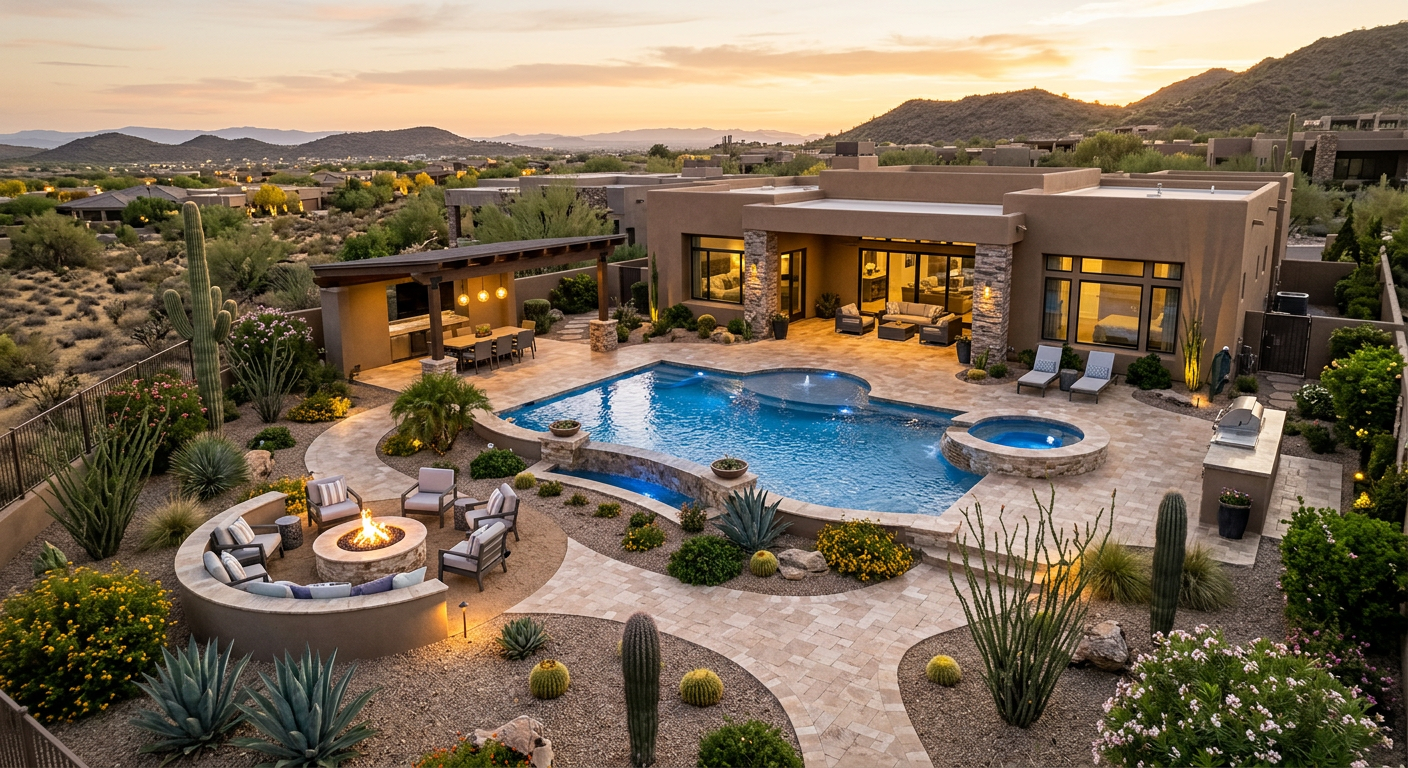
High End Backyard Design Ideas That Add Lasting Value
Create Outdoor Rooms With a Clear Purpose
Luxury backyards work best when they feel like a sequence of intentional rooms rather than one oversized patio. A covered lounge near the family room might serve quiet mornings and casual evenings, while a separate dining terrace supports larger gatherings. A poolside retreat can be positioned for sun and views without interrupting conversations around the kitchen or fire feature.
Use changes in paving, low walls, planting, ceiling treatments, or elevation to define each area without making the yard feel compartmentalized. Thoughtful circulation is essential. Guests should be able to move from the house to the pool, dining area, and landscape without crossing cooking zones or squeezing between furniture.
Make Shade Part of the Architecture
In Arizona, shade is a fundamental design material. Deep overhangs, covered patios, ramadas, pergolas, shade structures, and strategically placed trees can make the difference between an outdoor area that looks impressive and one that is genuinely comfortable.
The most successful structures are scaled to the home and positioned in response to sun angles, not simply placed over a patio after construction. Consider ceiling fans, integrated heaters where appropriate, subtle lighting, and finished ceiling materials that relate to the interior palette. For open views, shade can also be framed to protect comfort while preserving the visual connection to the landscape.
Design a Pool Area as a Resort-Quality Composition
A luxury pool should feel integrated with the entire site. Rather than letting the pool dominate every decision, use its placement, waterline, surrounding paving, planting, and lighting to establish a composed visual experience from inside and outside the home.
Material selection deserves close attention. Coping, deck surfaces, wall finishes, and waterline tile should complement the home’s exterior materials while performing well under desert sun and foot traffic. Consider whether a shallow lounging shelf, spa, water feature, or cabana truly supports the way the household will use the space. The right answer is different for a family-focused property, a second home, or a residence built around entertaining.
Build a Kitchen and Dining Area for Real Use
An outdoor kitchen becomes valuable when it supports how people actually gather. That usually means generous counter space, convenient circulation, weather-resistant storage, well-located utilities, and a nearby dining space that does not require a long walk from the interior kitchen.
Avoid treating appliances as the entire design. The surrounding finishes, backsplash or wall material, shade coverage, seating configuration, and lighting determine whether the area feels polished and useful. A carefully designed beverage station, pizza oven, or serving counter may be more meaningful than a crowded lineup of specialty equipment.
Use Water-Wise Planting and Irrigation as Luxury Features
Sustainable planning is not a compromise in high-end residential work. In fact, resilient desert planting can deliver some of the most striking color, form, fragrance, and seasonal interest in an Arizona landscape. The goal is not to make everything sparse. It is to select plants with a purpose and provide the soil preparation, spacing, irrigation, and maintenance expectations they need to thrive.
The U.S. Environmental Protection Agency reports that outdoor water use can account for as much as 60 percent of household water use in arid regions. It also notes that replacing a clock-based controller with a WaterSense labeled irrigation controller can reduce an average home’s irrigation water use by up to 30 percent. EPA WaterSense
For a refined landscape, group plants by water needs, use irrigation zones that match those needs, and plan for mature sizes rather than installing plants too tightly. Desert trees can establish shade and vertical structure. Accent trees, agaves, flowering shrubs, ornamental grasses, and groundcovers can create a layered garden with seasonal character. When the palette is coordinated with the architecture, drought-tolerant planting looks intentional and elevated.
Preserve Mature Trees and Work With the Site
Established trees can be among the most valuable elements on a property, especially where they provide shade, scale, and a sense of permanence. Before demolition or construction begins, evaluate which trees are worth protecting and what their root zones need to remain viable.
Tree preservation must be integrated into grading, utility routing, hardscape layout, and construction access. It is difficult to protect a tree after these decisions have already been made. The same principle applies to drainage, existing slopes, and views. Good landscape architecture resolves these site realities early, when the design still has room to respond.
Plan a Layered Lighting Experience
Outdoor lighting should make the backyard more inviting after sunset without creating glare or visual clutter. Start with the essential layers: safe paths and steps, gentle illumination at entries, low-level light for seating and dining, and selective accents for important trees, walls, artwork, or water.
Avoid trying to light every plant or surface. Darkness is part of the composition. A restrained approach creates depth and atmosphere, while poorly aimed fixtures can distract from the architecture, disturb neighboring properties, and make a beautiful landscape feel overdesigned.
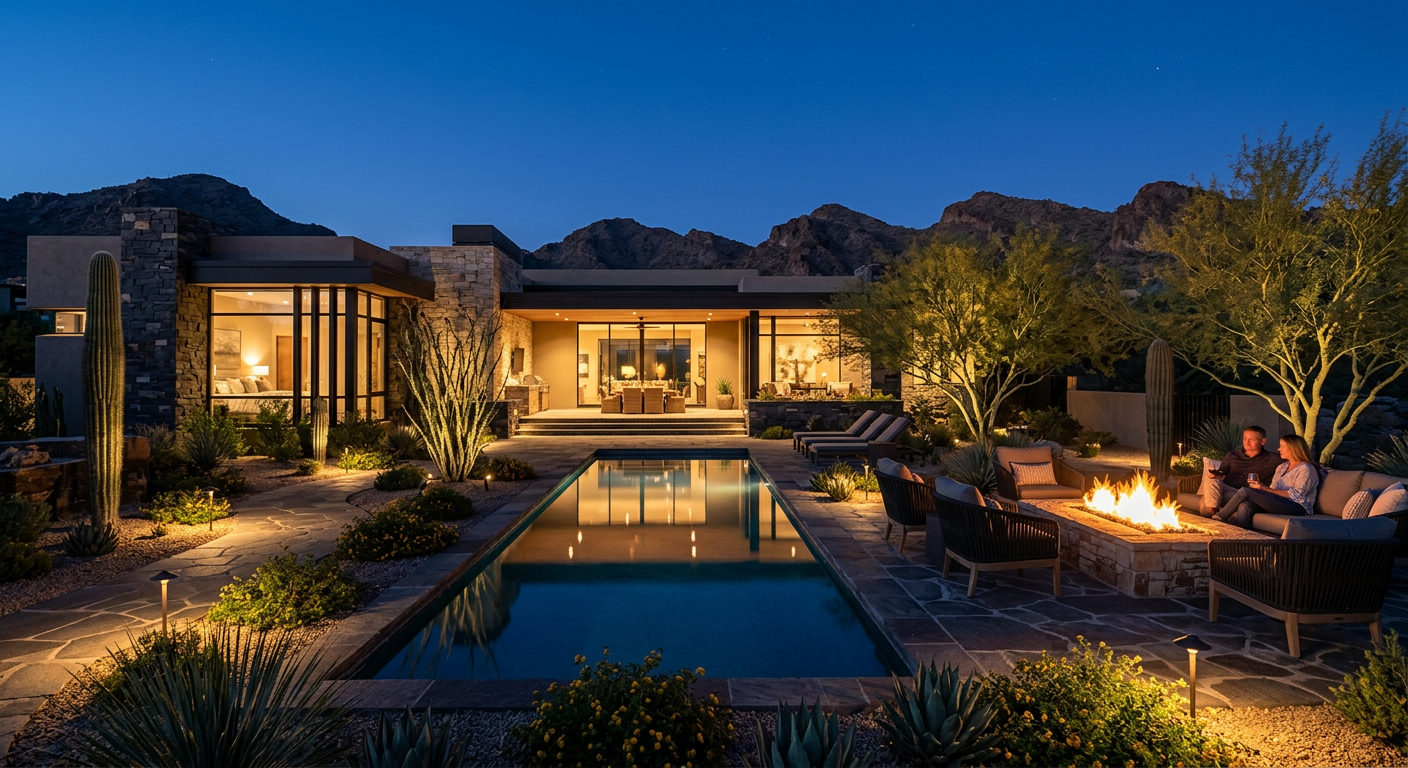
Planning a Custom Backyard in Arizona?
If you are building a custom home or renovating an established property in Scottsdale, Paradise Valley, Tempe, Phoenix, Carefree, Cave Creek, or North Scottsdale, early landscape planning can help align the outdoor environment with the architecture, construction schedule, and long-term budget.
We provide landscape architecture services that can include site planning, planting and irrigation design, construction documentation, and construction administration. To discuss a high-value residential project, call (480) 893-3849 or request a landscape architecture consultation.
Avoid These Common Luxury Backyard Mistakes
A large budget does not protect a project from poor sequencing. One of the most common mistakes is beginning landscape construction after the home is complete, with little coordination between exterior doors, drainage, grading, utility locations, and outdoor amenities. That can lead to expensive revisions and a backyard that feels disconnected from the residence.
Another mistake is choosing too many competing materials and focal points. High-end design often feels quieter than expected because it relies on proportion, repetition, quality materials, and detailed execution. Fewer, better choices usually create a more enduring result.
Finally, do not leave irrigation, drainage, soil improvement, and maintenance access until the end. These systems are foundational to the long-term health of the landscape. Janet Waibel, RLA, brings extensive experience in planning, irrigation, sustainable landscapes, and construction to the work. Homeowners and project teams can also explore landscape architecture books by Janet Waibel for practical education on sustainable landscape management and construction.
Frequently Asked Questions
What makes a backyard design feel high end?
A high-end backyard is cohesive, site-specific, and built with durable materials and thoughtful details. It relates to the architecture of the home, creates comfortable outdoor rooms, and integrates planting, irrigation, lighting, hardscape, and amenities into one complete composition.
Should landscape design begin before a custom home is built?
Yes. Early landscape planning helps coordinate finished floor elevations, views, drainage, pool placement, shade structures, utilities, tree preservation, and exterior room locations. This reduces conflicts during construction and creates a stronger connection between home and landscape.
What are the best plants for a luxury Arizona backyard?
The right plant palette depends on the site, architecture, sun exposure, soil, irrigation capacity, and desired style. A professional plan may combine desert-adapted trees, flowering shrubs, specimen plants, ornamental grasses, and groundcovers for shade, texture, color, and seasonal interest.
Can a luxury backyard be water efficient?
Yes. Water efficiency comes from site-appropriate plants, hydro-zoning, soil preparation, properly designed irrigation, smart controls, and ongoing oversight. These decisions can support a lush, layered appearance while avoiding wasteful watering practices.
Is a landscape architect different from a landscape contractor?
A landscape architect focuses on planning and design, including site analysis, spatial layout, grading concepts, planting, irrigation, materials, construction documents, and coordination. A landscape contractor typically installs the work, although firms may offer both design and construction-related services.
Does Waibel & Associates work on major backyard renovations?
Yes. Waibel & Associates Landscape Architecture works on custom residential landscapes, renovations, aging landscape improvements, irrigation updates, and outdoor living environments throughout the greater Phoenix area.
A Well-Planned Backyard Becomes Part of the Home
The most enduring high end backyard design ideas are not trends. They are decisions that make the property more comfortable, more beautiful, and easier to enjoy across changing seasons and years of ownership. Begin with the site, respect the architecture, invest in shade and infrastructure, and let materials and planting create a distinctive sense of place.
When those decisions are made as one coordinated plan, the backyard can become one of the home’s most valuable living spaces.
Talk With an Experienced Arizona Landscape Architect
Whether you are planning a custom home, major residential remodel, pool environment, outdoor kitchen, irrigation upgrade, or sustainable landscape renovation, we can help create an outdoor setting that complements your property and long-term goals.
Call (480) 893-3849 or contact Waibel & Associates to discuss your project.
About Waibel & Associates Landscape Architecture
Waibel & Associates Landscape Architecture is an Arizona landscape architecture firm led by Janet Waibel, RLA, Owner and Principal. The firm provides custom residential landscape architecture, sustainable landscape design, irrigation planning, tree preservation, outdoor living design, site planning, construction documentation, and professional landscape consulting throughout Tempe, Scottsdale, Paradise Valley, Phoenix, North Scottsdale, Carefree, Cave Creek, and surrounding Arizona communities.
Waibel & Associates focuses on thoughtful, high-quality landscapes that complement the architecture of each property while incorporating appropriate plant materials, water-efficient strategies, irrigation technology, and long-term planning.
Janet Waibel is also a published author whose books provide educational resources on sustainable landscape management and landscape construction.
Planning a custom residential or professional landscape project?
Call (480) 893-3849
or
Contact Waibel & Associates →
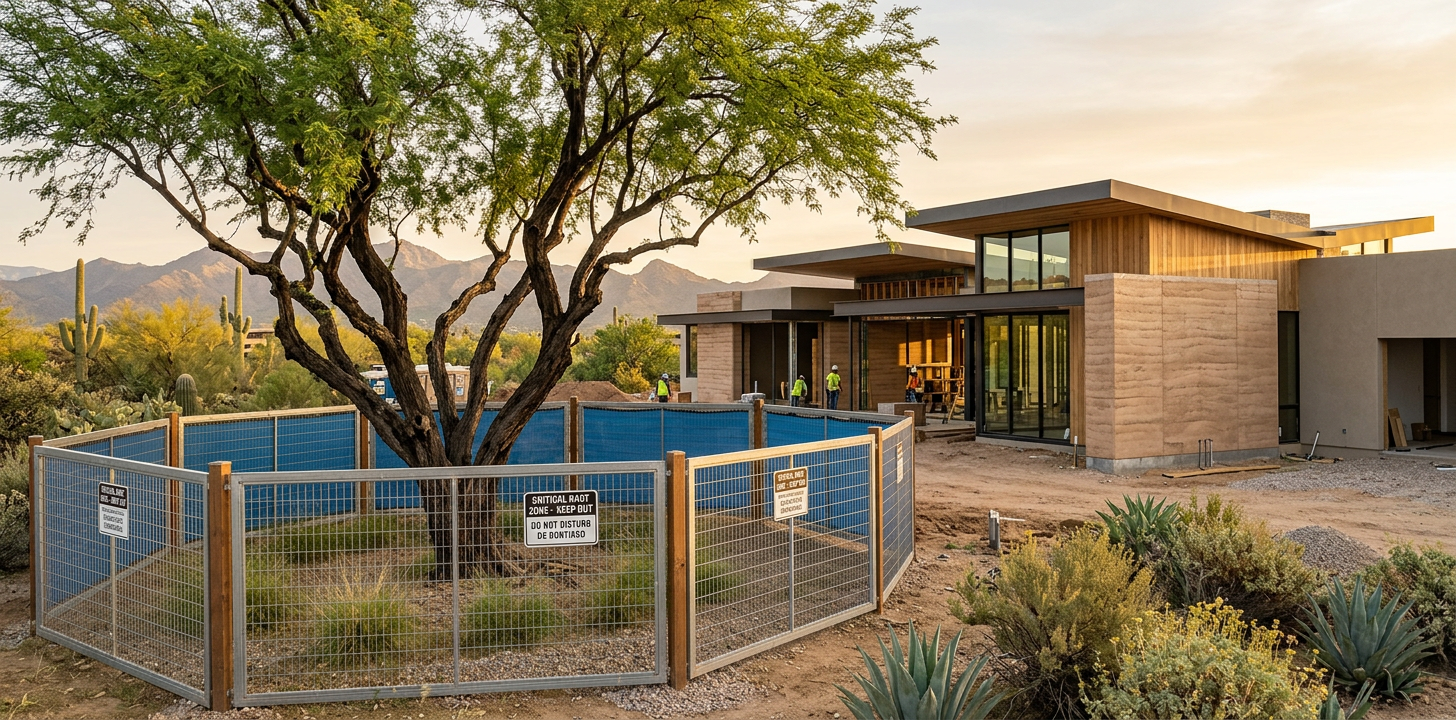
A mature tree can be one of the most valuable features on a custom residential site, yet it is also surprisingly easy to damage before the home is framed. Heavy equipment, trenching, grade changes, material staging, and repeated traffic can affect roots that extend well beyond the visible trunk and canopy.
For homeowners, builders, and architects, tree preservation during construction is not a final landscape detail. It is an early site-planning decision that influences building placement, utilities, drainage, hardscape layout, and the long-term character of the property. When we plan it well, mature trees can remain a defining part of a refined Arizona landscape instead of becoming an expensive loss after construction is complete.
Why Mature Trees Need Protection Before Construction Begins
Trees do not respond to construction damage like a broken paver or scratched wall. Root loss, compacted soil, and changes to drainage may not show obvious symptoms immediately. A tree can appear healthy through the completion of a project, then decline over the following seasons as its root system struggles to support the canopy.
The most common construction-related injuries are root severance, soil compaction, and trunk damage. The National Park Service guidance on protecting trees during construction also emphasizes that storage, debris, excavation, and equipment traffic inside the protected area can compromise root health.
For a luxury home in Scottsdale, Paradise Valley, Phoenix, or the East Valley, preserving an established mesquite, ironwood, palo verde, or other appropriate mature tree can provide something new planting cannot duplicate quickly: scale, shade, visual permanence, and a meaningful connection to the site.
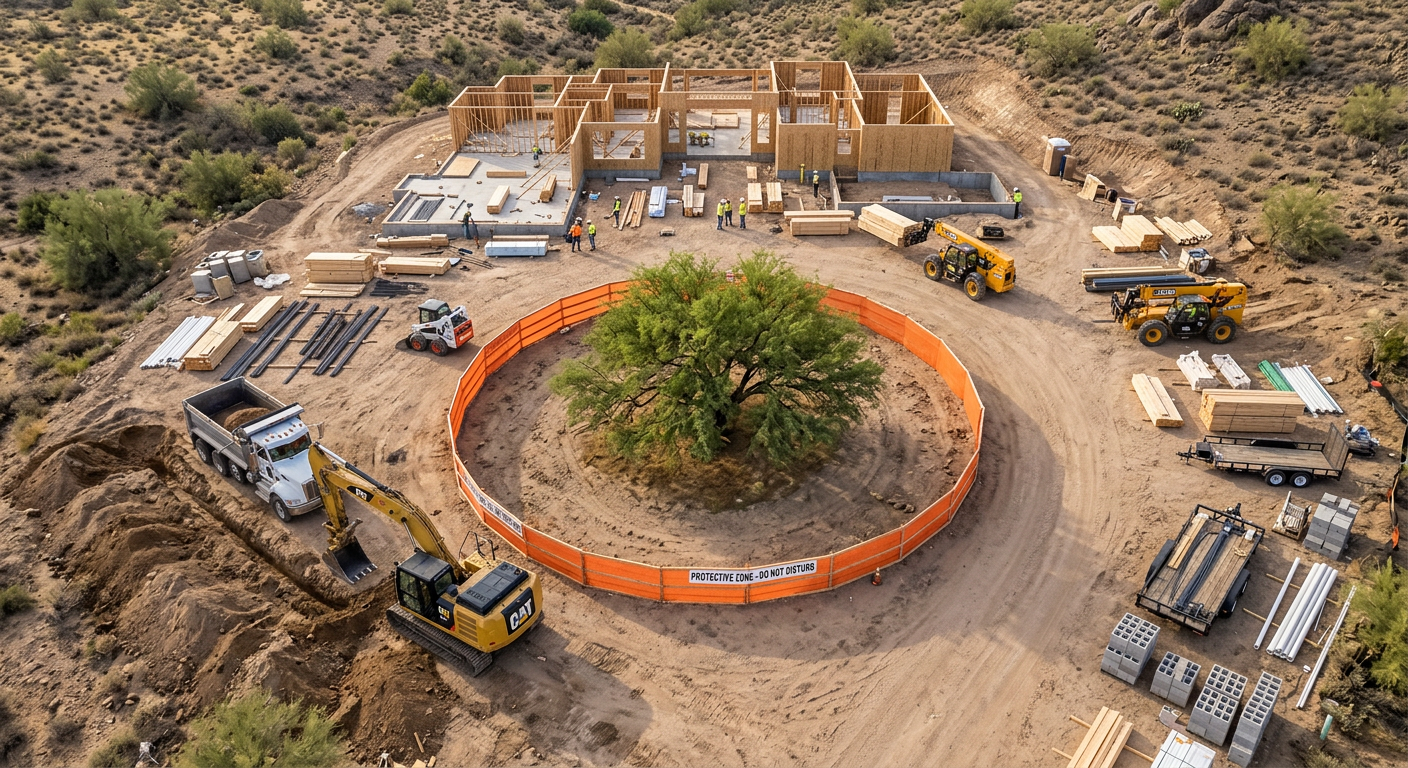
The Tree Protection Zone Is Not a Suggestion
A tree protection zone is the designated area around a retained tree where construction activity is tightly controlled or prohibited. The exact boundary should be determined by the tree species, size, condition, root structure, proposed work, and local requirements. We do not recommend relying on a one-size-fits-all measurement when a valuable tree is involved.
As a useful planning benchmark, the University of Massachusetts Building and Construction Technology program notes that a healthy tree will probably survive when at least 60 percent of its roots remain unaffected by construction. That is why protection must reach beyond the trunk. The real asset is the living soil and root system below grade.
A Practical Tree Preservation Plan for Custom Home Projects
A successful plan is created before clearing, grading, or utility work begins. It should be part of the overall site strategy, not a last-minute instruction taped to a fence.
Start With an Honest Tree Assessment
Not every tree should be saved. We first need to understand each tree's health, structural condition, species, existing stress, and ability to tolerate nearby construction. An arborist can help evaluate high-value trees, identify hazard concerns, and determine which specimens are genuinely viable candidates for preservation.
This matters because forcing a poorly located or declining tree into a new construction plan can create safety, maintenance, and design problems later. Thoughtful preservation means retaining the right trees, in the right locations, with enough protected space to succeed.
Coordinate the Home Footprint and Outdoor Program
The biggest opportunity comes early, when the home footprint, pool, guest house, driveway, walls, outdoor kitchen, and utility routes can still shift. Even modest adjustments to these elements may protect a major root zone and preserve the tree that gives the property its character.
At Waibel & Associates Residential Landscape Architecture, we approach the exterior environment as an extension of the home. That means mature trees, shade patterns, gathering areas, paving, planting, lighting, drainage, and irrigation should be planned together rather than resolved as disconnected parts of the project.
Install Real Protection Fencing Before Site Work
Protection fencing should be sturdy, highly visible, and installed before demolition, grading, clearing, or deliveries begin. It must stay in place throughout the work unless a qualified professional authorizes a specific, carefully managed exception.
Inside that protected zone, establish clear rules:
- No vehicle or equipment traffic
- No soil stockpiles, gravel, lumber, or material storage
- No concrete washout or debris disposal
- No routine trenching or excavation
- No grade changes without professional review
- No casual fence relocation for convenience
The fence is not merely a visual reminder. It helps protect the soil structure, root system, trunk, and lower canopy from the routine decisions that happen on an active jobsite.
Plan Utilities and Drainage With Trees in Mind
Utility trenches are among the most common ways a construction project damages roots. Coordinate water, sewer, electric, gas, drainage, and irrigation routes early so that lines avoid protected root areas whenever feasible. When work near roots is unavoidable, the approach may need to change from conventional excavation to methods that reduce damage.
Drainage also deserves attention. Raising grade can reduce the oxygen available to roots, while lowering grade can remove critical root mass and alter the tree's stability. The National Park Service advises keeping grade changes near a tree's dripline to a minimum, reinforcing why grading should never be treated as separate from tree protection.
Specify Construction-Phase Oversight
Even an excellent plan can fail when no one confirms that it is followed. We recommend identifying who is responsible for fence inspections, documenting approved access points, communicating restrictions at contractor meetings, and reviewing any unexpected field conditions before action is taken.
Construction administration is especially valuable on detailed custom projects because it connects design intent to what is actually built. Our landscape architecture services include site planning, planting and irrigation design, construction documentation, and construction administration that help teams make informed decisions as the work progresses.
Common Mistakes That Put Preserved Trees at Risk
The most damaging actions are often practical shortcuts, not dramatic mistakes. A crew needs a convenient place to park a lift, a contractor needs room for materials, or a trench route changes in the field. Without a clear plan and supervision, the protected area becomes the easiest place to use.
Treating the Dripline as the Entire Root System
The canopy edge is a helpful visual cue, but roots may extend beyond it. A tree's needs vary with species, site history, soil, age, and form. For that reason, a protection zone should be based on an informed evaluation, not just a quick measurement from the branches.
Compacting Soil Around the Tree
Heavy equipment can compress the spaces in soil that hold air and water. Once compaction occurs, correcting it near established roots can be difficult and risky. Keeping traffic and storage outside the protected zone is one of the simplest and most effective preservation measures.
Cutting Roots Without a Plan
Roots are sometimes encountered during excavation for walls, paving, footings, pools, or utilities. Ripping through them with a machine can cause unnecessary injury and leave the tree vulnerable. If roots must be addressed, pause the work and involve the appropriate professional before deciding how to proceed.
Waiting Until the Landscape Installation Phase
By the time planting, irrigation, and finishing work begin, the major damage may already be done. Mature-tree preservation belongs in site planning and construction documents, then continues through active construction and post-construction care.
Planning a Custom Landscape Project?
If you are building or remodeling a home in Tempe, Scottsdale, Paradise Valley, Phoenix, Carefree, Cave Creek, or the East Valley, early landscape planning can help protect mature trees while creating a cohesive outdoor environment. We can coordinate preservation goals with architecture, hardscape, water-efficient planting, irrigation, and outdoor living features.
Request a Landscape Architecture Consultation or call (480) 893-3849 to discuss your project.
Protecting Trees After Construction Ends
The work does not end when the fence comes down. Trees affected by nearby construction may need monitoring, appropriate irrigation, mulch, and an adjustment period while roots recover. Avoid assuming that an established tree will thrive on the same watering schedule as newly installed landscape materials.
In the Sonoran Desert, irrigation planning is particularly important. A preserved tree may need thoughtful seasonal water management that responds to the species, existing root conditions, rainfall, and changes to the surrounding hardscape. This is where landscape architecture and irrigation design work together to support both water responsibility and long-term plant health.
Janet Waibel, RLA, brings experience in planning, construction, irrigation, and sustainable landscapes to this kind of coordination. Her published resources also provide useful context for homeowners and project teams who want to understand the relationship between construction quality, landscape performance, and long-term care. Explore Landscape Architecture Books by Janet Waibel.
Frequently Asked Questions
Can mature trees be preserved during a home remodel?
Yes, when preservation is evaluated early and the design respects the tree's protected root area. The sooner the landscape architect, architect, builder, and arborist coordinate, the more options the team has for protecting valuable trees.
When should tree preservation planning begin?
It should begin before the home footprint, grading, utilities, driveway, pool, and outdoor spaces are finalized. Planning before site disturbance is far more effective than trying to repair damage after construction begins.
What damages trees most during construction?
The most common risks are root cutting, soil compaction, trunk damage, improper grade changes, material storage, and altered drainage. Several small impacts can be just as harmful as one major event.
Can a tree survive if roots are cut for a utility line?
Possibly, but the outcome depends on the tree, the amount and location of root loss, its health, soil conditions, and the quality of follow-up care. Any excavation near a retained tree should be reviewed before the work proceeds.
Do Arizona desert trees need protection during construction?
Yes. Desert-adapted trees are not immune to damage from excavation, compaction, grade changes, or disrupted irrigation. Their suitability for a desert climate does not eliminate their need for protected roots and healthy soil.
Who should coordinate tree protection on a custom project?
A landscape architect can coordinate preservation within the overall site and outdoor-living plan, while an arborist evaluates tree health and protection needs. The builder and all trades also need clear construction documents and jobsite expectations.
Preserve the Site Character You Cannot Recreate Quickly
The best construction projects do more than add a beautiful home. They respect the mature landscape elements that give the property identity, shade, and a sense of belonging in its setting. With early evaluation, clear protection boundaries, smart utility and grading decisions, and on-site follow-through, mature trees have a far better chance of becoming lasting assets to the finished landscape.
Talk With an Experienced Arizona Landscape Architect
Whether you are planning a custom home, a major residential remodel, a pool environment, or a comprehensive landscape renovation, we can help create a site plan that protects key trees and complements the architecture of your property. Waibel & Associates Landscape Architecture serves discerning clients throughout Tempe, Scottsdale, Paradise Valley, Phoenix, North Scottsdale, Carefree, Cave Creek, and surrounding Arizona communities.
Call (480) 893-3849 or contact Waibel & Associates for a landscape architecture consultation.
About Waibel & Associates Landscape Architecture
Waibel & Associates Landscape Architecture is an Arizona landscape architecture firm led by Janet Waibel, RLA, Owner and Principal. The firm provides custom residential landscape architecture, sustainable landscape design, irrigation planning, tree preservation, outdoor living design, site planning, construction documentation, and professional landscape consulting throughout Tempe, Scottsdale, Paradise Valley, Phoenix, North Scottsdale, Carefree, Cave Creek, and surrounding Arizona communities.
Waibel & Associates focuses on thoughtful, high-quality landscapes that complement the architecture of each property while incorporating appropriate plant materials, water-efficient strategies, irrigation technology, and long-term planning.
Janet Waibel is also a published author whose books provide educational resources on sustainable landscape management and landscape construction.
Planning a custom residential or professional landscape project?
Call (480) 893-3849
or
Contact Waibel & Associates
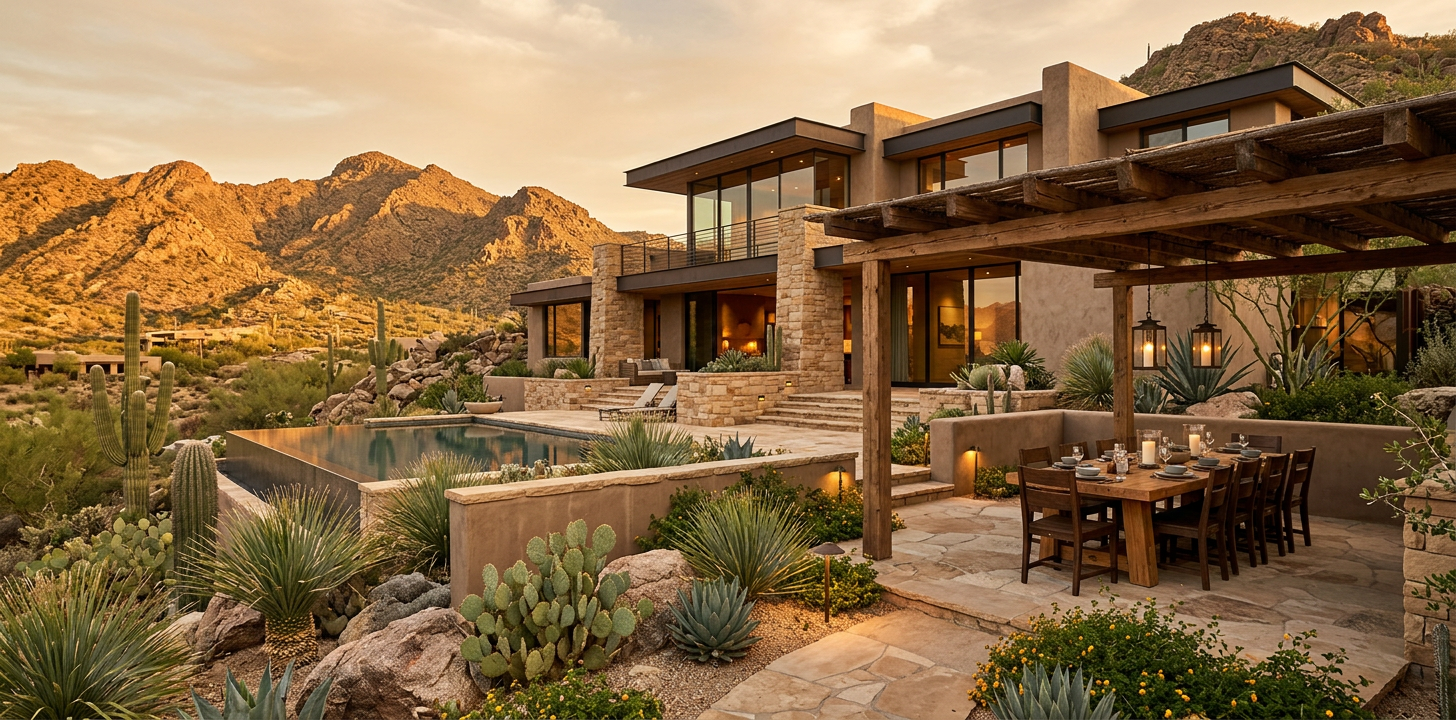
Residential Landscape Architecture Carefree for Custom Homes
A beautiful Carefree property deserves more than plants arranged around the perimeter. It needs an outdoor environment that belongs to the home, responds to desert sun and mountain views, and works beautifully for everyday living as well as entertaining.
That is what residential landscape architecture in Carefree is designed to accomplish. We begin with the character of the site, the architecture, how you live, and the long-term performance of every outdoor element. The result is not a collection of features. It is a cohesive setting that adds comfort, visual depth, and lasting value.
What Custom Landscape Architecture Adds to a Carefree Home
Carefree homes often sit on distinctive desert sites with natural grade changes, mature vegetation, expansive views, and strong architectural identities. These conditions create opportunity, but they also make unplanned outdoor improvements expensive to correct later. A professional landscape architect coordinates the parts of the property before construction begins.
| Design Priority | Why It Matters in Carefree | Planning Response |
|---|---|---|
| Desert views | Views are a major asset | Frame, preserve, and screen selectively |
| Intense sun | Outdoor areas can become unusable | Add shade, orientation, and thermal comfort |
| Water stewardship | Irrigation affects long-term performance | Specify hydrozones and efficient delivery |
| Site character | Grade and native vegetation vary | Protect assets and design with the land |
| Architectural fit | Materials must feel intentional | Coordinate paving, walls, lighting, and planting |
The value is in the sequence of decisions. We look at arrival, circulation, drainage, outdoor rooms, planting mass, irrigation, lighting, hardscape materials, and construction details as connected elements. This is especially important for a custom home or substantial renovation, where the landscape should reinforce the architecture instead of feeling added afterward.
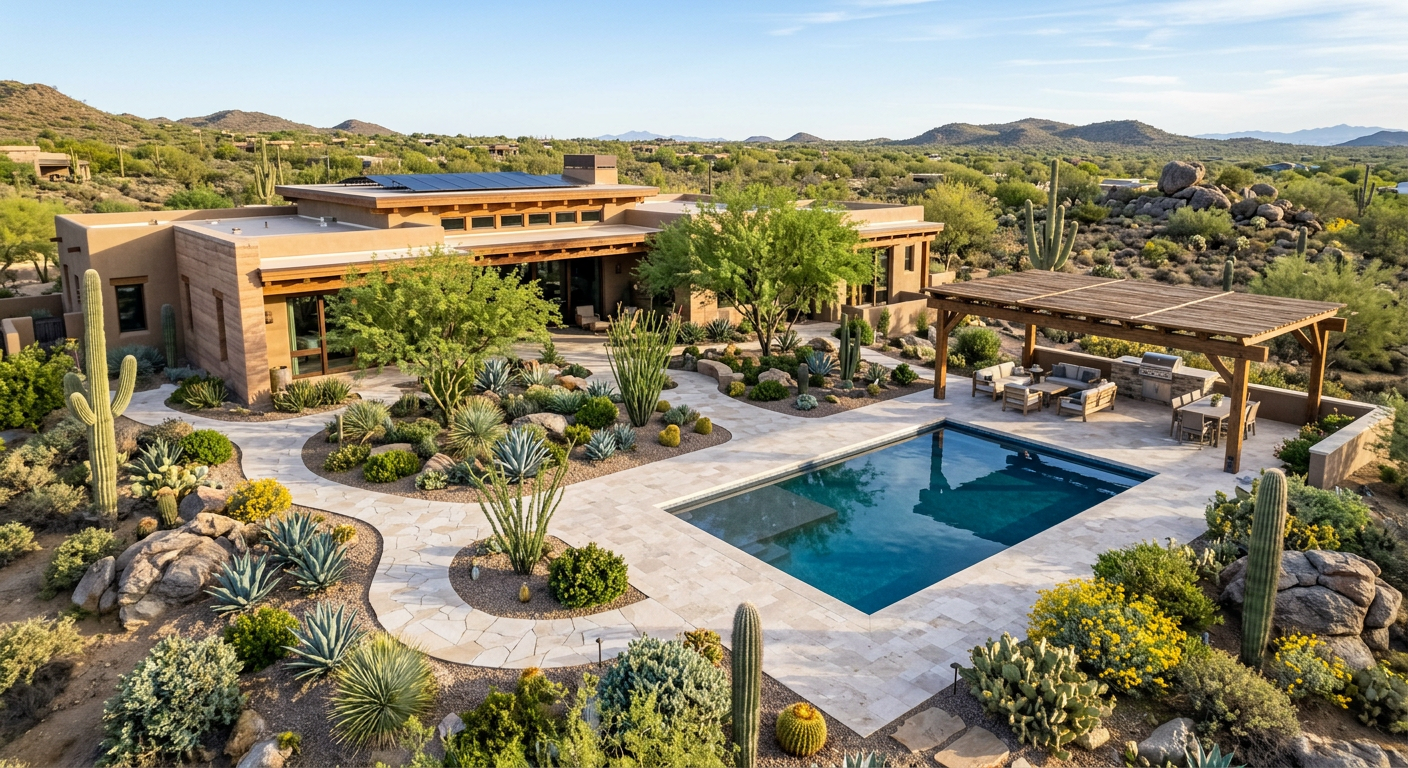
Residential Landscape Architecture Carefree Homeowners Can Use Every Day
A successful luxury landscape is not defined by how many amenities it holds. It is defined by how naturally those amenities support your life. We plan outdoor living spaces with a clear purpose, whether that is a quiet morning patio, a poolside gathering area, a protected dining space, or a garden court that softens the transition from indoors to outdoors.
Create a Strong Connection Between Home and Site
The best landscape plans begin inside the home. We consider the sightlines from major rooms, doors that should lead to a destination, and areas where shade or privacy will matter most. Material selections can echo the home’s textures and color palette, while planting provides seasonal rhythm, softness, and scale.
For example, a covered terrace may need a view-focused planting composition rather than a solid hedge. A guest suite may need a private garden court. A long blank exterior wall may become an opportunity for a layered planting bed, art element, or textured screen that feels intentional from both inside and outside.
Design Outdoor Rooms Before Selecting Features
Pools, fire elements, outdoor kitchens, and shade structures work best when they are part of a larger circulation and space-planning strategy. We establish the room first, then size and locate each feature so it has adequate access, service space, seating, and visual balance.
This approach avoids a common problem: installing attractive individual elements that compete with one another or make the yard feel crowded. Thoughtful outdoor living design gives each space a reason to exist and a comfortable relationship to the home.
Water-Efficient Design Without a Sparse Look
Water-wise landscape design does not mean settling for a flat, gravel-heavy yard. A regionally appropriate palette can create strong texture, color, shade, habitat, and seasonal interest while using water intentionally. Plant selection, soil preparation, sun exposure, and irrigation zones all influence how well the landscape matures.
The Arizona Department of Water Resources reports that landscaping is the largest use of potable water in Arizona and that as much as 70 percent of residential water use can occur outdoors. That makes irrigation planning and plant placement central design decisions, not finishing touches.
We use planting zones that reflect actual water needs, group compatible plants, and consider how shade from trees or structures changes the site over time. We also plan for access to irrigation components and understand that a landscape should be adjusted seasonally, not watered on one fixed schedule year-round.
Preserve Mature Trees and Site Assets Where Possible
Mature trees, established desert plants, distinctive boulders, and existing grades can give a Carefree property immediate presence. Preserving the right site elements can also help a newly completed home feel grounded rather than newly planted.
Preservation must be addressed early. Building pads, utility routes, drainage changes, and construction access can all affect roots and soil conditions. A site assessment helps identify what is worth retaining and how to protect it through design and construction.
Plan the Landscape Before Construction Begins
We recommend involving the landscape architect while the home is being designed, or as soon as a major remodel is being considered. Early planning allows the team to coordinate finished floor elevations, view corridors, utility locations, drainage, walls, gates, pool equipment, and outdoor lighting before costly decisions are locked in.
This is where professional construction documents make a tangible difference. Clear plans give builders and installers a coordinated direction, reduce interpretation on site, and help the finished work reflect the original design intent. Explore our residential landscape architecture approach and the full range of landscape architecture services available for custom properties.
Planning a Carefree Custom Home or Renovation?
If you are building, remodeling, or reworking a significant outdoor environment in Carefree, early landscape planning can protect the character of the property and make construction decisions easier to coordinate. Request a landscape architecture consultation with Waibel & Associates, or call (480) 893-3849 to discuss your project.
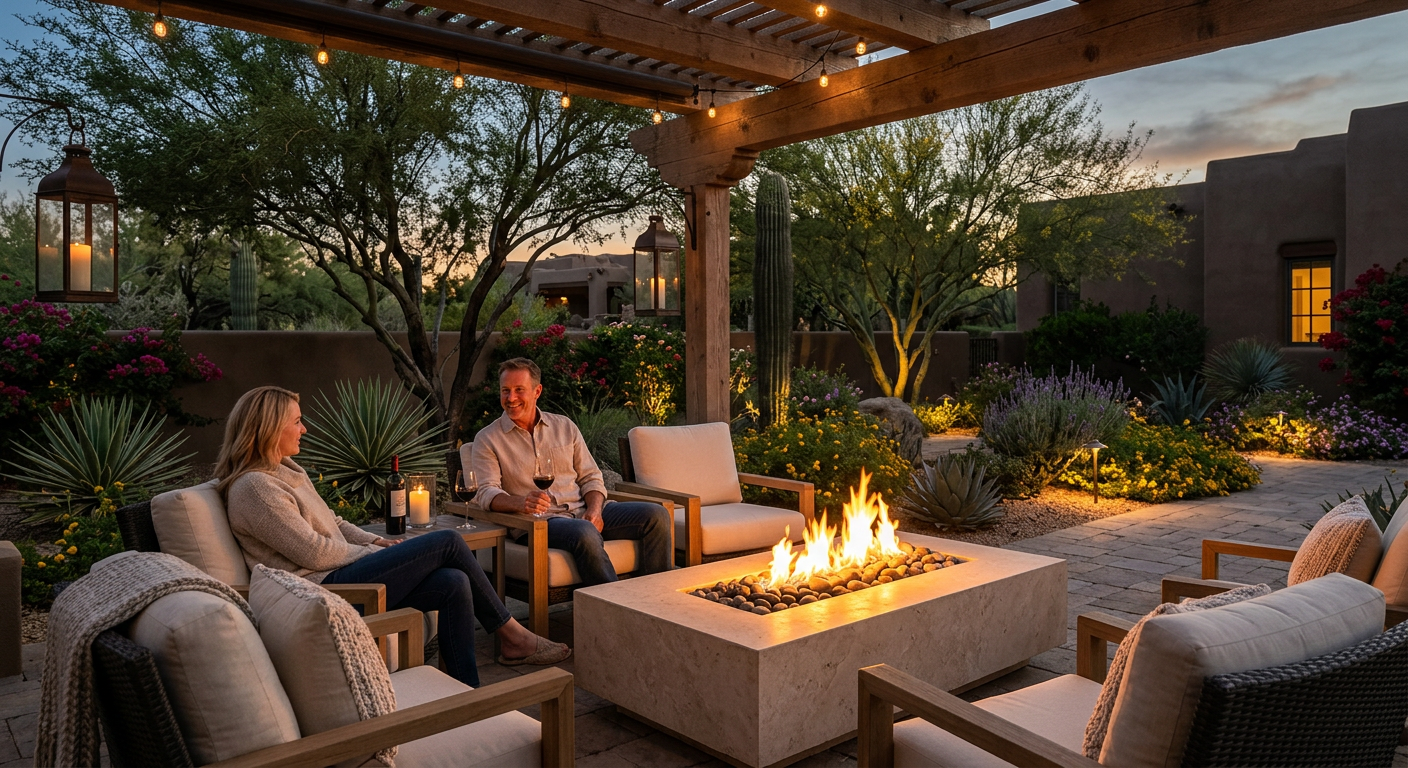
What We Coordinate in a Comprehensive Landscape Plan
A complete plan is tailored to the site and project scope, but it may include the following elements:
- Site analysis, grading awareness, drainage considerations, and circulation planning
- Plant selection that supports architecture, seasonal interest, and water efficiency
- Irrigation design organized around plant needs and practical maintenance access
- Hardscape planning for terraces, walks, drive approaches, walls, and steps
- Outdoor living spaces such as kitchens, pools, fire features, shade structures, and gathering areas
- Landscape lighting that supports arrival, safety, ambience, and key architectural features
- Construction documents and construction administration to help carry design intent into installation
At Waibel & Associates, Janet Waibel, RLA, brings extensive experience in design, planning, irrigation, and construction processes. You can learn more about her background through About Janet Waibel and Waibel & Associates. For homeowners and project teams interested in the principles behind enduring desert landscapes, Janet Waibel’s landscape architecture books offer additional practical perspective on sustainability and construction.
Frequently Asked Questions
When should I hire a landscape architect for a Carefree custom home?
Hire a landscape architect during early architectural planning, ideally before exterior elevations, grading, pool placement, and utility locations are finalized. Early coordination makes it easier to protect views, organize outdoor rooms, and avoid costly revisions.
What is the difference between a landscape architect and a landscaper?
A landscape architect focuses on site planning, design integration, materials, planting, irrigation, construction documentation, and coordination. Installation professionals build and maintain landscapes, while landscape architecture establishes the comprehensive plan that guides the work.
Can a water-efficient Carefree landscape still look lush?
Yes. A layered design using shade trees, flowering accents, sculptural desert plants, and appropriate irrigation zones can look abundant without relying on high-water planting. The key is matching plants to their exposure, soil conditions, and water requirements.
Can mature desert trees be preserved during a remodel?
Often, yes, but preservation needs to be evaluated early. Root zones, construction access, grade changes, drainage, and utility trenches should all be considered before work begins.
Does landscape architecture include pools and outdoor kitchens?
It can. We coordinate pools, patios, kitchens, fire features, shade structures, planting, lighting, and circulation as parts of one outdoor environment. This helps the finished property feel unified rather than pieced together.
Why are construction documents important for a residential landscape project?
Construction documents communicate the design clearly through plans, specifications, and details. They help installers understand materials, layout, planting, irrigation, and key dimensions, which supports a more consistent finished result.
Choose a Landscape That Belongs to the Property
A Carefree landscape should honor the site rather than erase it. When planning begins with the architecture, topography, views, and long-term water use, the finished environment feels natural, composed, and genuinely useful.
Whether the project is a new custom home, an aging landscape renovation, or a major outdoor living transformation, the right design process creates clarity before construction and confidence in every decision that follows.
Talk With an Experienced Arizona Landscape Architect
For a high-end home in Carefree, professional landscape architecture can bring the site, architecture, outdoor living, irrigation, and construction details into one thoughtful plan. Contact Waibel & Associates to discuss your custom residential project, or call (480) 893-3849.
About Waibel & Associates Landscape Architecture
Waibel & Associates Landscape Architecture is an Arizona landscape architecture firm led by Janet Waibel, RLA, Owner and Principal. The firm provides custom residential landscape architecture, sustainable landscape design, irrigation planning, tree preservation, outdoor living design, site planning, construction documentation, and professional landscape consulting throughout Tempe, Scottsdale, Paradise Valley, Phoenix, North Scottsdale, Carefree, Cave Creek, and surrounding Arizona communities.
Waibel & Associates focuses on thoughtful, high-quality landscapes that complement the architecture of each property while incorporating appropriate plant materials, water-efficient strategies, irrigation technology, and long-term planning.
Janet Waibel is also a published author whose books provide educational resources on sustainable landscape management and landscape construction.
Planning a custom residential or professional landscape project?
Call (480) 893-3849
or
Contact Waibel & Associates →
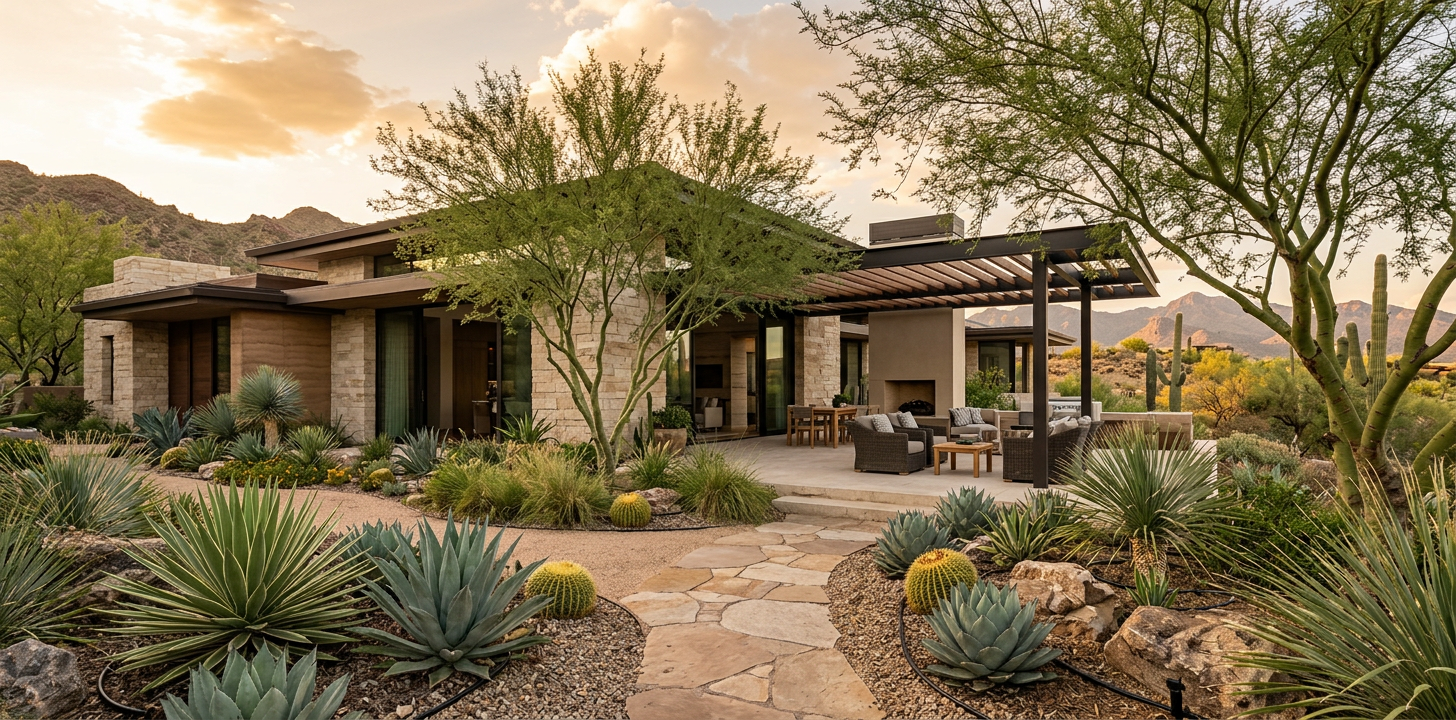
A beautiful Arizona landscape does not need to depend on excessive irrigation or a flat expanse of gravel. The strongest outdoor environments feel generous, lush in the right places, and deeply connected to the home’s architecture, while using water with intention.
For high-end homes in Scottsdale, Paradise Valley, Tempe, Phoenix, and the East Valley, water saving landscape solutions Arizona homeowners can rely on begin with a complete site strategy. Plant choices matter, but so do shade, soil, grading, irrigation zones, hardscape, mature trees, and how your family actually uses the property.
Water Saving Landscape Solutions Arizona for Luxury Properties
What A Water-Efficient Luxury Landscape Actually Includes
The goal is not to make every part of a property look the same. We design a hierarchy of spaces, with resilient low-water planting in broad landscape areas, concentrated planting near patios and entries, and shade where people gather. That approach supports both comfort and visual richness without treating every square foot as if it has identical water needs.
The Arizona Department of Water Resources reports that landscaping is the largest use of potable water in Arizona and that outdoor use can account for as much as 70 percent of residential water use. For a large custom property, that makes irrigation planning a design decision, not merely an installation detail.
| Design element | Water-saving role | Luxury benefit | Planning priority |
|---|---|---|---|
| Hydrozone planting | Matches water to plant needs | Fuller, healthier planting | High |
| Drip irrigation | Delivers water at the root zone | Cleaner visual finish | High |
| Shade trees and structures | Lowers heat stress | More usable outdoor rooms | High |
| Rainwater harvesting | Directs rainfall to planting | Site-specific character | Medium |
| Permeable surfaces | Helps water enter soil | Softer, tailored hardscape | Medium |
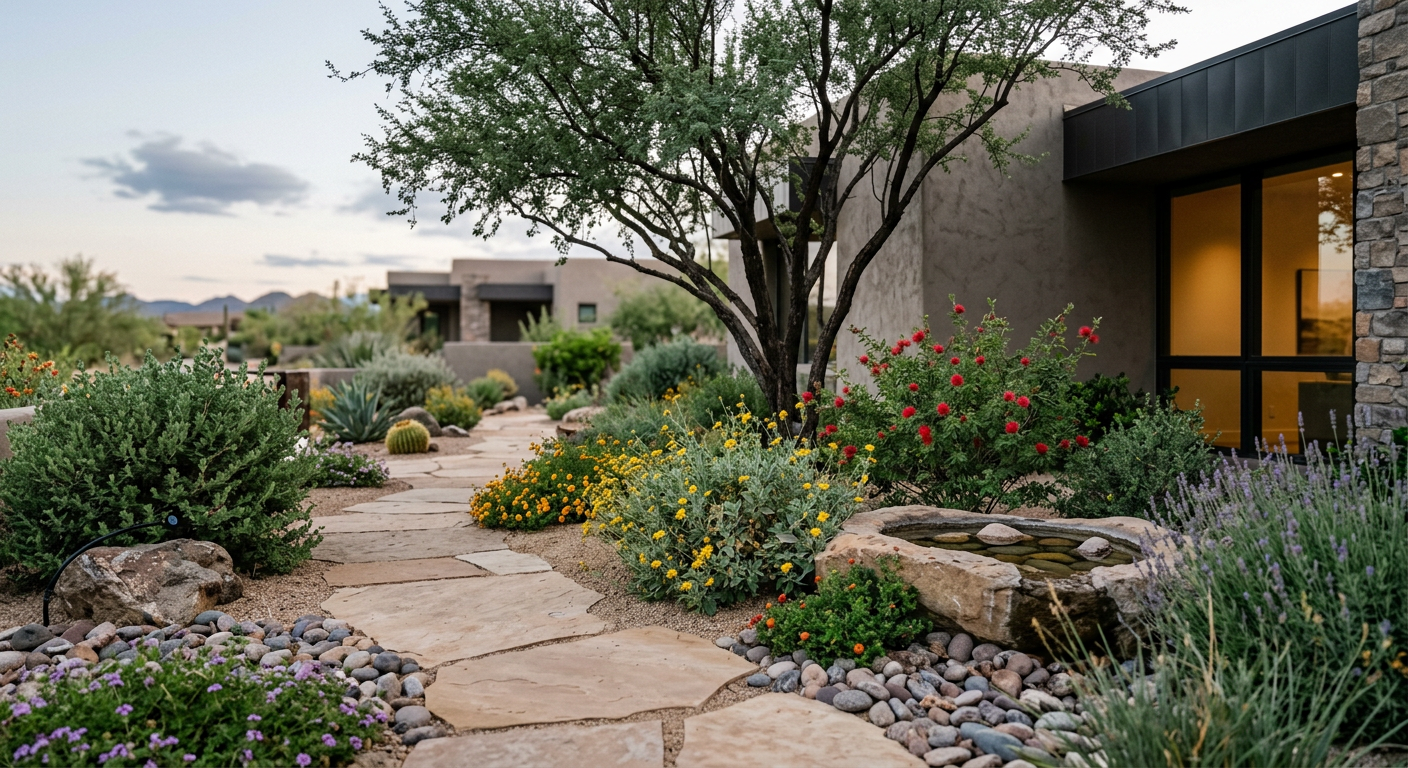
Start With The Site, Not A Plant List
A thoughtful plan studies orientation, grades, drainage patterns, existing vegetation, views, and outdoor living goals before plants are selected. This is especially important for hillside homes, large lots, and remodels where established trees may be among the property’s most valuable landscape assets.
We also look at where the home creates intense reflected heat, where winter sun is desirable, and where guests naturally move through the landscape. A courtyard, pool terrace, arrival sequence, or outdoor kitchen can feel cooler and more inviting when planting and shade are positioned deliberately.
Group Plants By Their Real Water Needs
Hydrozoning means placing plants with comparable water requirements on the same irrigation valve. It prevents a low-water desert accent plant from receiving the same schedule as a shaded flowering shrub or a specimen tree. It is simple in concept, but it requires coordination between planting design and irrigation documentation.
Desert-adapted does not mean every plant needs no water. New plantings need establishment care, mature shade trees need appropriate support, and seasonal weather changes affect demand. The practical goal is to give each plant the right amount of water at the right time, rather than using a single schedule across the entire property.
Five Design Strategies That Protect Water And Property Value
Preserve Mature Trees Whenever Possible
A mature mesquite, palo verde, olive, or other established tree can create meaningful shade that would take years to replace. Preserving suitable trees can reduce heat around hardscape, improve outdoor comfort, and anchor a new landscape so it feels established rather than recently installed.
Tree preservation must begin before demolition, grading, utility work, or new pool construction. Root-zone protection, proper drainage, and construction access planning are often more important than the final planting palette.
Build Shade Into Outdoor Living Areas
Arizona homeowners often focus on the pool or the outdoor kitchen first. We encourage clients to consider shade first as well. Trees, ramadas, pergolas, covered patios, and carefully placed walls can reduce the pressure placed on plants and make the landscape genuinely usable through more of the year.
Shade also gives us more flexibility with plant material. A protected courtyard can support a layered composition with small trees, shrubs, and accent planting that would struggle in exposed reflected heat.
Use Drip Irrigation As A Designed System
Drip irrigation is most effective when it is designed around plant sizes, root zones, slope, soil conditions, and separate hydrozones. It should not be an afterthought added after hardscape and planting decisions have already been made.
The state’s Guidelines for Landscape Drip Irrigation Systems emphasize design, installation, maintenance, operation, and repair. That full lifecycle matters. Even an excellent system wastes water if emitters are clogged, lines are damaged, or the controller never changes with the seasons.
Shape The Land To Hold Rainfall
Rainwater harvesting can be elegant and nearly invisible. Graded basins, swales, recessed planting areas, and strategically directed roof runoff can slow rainfall and guide it into the landscape rather than sending it off site.
The Arizona Department of Water Resources notes that rainwater harvesting reduces drinking-water use for irrigation and works especially well with native, low-water-use, and desert-adapted plants. On a custom residence, these features can be integrated into the overall geometry of the site instead of looking like a separate conservation add-on.
Improve Soil Before You Expect Plants To Perform
Compacted or poorly prepared soil can cause runoff, weak root development, and uneven irrigation performance. In many renovation projects, thoughtful soil preparation is what allows the planting to establish more evenly and use applied water more effectively.
Soil improvement is not one formula for every property. It depends on existing site conditions, selected plants, drainage, and construction disturbance. This is one reason a coordinated landscape architecture plan creates better long-term results than piecing together decisions as construction progresses.
A Better Alternative To The “Gravel And A Few Cactus” Approach
Water conservation does not require a stripped-down landscape. In fact, a property that relies only on rock can create more reflected heat, limit outdoor comfort, and feel disconnected from a home designed for entertaining.
A high-performing desert landscape uses contrast and layers: shade trees, flowering shrubs, architectural succulents, native or climate-appropriate accents, groundcovers, boulders, and carefully proportioned paving. The result can feel serene and tailored while remaining far more responsible than a traditional high-water lawn.
The key is to place higher-water planting where it delivers the greatest experience, such as an arrival courtyard, a primary view, or the edge of a shaded terrace. More resilient planting can then carry the larger areas of the site with texture, seasonal interest, and lower irrigation demand.
Planning A Custom Landscape Project?
If you are building or remodeling a home in Tempe, Scottsdale, Paradise Valley, Phoenix, Carefree, Cave Creek, or the East Valley, early landscape planning can protect mature trees, coordinate utilities, and prevent costly revisions after hardscape is underway. Explore our residential landscape architecture approach and landscape architecture services to see how a complete plan brings site planning, planting, irrigation, and outdoor living together.
Call (480) 893-3849 to discuss a custom residential landscape project with Waibel & Associates.
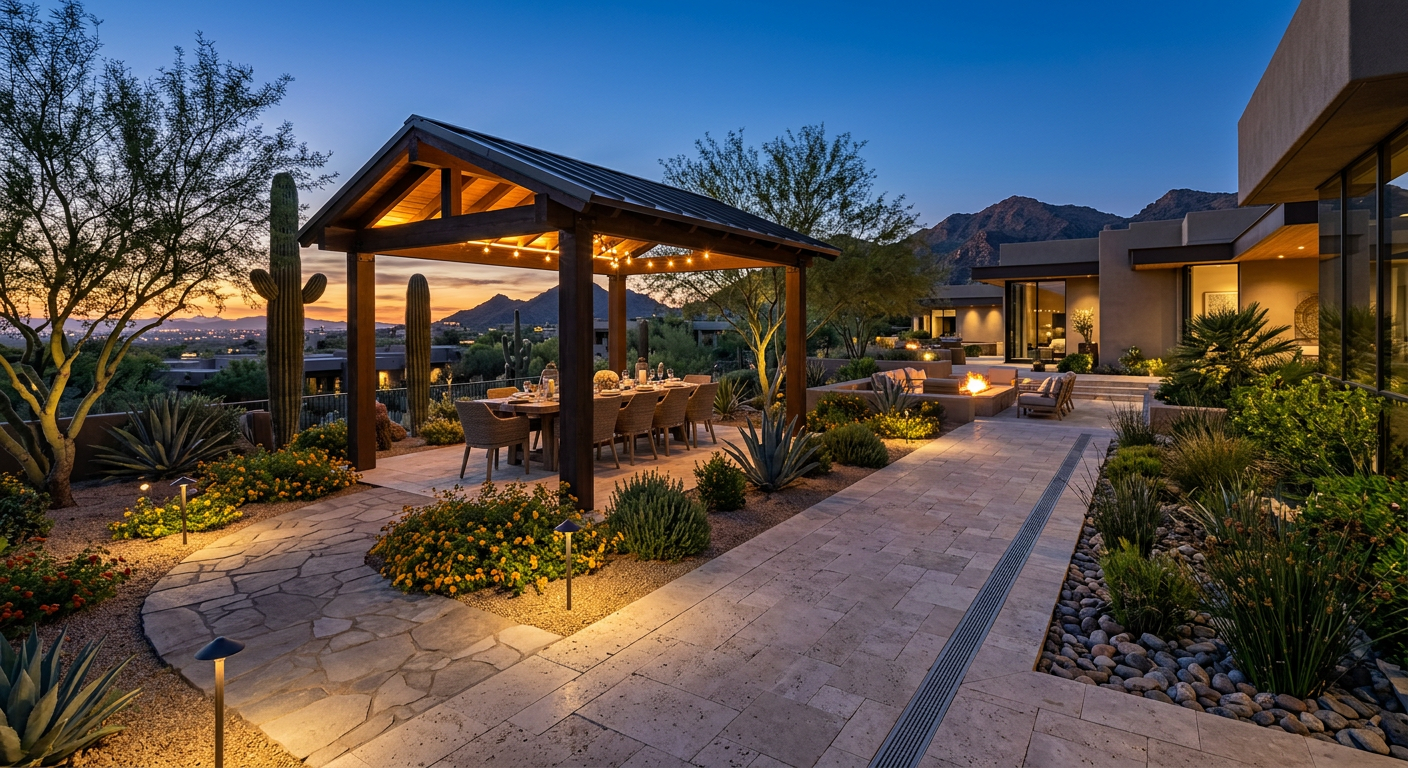
Why Professional Coordination Matters
A landscape plan is a communication tool for the entire project team. It helps the architect, builder, pool consultant, lighting professional, and installer understand the intended relationships between grades, walls, paving, planting, irrigation, drainage, and utilities.
This coordination is especially valuable on luxury renovations, where the property may have mature vegetation, limited access, existing structures, or difficult grades. It is also valuable for HOAs and developers that need an appealing, durable landscape identity without avoidable water demand.
Janet Waibel, RLA, Owner and Principal of Waibel & Associates Landscape Architecture, brings landscape architecture, irrigation planning, site analysis, and construction administration into a connected process. For homeowners and project teams who want deeper educational context around sustainable landscape decisions, you can also explore landscape architecture books by Janet Waibel.
Frequently Asked Questions
Can a luxury Arizona landscape be water-efficient?
Yes. A luxury landscape can use shade, layered planting, stone, artful grading, outdoor living features, and carefully controlled irrigation to create a rich experience with substantially more intentional water use. Luxury comes from design quality and site-specific detail, not from irrigating every area equally.
What plants use the least water in the Phoenix area?
Plant selection should reflect the property’s sun exposure, soil, microclimates, and desired character. The Phoenix Active Management Area plant resources from the Arizona Department of Water Resources are a useful reference, but a professional plan should evaluate how each plant will perform in its specific location.
Is drip irrigation always better than spray irrigation?
Drip irrigation is often well suited to trees, shrubs, and many desert plantings because it applies water close to the root zone. However, the right approach depends on the planting type, soil, slope, and intended use, and every system needs seasonal monitoring and maintenance.
Should we remove all turf from a high-end property?
Not necessarily. Limited turf may be appropriate for a functional recreation area, a pet space, or a specific design purpose. The important question is whether it earns its place, receives the right irrigation, and is proportioned realistically within the overall water budget.
Can rainwater harvesting work on a custom home site?
Yes. Roof runoff, paved areas, and site grading can be planned to support planted basins, specimen trees, or other landscape areas. It works best when it is considered early, alongside architecture, drainage, and hardscape decisions.
When should we hire a landscape architect for a new home or major remodel?
Bring in a landscape architect during early architectural planning, before site work, pool layouts, utility routing, and grading are fixed. This creates more opportunity to preserve trees, protect views, coordinate outdoor rooms, and integrate water-efficient systems without expensive changes later.
The Long-Term Value Of Intentional Water Use
The best water-saving landscape is not a collection of isolated products. It is a cohesive outdoor environment that respects the Arizona climate, makes the home more enjoyable, and allows every plant, paved area, and irrigation zone to serve a purpose.
When we plan the site as one connected system, water efficiency supports beauty instead of competing with it. That is the difference between a landscape that simply survives the desert and one that feels completely at home in it.
Talk With An Experienced Arizona Landscape Architect
Whether you are planning a custom home, a major residential remodel, an outdoor living environment, an irrigation upgrade, or a sustainable landscape renovation, Waibel & Associates can help create a landscape that complements your architecture and long-term goals. Request a landscape architecture consultation → or call (480) 893-3849.
About Waibel & Associates Landscape Architecture
Waibel & Associates Landscape Architecture is an Arizona landscape architecture firm led by Janet Waibel, RLA, Owner and Principal. The firm provides custom residential landscape architecture, sustainable landscape design, irrigation planning, tree preservation, outdoor living design, site planning, construction documentation, and professional landscape consulting throughout Tempe, Scottsdale, Paradise Valley, Phoenix, North Scottsdale, Carefree, Cave Creek, and surrounding Arizona communities.
Waibel & Associates focuses on thoughtful, high-quality landscapes that complement the architecture of each property while incorporating appropriate plant materials, water-efficient strategies, irrigation technology, and long-term planning.
Janet Waibel is also a published author whose books provide educational resources on sustainable landscape management and landscape construction.
Planning a custom residential or professional landscape project?
Call (480) 893-3849 or contact Waibel & Associates →